
소득공제
수입
직수입양서
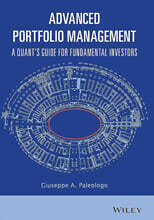
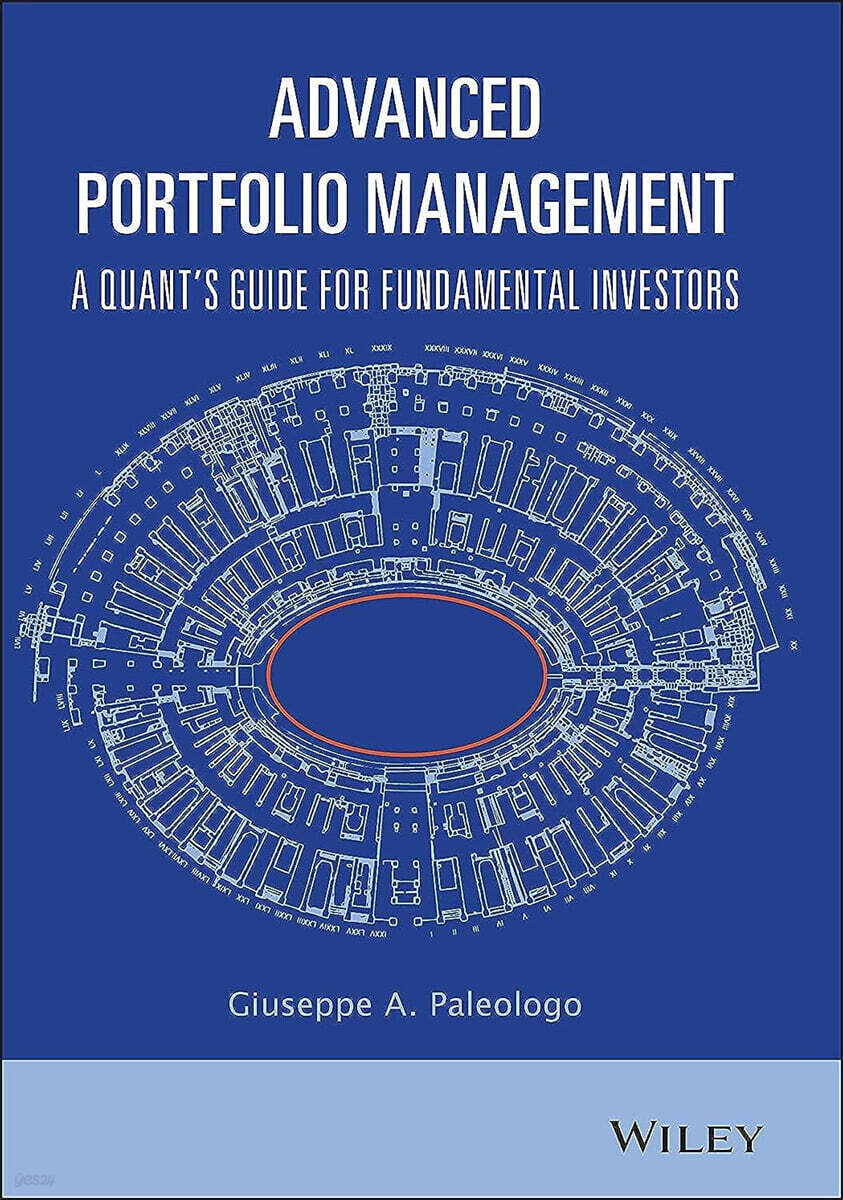
Advanced Portfolio Management
A Quant's Guide for Fundamental Investors
Hardback, 1st Edition
Wiley
2021.08.10.
- 번역서
- 퀀트 투자의 기초
이미 소장하고 있다면 판매해 보세요.
- 국내배송만 가능
- 해외 거래처 사정에 의하여 품절/지연 가능
- 도서 정보 중 미표기 사항 안내?
- 문화비소득공제 가능
책소개
목차
|
Chapter 1 For Whom? Why? And How? 1
1.1 What You Will Find Here 2 1.2 Asterisks; Or, How to Read This Book 3 1.3 Acknowledgments 3 Chapter 2 The Problem: From Ideas to Profit 5 2.1 How to Invest in Your Edge, and Hedge the Rest 7 2.2 How to Size Your Positions 8 2.3 How to Learn from Your History 8 2.4 How to Trade Efficiently 9 2.5 How to Limit Factor Risk 9 2.6 How to Control Maximum Losses 10 2.7 How to Determine Your Leverage 10 2.8 How to Analyze New Sources of Data 10 Chapter 3 A Tour of Risk and Performance 11 3.1 Introduction 12 3.2 Alpha and Beta 14 3.3 Where Does Alpha Come From? 15 3.4 Estimate Risk in Advance 18 3.4.1 What Is Risk? 18 3.4.2 Measuring Risk and Performance 20 3.5 First Steps in Risk Decomposition 25 3.6 Simple Hedging 26 3.7 Separation of Concerns 28 3.8 Takeaway Messages 29 Chapter 4 An Introduction to Multi-Factor Models 30 4.1 From One Factor to Many 31 4.2 * Frequently Asked Questions About Risk 35 4.3 * The Machinery of Risk Models 40 4.4 Takeaway Messages 43 Chapter 5 Understand Factors 44 5.1 The Economic Environment 47 5.1.1 Country 47 5.1.2 Industries 48 5.1.3 Beta 50 5.1.4 Volatility 54 5.2 The Trading Environment 56 5.2.1 Short Interest 56 5.2.2 Active Manager Holdings (AMH) 58 5.2.3 Momentum 60 5.3 The Company: Valuation Factors 66 5.3.1 Value 66 5.2 Takeaway Messages 71 Chapter 6 Use Effective Heuristics for Alpha Sizing 72 6.1 Sharpe Ratio 74 6.2 Estimating Expected Returns 76 6.3 Risk-Based Sizing 79 6.4 * Empirical Analysis of the Sizing Rules 81 6.5 From Ideas to Positions 88 6.6 Time-Series Risk-Based Portfolio Targeting 89 6.7 * Frequently Asked Questions About Performance 95 6.8 Takeaway Messages 96 Chapter 7 Manage Factor Risk 98 7.1 Tactical Factor Risk Management 99 7.1.1 Optimize If You Must 104 7.2 Strategic Factor Risk Management 107 7.2.1 Setting an Upper Limit on Factor Risk 107 7.2.2 Setting a Limit on Market Exposure 111 7.2.3 Setting an Upper Limit on Single-Stock Holdings 113 7.2.4 Setting an Upper Limit on Single-Factor Exposures 116 7.3 Systematic Hedging and Portfolio Management 118 7.4 Takeaway Messages 121 Chapter 8 Understand Your Performance 123 8.1 Factor 124 8.1.1 Performance Attribution 124 8.2 Idiosyncratic 127 8.2.1 Selection, Sizing, Timing 128 8.2.2 The Relationship Between Performance and Diversification 136 8.3 Trade Events Efficiently 139 8.4 * Use Alternative Data! 142 8.5 * Frequently Asked Questions About Performance 146 8.6 Takeaway Messages 148 Chapter 9 Manage Your Losses 149 9.1 How Stop-Loss Works 150 9.2 Why a Stop-Loss Policy? 151 9.3 The Costs and Benefits of Stop-Loss 154 9.4 Takeaway Messages 158 Chapter 10 * Set Your Leverage Ratio for a Sustainable Business 160 10.1 A Framework for Leverage Decisions 162 10.2 Takeaway Messages 166 Chapter 11 * * Appendix 168 11.1 Essential Risk Model Formulas 168 11.1.1 Factor Model 168 11.1.2 Factor-Mimicking Portfolios 169 11.1.3 Percentage Idio Variance 170 11.1.4 Betas 170 11.1.5 Marginal Contribution to Factor Risk 170 11.2 Diversification 171 11.3 Mean-Variance Formulations 172 11.3.1 Mean-Variance Portfolios 172 11.3.2 A Robust Mean-Variance Formulation 173 11.4 Proportional-Rule Formulations 174 11.5 Generating Custom Factors 175 11.5.1 Interpretation and Use 179 11.6 Optimization Formulations 179 11.6.1 Equal-Sized Portfolio with Constraints on Participation Rate 179 11.7 Tactical Portfolio Optimization 180 11.7.1 Variants 182 11.8 Hedging Formulations 182 11.9 Optimal Event Trading 186 References 191 Index 197 |
저자 소개 1
Giuseppe A. Paleologo
허드슨 리버 트레이딩(HRT)에서 리스크 관리 책임자로 근무했다.허드슨 리버 트레이딩에서 근무하는 동안 헤지펀드 업계 내 투자 위험 관리 분야에서 선도적인 인물로 인정받았다. 그의 전문성과 통찰력은 널리 인정받았으며 2022년에는 "월스트리트에서 가장 영향력 있는 리스크 전문가 10명"에 선정되기도 했다. 스탠퍼드 대학교에서 수학 연구원으로 근무했으며 코넬 대학교의 금융 공학 석사 프로그램에서 교수로 활동했다.
GIUSEPPE PALEOLOGO is the Head of Risk Management at Hudson River Trading. He has also held senior positions at Millennium, Citadel, Axioma, and IBM Research. He was formerly a mathematical researcher at Stanford and an instructor in the master’s program in Financial Engineering at Cornell University.
품목정보
- 발행일
- 2021년 08월 10일
- 쪽수, 무게, 크기
- 208쪽 | 156*232*18mm
- ISBN13
- 9781119789796
사락 별점0
혜택 및 유의사항밑줄0
혜택 및 유의사항상품정보안내
직수입외서의 경우, 해외거래처에서 제공하는 정보가 부족하여 제목, 표지, 가격, 유통상태 등의 정보가 미비하거나 변경되는 경우가 있습니다. 정확한 확인을 원하시는 경우, 일대일 상담으로 문의하여 주시면 답변 드리겠습니다.
(판형과 판수 등이 다양한 도서는 찾으시는 도서의 ISBN을 알려 주시면 보다 빠르고 정확한 안내가 가능합니다.)
해외거래처에서 품절인 경우, 2차 거래선을 통해 유럽과 미국 출판사로 직접 수입이 진행될 수 있습니다.
수입 진행 시점으로 부터 2~3주가 추가로 소요되며, 해외에서도 유통이 원활하지 않은 도서는 품절 안내가 지연될 수 있습니다.
해당 경우, 문자와 메일로 별도 안내를 드리고 있사오니 마이페이지에서 휴대전화번호와 메일주소를 다시 한번 확인해주시기 바랍니다.
(판형과 판수 등이 다양한 도서는 찾으시는 도서의 ISBN을 알려 주시면 보다 빠르고 정확한 안내가 가능합니다.)
해외거래처에서 품절인 경우, 2차 거래선을 통해 유럽과 미국 출판사로 직접 수입이 진행될 수 있습니다.
수입 진행 시점으로 부터 2~3주가 추가로 소요되며, 해외에서도 유통이 원활하지 않은 도서는 품절 안내가 지연될 수 있습니다.
해당 경우, 문자와 메일로 별도 안내를 드리고 있사오니 마이페이지에서 휴대전화번호와 메일주소를 다시 한번 확인해주시기 바랍니다.
58,090원
총 1개
58,090원