
이미 소장하고 있다면 판매해 보세요.
- 국내배송만 가능
- 문화비소득공제 가능
책소개
목차
|
1. Introduction / 16
2. Diplomatic Relations Between Korea and Japan / 32 3. Political and Judicial Oppression / 51 4. The Official “Paddle” / 64 5. Prisons and Prison Tortures / 76 6. Economic Exploitation / 97 7. Intellectual Strangulation / 115 8. Imposition of Social Evils / 133 9. The Persecution of the Church / 146 10. Indignities to Missionaries / 159 11. The Movement to Restore Independence I / 173 12. The Movement to Restore Independence II / 189 13. Japan Amuck / 199 14. Massacres / 217 15. “Speaking Officially” / 229 16. Japan’s Alleged Reforms / 253 17. Korean and Japanese Characters Contrasted / 271 18. Conclusion / 288 Appendices I. The Trial of Viscount Miura for the Murder of the Korean Queen / 310 II. Treaties and Conventions Relating to Korean Independence / 318 (a) Full Text of Korean-American Treaty, 1882 (b) List of Identical Treaties with Other Powers (c) Japan’s Guarantee of Korean Independence III. Balance Sheet Between Korean and Japan / 332 IV. Increases in Korea’s National Debt During Japanese Control / 334 V. Excess Taxes Collected During Japanese Control of Korea / 335 VI. Petition by Viscounts Kim Yun-sik and Yi Yong-chik to General Hasegawa, Japanese Governor-General of Korea / 336 VII. Atrocity Statistics and Notes of Special Incidents Reported by Eye Witnesses / 340 Endnote / 359 Epilogue Jae-hyun Kim: Henry Chung, A Man Worthy of Remembrance in History / 365 |
저자 소개 3
Henry Chung
평안남도 순천에서 태어난 정한경은 상동청년회에서 세운 순천사립시무학교에서 신학문을 배우고, 그곳에서 만난 독립운동가 박용만과 박용만의 삼촌 박장현의 영향을 받아 1904년 어린 나이에 미국으로 떠났다. L.A.에 잠시 거주하던 그는 1906년 박용만이 정착한 네브래스카로 이동해 미국인 가정에서 집안일을 돕고 숙식을 제공받으며 학업을 이어갔다. 어린 나이에도 조국의 독립을 위한 노력을 아끼지 않았던 그는 박용만이 세운 한인소년병학교에 입학해 유한양행의 설립자 유일한 등과 함께 훈련을 받으며 한국의 독립에 대한 열망과 의지를 키워나갔다.
정한경은 네브래스카주립대학에서 정치학
평안남도 순천에서 태어난 정한경은 상동청년회에서 세운 순천사립시무학교에서 신학문을 배우고, 그곳에서 만난 독립운동가 박용만과 박용만의 삼촌 박장현의 영향을 받아 1904년 어린 나이에 미국으로 떠났다. L.A.에 잠시 거주하던 그는 1906년 박용만이 정착한 네브래스카로 이동해 미국인 가정에서 집안일을 돕고 숙식을 제공받으며 학업을 이어갔다. 어린 나이에도 조국의 독립을 위한 노력을 아끼지 않았던 그는 박용만이 세운 한인소년병학교에 입학해 유한양행의 설립자 유일한 등과 함께 훈련을 받으며 한국의 독립에 대한 열망과 의지를 키워나갔다.
정한경은 네브래스카주립대학에서 정치학 학사와 석사를 받고, 워싱턴D.C.로 건너가 아메리칸대학에서 정치외교학으로 1921년 박사학위를 받았다. 1919년 4월, 이승만, 서재필과 함께 미주에서의 3·1운동이라 불리는 1차 대한인총대표회의를 주도했으며 이후, 광복 전까지 워싱턴에 머물며 임시정부 구미위원부 위원으로 외교 선전활동을 전개했다.
특별히 영어에 능통했던 정한경은 일본의 억압적인 통치와 한국의 3·1운동을 <뉴욕타임즈> 등의 주요 언론매체에 기고해 한국의 독립 의지를 서구세계에 호소했다. 이로서 당시 일본의 왕성한 선전활동으로 일본의 식민지배에 우호적이었던 미국 여론의 변화를 이끌어냈다. 또한, The Oriental Policy of the United States, Korean treaties, The Case of Korea 등의 책을 집필하면서 일제하 한국의 실정을 해외에 알리고자 노력했다. 1962년 한국 정부로부터 독립운동 지원의 공로를 인정받아 건국훈장 독립장을 수여받았다.
Henry Chung was born in Suncheon, South Pyeongan province and studied modern sciences at the private Simu School in Suncheon, which was established by the Sangdong Youth’s Association. He met the independence activist Park Yong-man and his uncle Park Jang?hyun there, and left for the U.S. at a young age in 1904. He was briefly in L.A. before moving to Nebraska, where Park Yong-man settled in 1906, and continued his studies at an American household, helping with household chores in return for bed and board. Even at his tender age, Henry did not hesitate to work for the his homeland’s independence, and joined the Korean Boy Soldier School established by Park and received training alongside boys such as Yoo Il-han, who would later found Yoohan Pharmaceuticals, and nurtured his passion and will for Korea’s independence.
Henry received a bachelor and master of political science from the Nebraska State University, and acquired a doctorate in political science in 1921 from the American University in Washington D.C. In April of 1919 he and Rhee Syngman and Suh Jai-pil (Philip Jaisohn) organized the The First Korean Movement, called the March 1st Movement of the Americas. Afterwards, he resided in Washington until Korea’s liberation, pursuing diplomatic propaganda activities as a member of the Provisional Government’s Korean Commission to America and Europe.
Henry was particularly fluent in English and contributed writings about Japan’s oppressive rule and Korea’s March 1st Movement to major news outlets such as The New York Times to appeal for Korea’s will for independence to the Western world. He was able to affect a change in American public opinion, which had hitherto between favorable of Japan’s colonial rule thanks to Japan’s vigorous propaganda activities. He also attempted to reveal the reality of Korea under Japan’s rule by writing books such as The Oriental Policy of the United States, Korean Treaties, and The Case of Korea. His effects in supporting the independence movement were recognized by the Korean government and he received the Order of Merit for National Foundation, Independence Medal in 1962.
정한경은 네브래스카주립대학에서 정치학 학사와 석사를 받고, 워싱턴D.C.로 건너가 아메리칸대학에서 정치외교학으로 1921년 박사학위를 받았다. 1919년 4월, 이승만, 서재필과 함께 미주에서의 3·1운동이라 불리는 1차 대한인총대표회의를 주도했으며 이후, 광복 전까지 워싱턴에 머물며 임시정부 구미위원부 위원으로 외교 선전활동을 전개했다.
특별히 영어에 능통했던 정한경은 일본의 억압적인 통치와 한국의 3·1운동을 <뉴욕타임즈> 등의 주요 언론매체에 기고해 한국의 독립 의지를 서구세계에 호소했다. 이로서 당시 일본의 왕성한 선전활동으로 일본의 식민지배에 우호적이었던 미국 여론의 변화를 이끌어냈다. 또한, The Oriental Policy of the United States, Korean treaties, The Case of Korea 등의 책을 집필하면서 일제하 한국의 실정을 해외에 알리고자 노력했다. 1962년 한국 정부로부터 독립운동 지원의 공로를 인정받아 건국훈장 독립장을 수여받았다.
Henry Chung was born in Suncheon, South Pyeongan province and studied modern sciences at the private Simu School in Suncheon, which was established by the Sangdong Youth’s Association. He met the independence activist Park Yong-man and his uncle Park Jang?hyun there, and left for the U.S. at a young age in 1904. He was briefly in L.A. before moving to Nebraska, where Park Yong-man settled in 1906, and continued his studies at an American household, helping with household chores in return for bed and board. Even at his tender age, Henry did not hesitate to work for the his homeland’s independence, and joined the Korean Boy Soldier School established by Park and received training alongside boys such as Yoo Il-han, who would later found Yoohan Pharmaceuticals, and nurtured his passion and will for Korea’s independence.
Henry received a bachelor and master of political science from the Nebraska State University, and acquired a doctorate in political science in 1921 from the American University in Washington D.C. In April of 1919 he and Rhee Syngman and Suh Jai-pil (Philip Jaisohn) organized the The First Korean Movement, called the March 1st Movement of the Americas. Afterwards, he resided in Washington until Korea’s liberation, pursuing diplomatic propaganda activities as a member of the Provisional Government’s Korean Commission to America and Europe.
Henry was particularly fluent in English and contributed writings about Japan’s oppressive rule and Korea’s March 1st Movement to major news outlets such as The New York Times to appeal for Korea’s will for independence to the Western world. He was able to affect a change in American public opinion, which had hitherto between favorable of Japan’s colonial rule thanks to Japan’s vigorous propaganda activities. He also attempted to reveal the reality of Korea under Japan’s rule by writing books such as The Oriental Policy of the United States, Korean Treaties, and The Case of Korea. His effects in supporting the independence movement were recognized by the Korean government and he received the Order of Merit for National Foundation, Independence Medal in 1962.
정한경의 다른 상품
서울대 및 동 대학원, 총신신학대학원, 하버드대학과 프린스턴신학대학(철학박사)에서 종교, 역사, 철학을 공부했다. 2004년 인문학연구기관인 키아츠(KIATS)를 설립해 지금까지 원장으로 있다. 대표적인 저서로는 『천상의 위계』(2011·번역), 『기록과 기억을 통해 본 프랭크 스코필드』(2016), 『한국기독교 성지순례 50Belt』(2017) 등이 있다.
Dr. Kim studied religion, history, and philosophy at the Seoul National University and its graduate school, the Chongshin
서울대 및 동 대학원, 총신신학대학원, 하버드대학과 프린스턴신학대학(철학박사)에서 종교, 역사, 철학을 공부했다. 2004년 인문학연구기관인 키아츠(KIATS)를 설립해 지금까지 원장으로 있다. 대표적인 저서로는 『천상의 위계』(2011·번역), 『기록과 기억을 통해 본 프랭크 스코필드』(2016), 『한국기독교 성지순례 50Belt』(2017) 등이 있다.
Dr. Kim studied religion, history, and philosophy at the Seoul National University and its graduate school, the Chongshin Theological Seminary, Harvard University and Princeton Theological Seminary (Ph.D.). He established the humanities research institute KIATS in 2004 and is still its president today. His major works are Celestial Hierarchy (2011, Korean trans.), Frank W. Schofield in Records and Memory (2016), and 50 Pilgrim Belts of Korean Christianity (2017).
Dr. Kim studied religion, history, and philosophy at the Seoul National University and its graduate school, the Chongshin Theological Seminary, Harvard University and Princeton Theological Seminary (Ph.D.). He established the humanities research institute KIATS in 2004 and is still its president today. His major works are Celestial Hierarchy (2011, Korean trans.), Frank W. Schofield in Records and Memory (2016), and 50 Pilgrim Belts of Korean Christianity (2017).
김재현의 다른 상품
1955년 전남 해남에서 출생하였다. 전 한국기독교역사연구소 소장. 홍익대학교 사범대학 역사교육과를 졸업하고, 서울대학교 대학원 국사학과를 거쳐 한국학대학원에서 한국근현대사 전공으로 박사학위를 받았다. 독립기념관 자료과장, 한국기독교역사연구소 연구실장을 거쳐 소장을 역임했다. 주요 저서로 『중일전쟁 이후 전시체제와 수탈』(독립기념관, 2009), 『개화개혁의 선구자 서재필』(역사공간, 2011), 『식민권력과 종교』(한국기독교역사연구소, 2012), 『자유독립을 위한 밀알 신석구』(역사공간, 2015) 등이 있고, 편역한 책으로는 『일제강점기 종교정책사 자료집』(한국기독교역사연구
1955년 전남 해남에서 출생하였다. 전 한국기독교역사연구소 소장. 홍익대학교 사범대학 역사교육과를 졸업하고, 서울대학교 대학원 국사학과를 거쳐 한국학대학원에서 한국근현대사 전공으로 박사학위를 받았다. 독립기념관 자료과장, 한국기독교역사연구소 연구실장을 거쳐 소장을 역임했다. 주요 저서로 『중일전쟁 이후 전시체제와 수탈』(독립기념관, 2009), 『개화개혁의 선구자 서재필』(역사공간, 2011), 『식민권력과 종교』(한국기독교역사연구소, 2012), 『자유독립을 위한 밀알 신석구』(역사공간, 2015) 등이 있고, 편역한 책으로는 『일제강점기 종교정책사 자료집』(한국기독교역사연구소, 1996), 『신사참배문제 자료집』 전3권(한국기독교역사연구소, 2014), 『3?1독립운동과 기독교』 전5권(한국기독교역사연구소, 2019-2020) 등이 있다.
김승태의 다른 상품
품목정보
- 발행일
- 2020년 01월 03일
- 쪽수, 무게, 크기
- 371쪽 | 152*225*30mm
- ISBN13
- 9791160371673
출판사 리뷰
|
Henry Chung, A Man Worthy of Remembrance in History
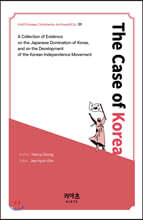
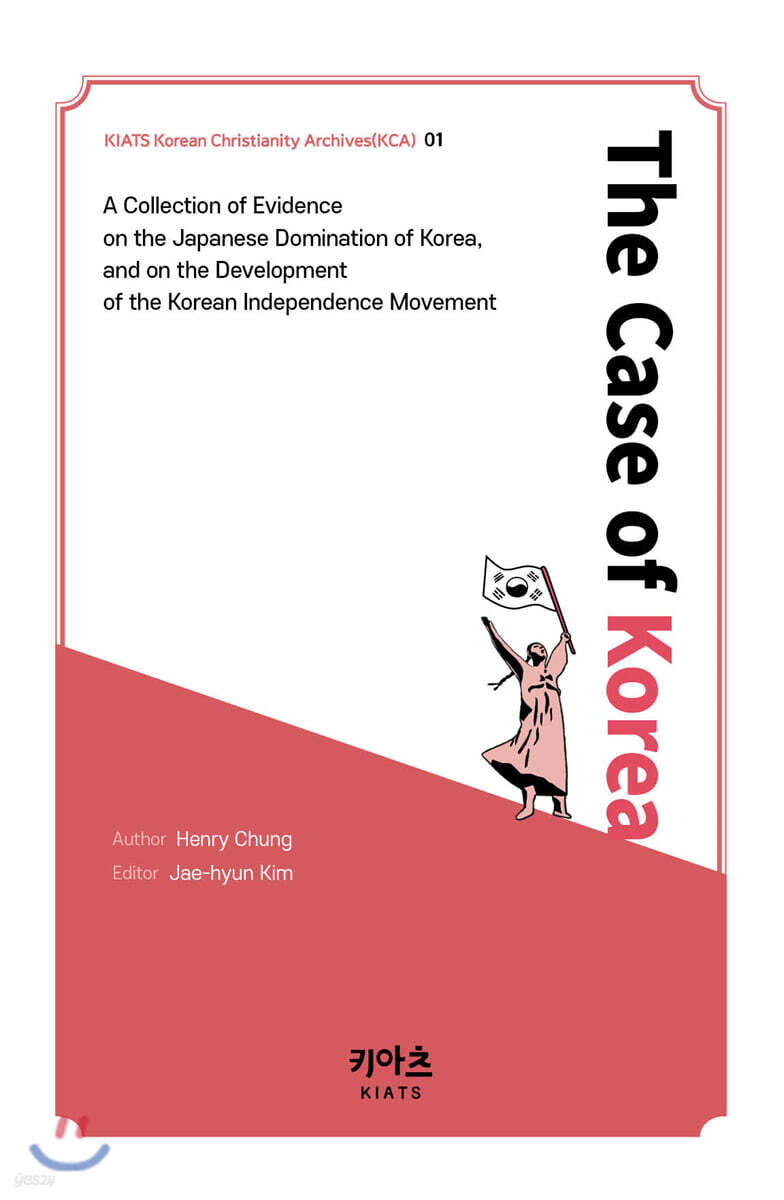
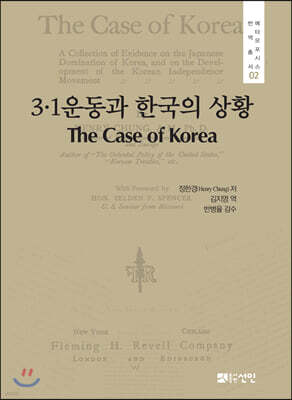
March 1st Movement The March 1st Movement was a nationwide independence movement by the Korean people on March 1st, 1919 in opposition to Japan’s oppressive colonial policies. Following Japan’s forced annexation in 1910, the Koreans lost their nation and resisted Japan’s colonial rule, pursuing independence and freedom with a sense of national identity. Also called the March 1st Manse Movement or the March 1st Revolution, it began in earnest in March and rapidly spread across the country. Japan arrested numerous Koreans both within and without Korea in the process of suppressing the March 1st Movement, and tortured and butchered and razed Korean settlements and buildings such as churches. Japan even brought Japanese firefighters and civilians to commit atrocities against Koreans. The nonviolent Manse movement of the Koreans stands in stark contrast to the brutality of the Japanese. At the time, the Korean peninsula was thoroughly blockaded by the Japanese and it was almost impossible for news of the tragic situation facing the Koreans and the Manse Movement to spread to the outside world. However, the March 1st Movement quickly became known throughout the world through foreigners such as Frank W. Schofield and Albert W. Taylor. Although Korea was unable to receive independence right away in the new global order as reorganized through the Paris Peace Conference after the First World War, the Korean March 1st Manse Movement left a lasting impression on the international society. The Forgotten Individual, Henry Chung De Yong, 1890-1985 How was Korea’s March 1st Movement, which had a great impact on the independence movements of small and weak peoples around the world, recorded, revealed to the outside world, and its key points organized? Of course, the contributions of foreign missionaries, reporters, and residents in Korea were absolute. Then how did the Koreans who actually cried “Manse” and directly suffered from all sorts of atrocious acts contribute? The Koreans also did all they could to reveal their plight and the Manse Movement to the world, telling of their horrible situation to missionaries and sending letters. Their efforts were insufficient to receive the attention of the international society, unlike the writings and testimonies of foreigners, yet the efforts of the Koreans themselves to tell Korea’s situation were no less energetic. In such a situation, Henry Chung, who would become the second Korean to ever receive a doctorate from an American university, organized and analyzed the information about the March 1st Manse Movement and submitted it as his doctoral thesis. Starting from an introduction of Korea’s history and geography, he prepared eighteen chapters analyzing preexisting material and organizing the cause, progress, and result of the March 1st Manse Movement. He included various materials such as verdicts from Japanese courts and Japanese yearbooks in the appendix for a more compelling thesis. It is difficult to find any other Korean record on the March 1st Movement, which is written in English and is as logical and comprehensive. Henry Chung was born in South Pyeongan province on February 28, 1890 and experienced the 20th century Korean history during his life before dying in 1985. He lived a long life of 95 years, but unfortunately almost nothing is known about his childhood and activities after Korea’s liberation. The two people who had a great influence on young Henry in his 10s and 20s was Park Yong-man and his uncle, Park Chang-hyun. It was also through their aid that Henry was able to start studying at the private Simu School, originally established as an affiliated school of the Sangdong Youth’s Association in Suncheon, South Pyeongan province. Henry left Korea at the age of 14 in 1904 to “learn new sciences and develop my homeland’s civilization.” Challenged by the shock of Western civilization as it slammed into Korea, Henry persuaded his parents and family and, despite his young age, settled in L.A. at the age of 15 in 1905, after passing through Hawaii and San Francisco. De Yong was added to his name as he entered the U.S. and Mrs. Sherman of the Korean (Gospel) Evangelization Hall in L.A. gave him the English name Henry. Mrs. Henry allowed him to pay cheap rent and learn Christianity in English, and introduced him to a ‘schoolboy’ job where he did odd jobs for another household to earn money. However, Henry was not yet familiar with American culture and English and had some difficulties, before heading to Nebraska in April 1906 with Park Yong-man and Park Chang-hyun. That September he enrolled in the fourth grade of elementary school in the city of Kearney and adapted to American society while displaying exceptional ability in learning English and giving speeches. Afterwards, Henry received a bachelor and master’s in political science at the Nebraska State University. Furthermore, he received a doctorate in political science from the American University in Washington D.C., and the book we translated here was his doctoral thesis. Even though he was a Korean, Henry’s outstanding language skills and persuasiveness enabled him to appeal in English to the American and Western world for Korea’s will for independence and Japan’s aggressive atrocities. Later he was an assistant professor at the Northwestern University in Illinois. Compared to Park Yong-man or Rhee Syngman, Henry may be categorized as a second-generation independence activist, but his importance places him on their level among the ranks of the most important independence activists. Despite his young age, he played a central role in the Korean Boy Soldier School started by Park Yong-man in Nebraska, and completed the three-year program with Yoo Il-han in 1911. In 1919 he was chosen as one of the three representatives for Korea to participate in the Paris Peace Conference by the Korean National Association. He was a member of the Shanghai Provisional Government’s Korean Commission to America and Europe, and from February 25, 1919 to 1921, sided with Rhee Syngman during the petition for mandatory rule dispute, then a major topic at the Provisional Government. Yet his activities aside from his life in Nebraska and his exploits following the March 1st Movement have hitherto remained concealed. He is recorded in the oral records edited by Sonia Shinn, but this is a project beyond our research at this time. (Sunwoo, edited by Sonia Shinn, Korea Kaleidoscope: Oral Histories 1, Early Korean Pioneers in USA 1903-1905(Davis, CA: Korean Oral History Project, 1982). Korea was liberated in 1945. The Korean government gave Henry, who dedicated his youth, the Order of Merit of National Foundation, Independence Medal in 1962 and he ended his eventful life on June 30, 1985. The Case of Korea This book was written on the foundation of Henry’s 1921 doctoral thesis. It showcases the academic ability of Henry, who studied political science. Henry’s book is important for two reasons. First, after receiving academic training in the U.S. in the field of political science through his doctoral program, Henry presented a considerably sophisticated academic analysis of Korea’s situation at the time and Japanese plundering. Second, this is a rare document in which one of the oppressed Koreans revealed the specifics of Korea’s situation and Japanese atrocities to the wider world. Until now there have been almost no cases in which a Korean presented graphic material on the March 1st Movement overseas, much less in English. U.S. Senator Shelden Spencer, who wrote the foreword, agreed on this point. “The history of this book is illuminating and thrilling. It is well worth the thoughtful consideration of all Americans. It deserves and demands attention.” Already on March 20, 1919, Henry Chung wrote “Korea’s Appeal” in The New York Times, emphasizing Japan’s atrocities and Korea’s ability to operate an independent government. In May 1919, he contributed the “Korea Today-A Korean View of Japan’s Colonial Policies” to ASIA (Vol. 19:5, May. 1919). Furthermore he published The Oriental Policy of the United States (New York, Chicago: Fleming H. Revell Co., 1919), covering Japan’s international propaganda tactics. Published in 1921 at the end of this process, The Case of Korea drew not a small amount of interest from Americans and at least two experts reviewed Henry’s work (Stanford University’s Payson J. Treat, The American Political Science Review, Vol. 15.4(Nov. 1921), pp.612-613.; Charles C. Tansill, Political Science Quarterly, Vol. 37(2)(Sep. 1922), p.542.). Henry Chung also left several other works. Korean Treaties (H. S, NICHOLS. INC., 1919) The Russians Came to Korea (Korean Pacific Press, 1947) Korea and the United States through War and Peace, 1943-1960(Seoul: Yonsei University Press, Institute for Modern Korean Studies Historical Materials Series; no.4, 2000) A Korean translation was started with the sponsorship of the Ministry of Veterans and Patriots Affairs in order that firsthand materials related to the independence movement might be discovered and presented to the public in 2019, the 100th anniversary of the March 1st Movement. Along with project, we decided to republish The Case of Korea in English. We hope that through this book, the life and patriotic efforts of Henry Chung, a man long forgotten whom we absolutely must remember, will be newly presented to the modern people. We expect that the efforts of this man, who a century ago left his homeland for foreign lands to pursue an academic and practical independence struggle will now resonate with the consciences and lives of many people. December 2019 Kim Jae-hyun, President of KIATS |