
소득공제
수입
직수입양서
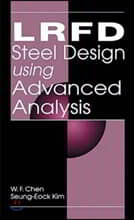
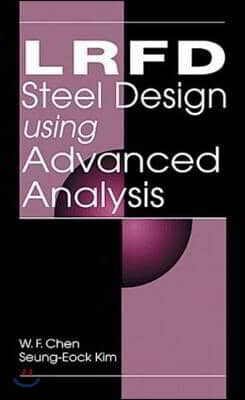
LRFD Steel Design Using Advanced Analysis
Hardback, 1st Edition
Chen, Wai-Fah / Kim, Seung-Eock
CRC Press
1997.01.30.
이미 소장하고 있다면 판매해 보세요.
- 국내배송만 가능
- 해외 거래처 사정에 의하여 품절/지연 가능
- 도서 정보 중 미표기 사항 안내?
- 문화비소득공제 가능
New Directions in Civil Engineering
-
 Analysis and Software of Cylindrical Members 이동Analysis and Software of Cylindrical Members10% 97,170원
 -
Fracture and Size Effect in Concrete and Other Quasibrittle Materials 이동Fracture and Size Effect in Concrete and Other Quasibrittle Materials10% 587,250원
-
Artificial Intelligence and Expert Systems for Engineers 이동Artificial Intelligence and Expert Systems for Engineers10% 425,250원
-
Analysis and Software of Cylindrical Members 이동Analysis and Software of Cylindrical Members10% 425,250원
-
Response Spectrum Method in Seismic Analysis and Design of Structures 이동Response Spectrum Method in Seismic Analysis and Design of Structures10% 587,250원
책소개
목차
|
Trend Toward Advanced Analysis
Introduction
Design Formats
Allowable Stress Design (ASD)
Plastic Design (PD)
Load and Resistance Factor Design (LRFD)
Advanced Analysis/Design
AISC-LRFD Design Method
Overview of AISC-LRFD Design Equations
Column Curves
Beam-Column Interaction Equations
Effective Length Factor
Moment Amplification Factor
Illustrative Example 1: Two-Bay Unbraced Frame
Illustrative Example 2: Leaning Column Frame
Semi-Rigid Frames
Methods of Advanced Analyses
Plastic-Zone Method
Quasi-Plastic Hinge Method
Elastic-Plastic Hinge Method
Notional-Load Plastic-Hinge Method
Refined-Plastic Hinge Method
Why Advanced Analysis
Summary
Practical Advanced Analysis
Introduction
Key Factors Influencing Steel Frame Behavior
Gradual Yielding Associated with Flexure
Gradual Yielding Associated with Residual Stresses
Second-Order Effects
Geometric Imperfections
Connection Nonlinearity
Desirable Attributes for Practical Advanced Analysis
Second-Order Refined Plastic Hinge Analysis
Stability Functions Accounting for Second-Order Effect
Incremental Force-Displacement Relationship
Cross-Section Plastic Strength
Modification of Element Stiffness for the Presence of Plastic Hinges
Tangent Modulus Model Associated with Residual Stresses
Two-Surface Stiffness Degradation Model Associated with Flexure
Analysis of Semi-Rigid Frames
Types of Semi-Rigid Connections
Practical Modeling of Connections
Formulation of Initial Stiffness and Ultimate Moment Capacity
Empirical Equation for Shape Parameter
Practical Estimation of Three-Parameters Using Computer Program
Incremental Force-Displacement Relationship Accounting for Semi-Rigid Connections
Geometric Imperfection Methods
Explicit Imperfection Modeling Method
Equivalent Notional Load Method
Further Reduced Tangent Modulus Method
Numerical Impleme
|
품목정보
- 발행일
- 1997년 01월 30일
- 쪽수, 무게, 크기
- 464쪽 | 843g | 156*234*30mm
- ISBN13
- 9780849374326
사락 별점0
혜택 및 유의사항밑줄0
혜택 및 유의사항상품정보안내
직수입외서의 경우, 해외거래처에서 제공하는 정보가 부족하여 제목, 표지, 가격, 유통상태 등의 정보가 미비하거나 변경되는 경우가 있습니다. 정확한 확인을 원하시는 경우, 일대일 상담으로 문의하여 주시면 답변 드리겠습니다.
(판형과 판수 등이 다양한 도서는 찾으시는 도서의 ISBN을 알려 주시면 보다 빠르고 정확한 안내가 가능합니다.)
해외거래처에서 품절인 경우, 2차 거래선을 통해 유럽과 미국 출판사로 직접 수입이 진행될 수 있습니다.
수입 진행 시점으로 부터 2~3주가 추가로 소요되며, 해외에서도 유통이 원활하지 않은 도서는 품절 안내가 지연될 수 있습니다.
해당 경우, 문자와 메일로 별도 안내를 드리고 있사오니 마이페이지에서 휴대전화번호와 메일주소를 다시 한번 확인해주시기 바랍니다.
(판형과 판수 등이 다양한 도서는 찾으시는 도서의 ISBN을 알려 주시면 보다 빠르고 정확한 안내가 가능합니다.)
해외거래처에서 품절인 경우, 2차 거래선을 통해 유럽과 미국 출판사로 직접 수입이 진행될 수 있습니다.
수입 진행 시점으로 부터 2~3주가 추가로 소요되며, 해외에서도 유통이 원활하지 않은 도서는 품절 안내가 지연될 수 있습니다.
해당 경우, 문자와 메일로 별도 안내를 드리고 있사오니 마이페이지에서 휴대전화번호와 메일주소를 다시 한번 확인해주시기 바랍니다.