
소득공제
수입
직수입양서
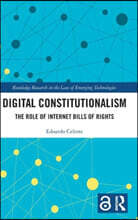
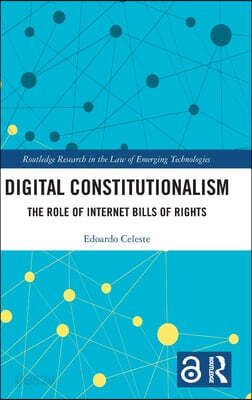
Digital Constitutionalism
The Role of Internet Bills of Rights
Hardback, 1st Edition
Celeste, Edoardo
Routledge
2022.10.13.
- 주문 제작 (POD) 도서로 제본 및 인쇄 품질이 다소 미흡할 수 있습니다 (해당 사유 반품 불가)
이미 소장하고 있다면 판매해 보세요.
- 국내배송만 가능
- 해외 거래처 사정에 의하여 품절/지연 가능
- 도서 정보 중 미표기 사항 안내?
- 문화비소득공제 가능
Routledge Research in the Law of Emerging Technologies
-
 Regulation of Artificial General Intelligence 이동Regulation of Artificial General Intelligence10% 139,960원
-
Privacy, Data Protection and Data-driven Technologies 이동Privacy, Data Protection and Data-driven Technologies10% 98,790원
-
Legal, Regulatory and Ethical Non-binary Choices of the AI Act 이동Legal, Regulatory and Ethical Non-binary Choices of the AI Act10% 354,070원
-
Regulation of Digital Technologies in the EU 이동Regulation of Digital Technologies in the EU10% 98,790원
-
Privacy, Data Protection and Data-driven Technologies 이동Privacy, Data Protection and Data-driven Technologies10% 483,800원
-
Regulation of Digital Technologies in the EU 이동Regulation of Digital Technologies in the EU10% 354,070원
-
Cryptocurrencies and the Regulatory Challenge 이동Cryptocurrencies and the Regulatory Challenge10% 111,150원
-
Regulating Artificial Intelligence in Industry 이동Regulating Artificial Intelligence in Industry10% 96,730원
책소개
목차
|
Table of Contents 1 ? Introduction * 2 ? A new constitutional moment * Constitutional equilibrium * Digital revolution * Power over digital lives * Orwellian nightmares * New rulers * Digital rights * Enhanced freedoms * Higher risks * Constitutional change * 3 ? Constitutional counteractions * Targeted transformations * Four examples * Right to digital information * Due process online * Right to Internet access * Data protection * Uneven elaboration * 4 ? Norms beyond the state * A functional approach * Constitutions and declarations * Constitutional charters * Limits of constitutions * Internet bills of rights * Public and private legislators * Advantages of ordinary law * Some examples * Lex digitalis * Lex Facebook * Code as a constitution * Courts and arbitrators * National and supranational courts * Private arbiters * ICANN’s arbitrators * 5 ? The constitutionalisation of the digital society * Constitutional pluralism * The age of globalisation * Multilevel theory * Double reflexivity * A single phenomenon * Plurality and fragmentation * Progressive translation * Societal input * 6 ? Digital constitutionalism * Constitutionalism vs constitutionalisation * The values of constitutionalism * Constitutionalism in the digital age * A new constitutionalism? * 7 ? Towards an Internet Constitution? * ‘Bytes can never hurt me’ * The end of innocence * A constitution for the Internet * Lessig: The constitution in the Internet * Teubner: Civil constitutions * Pernice: The constitution of the Internet society * Rodota: A charter of rights for the Internet * Following Rodota’s model * Internet bills of rights * Constitutional tone * Limited scholarship * A constitutional role? * Datasets * 8 ? The force of declarations * Proto-constitutional discourses * Experimentalism * Communicability * Gradualism * Compensation and stimulation * 9 ? Understanding the digital society * A new law of the horse? * Litmus test * A complex delimitation * What is really ‘the Internet’? * Datasets * Institutions * Reasons * Relations * Future-proof norms * 10 ? Empowering global people * Universal reach * Restricting private power * An enlarged social contract * Participatory deliberation * Theoretical models * Individuals * Civil society * National parliaments * International organisations * Global multi-stakeholder forums * A new constituent power * 11 ? Translating fundamental rights * An aerial view * Common roots * Human dignity * Life, liberty and security * Protection of children and disabled people * Right to a healthy environment * Economic freedom * Online as offline * Freedom of expression * Freedom and secrecy of correspondence * Freedom of association and assembly * Generalisation and re-specification * Non-discrimination * Right to privacy * Due process * 12 ? Constitutional innovation * New rights * Data protection * E-democracy * Internet access * A right to a digital forum * Public service value * Responsibilities * Governance * 13 ? Conclusion * Contrasting constitutional anaemia * The legacy of Internet bills of rights * Challenges of digital constitutionalism * Appendix A * Bibliography * Books and journal articles * Index * |
관련 분류
품목정보
- 발행일
- 2022년 10월 13일
- 쪽수, 무게, 크기
- 242쪽 | 553g | 160*230mm
- ISBN13
- 9781032189055
사락 별점0
혜택 및 유의사항밑줄0
혜택 및 유의사항상품정보안내
직수입외서의 경우, 해외거래처에서 제공하는 정보가 부족하여 제목, 표지, 가격, 유통상태 등의 정보가 미비하거나 변경되는 경우가 있습니다. 정확한 확인을 원하시는 경우, 일대일 상담으로 문의하여 주시면 답변 드리겠습니다.
(판형과 판수 등이 다양한 도서는 찾으시는 도서의 ISBN을 알려 주시면 보다 빠르고 정확한 안내가 가능합니다.)
해외거래처에서 품절인 경우, 2차 거래선을 통해 유럽과 미국 출판사로 직접 수입이 진행될 수 있습니다.
수입 진행 시점으로 부터 2~3주가 추가로 소요되며, 해외에서도 유통이 원활하지 않은 도서는 품절 안내가 지연될 수 있습니다.
해당 경우, 문자와 메일로 별도 안내를 드리고 있사오니 마이페이지에서 휴대전화번호와 메일주소를 다시 한번 확인해주시기 바랍니다.
(판형과 판수 등이 다양한 도서는 찾으시는 도서의 ISBN을 알려 주시면 보다 빠르고 정확한 안내가 가능합니다.)
해외거래처에서 품절인 경우, 2차 거래선을 통해 유럽과 미국 출판사로 직접 수입이 진행될 수 있습니다.
수입 진행 시점으로 부터 2~3주가 추가로 소요되며, 해외에서도 유통이 원활하지 않은 도서는 품절 안내가 지연될 수 있습니다.
해당 경우, 문자와 메일로 별도 안내를 드리고 있사오니 마이페이지에서 휴대전화번호와 메일주소를 다시 한번 확인해주시기 바랍니다.
300,550원
총 1개
300,550원
