
소득공제
수입
직수입양서
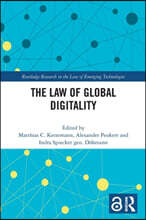
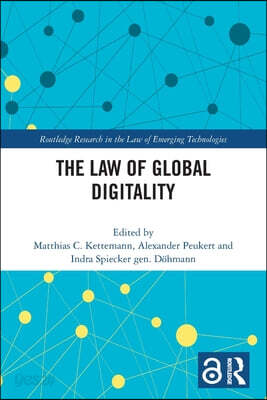
Law of Global Digitality
Paperback, 1st Edition
C. Kettemann, Matthias / Peukert, Alexander / Spiecker Gen Döhmann, Indra
Routledge
2024.01.29.
이미 소장하고 있다면 판매해 보세요.
- 국내배송만 가능
- 해외 거래처 사정에 의하여 품절/지연 가능
- 도서 정보 중 미표기 사항 안내?
- 문화비소득공제 가능
Routledge Research in the Law of Emerging Technologies
-
 Regulation of Artificial General Intelligence 이동Regulation of Artificial General Intelligence10% 139,960원
-
Privacy, Data Protection and Data-driven Technologies 이동Privacy, Data Protection and Data-driven Technologies10% 98,790원
-
Legal, Regulatory and Ethical Non-binary Choices of the AI Act 이동Legal, Regulatory and Ethical Non-binary Choices of the AI Act10% 354,070원
-
Regulation of Digital Technologies in the EU 이동Regulation of Digital Technologies in the EU10% 98,790원
-
Privacy, Data Protection and Data-driven Technologies 이동Privacy, Data Protection and Data-driven Technologies10% 483,800원
-
Regulation of Digital Technologies in the EU 이동Regulation of Digital Technologies in the EU10% 354,070원
-
Cryptocurrencies and the Regulatory Challenge 이동Cryptocurrencies and the Regulatory Challenge10% 111,150원
-
Regulating Artificial Intelligence in Industry 이동Regulating Artificial Intelligence in Industry10% 96,730원
책소개
목차
|
List of Contributors Introduction: The Law of Global Digitality ALEXANDER PEUKERT AND MATTHIAS C. KETTEMANN 1 Context, Subject Matter and Aim of This Book 2 Chapter Overview 2.1 Intellectual Property Law 2.2 Data Protection/Privacy 2.3 Consumer Contract Law 2.4 Media Law 2.5 Financial Regulation and Criminal Law PART I Intellectual Property 1 Towards a Legal Methodology of Digitalisation: The Example of Digital Copyright Law THOMAS RIIS AND JENS SCHOVSBO 1 Introduction 1.1 Characteristics of Copyright Law 2 Digitalisation in Action 2.1 Legislating Digitalisation 2.1.1 New Subject-Matter: Sui Generis Regulation or Adaptation of Existing Rules? 2.1.2 Designing Flexibility 2.1.3 Assessment 2.2 Adjudicating Digitalisation 2.2.1 Online Exhaustion 2.2.2 Linking 2.3 Summing Up 3 Methodological Shifts in Legal Digitalisation 3.1 The Shift From Substantive Law to Procedural Law 3.2 The Shift Towards Globalisation 3.3 The Shift Towards Horizontally Based Law 3.4 The Shift From State-Enacted Law to Contract and Code 4 Final Remarks 2 Transnational Intellectual Property Governance on the Internet ALEXANDER PEUKERT 1 Introduction 2 IPR Enforcement 2.1 Takedown Orders of Courts: De Iure and de Facto Effects 2.2 Intermediaries’ Enforcement Measures 2.2.1 The Central Role of Intermediaries 2.2.2 Intermediaries’ Enforcement Measures and Their Transnational Effect 2.2.2.1 Domain Name Registrars 2.2.2.2 Access Providers 2.2.2.3 Host Providers and Search Engines 2.2.2.4 Follow the Money: Advertising and Payment Services 2.2.3 Summary 3 Licensing IPRs 4 Conclusion PART II Data Protection/Privacy 3 The More the Merrier: A Dynamic Approach Learning From Prior Misgovernance in EU Data Protection Law INDRA SPIECKER GEN. DOHMANN 1 Introduction 2 The Historical Approach to Data Protection Law-An Overview 2.1 Goals 2.2 Instruments 3 Reaction of Today’s Data Protection Law to the Challenges of Global Digitality 3.1 Core Regulatory Goals 3.1.1 Data Protection as a Safeguard of Democracy 3.1.2 Power Asymmetry 3.1.3 GDPR as Unifier 3.2 Core Regulatory Instrumental Approach 3.2.1 Precautionary Principle Versus Risk-Based Approach and the Concept of Technological Neutrality 3.2.2 Data Protection Law as Consumer Protection and Fair Competition Law 3.3 Content Regulation 3.3.1 Enforcement Deficit 3.3.2 Territorial Scope 3.3.3 Enforcement of the Enforcement 3.3.4 Internet Regulation 4 Conclusion and Outlook 4 Giving the Invisible Hand a Relatively Free Hand: Data Privacy in the US and the Unfortunate, but Lawful, Commodification of the Person RONALD J. KROTOSZYNSKI, JR. 1 Introduction: The Myriad Cultural and Legal Difficulties of Safeguarding Informational Self-Determination Against Non-Government Actors in the US 2 The First Amendment Will Make Comprehensive Personal Data Protection Laws Difficult to Enact and Enforce 1 3 The Patchwork Quilt of Federal Statutory Privacy Protections and the First Amendment 4 Constitutional Data Privacy Rights, the State Action Doctrine, and the Scope of Constitutional Rights in the US 5 Why Does the US Lack Strong, General Personal Data Protections Against Non-Governmental Entities? 6 Global Digitality, Personal Data Protection, and "The Law of the Horse" 7 Conclusion PART III Consumer Contract Law 5 The Challenge of Globalized Online Commerce for U.S. Contract and Consumer Law CHRISTOPHER G. BRADLEY 1 Introduction 2 A Ragged Patchwork of Consumer Protection Laws, Regulations, and Institutions 3 The Limits of Technological Approaches to Consumer Protection 4 Not Ready to Restate: A Rejected Consumer Contracting "Bargain" 5 Marshaling Doctrinal, Regulatory, and Technological Protections for Consumers in the Digital Age 6 Conclusion 6 Paradigms of EU Consumer Law in the Digital Age FELIX MAULTZSCH 1 Introduction 2 The Market-Centred Approach to Contract Law 3 International Jurisdiction and Conflict of Laws: Connecting Factors 4 Extra-Territorial Application of EU Consumer Law 5 Trends in Substantive EU Sales Law 6 Alternative Means of Dispute Resolution and Enforcement of Consumer Rights 7 Private Governance by Contract and Technology 8 Conclusions PART IV Media Law 7 Law of Digitality: Media Law-U.S. Perspectives ELLEN P. GOODMAN 1 Digital Platform Disclosure Obligations for Political and Commercial Advertising 2 Digital Platform Disclosure Obligations for Deep Fakes and Bots 3 Government Access Obligations Under the First Amendment’s Public Forum Doctrine 4 Digital Platforms’ Exposure to Liability as Publishers and Distributors 4.1 Judicial Interpretations of Section 230 4.1.1 Herrick v. Grindr LLC 4.1.2 Force v. Facebook, Inc. 4.2 Territorial Question 5 Intermediary Liability Reform Proposals 5.1 Ex Post Duty of Care 5.2 Creating Genre-Based Statutory Limitations 5.3 Creating Narrow Content-Based Carve-Outs 5.4 Expanding the Definition of Content "Development" 5.5 "Political Neutrality" Mandates 5.6 Section 230 as Regulatory Leverage 5.7 Requiring User-Identification Procedures 5.8 Knowledge-Based Standard 6 U.S. Initiatives to Counter Disinformation 8 European Media Law in Times of Digitality STEPHAN DREYER, MATTHIAS C. KETTEMANN, WOLFGANG SCHULZ AND THERESA JOSEPHINE SEIPP 1 Introduction 2 The European Communication Order in Digitality 2.1 Media-Specific Legal Instruments 2.2 Sector-Specific Legal Framework 2.2.1 E-Commerce and Electronic Services Law 2.2.2 Telecommunications Law 2.2.3 Contract and Consumer Protection-Related Specifications in the Media Sector 2.2.4 Special Provisions Under Competition Law 2.2.5 Special Provisions Applicable to Intellectual Property Rights 3 Reform of Europe’s Media Order 3.1 The Year of Reform 3.2 Digital Services 3.3 Digital Markets 4 Conclusions PART V Financial Regulation and Criminal Law 9 Regulating Virtual Currencies ROLAND BROEMEL 1 Digital Currencies as a Form of Global Digitality 1.1 Digital Currencies as a Digital Phenomenon 1.1.1 Blockchain as a Specifically Digital Technology 1.1.2 Added Value of Payment Data 1.1.2.1 Data as a Commercial Factor: Cross-Market Business Models 1.1.2.2 Impact on Digital Payment Services and Currencies 1.1.2.3 Development of Digital Ecosystems in Digital Financial Services 1.1.2.4 Ecosystems in Digital Currencies 1.2 Virtual Currencies as a Specifically Global Phenomenon 1.2.1 Technical Factors of Globality 1.2.2 Economic Factors of Globality 1.2.2.1 Exchange Costs and Economic Functions of Money 1.2.2.2 Part of the Network Instead of a Geographical Area 2 Legal Framework of Virtual Currencies 2.1 Adaptation 2.1.1 Banking Supervision Law 2.1.1.1 Virtual Currency as Category: Unit of Account or Crypto Value 2.1.1.2 Regulatory Assessment of the Activities 2.1.2 Stablecoins as E-Money? 2.1.3 Civil Law 2.1.4 Securities Law 2.2 Specific Challenges of Digitality 2.2.1 Prevention of Money Laundering and Financing of Terrorism 2.2.2 Investor and Consumer Protection in the Issuing of Virtual Currencies 2.2.3 Specific Regulatory Requirements for "Value-Referenced Tokens" 3 Conclusion 10 Criminal Law of Global Digitality: Characteristics and Critique of Cybercrime Law BEATRICE BRUNHOBER 1 Defining Criminal Law of Global Digitality 1.1 From Computer Crime to Cybercrime 1.2 Cybercrime Offenses 2 The Challenging Global Dimension of Cybercrime 2.1 Global Challenges 2.2 Approaches to Addressing Global Cybercrime 3 Legislative Approaches 3.1 Distinguishing International From Transnational Criminal Law 3.2 United Nations Measures 3.3 The Council of Europe Convention on Cybercrime 3.4 European Union Framework Decisions and Directives Addressing Cybercrime 3.5 Economic Community of West African States Directive on Fighting Cybercrime 4 Policy Approaches 4.1 United Nations Policy Measures for Addressing Cybercrime 4.2 Regional Policy Strategies for Dealing With Cybercrime 5 Characteristics and Weaknesses of Global Digitality Criminal Law 5.1 Characteristics of Current Global Digitality Criminal Law 5.2 Weaknesses of Present Global Digitality Criminal Law 6 Conclusion Conclusion: The Law of Global Digitality: Findings and Future Research MATTHIAS C. KETTEMANN AND ALEXANDER PEUKERT 1 The Theme 2 The Findings 3 Suggestions for Future Research Index |
관련 분류
품목정보
- 발행일
- 2024년 01월 29일
- 쪽수, 무게, 크기
- 255쪽 | 530g | 160*230*234mm
- ISBN13
- 9781032255507
사락 별점0
혜택 및 유의사항밑줄0
혜택 및 유의사항상품정보안내
직수입외서의 경우, 해외거래처에서 제공하는 정보가 부족하여 제목, 표지, 가격, 유통상태 등의 정보가 미비하거나 변경되는 경우가 있습니다. 정확한 확인을 원하시는 경우, 일대일 상담으로 문의하여 주시면 답변 드리겠습니다.
(판형과 판수 등이 다양한 도서는 찾으시는 도서의 ISBN을 알려 주시면 보다 빠르고 정확한 안내가 가능합니다.)
해외거래처에서 품절인 경우, 2차 거래선을 통해 유럽과 미국 출판사로 직접 수입이 진행될 수 있습니다.
수입 진행 시점으로 부터 2~3주가 추가로 소요되며, 해외에서도 유통이 원활하지 않은 도서는 품절 안내가 지연될 수 있습니다.
해당 경우, 문자와 메일로 별도 안내를 드리고 있사오니 마이페이지에서 휴대전화번호와 메일주소를 다시 한번 확인해주시기 바랍니다.
(판형과 판수 등이 다양한 도서는 찾으시는 도서의 ISBN을 알려 주시면 보다 빠르고 정확한 안내가 가능합니다.)
해외거래처에서 품절인 경우, 2차 거래선을 통해 유럽과 미국 출판사로 직접 수입이 진행될 수 있습니다.
수입 진행 시점으로 부터 2~3주가 추가로 소요되며, 해외에서도 유통이 원활하지 않은 도서는 품절 안내가 지연될 수 있습니다.
해당 경우, 문자와 메일로 별도 안내를 드리고 있사오니 마이페이지에서 휴대전화번호와 메일주소를 다시 한번 확인해주시기 바랍니다.
96,730원
총 1개
96,730원
