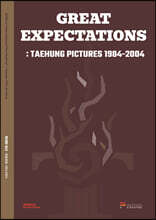

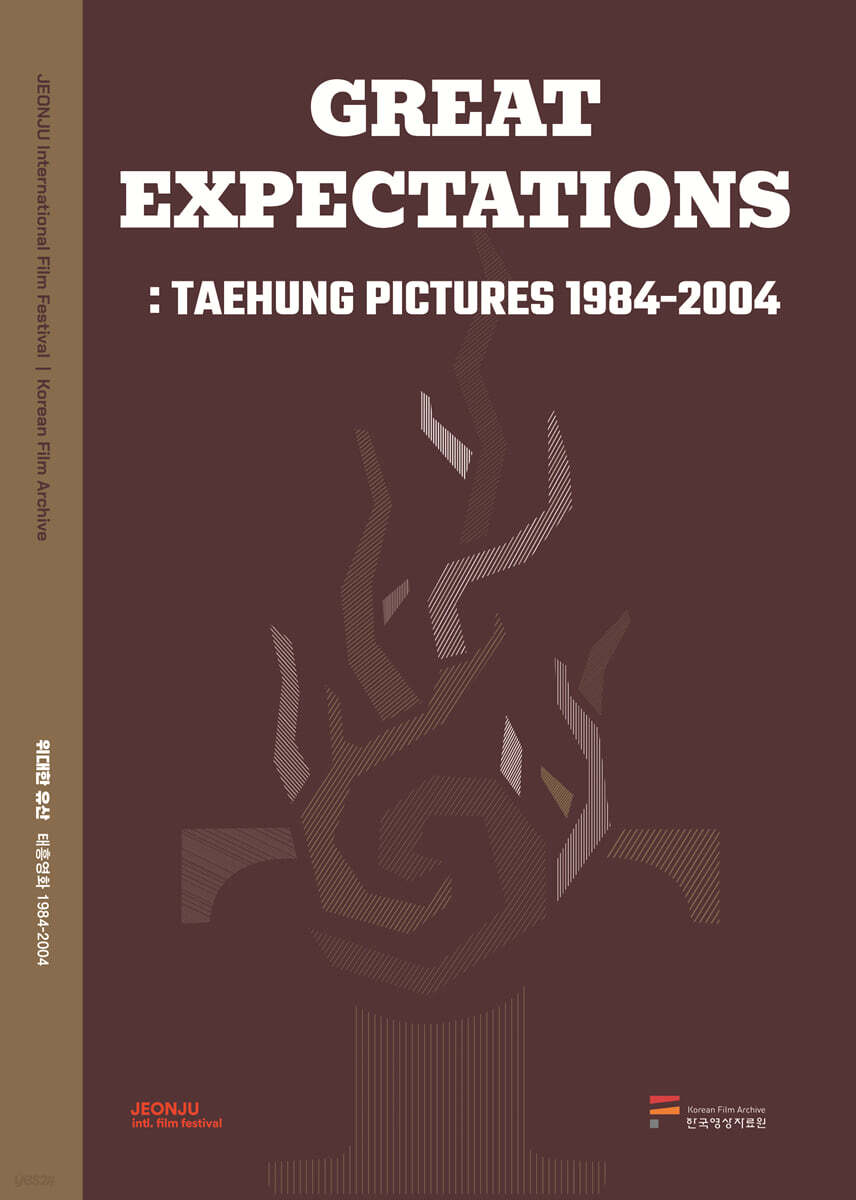
- 본 도서는 『위대한 유산』의 영문판입니다
이미 소장하고 있다면 판매해 보세요.
- 국내배송만 가능
- 문화비소득공제 가능
이 상품의 태그
책소개
목차
|
Publication Remark
Preface _ In Memory of the Late Lee Tae-won | Shim Jae Myung | PART 1 Path of Taehung Pictures A Brief History of Taehung Pictures: A Prestigious Production Company in Chungmuro | Kim Hyung-seok | 019 PART 2 Legacy of Taehung Pictures Korean Films Produced by Taehung Pictures A Spectacular History of Korean Cinema Drawn by a Filmmaker’s Perseverance | Cho Junhyoung | Foreign Films Imported or Distributed by Taehung Pictures An Adventurer to Make Winning Move at the Chaotic Korean Film Scene | Yi Sooyeon | Canceled Film Projects of Taehung Pictures Another Piece of Puzzles Completing the History of Taehung Pictures | Park Jin-hee | Taehung Pictures’ Films Seen from Its Brochures from 〈Between the Knees〉 to 〈Low Life〉 | Park Jin-hee | PART 3 The Age of Taehung and Lee Tae-won In memory of filming scenes of CHIHWASEON The record of Taehung Pictures, the winter in 2001 or the last classical production mode in Korean film history | Jung Sung-il | Film industry colleagues talk about Lee Tae-won and Taehung Pictures “Lee Tae-won himself is a special legacy of the Korean film industry” | Huh Nam-Woong | Reprint of an interview with Lee Tae-won conducted during his lifetime “The Film Industry Is a Playground for the Genius!”| Oh Dongjin · Lee Jihoon | Appendix Taehung Pictures's Chronology Filmography of Taehung Pictures List of Imported and Distributed Films by Taehung Pictures References Index About the author |
저자 소개 2
JEONJU International Film Festival
전주국제영화제는 영화예술의 대안적 흐름과 독립 · 실험 영화의 최전선에 있는 작품들을 소개하고자 2000년에 출범했다. 영화 상영뿐만 아니라 전주시네마프로젝트(JCP)를 통한 제작 지원, 지역영화 지원사업 등을 통해 미래 영화의 주역이 될 재능 있는 영화인을 발굴하고, 전 세계 영화작가들이 만나고 소통할 수 있는 기회를 제공하고 있다. 아울러 《영화는 무엇이 될 것인가》(2021), 《발리우드 너머의 영화들》(2013), 《한국단편영화의 쟁점들》(2007) 등 발간사업도 활발히 진행하고 있다.
Launched in 2000, JEONJU International Film F
전주국제영화제는 영화예술의 대안적 흐름과 독립 · 실험 영화의 최전선에 있는 작품들을 소개하고자 2000년에 출범했다. 영화 상영뿐만 아니라 전주시네마프로젝트(JCP)를 통한 제작 지원, 지역영화 지원사업 등을 통해 미래 영화의 주역이 될 재능 있는 영화인을 발굴하고, 전 세계 영화작가들이 만나고 소통할 수 있는 기회를 제공하고 있다. 아울러 《영화는 무엇이 될 것인가》(2021), 《발리우드 너머의 영화들》(2013), 《한국단편영화의 쟁점들》(2007) 등 발간사업도 활발히 진행하고 있다.
Launched in 2000, JEONJU International Film Festival has introduced alternative currents of film art and films at the forefront of independent and experimental films. In addition to screening films, JEONJU IFF provides opportunities to meet and communicate with film auteurs around the world by discovering talented filmmakers who
will become the leaders of future films through production support via JEONJU Cinema Project (JCP) and local film support programs. In addition, JEONJU IFF has actively published the official books such as WHAT WILL BECOME OF THE CINEMA? (2021), Films Beyond Bollywood (2013), Issues in the Korean Short Films (2007), etc. JEONJU International Film Festival will fulfill its role as a dynamic platform that provides a variety of films to the audience.
Launched in 2000, JEONJU International Film Festival has introduced alternative currents of film art and films at the forefront of independent and experimental films. In addition to screening films, JEONJU IFF provides opportunities to meet and communicate with film auteurs around the world by discovering talented filmmakers who
will become the leaders of future films through production support via JEONJU Cinema Project (JCP) and local film support programs. In addition, JEONJU IFF has actively published the official books such as WHAT WILL BECOME OF THE CINEMA? (2021), Films Beyond Bollywood (2013), Issues in the Korean Short Films (2007), etc. JEONJU International Film Festival will fulfill its role as a dynamic platform that provides a variety of films to the audience.
전주국제영화제의 다른 상품
-
Lee Chang-dong: Films That Never Stop Asking Questions 이동Lee Chang-dong: Films That Never Stop Asking Questions14,400원 10%
Korean Film Archive
한국영상자료원은 한국에서 만들어지고 개봉된 모든 영화의 필름, 시나리오, 포스터 등과 주요한 해외영화, 독립영화, 기타 영상자료를 수집·보존하는 국내 유일의 영상 아카이브 기관. 1974년 필름보관소라는 이름으로 출발해 변화와 발전을 거듭하며 오늘에 이르고 있다. 한국영상자료원은 후대를 위해 자료를 보존하는 곳일 뿐 아니라, 국민들이 쉽고 즐겁게 영상문화를 즐길 수 있도록 한국영화박물관, 시네마테크KOFA, 영상도서관 그리고 온라인상의 다양한 서비스를 운영하고 있다.
The Korean Film Archive is the only national film archive i
한국영상자료원은 한국에서 만들어지고 개봉된 모든 영화의 필름, 시나리오, 포스터 등과 주요한 해외영화, 독립영화, 기타 영상자료를 수집·보존하는 국내 유일의 영상 아카이브 기관. 1974년 필름보관소라는 이름으로 출발해 변화와 발전을 거듭하며 오늘에 이르고 있다. 한국영상자료원은 후대를 위해 자료를 보존하는 곳일 뿐 아니라, 국민들이 쉽고 즐겁게 영상문화를 즐길 수 있도록 한국영화박물관, 시네마테크KOFA, 영상도서관 그리고 온라인상의 다양한 서비스를 운영하고 있다.
The Korean Film Archive is the only national film archive institution in South Korea that collects and preserves films, screenplays, and posters of all films made and released in Korea as well as major foreign films, independent films, and other film-related materials. KOFA started as a film archive in 1974 and has continued to change and develop until today. KOFA is not only a place to preserve materials for future generations but also operates the Korean Film Museum, Cinematheque KOFA, Film Reference Library, and various online services so that people can enjoy film culture with ease and happiness. KOFA aims to contribute to enriching Korea’s film culture both as a paradise for film enthusiasts and a place for film education.
The Korean Film Archive is the only national film archive institution in South Korea that collects and preserves films, screenplays, and posters of all films made and released in Korea as well as major foreign films, independent films, and other film-related materials. KOFA started as a film archive in 1974 and has continued to change and develop until today. KOFA is not only a place to preserve materials for future generations but also operates the Korean Film Museum, Cinematheque KOFA, Film Reference Library, and various online services so that people can enjoy film culture with ease and happiness. KOFA aims to contribute to enriching Korea’s film culture both as a paradise for film enthusiasts and a place for film education.
한국영상자료원의 다른 상품
-
한국영화 100선 : '청춘의 십자로'부터 '헤어질 결심'까지 + 영화잡지 스크린 1984~ 1994 세트 이동한국영화 100선 : '청춘의 십자로'부터 '헤어질 결심'까지 + 영화잡지 스크린 1984~ 1994 세트43,200원 10%


품목정보
- 발행일
- 2022년 04월 28일
- 쪽수, 무게, 크기
- 368쪽 | 170*240*30mm
- ISBN13
- 9791197853418
책 속으로
|
In his last interview in 2012, he said, “Now, my time has passed. I have no intention of making a film again. The one who wins is the one who does it with a do-or-die attitude. You have to make a film with all your heart and without lies.” This seems to be his lifelong clear mindset and attitude toward film. Perhaps this might had been his will that just arrived too quickly.
- p. 15, Shim Jae Myung, 〈Preface: In Memory of the Late Lee Tae-won〉 〈Bhiksuni〉, which ended up being Taehung Pictures’ “canceled foundingwork,” was originally planned by actress Kim Ji-mee. Director Im Kwontaek was supposed to direct the film; as the production schedule continued to be delayed, however, Im Kwon-taek recommended Lee Tae-won to take over the project. Lee Tae-won took over the project after paying for the pre-production cost. 〈Bhiksuni〉, written by Song Gil-han, was the story of a bhuksuni (Buddhist nun) who converted herself to Buddhism to reach nirvana. - p. 32, Kim Hyung-seok, 〈A Brief History of Taehung Pictures: A Prestigious Production Company in Chungmuro〉 As such, Taehung Pictures raised necessary funding in the way of old Chungmuro to produce a film. However, Chungmuro’s topography changed rapidly with the influx of large companies and financial capital in the 1990s. In fact, Samsung Entertainment Group once offered Taehung Pictures 10 billion won worth of production budget, but he refused the proposal, thinking “the know-how is with me even if large companies rushed in” - p. 54, Kim Hyung-seok, 〈A Brief History of Taehung Pictures: A Prestigious Production Company in Chungmuro〉 〈Mulberry〉 has been depreciated just as one of those sexual films, as it became a franchise for 10 years. In fact, the original film was highly praised at the time for its excellent visual aesthetics and narrative structure. It received many awards at major film festivals, including the Best Screenplay at the 24th Daejong Film Awards, the Best Director at the 22nd Baeksang Arts Awards, and the Best Actress and Best Music at the 31st Asia Pacific Film Festival. It was released in Dansungsa in February 1986 and attracted about 137,000 spectators, ranking sixth at the box office that year. - p. 84, Cho Junhyoung, 〈A Spectacular History of Korean Cinema Drawn by a Filmmaker’s Perseverance〉 In the midst of a commotion, Taehung Pictures distributed a total of 11 films imported by 20th Century Fox throughout the country from 〈Black Widow〉 (dir. Bob Rafelson, 1987), released on February 6, 1988, to 〈Home Alone〉 (dir. Chris Columbus, 1990), released on July 6, 1991. And, after the contract with 20th Century Fox expired, Taehung Pictures distributed the films of Columbia Pictures nationwide through indirect distribution. - p. 150, Yi Sooyeon, 〈An Adventurer to Make Winning Move at the Chaotic Korean Film Scene〉 Taehung’s 1980s filmography is filled with films related to the aftermath of stranded 〈Bhiksuni〉, i.e., sexual films such as its founding work 〈Between the Knees〉, 〈Eoh Wu-dong〉, and 〈Mulberry〉, and youth films such as 〈Crazy Boy〉, 〈Bittersweet Night〉, and 〈Springtime of Mimi and Cheol-su〉. As known, the 1980s was an era of awakening as well as of hallucination as in Sim San’s recollection saying, “I threw stones against Chun Doo-hwan’s tyranny during the day while I giggled watching cheap erotic movies produced in line with Chun Doo-hwan’s liberalization policy at night.” - p. 182, Park Jin-hee, 「Another Piece of Puzzles Completing the History of Taehung Pictures〉 “It was during the production of 〈Chihwaseon〉 that there came a very big change in the method of film promotion. At that time, making a good website became a huge issue. For example, just as how to use “metaverse” is an issue these days, the website was important at the time. I put a lot of effort into the website of 〈Chihwaseon〉 and eventually won an award for it. It won the Silver Lion Award in the Film Event Promotion category of the 49th Cannes International Advertising Festival (now the Cannes Lions International Festival of Creativity). The website was constructed with the concept of using the monitor screen as blank paper and drawing on it, and the homepage made use of the characteristics of Korean painting through the effect of ink spreading on the paper.” - p. 246, Park Jin-hee, 〈from 〈Between the Knees〉 to 〈Low Life〉〉 It is too simple to explain the relationship between Taehung Pictures and its CEO, Lee Tae-won. Easy to become somewhat fictional. Is Taehung Pictures an allegory of Lee Tae-won? Or Is Lee Tae-won a metonymy of Taehung Pictures? These questions can’t give any explanation. The relation of the two is linked without the medium - p. 266, JUNG Sung-il, 〈The record of Taehung Pictures, the winter in 2001 or the last classical production mode in Korean film history〉 In the year 2000, when I first worked as a film journalist, a new page was written in the history of Korean cinema. A Korean film, Chunhyang (dir. Im Kwon-taek, 2000), was selected for the competition section of the Cannes International Film Festival for the first time in Korean film history; two years later, Im Kwon-taek, director of Chihwaseon (2002), won the Best Director at the same film festival. In my early days as a reporter, the fact that Korean films were approved and accepted at the best film festivals in the world felt surreal. - p. 283, HUH Nam-woong, 〈Film-industry colleagues talk about Lee Tae-won and Taehung Pictures〉 |
출판사 리뷰
|
영화인들이 말하는 태흥의 유산
2021년 10월 24일, 한국영화계의 거목 이태원 태흥영화사 전 대표가 별세했다. 당시 후배 제작자로서 일간지에 부고 기사를 기고했던 심재명 명필름 대표가 이 책에서도 서문을 담당했다. 이 책은 총 3부로 구성되어 있다. 1부는 ‘태흥영화사가 걸어온 길’로 영화저널리스트 김형석이 태흥영화사와 이태원 대표의 약사를 재구성했다. 2부 ‘태흥영화사가 남긴 것’에서는 한국영상자료원의 조준형, 이수연, 박진희 연구원이 태흥 제작 영화 37편과 태흥 수입 및 배급영화, 태흥 미제작 영화를 각종 자료와 함께 정리했다. ‘홍보’로도 유명했던 태흥이 제작한 올컬러 전단 자료가 볼거리다. 3부는 ‘영화인들이 말하는 태흥과 이태원의 시대’이다. 2001년 당시 〈취화선〉의 촬영 현장을 방문해 《씨네21》에 취재기를 남겼던 정성일 평론가가 당시를 회상하며 태흥 ‘모델’이 현재의 영화계에 남긴 과제를 고찰한 글부터, 허남웅 평론가가 태흥영화사 식구들과 태흥에서 작업했던 임권택·정일성·김수철·배창호·장선우·김홍준 등의 영화인을 인터뷰한 글, 이태원 회장 생전 《필름2.0》 인터뷰를 재록한 글까지 태흥영화사와 이태원의 진면목을 파악할 수 있는 세 편의 글이 담겨 있다. 그 밖에 태흥영화사 연보와 태흥 제작영화 목록, 태흥 수입 및 배급영화 목록 등이 부록으로 실렸다 |
사락 별점0
혜택 및 유의사항밑줄0
혜택 및 유의사항
21,600원
총 1개
21,600원