

소득공제
수입
직수입양서
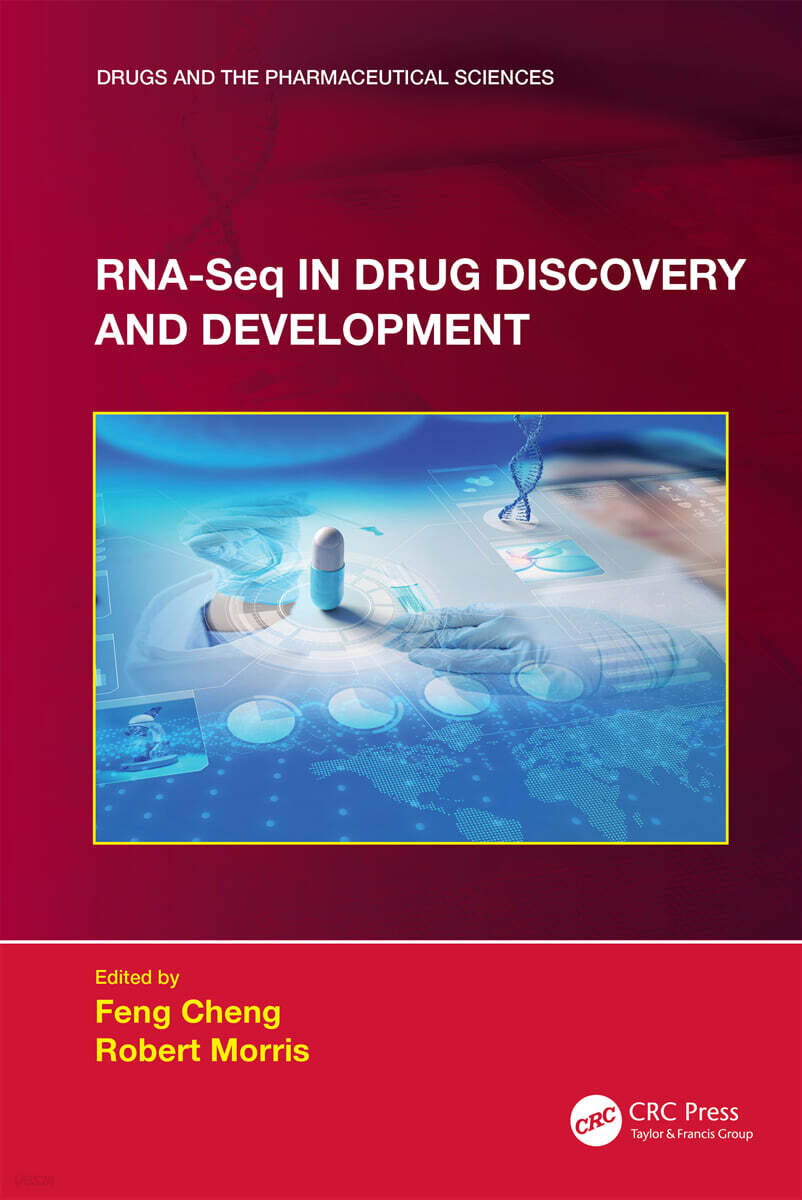
RNA-Seq in Drug Discovery and Development
Paperback, 1st Edition, Illustrations, Color
Feng Cheng,Robert Morri
CRC Press
2024.12.19.
이미 소장하고 있다면 판매해 보세요.
- 국내배송만 가능
- 해외 거래처 사정에 의하여 품절/지연 가능
- 도서 정보 중 미표기 사항 안내?
- 문화비소득공제 가능
Drugs and the Pharmaceutical Sciences
-
 Computer Simulations in the Pharmaceutical Industry 이동Computer Simulations in the Pharmaceutical Industry10% 104,680원
-
Computer Simulations in the Pharmaceutical Industry 이동Computer Simulations in the Pharmaceutical Industry10% 346,330원
-
Brain Drug Delivery for the Treatment of Neurological Disorders 이동Brain Drug Delivery for the Treatment of Neurological Disorders10% 422,880원
-
Pharmaceutical Computer Systems Validation: Two Volume Set 이동Pharmaceutical Computer Systems Validation: Two Volume Set10% 765,220원
-
Pharmaceutical Computer Systems Validation 이동Pharmaceutical Computer Systems Validation10% 422,880원
-
Pharmaceutical Computer Systems Validation 이동Pharmaceutical Computer Systems Validation10% 422,880원
-
Good Manufacturing Practices for Pharmaceuticals 이동Good Manufacturing Practices for Pharmaceuticals10% 422,880원
-
Principles of Research Methodology and Ethics in Pharmaceutical Sciences 이동Principles of Research Methodology and Ethics in Pharmaceutical Sciences10% 112,740원
-
Good Clinical Practices in Pharmaceuticals 이동Good Clinical Practices in Pharmaceuticals10% 112,740원
-
Pharmaceutical Computer Systems Validation 이동Pharmaceutical Computer Systems Validation10% 382,600원
-
GMP Audits in Pharmaceutical and Biotechnology Industries 이동GMP Audits in Pharmaceutical and Biotechnology Industries10% 112,740원
-
Guide to Particulate Science in Pharmaceutical Product Development 이동Guide to Particulate Science in Pharmaceutical Product Development10% 378,550원
-
Industrial Hygiene in the Pharmaceutical and Consumer Healthcare Industries 이동Industrial Hygiene in the Pharmaceutical and Consumer Healthcare Industries10% 86,570원
-
Good Clinical Practices in Pharmaceuticals 이동Good Clinical Practices in Pharmaceuticals10% 251,690원
책소개
목차
|
Chapter 1: Introduction to RNA-Sequencing and Quality Control 1.1: What is RNA-Sequencing? 1.2. Overview of RNA-sequencing 1.2.1. Isolation of the RNA and RNA quality check 1.2.2 Selection and depletion of particular RNA 1.2.3 Fragmentation 1.2.4 Reverse transcription to generate cDNA and adaptor sequences 1.2.5 Single-end and Pair-end Sequencing 1.3. RNA-seq Sequencing techniques: 1.3.1 Roche 454 1.3.2 Illumina platform 1.3.3 Small-scale RNA-seq platform 1.4. RNA-seq file format 1.4.1 Output file: Fastq file 1.4.2 Mapped file: SAM/BAM/BIGWIG formats 1.4.3 GTF file 1.4.4 BED File 1.5. Quality control of RNA-seq Data 1.5.1 Basic Usage of the Public Server Galaxy 1.5.2 FastQC program 1.6. Advantages of RNA-seq over microarrays 1.7. Summary Chapter 2: Read Alignment and Transcriptome Assembly 2. Introduction 2.1 Transcriptome Assembly Methodology 2.1.1 De novo assembly 2.2 Genome-guided Assembly 2.2.1 Unspliced Aligners: Burrows-Wheeler Transform (BWT) 2.2.2 Unspliced Aligners: Seed Methods 2.3 Spliced Aligners 2.3.1 TopHat 2.3.2 HISAT2 2.3.3 STAR 2.4 Summary Chapter 3: Normalization and Downstream Analyses 3.1 Introduction 3.2 Quantification of Transcript Abundance 3.3 Raw Counts Extraction 3.3.1 Rsubread and featurecounts 3.3.2 Normalization Methods 3.4 Differential gene expression analysis 3.4.1 DESeq2 3.4.2 EdgeR 3.4.3 Ballgown 3.5. Visualization of differential expression 3.5.1 Integrative Genomics Viewer (IGV) 3.5.2 UCSC Genome Browser 3.5.3 Heatmaps 3.5.4 Volcano Plots 3.5.5 DAVID Pathway Analysis 3.6. Summary Chapter 4: Constitutive and Alternative Splicing Events 4.1. Introduction to RNA splicing 4.1.1 What is splicing? 4.1.2 Molecular mechanism of splicing 4.1.3 Alternative Splicing 4.2. Differential splicing analysis 4.2.1 Cuffdiff 2 4.2.2 DiffSplice 4.2.3 DEXSeq 4.2.4 edgeR 4.2.5 LIMMA 4.3. Summary Chapter 5: The role of transcriptomics in identifying fusion genes and chimeric RNAs in cancer 5.1 Introduction to fusion genes 5.1.1 What is a fusion gene? 5.1.2 Mechanisms that generate new fusion genes 5.1.3 Fusion RNA transcripts 5.1.4 The connection between fusion genes and non-coding RNAs 5.2 Detection methods for identification of fusion genes and chimeric proteins 5.2.1 Guided detection approaches 5.2.2 High-throughput sequencing-based detection methods 5.3 Summary Chapter 6: MiRNA and RNA-seq 6.1 Non-coding RNAs 6.2 MiRNAs 6.3 LncRNAs 6.4 miRDeep2 6.5 Applications 6.6 Summary Chapter 7: Toxicogenomics and RNA-seq 7.1 Introduction of toxicity 7.1.1 Traditional toxicity study 7.2 Toxicogenomics 7.2.1 What is Toxicogenomics? 7.2.2 Advantages: Mechanisms and predictive toxicology 7.2.3 Mechanisms of toxicity: 7.2.4 Limitations of toxicogenomics: 7.3 Methods for toxicogenomics data analysis 7.3.1 Identification of Differentially expressed genes 7.3.2 Signature matching 7.3.3 Gene Networks 7.3.4 Co-expression networks 7.4 Toxicogenomics databases 7.4.1 Comparative Toxicogenomics Database (CTD) 7.4.2 Japanese Toxicogenomics Project (TGP) 7.4.3 DrugMatrix 7.5 Comparing microarray vs. RNA-seq 7.6 Summary Chapter 8: Drug Discovery and Traditional Medicine 8.1 Introduction 8.2 What is herbal medicine? 8.2.1 Traditional medicine 8.2.2 Herbal medicine 8.2.3 Use of database for bioactive compound example 8.2.4 Properties of candidate herbal compounds 8.2.5 RNA-seq and herbal medicine 8.3 Mining functional genes of medicinal plants 8.3.1 Mining functional genes of medicinal plants 8.3.2 Discovery of secondary metabolites and their metabolic pathways 8.3.3 Discovery of developmental mechanisms 8.3.4 Development of molecular markers to improve plant breeding 8.3.5 Identification of target genes and molecular mechanisms of herbal drugs 8.3.6 Synergism of herbal compounds in pathway regulation 8.3.7 Herbal medicine toxicity 8.3.8 Natural drug repurposing 8.4 Summary Chapter 9: Single-Cell RNA-sequencing 9. Introduction to single-cell sequencing 9.1 Microdroplet approaches to cell capture 9.2 Non-microfluidic approaches to cell capture 9.3 Single-cell processing: Cell Ranger 9.4 STARsolo 9.5 DropletUtils 9.6 Seurat 9.7 Limitations 9.8 Applications 9.9 Summary |
관련 분류
품목정보
- 발행일
- 2024년 12월 19일
- 쪽수, 무게, 크기
- 266쪽 | 460g | 150*230mm
- ISBN13
- 9781032004099
사락 별점0
혜택 및 유의사항밑줄0
혜택 및 유의사항상품정보안내
직수입외서의 경우, 해외거래처에서 제공하는 정보가 부족하여 제목, 표지, 가격, 유통상태 등의 정보가 미비하거나 변경되는 경우가 있습니다. 정확한 확인을 원하시는 경우, 일대일 상담으로 문의하여 주시면 답변 드리겠습니다.
(판형과 판수 등이 다양한 도서는 찾으시는 도서의 ISBN을 알려 주시면 보다 빠르고 정확한 안내가 가능합니다.)
해외거래처에서 품절인 경우, 2차 거래선을 통해 유럽과 미국 출판사로 직접 수입이 진행될 수 있습니다.
수입 진행 시점으로 부터 2~3주가 추가로 소요되며, 해외에서도 유통이 원활하지 않은 도서는 품절 안내가 지연될 수 있습니다.
해당 경우, 문자와 메일로 별도 안내를 드리고 있사오니 마이페이지에서 휴대전화번호와 메일주소를 다시 한번 확인해주시기 바랍니다.
(판형과 판수 등이 다양한 도서는 찾으시는 도서의 ISBN을 알려 주시면 보다 빠르고 정확한 안내가 가능합니다.)
해외거래처에서 품절인 경우, 2차 거래선을 통해 유럽과 미국 출판사로 직접 수입이 진행될 수 있습니다.
수입 진행 시점으로 부터 2~3주가 추가로 소요되며, 해외에서도 유통이 원활하지 않은 도서는 품절 안내가 지연될 수 있습니다.
해당 경우, 문자와 메일로 별도 안내를 드리고 있사오니 마이페이지에서 휴대전화번호와 메일주소를 다시 한번 확인해주시기 바랍니다.
100,660원
총 1개
100,660원