
소득공제
수입
직수입양서
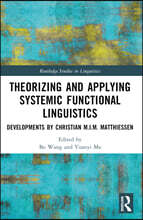
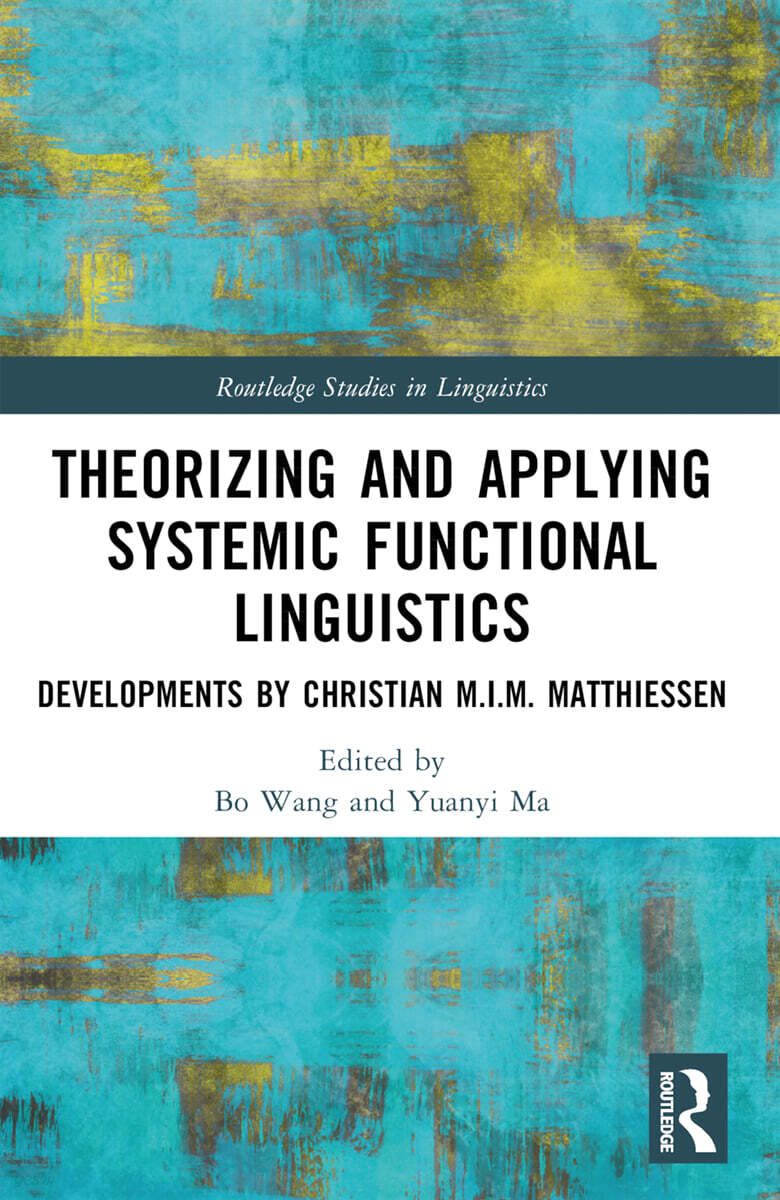
Theorizing and Applying Systemic Functional Linguistics
Developments by Christian M.I.M. Matthiessen
Paperback, 1st Edition
Bo Wang,Yuanyi M
Routledge
2025.05.05.
이미 소장하고 있다면 판매해 보세요.
- 국내배송만 가능
- 해외 거래처 사정에 의하여 품절/지연 가능
- 도서 정보 중 미표기 사항 안내?
- 문화비소득공제 가능
Routledge Studies in Linguistics
-
 Form and Function Mapping in English Syntax 이동Form and Function Mapping in English Syntax10% 363,750원
 -
Independent Wh-Exclamative Constructions in the History of English 이동Independent Wh-Exclamative Constructions in the History of English10% 101,490원
-
Data Analytics for Discourse Analysis with Python 이동Data Analytics for Discourse Analysis with Python10% 101,490원
-
Coordination and the Strong Minimalist Thesis 이동Coordination and the Strong Minimalist Thesis10% 101,490원
-
Theorizing and Applying Systemic Functional Linguistics 이동Theorizing and Applying Systemic Functional Linguistics10% 101,490원
-
Present in Linguistic Expressions of Temporality 이동Present in Linguistic Expressions of Temporality10% 101,490원
-
Discourse Particles in Asian Languages Volume II 이동Discourse Particles in Asian Languages Volume II10% 93,030원
-
Discourse Particles in Asian Languages Volume I 이동Discourse Particles in Asian Languages Volume I10% 93,030원
-
Independent Wh-Exclamative Constructions in the History of English 이동Independent Wh-Exclamative Constructions in the History of English10% 363,750원
-
Data Analytics for Discourse Analysis with Python 이동Data Analytics for Discourse Analysis with Python10% 363,750원
-
Coordination and the Strong Minimalist Thesis 이동Coordination and the Strong Minimalist Thesis10% 363,750원
-
Theorizing and Applying Systemic Functional Linguistics 이동Theorizing and Applying Systemic Functional Linguistics10% 363,750원
-
Present in Linguistic Expressions of Temporality 이동Present in Linguistic Expressions of Temporality10% 363,750원
책소개
목차
|
List of Figures List of Tables List of Contributors Acknowledgements Abbreviations Introduction BO WANG AND YUANYI MA PART I Christian Matthiessen and systemic functional theory 1 Navigating in semiological space: Theory and Matthiessonian cartography, from typology to register and artificial intelligence DAVID G. BUTT AND ANNABELLE LUKIN Preface 1.1 Introduction 1.2 An international troubadour of linguistics 1.3 A “magnum opus” 1.4 Matthiessen and the challenge of linguistic categories 1.5 Grammars, and the centrality of the maps to sciences of society and mind 1.6 Typological and multilingual work 1.7 Realizational systems: Probabilistic, adaptive systems 1.8 Teaching theory 1.9 Managing complexity amid semiotic evolution: Semogenesis 1.10 Conclusion: Linguistics for grown-ups Notes References 2 Christian Matthiessen and register ERICH STEINER 2.1 Introduction 2.2 Register ? situating the concept 2.2.1 Register ? origins in Firthian linguistics and Systemic Functional Linguistics 2.2.2 Register ? its place in SFL architecture 2.2.3 Register ? its place in other linguistic traditions 2.3 Matthiessen and register 2.3.1 Conceptual overviews 2.3.2 Context related to other semiotic systems and individuation/affiliation 2.3.3 A comprehensive research programme: Field-based maps of registers of one language (English) 2.4 Empirical claims and future development Notes References 3 Syllable and syllable onsets: Japanese and English: Some insights inspired by Halliday and Matthiessen’s systemic functional linguistic architecture GERARD O’GRADY 3.1 Introduction 3.2 What would a systemic phonology look like? 3.3 Japanese syllables and English onsets compared and contrasted 3.4 Conclusion Appendix Notes References PART II Christian Matthiessen and applications of systemic functional theory 4 Systemic Functional Linguistics: Language description, comparison and typology ? Key characteristics CHRISTIAN M.I.M. MATTHIESSEN 4.1 Introduction: SFL and language description, comparison and typology 4.2 Key characteristics of systemic functional language description, comparison and typology 4.2.1 Key characteristics covered in some detail here 4.2.2 Key characteristics only mentioned here 4.3 Theory of language and descriptions of languages 4.3.1 Theory and description: Hjelmslev, Firth, Halliday 4.3.2 Theory of modern language, description, comparison and descriptive generalizations 4.3.3 The theoretical architecture of language: Dimensionality and basis for comparison 4.4 The primacy of systemic organization 4.4.1 An illustration of the primacy of systemic organization: Modern Standard Arabic 4.4.2 Axis: Paradigmatic (systemic) and syntagmatic (structural) 4.4.3 The systemic composition of languages as systems of system 4.4.4 Reinterpretation of implicational “universals” 4.4.5 Frequency in representative typological samples 4.4.6 Multilingual systems networks 4.5 The cline of instantiation and the probabilistic nature of the linguistic system 4.5.1 Probabilistic profiles 4.5.2 Babies taking statistics 4.6 The inherent variability of the linguistic system 4.6.1 Three kinds of variation 4.6.2 Registerial variation 4.6.3 Registerial variation in context: Field of activity 4.6.4 Variation around the languages of the world seen “from above” and “from below”; and also “from roundabout” 4.7 The content plane: The metafunctional spectral organization of language 4.7.1 The status of the metafunctions 4.7.2 Metafunctional modes of meaning: Complementarity and variation 4.7.3 Logical and experiential complementarity 4.7.4 Examples of diversity in the experiential construal of the “Umwelt” of speakers 4.7.5 Metafunctional modes of meaning, modes of expression and media of expression 4.7.6 Variation in metafunctional combinations 4.8 Semogenesis: Lexicogrammaticalization 4.8.1 “Grammaticalization” in the descriptivetypological literature 4.8.2 Towards a systemic functional account of lexicogrammaticalization 4.8.3 Hierarchy of axis ? paradigmatic: decrease in delicacy; rank: descent in rank 4.8.4 Cline of instantiation: Increase in frequency 4.8.5 The spectrum of metafunction: Experiential to interpersonal and textual 4.9 A personal angle 4.10 Conclusion Notes References 5 On language and linguistics in health: Christian Matthiessen and health communication research NEDA KARIMI 5.1 Text generation and health reports 5.2 A socio-semiotic framework for conceptualizing patientcentered care 5.2.1 Patient-centered care 5.2.2 Matthiessen’s (2013) socio-semiotic model 5.3 The patient journey and communication load 5.4 Building research capacity and mentorship 5.5 Final remark Note References 6 Christian Matthiessen and verbal art DONNA R. MILLER 6.1 Introduction 6.2 Building on the Halliday?Hasan verbal art cornerstone 6.3 Amplifying and enriching the SFS legacy 6.3.1 Trinocularity 254 6.3.2 Verbal art from the vantage point of the field of activity 6.3.3 The stratal dispersal of literature 6.3.4 The spectrum of metafunction 6.3.5 The cline of instantiation, meaning potential and register vis-a-vis verbal art 6.4 Parting thoughts Acknowledgements Notes References PART III Christian Matthiessen and the global influences of Systemic Functional Linguistics 7 The impact of Christian M.I.M Matthiessen on Systemic Functional Linguistics in Australia ERNEST S. AKEREJOLA 7.1 Introduction 7.2 Matthiessen in the Australian SFL context 7.3 Matthiessen’s crucial role in SFL advancement in Australia 7.4 Matthiessen’s professional commitments 7.4.1 Professor of Linguistics 7.4.2 The provision of tools for modelling SFL description 7.4.3 The foundation of systemic linguistic typological research groups across and beyond Australia 7.4.4 The Matthiessonian approach 7.4.5 The successful building of the SFL community 7.4.6 An all-round linguistic scholar and his mentoring strategies 7.4.7 The Matthiessonian teaching and supervision 7.5 Matthiessen’s humane intellectualism 7.5.1 The Matthiessonian modus operandi 7.5.2 Postlude to Matthiessen’s mentorship Notes References 8 Matthiessen in the Latin American SFL community JESUS DAVID GUERRA LYONS 8.1 Introduction 8.2 Methodology 8.3 Findings 8.3.1 Quantitative indicators 8.3.2 Qualitative indicators 8.4 Concluding remarks Notes References 9 Christian Matthiessen and Systemic Functional Linguistics in Europe JORGE ARUS-HITA 9.1 Introduction 9.2 Early years: Matthiessen in Sweden 9.3 Influence of Matthiessen’s research 9.4 Specific collaborations 9.5 Christian and Michael 9.6 Conclusion Acknowledgments References Index |
품목정보
- 발행일
- 2025년 05월 05일
- 쪽수, 무게, 크기
- 352쪽 | 640g | 150*230mm
- ISBN13
- 9781032610986
리뷰/한줄평0
상품정보안내
직수입외서의 경우, 해외거래처에서 제공하는 정보가 부족하여 제목, 표지, 가격, 유통상태 등의 정보가 미비하거나 변경되는 경우가 있습니다. 정확한 확인을 원하시는 경우, 일대일 상담으로 문의하여 주시면 답변 드리겠습니다.
(판형과 판수 등이 다양한 도서는 찾으시는 도서의 ISBN을 알려 주시면 보다 빠르고 정확한 안내가 가능합니다.)
해외거래처에서 품절인 경우, 2차 거래선을 통해 유럽과 미국 출판사로 직접 수입이 진행될 수 있습니다.
수입 진행 시점으로 부터 2~3주가 추가로 소요되며, 해외에서도 유통이 원활하지 않은 도서는 품절 안내가 지연될 수 있습니다.
해당 경우, 문자와 메일로 별도 안내를 드리고 있사오니 마이페이지에서 휴대전화번호와 메일주소를 다시 한번 확인해주시기 바랍니다.
(판형과 판수 등이 다양한 도서는 찾으시는 도서의 ISBN을 알려 주시면 보다 빠르고 정확한 안내가 가능합니다.)
해외거래처에서 품절인 경우, 2차 거래선을 통해 유럽과 미국 출판사로 직접 수입이 진행될 수 있습니다.
수입 진행 시점으로 부터 2~3주가 추가로 소요되며, 해외에서도 유통이 원활하지 않은 도서는 품절 안내가 지연될 수 있습니다.
해당 경우, 문자와 메일로 별도 안내를 드리고 있사오니 마이페이지에서 휴대전화번호와 메일주소를 다시 한번 확인해주시기 바랍니다.
101,490원
총 1개
101,490원