
소득공제
수입
직수입양서
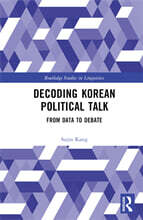
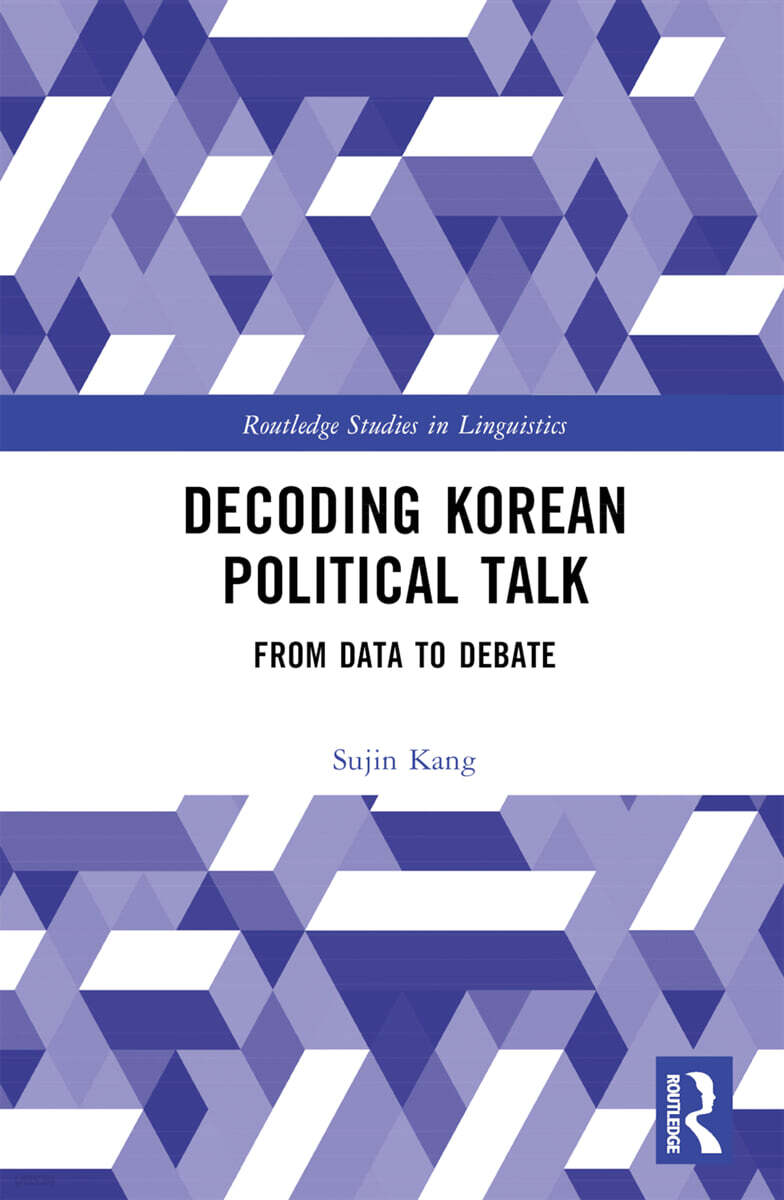
Decoding Korean Political Talk
From Data to Debate
Hardback, 1st Edition
Kang, Sujin
Routledge
2024.09.30.
이미 소장하고 있다면 판매해 보세요.
- 국내배송만 가능
- 해외 거래처 사정에 의하여 품절/지연 가능
- 도서 정보 중 미표기 사항 안내?
- 문화비소득공제 가능
Routledge Studies in Linguistics
-
 Form and Function Mapping in English Syntax 이동Form and Function Mapping in English Syntax10% 363,750원
 -
Independent Wh-Exclamative Constructions in the History of English 이동Independent Wh-Exclamative Constructions in the History of English10% 101,490원
-
Data Analytics for Discourse Analysis with Python 이동Data Analytics for Discourse Analysis with Python10% 101,490원
-
Coordination and the Strong Minimalist Thesis 이동Coordination and the Strong Minimalist Thesis10% 101,490원
-
Theorizing and Applying Systemic Functional Linguistics 이동Theorizing and Applying Systemic Functional Linguistics10% 101,490원
-
Present in Linguistic Expressions of Temporality 이동Present in Linguistic Expressions of Temporality10% 101,490원
-
Discourse Particles in Asian Languages Volume II 이동Discourse Particles in Asian Languages Volume II10% 93,030원
-
Discourse Particles in Asian Languages Volume I 이동Discourse Particles in Asian Languages Volume I10% 93,030원
-
Independent Wh-Exclamative Constructions in the History of English 이동Independent Wh-Exclamative Constructions in the History of English10% 363,750원
-
Data Analytics for Discourse Analysis with Python 이동Data Analytics for Discourse Analysis with Python10% 363,750원
-
Coordination and the Strong Minimalist Thesis 이동Coordination and the Strong Minimalist Thesis10% 363,750원
-
Theorizing and Applying Systemic Functional Linguistics 이동Theorizing and Applying Systemic Functional Linguistics10% 363,750원
-
Present in Linguistic Expressions of Temporality 이동Present in Linguistic Expressions of Temporality10% 363,750원
책소개
목차
|
Table of Contents Preface Introduction Chapter 1. Background 1. Historical Backdrop of Korean Politics and Political Talk 2. Theoretical Foundations 2.1 Interactional Linguistics and Conversation Analysis 2.2. Previous CA Research: Language Dynamics in Institutional Settings 2.3. Previous Research on Korean Political Talk 2.4 Interrogative Structures in Korean Language Part1. Setting the Stage Chapter 2. The Power of Big Data Analytics: Collection, Understanding, and Analysis 1. The Benefits of Big Data Analytics 2. The Data 3. Counting Questions and Answers: Criteria and Analysis 4. A Hybrid Approach 5. Analytical Procedure Chapter 3. Understanding Questions and Answers 1. Questions 1.1 Types of Questions and Their Social Actions 2. Answers 2.1 Response Design: Preferred and Dispreferred Responses 2.2 Repair Part2. Findings Chapter 4. Revelations from Big Data Analytics: Decoding Patterns and Insights 1. Decoding Political Discourse: A Text Mining Approach 1.1 The significance of Parts of Speech (POS) 1.2 The Prevalence of Verbs, Nouns, Adjectives and Adverbs 2. Semantic Network Analysis 3. Sentiment Analysis 4. Exploring Questions: Grammatical Items for Forming Questions 4.1 Overt Interrogative Sentence Endings 4.2 Q-Words 4.3 Declarative Sentence Endings 5. Types of Questions and Their Frequency of Distribution Chapter 5. Questions and Their Responses 1. Introduction 2. Major Questions and Their Answers 2.1 Type A: Positive Polar Questions 2.2 The Most Frequent Polar Questions -c(i)yo 2.3 Type B:Wh-Questions 2.4. Type C: Negative Questions 2.5 Conclusion 3. Minor Questions and Their Answers 3.1 Type D: Rhetorical Questions 3.2 Type E: Declarative Questions 3.3 Type F: Alternative Questions 3.4 Conclusion Chapter 6. Conclusion 1. Findings 2. Limitations and Further Studies |
관련 분류
품목정보
- 발행일
- 2024년 09월 30일
- 쪽수, 무게, 크기
- 256쪽 | 650g | 160*230mm
- ISBN13
- 9781032737263
리뷰/한줄평0
상품정보안내
직수입외서의 경우, 해외거래처에서 제공하는 정보가 부족하여 제목, 표지, 가격, 유통상태 등의 정보가 미비하거나 변경되는 경우가 있습니다. 정확한 확인을 원하시는 경우, 일대일 상담으로 문의하여 주시면 답변 드리겠습니다.
(판형과 판수 등이 다양한 도서는 찾으시는 도서의 ISBN을 알려 주시면 보다 빠르고 정확한 안내가 가능합니다.)
해외거래처에서 품절인 경우, 2차 거래선을 통해 유럽과 미국 출판사로 직접 수입이 진행될 수 있습니다.
수입 진행 시점으로 부터 2~3주가 추가로 소요되며, 해외에서도 유통이 원활하지 않은 도서는 품절 안내가 지연될 수 있습니다.
해당 경우, 문자와 메일로 별도 안내를 드리고 있사오니 마이페이지에서 휴대전화번호와 메일주소를 다시 한번 확인해주시기 바랍니다.
(판형과 판수 등이 다양한 도서는 찾으시는 도서의 ISBN을 알려 주시면 보다 빠르고 정확한 안내가 가능합니다.)
해외거래처에서 품절인 경우, 2차 거래선을 통해 유럽과 미국 출판사로 직접 수입이 진행될 수 있습니다.
수입 진행 시점으로 부터 2~3주가 추가로 소요되며, 해외에서도 유통이 원활하지 않은 도서는 품절 안내가 지연될 수 있습니다.
해당 경우, 문자와 메일로 별도 안내를 드리고 있사오니 마이페이지에서 휴대전화번호와 메일주소를 다시 한번 확인해주시기 바랍니다.
363,750원
총 1개
363,750원