
이 상품의 태그













소개
목차
|
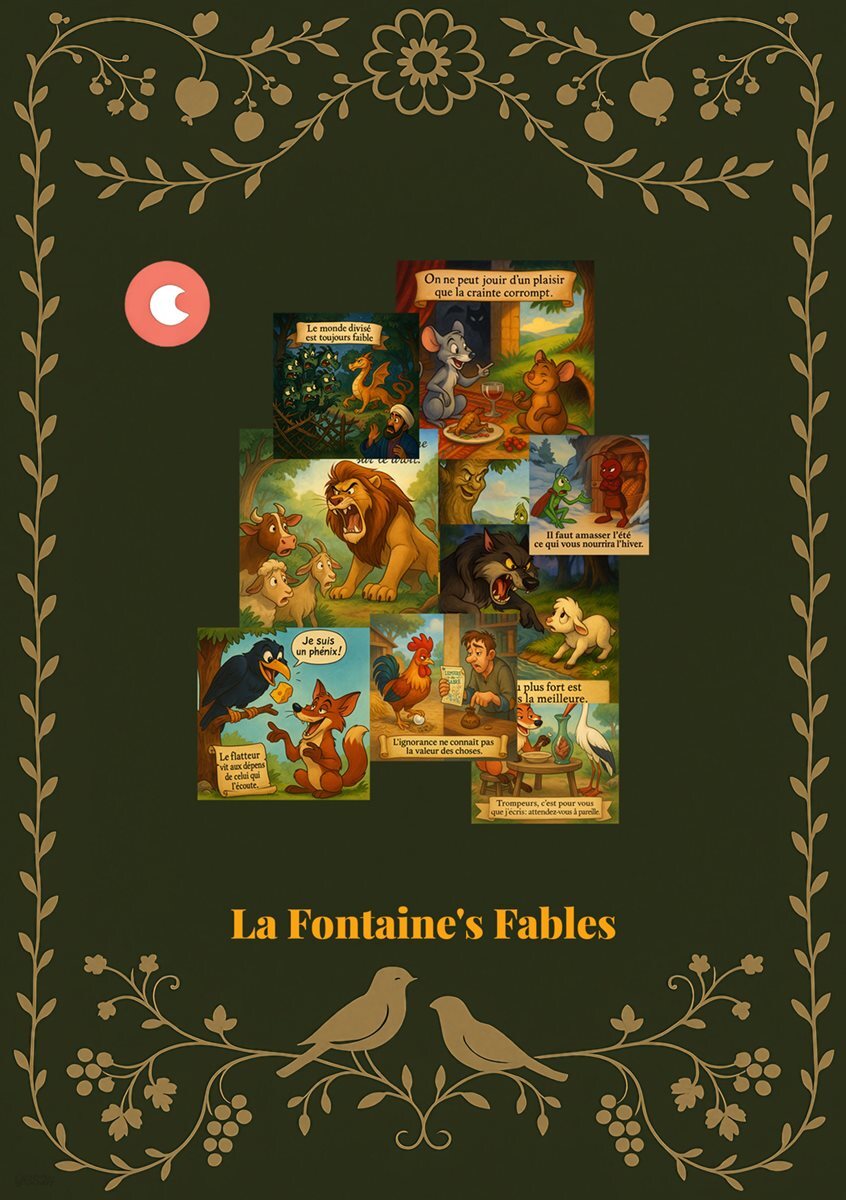
La Fontaine's Fables, Book I
La Fontaine's Fables The Cicada and the Ant The Crow and the Fox The Frog Who Wanted to Be as Big as the Ox The Two Mules The Wolf and the Dog The Heifer, the Goat, and the Sheep in Partnership with the Lion The Bag The Swallow and the Little Birds The Town Rat and the Country Rat The Wolf and the Lamb The Man and His Reflection The Dragon with Many Heads, and the Dragon with Many Tails The Thieves and the Donkey Simonides Saved by the Gods Death and the Unfortunate Man Death and the Woodcutter The Man Between Two Ages and His Two Mistresses The Fox and the Stork The Child and the Schoolmaster The Rooster and the Pearl The Hornets and the Honeybees The Oak and the Reed |
저자 소개
역자: 민현식
번역:
페스카라 이야기
페스카라 이야기 번역노트
자기만의 방 번역노트 I
이런 쇼펜하우어, 고통에 대하여
이런 쇼펜하우어, 여자에 대하여
이런 쇼펜하우어, 자살에 대하여
어린왕자 (Le petit prince 불역)
어린왕자 (The little prince 영역)
어른을 위한 동화, 라퐁텐 이야기 (불한 번역)
어른을 위한 동화, 라퐁텐 이야기 (영한 번역)
어른을 위한 동화, 라퐁텐 이야기 (불영 번역)
ean de La Fontaine (1621?1695) was one of the most influential French poets of the 17th century and is best known for his Fables, which have become classics of world literature. Drawing on sources such as Aesop’s fables, Indian tales like the Panchatantra, and Eastern traditions, La Fontaine transformed these moral stories into elegant French verse, rich in irony, wit, and philosophical insight. His works reflect the complexities of human nature through the voices of talking animals, allowing him to critique society under the guise of simple tales.
Born in Chateau-Thierry in northern France, La Fontaine was originally trained in law but soon turned to literature, gaining the patronage of influential figures such as Nicolas Fouquet and Madame de La Sabliere. His Fables, published in several volumes between 1668 and 1694, span over 240 stories and are considered masterpieces of poetic storytelling. Each fable typically ends with a moral lesson, often targeting the vanity, greed, or hypocrisy of mankind, making them relevant far beyond their original historical context.
Though not a political figure or a courtier, La Fontaine observed the absolutist monarchy of Louis XIV with a keen and critical eye. In 1684, he was elected to the prestigious Academie Francaise, despite some resistance. He died in 1695, but his legacy endures: The Fables are taught in French schools to this day and remain widely read for their timeless wisdom, lyrical beauty, and subtle satire of human behavior.
번역:
페스카라 이야기
페스카라 이야기 번역노트
자기만의 방 번역노트 I
이런 쇼펜하우어, 고통에 대하여
이런 쇼펜하우어, 여자에 대하여
이런 쇼펜하우어, 자살에 대하여
어린왕자 (Le petit prince 불역)
어린왕자 (The little prince 영역)
어른을 위한 동화, 라퐁텐 이야기 (불한 번역)
어른을 위한 동화, 라퐁텐 이야기 (영한 번역)
어른을 위한 동화, 라퐁텐 이야기 (불영 번역)
ean de La Fontaine (1621?1695) was one of the most influential French poets of the 17th century and is best known for his Fables, which have become classics of world literature. Drawing on sources such as Aesop’s fables, Indian tales like the Panchatantra, and Eastern traditions, La Fontaine transformed these moral stories into elegant French verse, rich in irony, wit, and philosophical insight. His works reflect the complexities of human nature through the voices of talking animals, allowing him to critique society under the guise of simple tales.
Born in Chateau-Thierry in northern France, La Fontaine was originally trained in law but soon turned to literature, gaining the patronage of influential figures such as Nicolas Fouquet and Madame de La Sabliere. His Fables, published in several volumes between 1668 and 1694, span over 240 stories and are considered masterpieces of poetic storytelling. Each fable typically ends with a moral lesson, often targeting the vanity, greed, or hypocrisy of mankind, making them relevant far beyond their original historical context.
Though not a political figure or a courtier, La Fontaine observed the absolutist monarchy of Louis XIV with a keen and critical eye. In 1684, he was elected to the prestigious Academie Francaise, despite some resistance. He died in 1695, but his legacy endures: The Fables are taught in French schools to this day and remain widely read for their timeless wisdom, lyrical beauty, and subtle satire of human behavior.
품목정보
- 발행일
- 2025년 05월 20일
- 지원기기
- 크레마,PC(윈도우 - 4K 모니터 미지원),아이폰,아이패드,안드로이드폰,안드로이드패드,전자책단말기(저사양 기기 사용 불가),PC(Mac)
- 파일/용량
- EPUB(DRM) | 6.09MB ?
- 글자 수/ 페이지 수
- 약 2.2만자, 약 0.5만 단어, A4 약 14쪽 ?
- ISBN13
- 9791192812564
- ECN
