
소득공제
수입
직수입양서
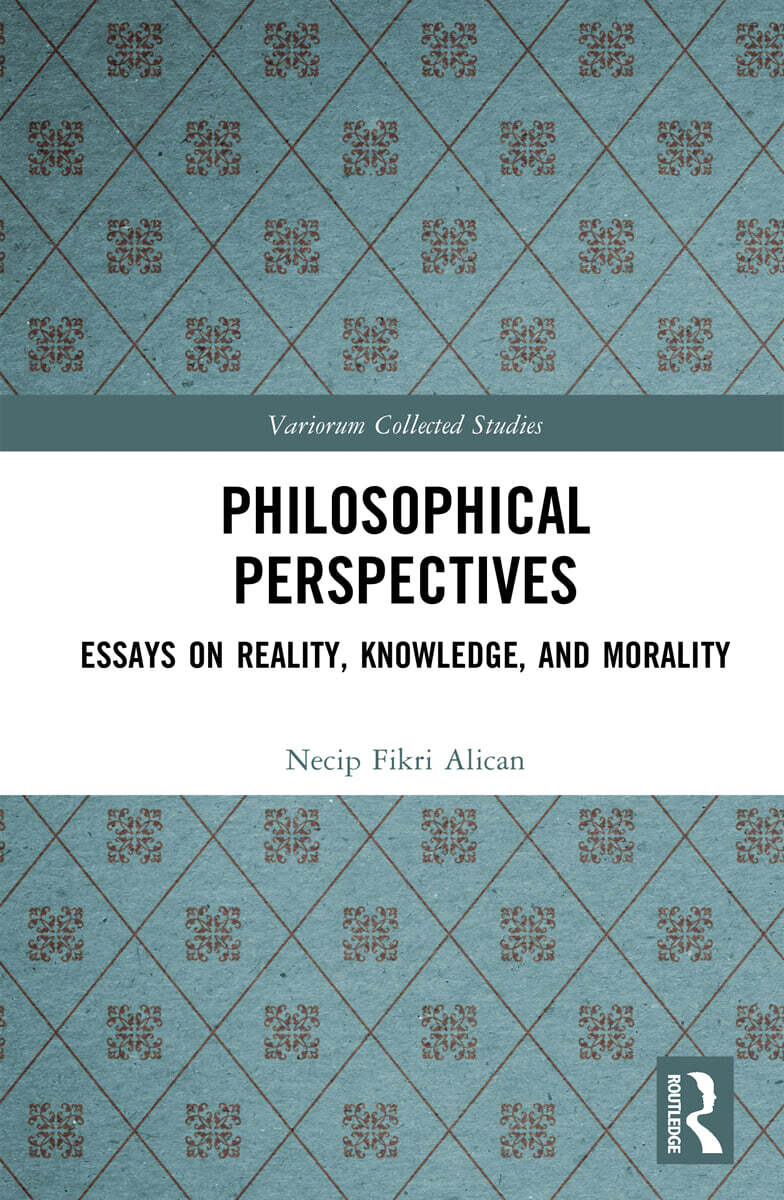
Philosophical Perspectives
Essays on Reality, Knowledge, and Morality
Hardback, 1st Edition
Necip Fikri Alican
Routledge
2026.08.14.
이미 소장하고 있다면 판매해 보세요.
- 국내배송만 가능
- 해외 거래처 사정에 의하여 품절/지연 가능
- 도서 정보 중 미표기 사항 안내?
- 문화비소득공제 가능
Variorum Collected Studies
-
 “And O’er Earth’s Troubled, Angry Sea”: The History of Christian Science in the United States 이동“And O’er Earth’s Troubled, Angry Sea”: The History of Christian Science in the United States10% 96,630원
 -
Women, the Crusades, the Templars and Hospitallers in Medieval European Society and Culture 이동Women, the Crusades, the Templars and Hospitallers in Medieval European Society and Culture10% 96,630원
-
Reflections on Observational Astronomy in the Medieval Islamic Period 이동Reflections on Observational Astronomy in the Medieval Islamic Period10% 96,630원
-
Medieval Warfare: Technology, Military Revolutions, and Strategy 이동Medieval Warfare: Technology, Military Revolutions, and Strategy10% 96,630원
-
Continuity and Rupture in the Long Middle Ages 이동Continuity and Rupture in the Long Middle Ages10% 96,630원
-
Armies and Warfare in Carolingian East Francia and Ottonian Germany 이동Armies and Warfare in Carolingian East Francia and Ottonian Germany10% 346,330원
-
Studies in Music, Words, and Imagery in Early Modern Europe 이동Studies in Music, Words, and Imagery in Early Modern Europe10% 96,630원
-
Mosaics, Empresses and Other Things in Byzantium 이동Mosaics, Empresses and Other Things in Byzantium10% 96,630원
-
Epigraphy and Theory in the Study of Early Islam 이동Epigraphy and Theory in the Study of Early Islam10% 346,330원
-
Italian Merchant Bankers in North-Western Europe in the Late Middle Ages 이동Italian Merchant Bankers in North-Western Europe in the Late Middle Ages10% 346,330원
-
Biblical Exegesis and Mystical Theology in the Venerable Bede 이동Biblical Exegesis and Mystical Theology in the Venerable Bede10% 96,630원
-
Myth and Reality: Studies on the Templars and Hospitallers, Medieval Narratives, and the Trial of the Templars 이동Myth and Reality: Studies on the Templars and Hospitallers, Medieval Narratives, and the Trial of the Templars10% 346,330원
-
Wolfhart Heinrichs' Essays and Articles on Arabic Literature 이동Wolfhart Heinrichs' Essays and Articles on Arabic Literature10% 402,750원
-
Wolfhart Heinrichsʼ Essays and Articles on Arabic Literature 이동Wolfhart Heinrichsʼ Essays and Articles on Arabic Literature10% 96,630원
-
Wolfhart Heinrichs´ Essays and Articles on Arabic Literature 이동Wolfhart Heinrichs´ Essays and Articles on Arabic Literature10% 96,630원
-
Sciences in Islamicate Societies in Context 이동Sciences in Islamicate Societies in Context10% 96,630원
-
From Clovis to Charlemagne: Frankish History and Historians 이동From Clovis to Charlemagne: Frankish History and Historians10% 346,330원
책소개
목차
|
Preface Acknowledgments Introduction: The Love of Wisdom Process Proof Definition Praxis Pedagogy Conclusion 1 Who Mourns for Adonais? Or, Where Have All the Gods Gone? 1.1 Encounter with Adonais 1.2 Methodological Orientation 1.3 Creator Gods 1.4 Ruler Gods 1.5 Progressive Synthesis 1.6 Nostalgic Reminders 1.7 Requiem for Adonais 1.8 Relevance of Precedents: Syncretism or Parallelomania? Appendix: Tables 2 No More This than That: Skeptical Impression or Pyrrhonian Dogma? 2.1 Epistemic Journey 2.2 Evidentiary Context 2.3 Conceptual Perspective 2.4 Practical Perspective 2.5 Deep Disagreement 2.6 Conclusion 3 Fool Me Once, Shame on You, Fool Me Twice, Shame on Me: The Alleged Prisoner’s Dilemma in Hobbes’s Social Contract 3.1 Overview 3.2 Problem 3.3 Analysis 3.4 Solution 3.5 Conclusion 4 Kant’s Neglected Alternative: Neither Neglected nor an Alternative 4.1 Overview 4.2 Problem 4.3 Analysis 4.4 Solution 4.5 Evaluation 4.6 Conclusion 5 What’s So Good About the Good Will? An Ontological Critique of Kant’s Axiomatic Moral Construct 5.1 Overview 5.2 The Good Will as a Qualified Concept 5.3 The Good Will and the Highest Good 5.4 The Problem with Axiomatic Qualification 6 Rawls’s Justification Model for Ethics: What Exactly Does It Justify? 6.1 Overview 6.2 Critical Context 6.3 Application Bias 6.4 System Sterility 6.5 Broader Context 6.6 Conclusion 7 Rawls’s Justification Model for Ethics: What Exactly Justifies the Model? 7.1 Overview 7.2 Critical Context 7.3 Defensive Strategy 7.4 Possible Objections 7.5 Conclusion 8 Angelique: An Angel in Distress, Morality in Crisis 8.1 Overview 8.2 Literary Interpretation 8.3 Philosophical Appraisal 8.4 Critical Reception 8.5 Conclusion Works Cited Index |
관련 분류
품목정보
- 발행일
- 2026년 08월 14일
- 쪽수, 무게, 크기
- 334쪽 | 830g | 160*230mm
- ISBN13
- 9781041245049
사락 별점0
혜택 및 유의사항밑줄0
혜택 및 유의사항상품정보안내
직수입외서의 경우, 해외거래처에서 제공하는 정보가 부족하여 제목, 표지, 가격, 유통상태 등의 정보가 미비하거나 변경되는 경우가 있습니다. 정확한 확인을 원하시는 경우, 일대일 상담으로 문의하여 주시면 답변 드리겠습니다.
(판형과 판수 등이 다양한 도서는 찾으시는 도서의 ISBN을 알려 주시면 보다 빠르고 정확한 안내가 가능합니다.)
해외거래처에서 품절인 경우, 2차 거래선을 통해 유럽과 미국 출판사로 직접 수입이 진행될 수 있습니다.
수입 진행 시점으로 부터 2~3주가 추가로 소요되며, 해외에서도 유통이 원활하지 않은 도서는 품절 안내가 지연될 수 있습니다.
해당 경우, 문자와 메일로 별도 안내를 드리고 있사오니 마이페이지에서 휴대전화번호와 메일주소를 다시 한번 확인해주시기 바랍니다.
(판형과 판수 등이 다양한 도서는 찾으시는 도서의 ISBN을 알려 주시면 보다 빠르고 정확한 안내가 가능합니다.)
해외거래처에서 품절인 경우, 2차 거래선을 통해 유럽과 미국 출판사로 직접 수입이 진행될 수 있습니다.
수입 진행 시점으로 부터 2~3주가 추가로 소요되며, 해외에서도 유통이 원활하지 않은 도서는 품절 안내가 지연될 수 있습니다.
해당 경우, 문자와 메일로 별도 안내를 드리고 있사오니 마이페이지에서 휴대전화번호와 메일주소를 다시 한번 확인해주시기 바랍니다.
346,330원
총 1개
346,330원
