
소득공제
수입
직수입양서
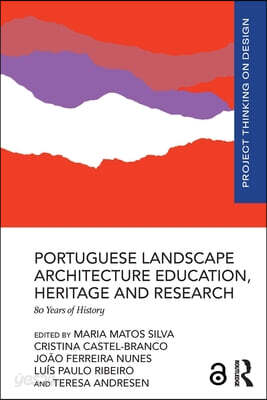
Portuguese Landscape Architecture Education, Heritage and Research
80 Years of History
Paperback, 1st Edition
Andresen, Teresa(EDT)
Routledge
2026.05.22.
이미 소장하고 있다면 판매해 보세요.
- 국내배송만 가능
- 해외 거래처 사정에 의하여 품절/지연 가능
- 도서 정보 중 미표기 사항 안내?
- 문화비소득공제 가능
Project Thinking on Design
-
 Towards a Metropolitan Public Space Network 이동Towards a Metropolitan Public Space Network10% 97,170원
 -
Portuguese Landscape Architecture Education, Heritage and Research 이동Portuguese Landscape Architecture Education, Heritage and Research10% 97,170원
-
Towards a Metropolitan Public Space Network 이동Towards a Metropolitan Public Space Network10% 348,270원
-
Portuguese Landscape Architecture Education, Heritage and Research 이동Portuguese Landscape Architecture Education, Heritage and Research10% 348,270원
책소개
목차
|
List of illustrations List of contributors Acknowledgements Foreword I Bruno Marques Foreword II João Ceregeiro Introduction: Three principles of ecological thinking for an interpretation of Portuguese Landscape Architecture education, heritage, and researchMaria Matos Silva Methodology and review processMaria Matos Silva and Anubhav Goyal PART I Heritage and history of Portuguese Landscape Architecture: A time frame for Landscape ArchitectureTeresa Andresen 1. Historic gardens as cultural heritage. From early debates to future initiatives Teresa Portela Marques and Maria José Curado 2. Gonçalo Ribeiro Telles: Landscape architect, ecologist and politician in Portugal Domingas Vasconcelos, Paulo Farinha-Marques and Francisco Castro Rego 3. Francisco Caldeira Cabral and the "Panorama" magazine: Introducing a landscape conscience in tourist propaganda Gonçalo Duarte Gomes 4. Landscape Architecture education in Portugal and Italy. The pioneering approaches of Francisco Caldeira Cabral and Pietro Porcinai Ludovica Nardella 5. Landscape Architecture in Portugal: The quest for a needed memory Maria João Fonseca 6. Lisbon city gardeners, from horticulture to Landscape Architecture (1840-1960) Cristina Castel-Branco, Ana Raquel Cunha and Ana Luísa Soares 7. From historical research to urban ecology: A new perspective on the evolution of landscape art Ana Raquel Cunha, Maria Manuel Romeiras, Miguel Brilhante, Francisco Castro Rego and Ana Luísa Soares 8. Thirty years of research in green infrastructure and landscape planning Inês Adagói, Natália Cunha, Ana Müller, João Silva, Leonor T. Barata, Manuela R. Magalhães, Selma B. Pena and Luísa Franco PART II A Portuguese context on education and pedagogy in Landscape Architecture: Landscape Architecture: Heading to a comprehensive logical/rational, aesthetic, and ethic approachLuís Paulo Ribeiro 9. Teaching restoration of historical gardens: Research through design experience Cristina Castel-Branco and Sónia Talhé Azambuja 10. Nature-based solutions in the teaching of landscape design by Manuel de Sousa da Câmara Paulo Farinha-Marques 11. The legacy of three generations of architects-professors: Francisco Caldeira Cabral, Manuel de Sousa da Câmara, and João Ferreira Nunes Eduardo J.S.C. Pinto 12. Landscape Architecture and urban ecology research as means for knowledge transfer on urban resilience in Maputo, Mozambique Ana Beja da Costa 13. Breaking siloes and embracing the future: Western and Indigenous lenses in the education of landscape architects Bruno Marques and Jacqueline McIntosh 14. From the concept of cultural landscape to its application in conservation policies and higher education in Portugal Raquel Carvalho, Teresa Portela Marques and Cristina Castel-Branco Part III Portuguese perspectives on theory and methods in Landscape Architecture. Theory versus circumstances: The Help of Methods in Landscape ArchitectureCristina Castel-Branco 15. In between revolutions: Drivers of landscape change in Interior Alentejo from the Liberal Revolution to the April Revolution Isabel Martinho da Silva 16. Urban adaptation strategy for the Tinto riverscape, at watershed scale, towards its multifunctionality and hydrological resilience-impacts and governance challenges Diana T. Fernandes, Maria José Curado and Rodrigo Maia 17. Diversity of street trees in Lisbon, towards city sustainability Ana Luísa Soares, Leónia Nunes, Inês Duarte, Ana Júlia Francisco, Davide Gaião, Francisco Castro Rego and Susana Dias 18. Contributions to the integration of socio-cultural landscape assessment methods in the learning process Lígia Vaz de Figueiredo, Isabel Loupa Ramos, Maria da Graça Saraiva and Fátima Bernardo 19. Multiscalarity, interdisciplinarity, and research-by-design towards a metropolitan landscape Ana Beja da Costa, Wim Wambecq and João Rafael Santos PART IV Conclusion: Landscape Architecture and the practice of ecological thinking: Considerations for the next 80 years of history Maria Matos Silva and João Ferreira Nunes Index |
관련 분류
품목정보
- 발행일
- 2026년 05월 22일
- 쪽수, 무게, 크기
- 308쪽 | 630g | 160*230mm
- ISBN13
- 9781032592862
사락 별점0
혜택 및 유의사항밑줄0
혜택 및 유의사항상품정보안내
직수입외서의 경우, 해외거래처에서 제공하는 정보가 부족하여 제목, 표지, 가격, 유통상태 등의 정보가 미비하거나 변경되는 경우가 있습니다. 정확한 확인을 원하시는 경우, 일대일 상담으로 문의하여 주시면 답변 드리겠습니다.
(판형과 판수 등이 다양한 도서는 찾으시는 도서의 ISBN을 알려 주시면 보다 빠르고 정확한 안내가 가능합니다.)
해외거래처에서 품절인 경우, 2차 거래선을 통해 유럽과 미국 출판사로 직접 수입이 진행될 수 있습니다.
수입 진행 시점으로 부터 2~3주가 추가로 소요되며, 해외에서도 유통이 원활하지 않은 도서는 품절 안내가 지연될 수 있습니다.
해당 경우, 문자와 메일로 별도 안내를 드리고 있사오니 마이페이지에서 휴대전화번호와 메일주소를 다시 한번 확인해주시기 바랍니다.
(판형과 판수 등이 다양한 도서는 찾으시는 도서의 ISBN을 알려 주시면 보다 빠르고 정확한 안내가 가능합니다.)
해외거래처에서 품절인 경우, 2차 거래선을 통해 유럽과 미국 출판사로 직접 수입이 진행될 수 있습니다.
수입 진행 시점으로 부터 2~3주가 추가로 소요되며, 해외에서도 유통이 원활하지 않은 도서는 품절 안내가 지연될 수 있습니다.
해당 경우, 문자와 메일로 별도 안내를 드리고 있사오니 마이페이지에서 휴대전화번호와 메일주소를 다시 한번 확인해주시기 바랍니다.
97,170원
총 1개
97,170원