
- 국내배송만 가능
- 예약도서와 함께 주문 시 도서 출간일에 함께 배송됩니다. (출판사의 사정으로 출간 지연 가능)
- 해외 거래처 사정에 의하여 품절/지연 가능
- 도서 정보 중 미표기 사항 안내?
- 문화비소득공제 가능
Routledge Frontiers of Political Economy
-
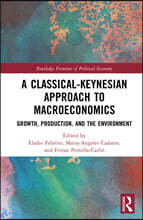
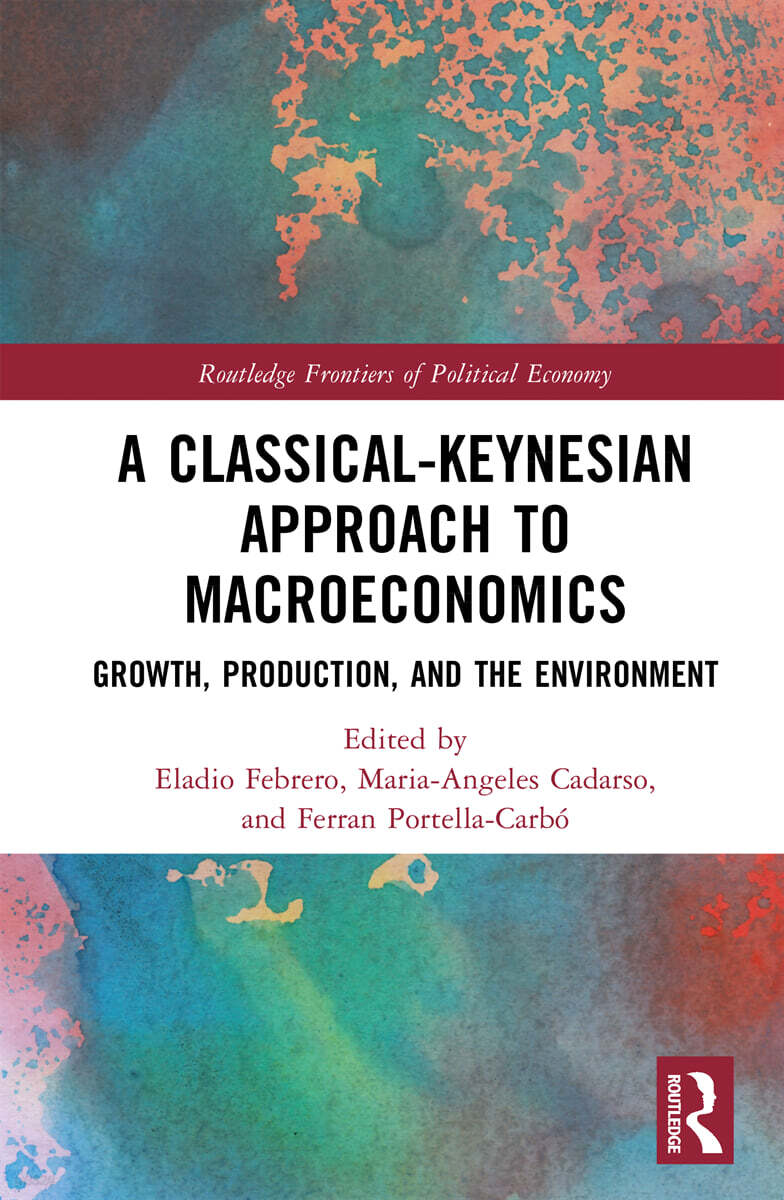
 Classical-Keynesian Approach to Macroeconomics 이동Classical-Keynesian Approach to Macroeconomics10% 346,330원
 -
Marx, the State, and Primitive Accumulation 이동Marx, the State, and Primitive Accumulation10% 346,330원
-
Derivatives and the Transformation of Capitalism 이동Derivatives and the Transformation of Capitalism10% 346,330원
-
Political Economy in the Middle East and North Africa 이동Political Economy in the Middle East and North Africa10% 96,630원
-
Political Economy and Ethics of Debt Financing 이동Political Economy and Ethics of Debt Financing10% 50,310원
-
Government and Economic Growth in the 21st Century 이동Government and Economic Growth in the 21st Century10% 96,630원
-
Economic Populism and Institutional Reform 이동Economic Populism and Institutional Reform10% 96,630원
-
Corruption and the Sustainable Development Goals 이동Corruption and the Sustainable Development Goals10% 346,330원
책소개
목차
|
Introduction. PART ONE: Classical theory of production. The aggregate production function: a consideration of some existential problems. On the meaning of sectoral real value added. A Sraffian view. Are output proportions close to the Perron-Frobenius eigenvector proportions? Evidence from the Spanish wage-goods baskets (2010–2023). PART TWO: The Keynesian principle of effective demand and the Supermultiplier. Autonomous demand-led growth and the Supermultiplier: the theory, the model, and some clarification. Permanent demand, instability, and growth: Óscar Dejuán's contribution to post-Keynesian economics. European fiscal rules, demand-led growth, and the Supermultiplier. Financial constraints and the Supermultiplier: a Stock-Flow Consistent approach. PART THREE: Monetary macroeconomics. The ECB's monetary policy from 2007 to 2018: a long and turbulent decade. Aggregate demand deficiencies, functional finance, and the neutral interest rate. Bank accounting, transparency, and financial stability: lessons from the expected credit loss model. Financial accumulation in a financialised economy: lessons from Spain. PART FOUR: History of economic thought and methodological issues. The legacy of Pierangelo Garegnani. A re-assessment of some debated issues. Adam Smith's System of Natural Liberty: the gravitational force of the "morally restrained self-interest". Reflections on the Classical-Sraffian approach to surplus from an Ecological economics perspective. PART FIVE: Environmental and structural input–output analysis. How much would the Kyoto Protocol have cost households? Choice of techniques for minimising greenhouse-gas emissions: an input–output exercise for the 2020 Mexican economy. Scenarios of carbon emissions savings potential from differences in emissions intensities. Input–output techniques as a key methodology for firm-level carbon footprint calculation. The case of an academic event. Understanding global income inequality (1995–2020) through input–output analysis and vertical integration. Index. |
품목정보
- 발행일
- 2026년 09월 28일
- 쪽수, 무게, 크기
- 386쪽 | 920g | 160*230mm
- ISBN13
- 9781041233923
사락 별점0
혜택 및 유의사항밑줄0
혜택 및 유의사항상품정보안내
(판형과 판수 등이 다양한 도서는 찾으시는 도서의 ISBN을 알려 주시면 보다 빠르고 정확한 안내가 가능합니다.)
해외거래처에서 품절인 경우, 2차 거래선을 통해 유럽과 미국 출판사로 직접 수입이 진행될 수 있습니다.
수입 진행 시점으로 부터 2~3주가 추가로 소요되며, 해외에서도 유통이 원활하지 않은 도서는 품절 안내가 지연될 수 있습니다.
해당 경우, 문자와 메일로 별도 안내를 드리고 있사오니 마이페이지에서 휴대전화번호와 메일주소를 다시 한번 확인해주시기 바랍니다.