
이미 소장하고 있다면 판매해 보세요.
- 국내배송만 가능
- 문화비소득공제 가능
김주호 인문철학총서
이 상품의 시리즈 알림신청
이 상품의 태그
책소개
목차
|
Introduction. The Architecture of Philosophy
Chapter 1. The First Integrated Philosophical Thought-Space (Existence-Will-Cognition Space: Space of Thought-Expression) 1-1. Existentialist Philosophy Kierkegaard, Nietzsche, Heidegger, Sartre, Camus 1-2. Positivist Philosophy Comte, Mach, Carnap 1-3. Universalist Philosophy Plato, Kant, Spinoza, Socrates 1-4. Analytic (Logical-Linguistic) Philosophy Frege, Russell, Wittgenstein 1-5. Enlightenment Philosophy Montesquieu, Voltaire, Rousseau, Diderot, Kant, Adam Smith Chapter 2. The Second Integrated Philosophical Thought-Space ([Anti-Existence]-Will-Cognition Space: Space of Lost Substance) 2-1. Rationalist Philosophy Descartes, Spinoza, Leibniz 2-2. Idealist Philosophy Plato, Berkeley, Kant, Fichte, Schelling, Hegel 2-3. Confucian Philosophy Confucius, Mencius, Xunzi, Zhu Xi, Wang Yangming 2-4. Socialist Philosophy Marx, Engels 2-5. Democratic Philosophy John Locke, Rousseau, Mill 2-6. Value-Ideal Philosophy Plato, Kant, Hegel 2-7. Legalist Philosophy (Rule of Law) Han Feizi, Plato, Hobbes, John Locke, Montesquieu Chapter 3. The Third Integrated Philosophical Thought-Space (Existence-[Anti-Will]-Cognition Space: Space of Powerlessness Toward Truth and Value) 3-1. Pessimist Philosophy Schopenhauer, Nietzsche, Tolstoy 3-2. Eleatic Philosophy Parmenides, Zeno, Xenophanes 3-3. Determinist Philosophy Spinoza, Laplace, Schopenhauer, Zeno Chapter 4. The Fourth Integrated Philosophical Thought-Space ([Anti-Existence]-[Anti-Will]-Cognition Space: Space of Nihilistic Emptiness) 4-1. Daoist Philosophy Laozi, Zhuangzi 4-2. Buddhist Philosophy Śākyamuni, Nāgārjuna, Vasubandhu, Bodhidharma, Huineng 4-3. Stoic Philosophy Zeno, Aurelius, Seneca, Epictetus 4-4. Scholastic Philosophy Anselm, Aquinas, Ockham Chapter 5. The Fifth Integrated Philosophical Thought-Space (Existence-Will-[Anti-Cognition] Space: Space of Latent Cognition) 5-1. Empiricist Philosophy John Locke, Berkeley, Hume 5-2. Utilitarian Philosophy Bentham, John Stuart Mill 5-3. Hedonist Philosophy Epicurus, Aristippus 5-4. Pragmatist Philosophy Peirce, James, John Dewey 5-5. Relativist Philosophy Sophists (Protagoras, Gorgias), Nietzsche, Wittgenstein Chapter 6. The Sixth Integrated Philosophical Thought-Space ([Anti-Existence]-Will-[Anti-Cognition] Space: Space of Hidden Individual Order) 6-1. Skeptical Philosophy Pyrrho, Sextus Empiricus, Montaigne, Zhuangzi, Karl Popper 6-2. Deconstructionist Philosophy Derrida, Foucault 6-3. Postmodern Philosophy Lyotard, Foucault, Deleuze Chapter 7. The Seventh Integrated Philosophical Thought-Space (Existence-[Anti-Will]-[Anti-Cognition] Space: Space of Substantial Unconsciousness) 7-1. Realist Philosophy Aristotle, Aquinas, John Locke, Russell 7-2. Phenomenological Philosophy Husserl, Heidegger, Merleau-Ponty 7-3. Materialist Philosophy Democritus, Epicurus, Lucretius, Marx, Engels 7-4. Psychoanalytic Philosophy Freud, Jung, Lacan Chapter 8. The Eighth Integrated Philosophical Thought-Space ([Anti-Existence]-[Anti-Will]-[Anti-Cognition] Space: Space of Total Collapse) 8-1. Madhyamaka Philosophy Nāgārjuna, Wonhyo, Uisang Chapter 9. Conclusion — The Role and Value of Integrated Philosophy References Appendix |
저자 소개 1
김민준
김주호는 인류 철학을 통합적 관점에서 재해석하고 대중화에 힘쓰는 인문철학자이자 자기성찰적 작가로, "통합사유철학"이라는 독자적인 철학적 접근법을 제안·개척하고 있다. 그의 저술은 인간 존재의 근본적 질문-즉, 우리가 누구이며 어떻게 살아야 하는지-에 대해 탐구하며, 이를 통해 진정한 행복과 자아실현의 길을 모색하도록 독자들을 이끈다.
1. 철학적 체계 구축과 통합사유철학
김주호는 "통합사유철학"이라는 독자적 철학 체계를 제안하며, 2,500년 인류 철학을 3차원 좌표계로 재구성했다. "존재", "의지", "인식"을 기본축으로 삼고, 이들의 반대 개념인 "반존재", "반의지
김주호는 인류 철학을 통합적 관점에서 재해석하고 대중화에 힘쓰는 인문철학자이자 자기성찰적 작가로, "통합사유철학"이라는 독자적인 철학적 접근법을 제안·개척하고 있다. 그의 저술은 인간 존재의 근본적 질문-즉, 우리가 누구이며 어떻게 살아야 하는지-에 대해 탐구하며, 이를 통해 진정한 행복과 자아실현의 길을 모색하도록 독자들을 이끈다.
1. 철학적 체계 구축과 통합사유철학
김주호는 "통합사유철학"이라는 독자적 철학 체계를 제안하며, 2,500년 인류 철학을 3차원 좌표계로 재구성했다. "존재", "의지", "인식"을 기본축으로 삼고, 이들의 반대 개념인 "반존재", "반의지", "반인식"을 도입해 사유의 구조를 입체적으로 분석한다. 이를 통해 플라톤부터 니체까지 다양한 철학 사상을 통합적으로 조명하며, 철학을 "소수의 전문가 영역"에서 "일상적 사유 도구"로 전환하려는 혁신적 시도를 이끌었다.
2. 교육자로서의 활동
그는 철학의 대중화에 주력했다. 다양한 교육 공간에서 《통합사유철학강의》를 진행하며, 인류 사유의 역사를 8개의 공간(예: 사유 표출 공간, 니힐리즘 공간)으로 분류하고, 이를 통해 삶의 방향성을 탐구하는 강의를 펼쳤다. 또한 《고전인문철학수업》 강의에서 《이솝우화》《어린 왕자》《데미안》《국가》《장자》등 문학 작품과 철학을 접목해 인문철학 교육의 접근성을 높였다.
3. 주요 저술 활동
그의 작품 대부분은 인간 존재의 근본적 요소들을 재해석하고, 보다 깊은 자아실현과 행복을 위한 길을 제시하고 있다.
《통합사유철학강의》: 인류 철학을 체계화한 대표작으로, 2014년 초판 출간 이후 널리 보급되었다.
《즐거운 여름밤 서늘한 바람이 알려주는 것들》: 실존적 치유와 자아 성찰을 주제로 한 인문서로, 삶의 허무함을 겪는 독자들에게 희망을 전달한다.
《행복 따위 필요 없다》: 행복을 "삶의 유일한 목표"에서 "부차적 결과"로 격하시킨다.
4. 학문적 비전
그는 철학을 통합적 "삶의 지도"로 재정의하며, "자유 정신적 평등"을 강조한다. 예를 들어, 《통합사유철학강의》에서 "인간의 회복은 자유와 평등한 사유에서 시작된다"고 주장하며, 개인의 자율적 사유를 통한 사회적 치유를 제시한다. 또한 디지털 시대의 교육 혁신을 위해 다양한 기술적 도구와 플랫폼을 활용해 철학 학습의 접근성을 높였다.
· 통합사유철학:
김주호 작가는 인간의 삶을 "존재, 의지, 인식"의 세 가지 축으로 이해하며, 이 세 가지가 조화를 이룰 때 비로소 진정한 행복과 진리가 실현될 수 있다고 본다. 그의 저서들은 이러한 철학적 틀을 바탕으로, 개인이 자신의 내면을 성찰하고 지속적인 연습을 통해 행복에 이르는 방법을 구체적으로 제시한다.
· 실천과 연습의 가치:
그의 저술은 단순한 이론 전달을 넘어서, 행복은 하루아침에 도달하는 것이 아니라 끊임없는 자기 개선과 실천을 통해 서서히 이루어진다는 점을 강조한다. "진리의서" 시리즈에서는 올바른 삶의 자세와 자기 성찰이 어떻게 개인을 변화시키고 내면의 진리를 체득하는지에 대한 구체적인 지침을 제공한다.
· 자기성찰적 접근:
김주호 작가는 잘못된 교육이나 사회가 정해놓은 틀에 갇힌 기존의 인식들을 비판하고, 독자들이 스스로의 경험과 감정을 통해 새로운 진리를 발견할 수 있도록 격려한다. 이를 통해 그는 독자들에게 단순히 행복을 기다리는 수동적인 태도가 아니라, 적극적으로 자신을 재발견하는 과정을 권유합니다.
5. 평가와 영향력
김주호의 작업은 단순한 학문적 연구를 넘어 실천적 철학으로 평가 받는다. 그의 통합적 접근법은 복잡한 철학 개념을 직관적으로 이해할 수 있게 하며, 독자로 하여금 "나는 누구인가?"라는 근본적 질문을 새롭게 탐구하도록 유도한다. 특히 "8개 사유 공간" 이론은 개인의 정신적 혼란을 체계적으로 해석하는 도구로 활용되며, 철학의 실용적 가치를 입증했다. 종합하면, 김주호는 철학을 학문의 경계에서 끌어내어 일상 속 실천으로 연결한 선구자이다. 그의 작업은 인문학의 대중화와 현대 사회의 정신적 회복에 기여하며, 철학적 사유가 지닌 힘을 재발견하게 한다. 김주호 작가의 저술은 단순히 철학적 사유에 머무르지 않고, 우리 각자가 일상 속에서 겪는 불안, 고독, 그리고 혼란을 극복하고 진정한 자아를 회복할 수 있는 실질적인 방법을 제공하는 데 그 의의가 있다. 그의 글은 철학적 깊이와 동시에 따뜻한 위로와 실천적 지침을 함께 담고 있어, 독자들로 하여금 스스로의 삶을 다시 한 번 돌아보고 개선할 수 있는 동기를 부여한다. 김주호는 인문철학과 자기계발의 경계를 넘나들며, 삶의 본질을 탐구하고자 하는 독자들에게 깊은 성찰과 실천적 지혜를 선사하는 작가로 평가받고 있다.
1. 철학적 체계 구축과 통합사유철학
김주호는 "통합사유철학"이라는 독자적 철학 체계를 제안하며, 2,500년 인류 철학을 3차원 좌표계로 재구성했다. "존재", "의지", "인식"을 기본축으로 삼고, 이들의 반대 개념인 "반존재", "반의지", "반인식"을 도입해 사유의 구조를 입체적으로 분석한다. 이를 통해 플라톤부터 니체까지 다양한 철학 사상을 통합적으로 조명하며, 철학을 "소수의 전문가 영역"에서 "일상적 사유 도구"로 전환하려는 혁신적 시도를 이끌었다.
2. 교육자로서의 활동
그는 철학의 대중화에 주력했다. 다양한 교육 공간에서 《통합사유철학강의》를 진행하며, 인류 사유의 역사를 8개의 공간(예: 사유 표출 공간, 니힐리즘 공간)으로 분류하고, 이를 통해 삶의 방향성을 탐구하는 강의를 펼쳤다. 또한 《고전인문철학수업》 강의에서 《이솝우화》《어린 왕자》《데미안》《국가》《장자》등 문학 작품과 철학을 접목해 인문철학 교육의 접근성을 높였다.
3. 주요 저술 활동
그의 작품 대부분은 인간 존재의 근본적 요소들을 재해석하고, 보다 깊은 자아실현과 행복을 위한 길을 제시하고 있다.
《통합사유철학강의》: 인류 철학을 체계화한 대표작으로, 2014년 초판 출간 이후 널리 보급되었다.
《즐거운 여름밤 서늘한 바람이 알려주는 것들》: 실존적 치유와 자아 성찰을 주제로 한 인문서로, 삶의 허무함을 겪는 독자들에게 희망을 전달한다.
《행복 따위 필요 없다》: 행복을 "삶의 유일한 목표"에서 "부차적 결과"로 격하시킨다.
4. 학문적 비전
그는 철학을 통합적 "삶의 지도"로 재정의하며, "자유 정신적 평등"을 강조한다. 예를 들어, 《통합사유철학강의》에서 "인간의 회복은 자유와 평등한 사유에서 시작된다"고 주장하며, 개인의 자율적 사유를 통한 사회적 치유를 제시한다. 또한 디지털 시대의 교육 혁신을 위해 다양한 기술적 도구와 플랫폼을 활용해 철학 학습의 접근성을 높였다.
· 통합사유철학:
김주호 작가는 인간의 삶을 "존재, 의지, 인식"의 세 가지 축으로 이해하며, 이 세 가지가 조화를 이룰 때 비로소 진정한 행복과 진리가 실현될 수 있다고 본다. 그의 저서들은 이러한 철학적 틀을 바탕으로, 개인이 자신의 내면을 성찰하고 지속적인 연습을 통해 행복에 이르는 방법을 구체적으로 제시한다.
· 실천과 연습의 가치:
그의 저술은 단순한 이론 전달을 넘어서, 행복은 하루아침에 도달하는 것이 아니라 끊임없는 자기 개선과 실천을 통해 서서히 이루어진다는 점을 강조한다. "진리의서" 시리즈에서는 올바른 삶의 자세와 자기 성찰이 어떻게 개인을 변화시키고 내면의 진리를 체득하는지에 대한 구체적인 지침을 제공한다.
· 자기성찰적 접근:
김주호 작가는 잘못된 교육이나 사회가 정해놓은 틀에 갇힌 기존의 인식들을 비판하고, 독자들이 스스로의 경험과 감정을 통해 새로운 진리를 발견할 수 있도록 격려한다. 이를 통해 그는 독자들에게 단순히 행복을 기다리는 수동적인 태도가 아니라, 적극적으로 자신을 재발견하는 과정을 권유합니다.
5. 평가와 영향력
김주호의 작업은 단순한 학문적 연구를 넘어 실천적 철학으로 평가 받는다. 그의 통합적 접근법은 복잡한 철학 개념을 직관적으로 이해할 수 있게 하며, 독자로 하여금 "나는 누구인가?"라는 근본적 질문을 새롭게 탐구하도록 유도한다. 특히 "8개 사유 공간" 이론은 개인의 정신적 혼란을 체계적으로 해석하는 도구로 활용되며, 철학의 실용적 가치를 입증했다. 종합하면, 김주호는 철학을 학문의 경계에서 끌어내어 일상 속 실천으로 연결한 선구자이다. 그의 작업은 인문학의 대중화와 현대 사회의 정신적 회복에 기여하며, 철학적 사유가 지닌 힘을 재발견하게 한다. 김주호 작가의 저술은 단순히 철학적 사유에 머무르지 않고, 우리 각자가 일상 속에서 겪는 불안, 고독, 그리고 혼란을 극복하고 진정한 자아를 회복할 수 있는 실질적인 방법을 제공하는 데 그 의의가 있다. 그의 글은 철학적 깊이와 동시에 따뜻한 위로와 실천적 지침을 함께 담고 있어, 독자들로 하여금 스스로의 삶을 다시 한 번 돌아보고 개선할 수 있는 동기를 부여한다. 김주호는 인문철학과 자기계발의 경계를 넘나들며, 삶의 본질을 탐구하고자 하는 독자들에게 깊은 성찰과 실천적 지혜를 선사하는 작가로 평가받고 있다.
김주호의 다른 상품




관련 분류
품목정보
- 발행일
- 2026년 09월 30일
- 쪽수, 무게, 크기
- 400쪽 | 153*224*30mm
- ISBN13
- 9791194648512
출판사 리뷰
|
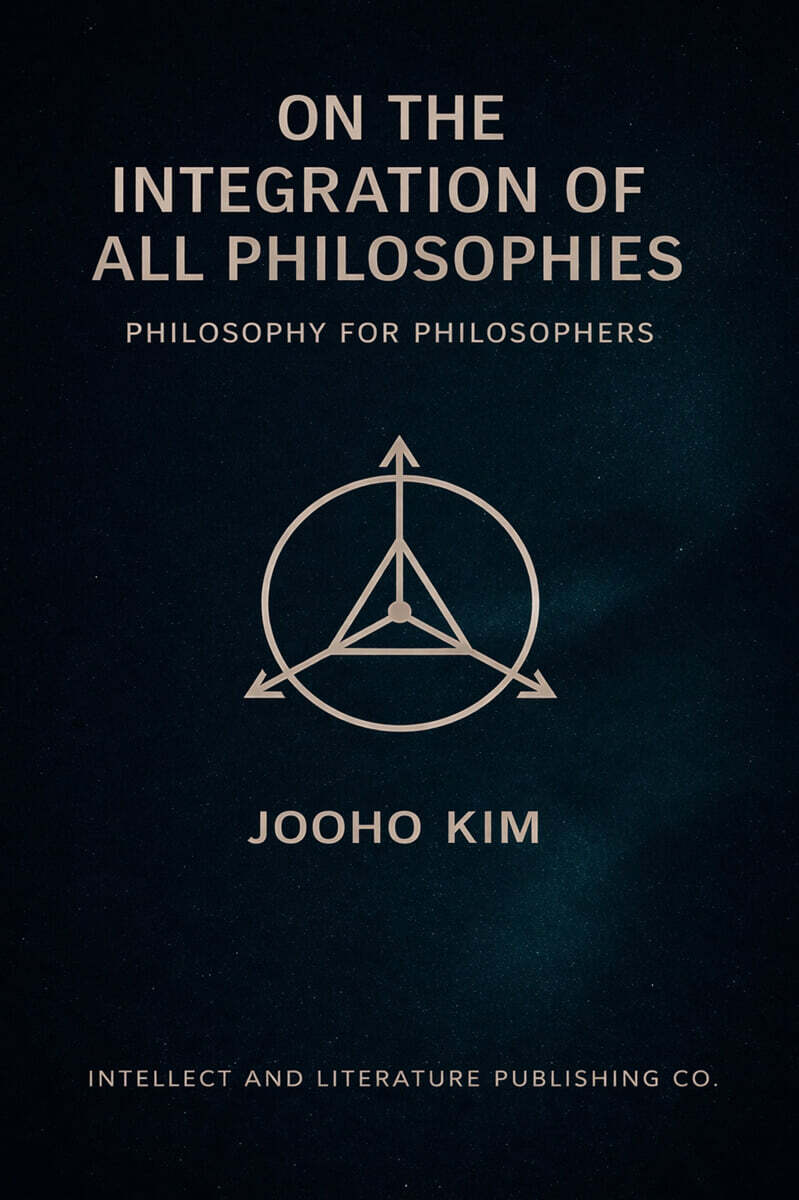
This book is a research work that integrates 2,500 years of philosophical thought. It reorganizes thirty-two major philosophical traditions of humanity within eight spatial domains generated by three axes of thought—Existence vs. Anti-Existence, Will vs. Anti-Will, and Cognition vs. Anti-Cognition. Through this study, I hope that the logical and rational foundations of several essential questions become clearer: why each of us is infinitely precious and fundamentally not different from one another; what we ought to live for and what we ought to pursue; how we may overcome the world; and how we may look upon our lives with greater serenity. May this work lift a part of the dense fog before us and reveal—even if only slightly—the path that leads toward a more luminous hill.
|
사락 별점0
혜택 및 유의사항밑줄0
혜택 및 유의사항
26,100원
총 1개
26,100원
