
상세 이미지

소개
목차
|
서문 | Preface | 2
저자소개 · 판권 | The author & publication | 3 차례 | Contents | 4 001. 포토푀 | Pot-au-feu | 7 002. 뵈프 부르기뇽 | Bœuf bourguignon | 12 003. 코코뱅 | Coq au vin | 17 004. 블랑케트 드 보 | Blanquette de veau | 22 005. 카술레 드 카스텔노다리 | Cassoulet de Castelnaudary | 27 006. 부야베스 마르세예즈 | Bouillabaisse marseillaise | 31 007. 도브 프로방살 | Daube provencale | 36 008. 가르디안 드 토로 | Gardianne de taureau | 41 009. 부리드 세투아즈 | Bourride setoise | 46 010. 코트리아드 브르통 | Cotriade bretonne | 51 011. 마르미트 디에푸아즈 | Marmite dieppoise | 56 012. 슈크루트 가르니 알자시엔 | Choucroute garnie alsacienne | 61 013. 베케오페 | Baeckeoffe | 66 014. 키슈 로렌 | Quiche lorraine | 70 015. 파테 로렌 | Pate lorrain | 75 016. 나바랭 다뇨 | Navarin d’agneau | 80 017. 아시 파르망티에 | Hachis parmentier | 84 018. 풀 오 포 | Poule au pot | 89 019. 포테 오베르냐트 | Potee auvergnate | 94 020. 가르뷔르 베아르네즈 | Garbure bearnaise | 99 021. 콩피 드 카나르 | Confit de canard | 104 022. 마그레 드 카나르 | Magret de canard | 109 023. 풀레 바스케즈 | Poulet basquaise | 114 024. 풀레 발레 도주 | Poulet vallee d’Auge | 119 025. 풀레 오 뱅 존 에 모르유 | Poulet au vin jaune et aux morilles | 124 026. 크넬 드 브로셰 소스 낭튀아 | Quenelles de brochet sauce Nantua | 129 027. 그라탱 드 라비올 뒤 도피네 | Gratin de ravioles du Dauphine | 134 028. 타르티플레트 | Tartiflette | 139 029. 알리고 소시스 | Aligot-saucisse | 144 030. 트립 아 라 모드 드 캉 | Tripes a la mode de Caen | 149 031. 타블리에 드 사푀르 | Tablier de sapeur | 154 032. 피에 에 파케 | Pieds et paquets | 159 033. 포슈즈 부르기뇽 | Pochouse bourguignonne | 164 034. 프티 살레 오 랑티유 | Petit sale aux lentilles | 169 035. 라팽 아 라 무타르드 | Lapin a la moutarde | 174 036. 보 마랑고 | Veau Marengo | 179 037. 아이올리 가르니 | Aioli garni | 184 038. 수프 오 피스투 | Soupe au pistou | 189 039. 피셀 피카르드 | Ficelle picarde | 194 040. 키그 아 파르즈 | Kig ha farz | 199 041. 티엘 세투아즈 | Tielle setoise | 204 042. 브랑다드 드 모뤼 드 님 | Brandade de morue de Nimes | 209 043. 무클라드 샤랑테즈 | Mouclade charentaise | 213 044. 풀라르 드 브레스 드미되유 | Poularde de Bresse demi-deuil | 217 045. 테트 드 보 소스 그리비슈 | Tete de veau sauce gribiche | 222 046. 스테이크 프리트 | Steak frites | 227 047. 크로크 무슈 | Croque-monsieur | 232 048. 잠봉 뵈르 바게트 샌드위치 | Jambon-beurre baguette sandwich | 237 049. 살라드 니수아즈 한 접시 | Salade nicoise meal | 241 050. 브르타뉴 갈레트 콩플레트 | Galette complete bretonne | 246 051. 물 프리트 | Moules-frites in France | 251 052. 알자스 타르트 플랑베 | Tarte flambee alsacienne | 256 053. 사부아 치즈 퐁뒤 한 상 | Fondue savoyarde meal | 261 054. 프랑스 알프스 라클레트 디너 | Raclette dinner in France | 266 055. 양파 수프 그라탱 | Soupe a l’oignon gratinee | 271 056. 프랑스식 로스트치킨과 감자 | Poulet roti et pommes de terre | 276 057. 프랑스식 쿠스쿠스 로얄 | Couscous royal in France | 281 058. 프렌치 타코 | French tacos | 286 059. 프랑스 도시 케밥 프리트 | Kebab-frites in France | 291 060. 파리 팔라펠 피타 샌드위치 | Paris falafel pita sandwich | 296 |
저자 소개 1
삼성그룹공채 34기로 입사하여 삼성전자 본사 전략기획총괄 인사팀에서 국내외 채용 및 인력 경영계획, 노사업무를 담당하였다. 이후 (주)베스트윈을 창업하여 KT 비즈메카 협력사로서 다양한 솔루션을 개발·관리하였으며, (주)조인스 HRD을 창업하여 수도권 6개 대학교에 유학원을 운영하였다. 현재 국제경력개발협회 협회장으로 직무역량제고·창직·창업을 위한 국가민간 자격증 개발 및 교육을 보급하고 있으며, 대학교에서 구글 및 모바일 응용 앱을 융합하는 IT 활용법, 모의면접·취업진로 등 HRD 관련 강의 및 이커머스를 기반으로 하는 창업 홍보 마케팅법 등을 강의하고 있다. 또한 한국비서학
삼성그룹공채 34기로 입사하여 삼성전자 본사 전략기획총괄 인사팀에서 국내외 채용 및 인력 경영계획, 노사업무를 담당하였다. 이후 (주)베스트윈을 창업하여 KT 비즈메카 협력사로서 다양한 솔루션을 개발·관리하였으며, (주)조인스 HRD을 창업하여 수도권 6개 대학교에 유학원을 운영하였다. 현재 국제경력개발협회 협회장으로 직무역량제고·창직·창업을 위한 국가민간 자격증 개발 및 교육을 보급하고 있으며, 대학교에서 구글 및 모바일 응용 앱을 융합하는 IT 활용법, 모의면접·취업진로 등 HRD 관련 강의 및 이커머스를 기반으로 하는 창업 홍보 마케팅법 등을 강의하고 있다. 또한 한국비서학회 산업분과위원장·핸드폰책쓰기코칭협회 본부장으로 활동하고 있다.
저자는 특이한 경력의 소유자다. ‘삼성전자(대기업)+한소프트넷(벤처기업)+창업+겸임교수’ 업무를 경험하였고, 그동안의 경험을 실전 현장인 자동차 금형 제조공장에서 공장장으로 근무하면서 바코드를 활용한 무인화된 재고관리, 구글 계정을 활용한 전자결재 및 중앙 데이터베이스화, 자체 온라인 교육센터 구축 및 평가 보상 체계 마련, 셀프 리더십으로 함께하는 5S3정 시행, 실시간 공정 협업이 실무적으로 가능한 스마트 팩토리 체계 등을 도입하였다.
코로나19 사태로 ‘기업의 패러다임도 바뀌어야 한다.’며 국제경력개발협회 산하 기업역량강화센터를 이러닝으로 구축하여 널리 보급하고자 활동하고 있다.
김익순의 다른 상품
-
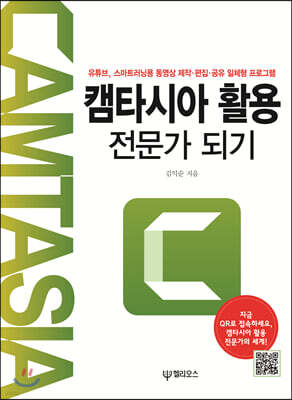
eBook[대여] 캠타시아 활용 전문가 되기 : 유튜브, 스마트러닝용 동영상 제작,편집,공유 일체형 프로그램 이동[대여] 캠타시아 활용 전문가 되기 : 유튜브, 스마트러닝용 동영상 제작,편집,공유 일체형 프로그램12,180원 30%




국제경력개발협회 협회장이자 한국어 교원으로, 언어와 생활문화의 관계를 탐구하는 교육 콘텐츠를 집필하고 있습니다. 삼성전자 본사 전략기획총괄 인사팀에서 쌓은 실무 경험을 바탕으로 사람과 조직, 서로 다른 문화가 만나는 장면에 관심을 기울여 왔습니다. 『한국문화 300』, 『필리핀문화 300』, 『일본문화 300』 등 문화 이해를 돕는 저술과 한국어·스마트워크 교육을 이어가고 있습니다.
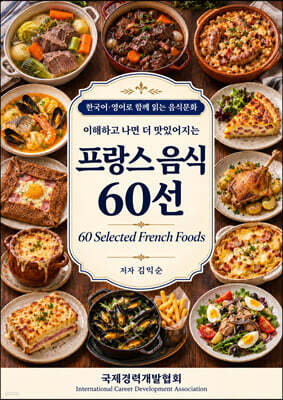
『프랑스 음식 60선』에서는 식탁을 통해 지역의 재료와 생활의 맥락을 읽습니다. 조리 방식과 지역의 기록을 함께 살피고, 한국어와 영어로 식사 경험을 나누는 질문으로 연결합니다.
Kim Ik-soon is President of the International Career Development Association and a Korean-language teacher. His educational writing explores the relationship between language and everyday culture. Drawing on his experience in the Human Resources Team of Samsung Electronics’ Corporate Strategic Planning Office, he has focused on encounters between people, organisations and cultures. His work includes books on Korean, Philippine and Japanese culture, alongside Korean-language and smart-work education.
In 60 Selected French Foods, he explores local ingredients and everyday life through the table. The book connects cooking methods and regional records with questions that encourage readers to share dining experiences in Korean and English.
품목정보
- 발행일
- 2026년 11월 09일
- 지원기기
- 크레마, PC(윈도우 - 4K 모니터 미지원), 아이폰, 아이패드, 안드로이드폰, 안드로이드패드, 전자책단말기(저사양 기기 사용 불가)
- 파일/용량
- PDF(DRM) | 55.55MB ?
- 글자 수/ 페이지 수
- 약 300쪽 ?
- ISBN13
- 9791124956335
출판사 리뷰
|
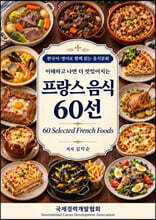
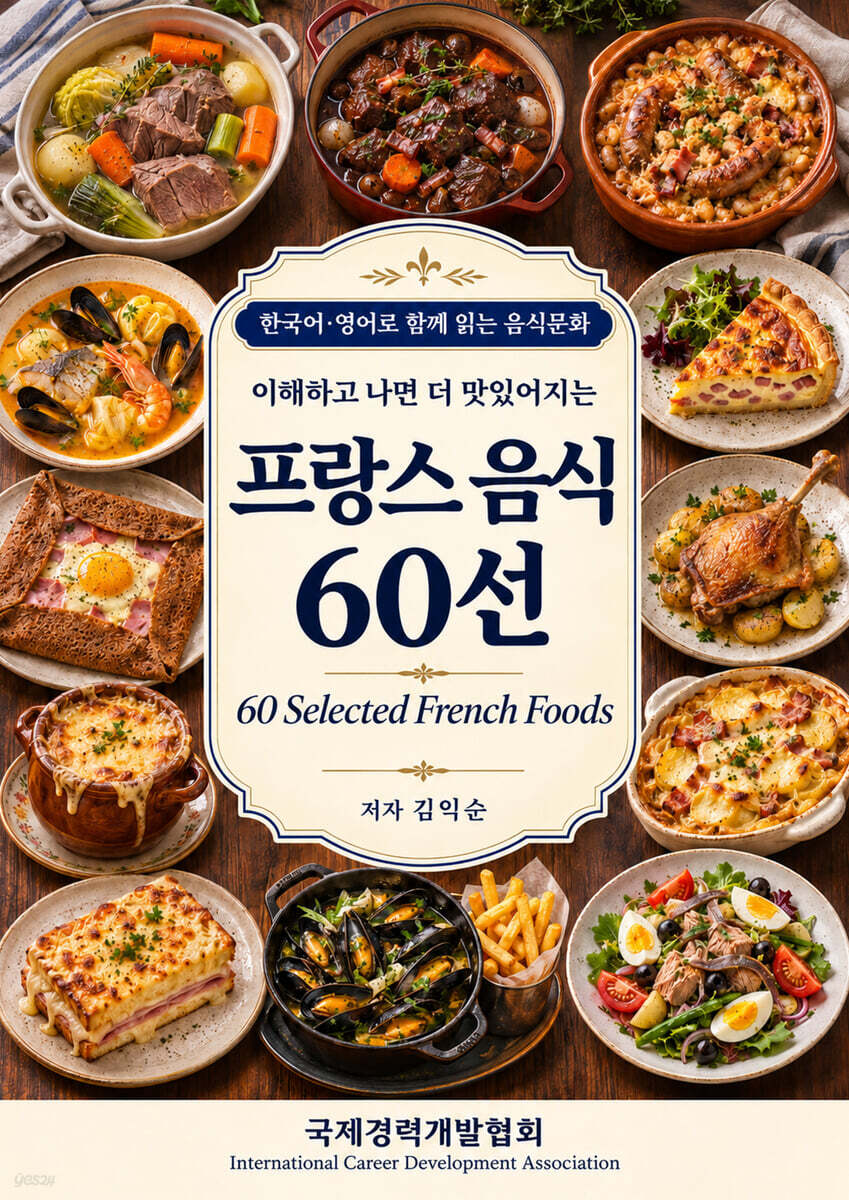
이 책의 설명은 음식 이름을 외우기 전에 접시를 관찰하도록 이끕니다. 포토푀의 맑은 육수와 뵈프 부르기뇽의 진한 소스, 콩피 드 카나르의 오리 다리와 마그레 드 카나르의 가슴살처럼 비슷해 보이는 요리를 가르는 재료와 조리의 차이를 짚습니다. 음식의 생김새, 익힘, 곁들임을 연결하는 서술은 낯선 메뉴를 구체적인 식사 장면으로 이해하는 데 도움이 됩니다.
지역을 설명하는 방식에도 주목할 만한 점이 있습니다. 티엘 세투아즈에서는 이주와 지역화를 함께 살피고, 라클레트에서는 치즈의 산지와 공동 식사의 도구를 구분합니다. 쿠스쿠스와 팔라펠을 포함한 구성은 오늘날 프랑스의 식탁을 여러 공동체의 생활 속에서 읽게 합니다. 하나의 국가명만으로 음식의 기원과 현재 모습을 모두 설명하지 않는 접근입니다. 한국 음식과의 비교는 익숙함을 제공하면서 차이도 남겨 둡니다. 갈비찜, 닭백숙, 메밀전병, 김밥을 떠올리되 두 음식의 역사나 조리법이 같다고 단정하지 않습니다. 토픽 끝의 질문도 상대가 실제로 먹은 음식과 좋아하는 재료를 묻습니다. 문화 설명을 개인의 기억과 취향을 듣는 대화로 이어 간다는 점이 이 책의 활용 방향을 분명하게 보여 줍니다. 문단별 한영 대역은 같은 설명을 두 언어로 대조해 읽기 편리하며, 음식별로 나뉜 60개 토픽은 관심 있는 지역이나 메뉴부터 찾아 읽기에 알맞습니다. 재료와 조리를 식탁의 경험, 지역의 기록과 연결해 읽고 싶은 독자에게 어울리는 구성입니다. The book encourages readers to observe a plate before memorising its name. It identifies differences in ingredients and technique that distinguish seemingly similar dishes: the clear broth of pot-au-feu and the rich sauce of bœuf bourguignon, or the duck leg in confit de canard and the breast in magret de canard. Connecting appearance, cooking and accompaniments helps turn an unfamiliar menu item into a recognisable dining experience. Its treatment of place is also useful. The discussion of tielle setoise considers migration and local adaptation, while the raclette topic distinguishes the cheese’s regional identity from the tools used for a shared meal. Including couscous and falafel allows readers to consider contemporary French tables through the lives of different communities. A country’s name alone is not treated as a complete explanation of a dish’s origins and present form. Comparisons with Korean food offer familiar starting points while retaining differences. Galbijjim, chicken baeksuk, buckwheat rolls and gimbap enter the discussion without implying identical histories or preparation. The closing questions ask about food people have actually eaten and ingredients they enjoy. This movement from cultural explanation to personal memories and preferences gives the book a clear conversational purpose. Paragraph-by-paragraph Korean?English presentation makes it convenient to compare the same explanation in both languages. The 60 separate topics also suit readers who wish to begin with a particular region or menu item. The format serves those interested in connecting ingredients and cooking with dining experiences and regional records. |