


소득공제
수입
직수입양서
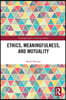
Ethics, Meaningfulness, and Mutuality
Hardback, 1st Edition
Yeoman, Ruth
Routledge
2019.12.02.
이미 소장하고 있다면 판매해 보세요.
- 국내배송만 가능
- 해외 거래처 사정에 의하여 품절/지연 가능
- 도서 정보 중 미표기 사항 안내?
- 문화비소득공제 가능
Routledge Studies in Business Ethics
-
 Approaches to Corporate Social Responsibility 이동Approaches to Corporate Social Responsibility15% 81,760원
 -
Approaches to Corporate Social Responsibility 이동Approaches to Corporate Social Responsibility10% 346,330원
-
Business Ethics After the Global Financial Crisis 이동Business Ethics After the Global Financial Crisis10% 98,640원
-
Business Ethics After the Global Financial Crisis 이동Business Ethics After the Global Financial Crisis10% 346,330원
책소개
목차
|
Preface OVERVIEW The sustainability imperative Motivating humanity A human capability for ethical world-building Meaningfulness and mutuality Towards a philosophy of ethical world-building Organisations and organising Overview of chapters CHAPTER ONE: THE REALM OF VALUES Relational Conception of Values Eudaimonic reflection and cosmopolitan morality Organisational values Values-work Values in ethical organising Moral free space Liberal value pluralism Moral progress Moral imagination Meanings, understanding, and knowledge Common knowledge Changing values CHAPTER TWO: THE MEANINING OF VALUE Value and the sustainability imperative The meaning of value Forms of value Value worth creating Worth Integrative worth and publicness Ethical worlds The life value model Materialist ethics Framing life value organisations Elements of the life value model CHAPTER THREE: MEANINGFULNESS AND MUTUALITY The value of meaningfulness Meaningfulness ? objective, subjective, hybrid Sources of meaning and public meaningfulness Practical reasoning Ethics of care Domination and alienation Mutuality as an organising principle Roots of mutuality Mutuality and reciprocity Constrained and expansive mutuality Dimensions of mutuality Ethical orientations ? fairness, care, flourishing Voice in ethical world-building Structures and institutions Metis ? overcoming muteness and harnessing mutancy CHAPTER FOUR: COLLECTIVE ACTION ? INTEGRITY, PURPOSE, WORK Normatively-desirable collective action Collective moral agents Integrity Emotions and reasons Morally worthy organisations Philosophy of purpose Organisational purpose Aspects of purpose and purposing Work ? complex contribution Agonistic republicanism Consensus and conflict Agonism ? constructive conflict Republicanism ? responsible difference-making CHAPTER FIVE: JUDGING, RESPONSIBILITY, AND AN ETHIC OF CARE Judging as thinking and feeling Objects Concern for objects Bringing objects into view Responsibility to create collective moral agents Duties to organise Responsibilities to ‘see’ others Ethic of care Materialist ethic of care Becoming a self-determining being Ethic of care and systems of social cooperation Separations of distance, culture, and power Supply chains as systems of social cooperation CHAPTER SIX: A PHILOSOPHY OF ETHICAL ORGANISING: JUSTICE, CAPABILTIIES, MEANINGFULNESS Capability justice Social constructivism and justice Seeing ourselves as world-builders Constructing basic structures Contesting ethical worlds A Capability for ethical world-building Individual capabilities Collective capabilities Organisational capabilities Life capabilities Ethical organising at the base-of-the-pyramid CHAPTER SEVEN: THE SOCIETY OF MEANING-MAKERS: DIGNITY, EMPATHY, POWER The society of meaning-makers All affected Mutuality in the society of meaning-makers Creating the moral community Distributed power system Organisational power Relational power Discursive authority CONCLUSION: TOWARDS AN EMPIRICAL RESEARCH AGENDA Bibliography Index |
관련 분류
품목정보
- 발행일
- 2019년 12월 02일
- 쪽수, 무게, 크기
- 258쪽 | 492g | 150*230mm
- ISBN13
- 9780815380405
사락 별점0
혜택 및 유의사항밑줄0
혜택 및 유의사항상품정보안내
직수입외서의 경우, 해외거래처에서 제공하는 정보가 부족하여 제목, 표지, 가격, 유통상태 등의 정보가 미비하거나 변경되는 경우가 있습니다. 정확한 확인을 원하시는 경우, 일대일 상담으로 문의하여 주시면 답변 드리겠습니다.
(판형과 판수 등이 다양한 도서는 찾으시는 도서의 ISBN을 알려 주시면 보다 빠르고 정확한 안내가 가능합니다.)
해외거래처에서 품절인 경우, 2차 거래선을 통해 유럽과 미국 출판사로 직접 수입이 진행될 수 있습니다.
수입 진행 시점으로 부터 2~3주가 추가로 소요되며, 해외에서도 유통이 원활하지 않은 도서는 품절 안내가 지연될 수 있습니다.
해당 경우, 문자와 메일로 별도 안내를 드리고 있사오니 마이페이지에서 휴대전화번호와 메일주소를 다시 한번 확인해주시기 바랍니다.
(판형과 판수 등이 다양한 도서는 찾으시는 도서의 ISBN을 알려 주시면 보다 빠르고 정확한 안내가 가능합니다.)
해외거래처에서 품절인 경우, 2차 거래선을 통해 유럽과 미국 출판사로 직접 수입이 진행될 수 있습니다.
수입 진행 시점으로 부터 2~3주가 추가로 소요되며, 해외에서도 유통이 원활하지 않은 도서는 품절 안내가 지연될 수 있습니다.
해당 경우, 문자와 메일로 별도 안내를 드리고 있사오니 마이페이지에서 휴대전화번호와 메일주소를 다시 한번 확인해주시기 바랍니다.
346,330원
총 1개
346,330원