

이미 소장하고 있다면 판매해 보세요.
- 국내배송만 가능
- 문화비소득공제 가능
상세 이미지

책소개
목차
|
Preface 004
Acclaim for Andrew KIM and ABLE education 012 Praise for 〈Vactor: A Pioneer of Excellence and Prosperity〉 016 Prologue 026 Part I. Space between Stimulus and Response: Decision and Choice Chapter 01. Map to understand the world: Mental Models 1. Perspectives on Human beings 041 1) Psychoanalysis and Behaviorism 041 2) Cognitive Development Theory and “Cognitive Revolution” 045 2. How does the human brain process “information” 046 3. Mental Models (MM) 052 4. Functions of Mental Models 060 5. Mental Models as Lenses, Biases and Tools 065 1) Lenses 066 2) Biases 068 3) Tools 070 6. Hard mental models and Soft mental models 075 Chapter 02. Understanding how the System works 1. Systems and Mental Models 086 1) What is a System? 086 2) System and IPO model 091 3) Little’s Law 093 2. Mechanism of some Systems 100 1) A system called a fan 100 2) “Organizations” and “Corporations” 106 3) Business system 110 4) System called “Capitalism” 112 5) The system of “Money”: Compounding and Leverage 122 Chapter 03. Improvement and Utilization of the System Before started 130 1. How to improve the system 131 1) One Level Higher 131 2) Theory of Constraints 134 3) First principle 141 2. Use of feedback loop 145 1) Understanding feedback loops: some example 147 2) Use of feedback loop 149 3) What well-designed feedback loops have in common 152 3. A system called “Luck” 155 1) Magic potion 156 2) 4 stages of luck and “luck surface area” 156 3) Improving the luck system: 5 ways to increase your “luck surface area”158 Chapter 04. Decision-making methods for value creation Before started 161 1. Making a decision 163 1) Long-term: Regret Minimization 163 2) Medium-term: Pareto Principle 166 3) Short-term: ICE 167 4) Immediate: Eisenhower Matrix 170 2. Systems thinking 171 3. Game theory 180 4. Second-order thinking 187 5. Marginal thinking and sub goals 191 1) Marginal thinking and holistic thinking 191 2) Sub goal 197 6. Numeracy and Analytical Thinking 200 7. Optimization: Linear Programming 207 8. Probabilistic Decision Making 211 1) Bad Decisions but Luck vs. Good decisions but bad luck 214 2) Think Like a Poker Player 215 3) How to think of betting in three steps 215 9. Backwards reasoning 217 10. The 3 stages of decision making and simplification 221 Part II. Competence and Performance Chapter 05. Meta-cognition and Circle of Competence 1. Value creation and Competence 230 2. Competence and Meta-cognition 236 3. Competence and Circle of Competence 247 1) What is the circle of competence? 247 2) If so, how can you find your circle of competence? 251 4. Negative capability 254 Chapter 06. Pareto’s Principle Episode: Reverend John Maxwell 263 1. Non-linear: efforts and results 265 2. Pareto Principle and Performance 268 3. Focus on High-value areas! 276 4. Practice the Pareto Principle! 284 Chapter 07. A Critical Review of the 10,000-hour rule 1. 10,000-Hour rule 287 2. Original source of the 10,000 hour rule 288 3. In-depth review of the 10,000 hour rule: 292 1) When effort and performance are not related. (Luck) 292 2) If the aptitude is not right for you 294 3) When the amount of effort is not enough 297 4) When quality is more important than quantity of effort 298 4. A more realistic alternative for us 299 Part III. Mindsets Chapter 08. Expansion and Strengthening of Competence Before Started 304 1. What’s wrong with staying in your comfort zone? 305 1) If you settle in your comfort zone, there is no growth, but rather stagnation. 305 2) Comfort zone and safety zone are not the same. And the safety zone changes. 308 2. Get out of your comfort zone? 311 1) Model 1: comfort zone → fear zone → learning zone → growth zone 312 2) Model 2: comfort zone → “Stretch zone” → panic zone 314 3) Synthesis of the two models 315 3. Mindset that drives people 321 1) Fixed mindset and Growth mindset 321 2) From limits of Growth mindset to Vactor mindset 323 4. What are the beliefs that give us strength? 328 1) Message from Steve Jobs 329 2) The Grounds and Amazing Power of Beliefs: The Hidden Link to the Growth Mindset (or Vactor Mindset) 332 Further reading: An episode of Dr. Youngwoo Kang 338 Chapter 09. Value creation based on the Plus-sum mindset 1. Competition and Zero-sum 344 2. Plus-sum and Plus-sum mindset 348 3. How to create value? 357 4. How to create value? : Case Study 364 Further reading: 〈One red paperclip〉-from Plus-sum 369 Part IV. Social Networks Chapter 10. The Impact of Social Networks on Success and Prosperity 1. How did Einstein become a celebrity? 384 2. Mixed fortunes of SAMO partners 394 3. Lessons from Einstein and Basquiat 401 4. Social Networks 410 1) Weak ties 410 2) Success formula : “3 Elements of Success, PIE” 415 3) Value network 417 Epilogue 424 |
저자 소개 1
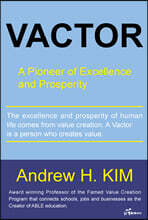
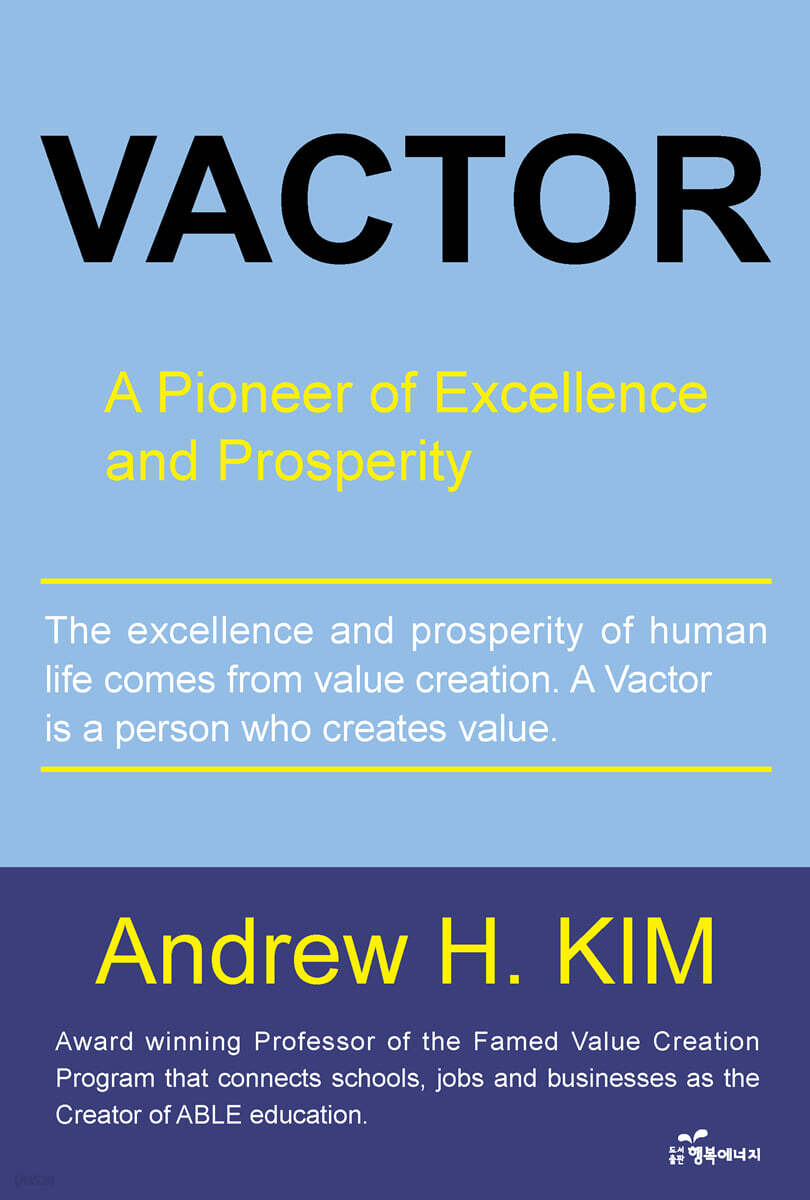
Andrew H. Kim
는 미국 오이코스 대학교의 Vactor Business School 원장으로 재직하고 있다. 해군학사장교(OCS) 보급관으로 군복무를 마쳤다. 행정고시 합격 후 국가안전기획부(現 국가정보원)에 고시 특채되어 분석관과 정보관으로 봉직했다. 산업통상자원부 등 여러 부처의 정책자문위원과 대통령의 지식재산분야 자문위원을 역임했다.
KAIST에서 미래전략과 지식재산을 가르쳤고 2011년 모스크바 국립대학교(MSU) 초빙 교수로 위촉된 이래 러시아 고등경제대학교(HSE) 등 명망 있는 대학에서 강의했고 세계 No.1 교육·학술·연구기관인 중국과학원(CAS) 산하 가상경제 및 데이터과
는 미국 오이코스 대학교의 Vactor Business School 원장으로 재직하고 있다. 해군학사장교(OCS) 보급관으로 군복무를 마쳤다. 행정고시 합격 후 국가안전기획부(現 국가정보원)에 고시 특채되어 분석관과 정보관으로 봉직했다. 산업통상자원부 등 여러 부처의 정책자문위원과 대통령의 지식재산분야 자문위원을 역임했다.
KAIST에서 미래전략과 지식재산을 가르쳤고 2011년 모스크바 국립대학교(MSU) 초빙 교수로 위촉된 이래 러시아 고등경제대학교(HSE) 등 명망 있는 대학에서 강의했고 세계 No.1 교육·학술·연구기관인 중국과학원(CAS) 산하 가상경제 및 데이터과학센터(CAS FEDS)와 공동으로 “중국과학원 지식재산최고위 과정”을 개설하여 역량 있는 지식재산 전문가를 양성했다.
저자는 제네바 국제발명전에서 금상을 수상한 발명가이며, 창업하여 글로벌 유수 기업의 파트너로서 활동한 모험적 기업가일 뿐 아니라 유망한 스타트업들의 성공의 발판과 터전을 만들기도 했다. 교육, 혁신 및 일자리 창출 등 각종 문제를 자문하거나 직접 해결해온 데 이어 이를 심화시켜 개인, 집단, 기업 및 국가 단위의 가치창출을 위한 『ABLE education』으로 집대성하여 국경을 넘어 전파하고 있다.
러시아연방 과학과 예술분야 국가영재인 Altair (Sirius)의 고문으로서 모스크바 국립대와 협력하에 ABLE 프로그램을 교육하고 있다. 러시아연방 다게스탄 국립대의 방문학자이자 러시아연방 다게스탄 국립과학원(Russian Academy of Sciences, Dagestan)의 외국인 회원이며, 러시아 스포츠영웅 Khabib 교육·스포츠재단(ROSSI Foundation)의 고문으로도 활동하고 있다.
Andrew H. KIM is the founder of "ABLE Education.“ He is a renowned HRD & Systems theorist. What he studies is the building of dynamic communities in which individuals can excel and prosper, and sustainable exemplary nations that thrive as a result.
He was engaged in the formulation of national policy at an agency directly under the President of the Republic of Korea. He has served as economic and scientific adviser to several South Korean presidents.
He taught future strategy at KAIST and is a visiting professor at Moscow State University. He has written more than 10 books, including 『Leonardo da Vinci's Perspective』 and 『Work, Money and Bread』
KAIST에서 미래전략과 지식재산을 가르쳤고 2011년 모스크바 국립대학교(MSU) 초빙 교수로 위촉된 이래 러시아 고등경제대학교(HSE) 등 명망 있는 대학에서 강의했고 세계 No.1 교육·학술·연구기관인 중국과학원(CAS) 산하 가상경제 및 데이터과학센터(CAS FEDS)와 공동으로 “중국과학원 지식재산최고위 과정”을 개설하여 역량 있는 지식재산 전문가를 양성했다.
저자는 제네바 국제발명전에서 금상을 수상한 발명가이며, 창업하여 글로벌 유수 기업의 파트너로서 활동한 모험적 기업가일 뿐 아니라 유망한 스타트업들의 성공의 발판과 터전을 만들기도 했다. 교육, 혁신 및 일자리 창출 등 각종 문제를 자문하거나 직접 해결해온 데 이어 이를 심화시켜 개인, 집단, 기업 및 국가 단위의 가치창출을 위한 『ABLE education』으로 집대성하여 국경을 넘어 전파하고 있다.
러시아연방 과학과 예술분야 국가영재인 Altair (Sirius)의 고문으로서 모스크바 국립대와 협력하에 ABLE 프로그램을 교육하고 있다. 러시아연방 다게스탄 국립대의 방문학자이자 러시아연방 다게스탄 국립과학원(Russian Academy of Sciences, Dagestan)의 외국인 회원이며, 러시아 스포츠영웅 Khabib 교육·스포츠재단(ROSSI Foundation)의 고문으로도 활동하고 있다.
Andrew H. KIM is the founder of "ABLE Education.“ He is a renowned HRD & Systems theorist. What he studies is the building of dynamic communities in which individuals can excel and prosper, and sustainable exemplary nations that thrive as a result.
He was engaged in the formulation of national policy at an agency directly under the President of the Republic of Korea. He has served as economic and scientific adviser to several South Korean presidents.
He taught future strategy at KAIST and is a visiting professor at Moscow State University. He has written more than 10 books, including 『Leonardo da Vinci's Perspective』 and 『Work, Money and Bread』
김흥기의 다른 상품

관련 분류
- 카테고리 분류
품목정보
- 발행일
- 2023년 08월 22일
- 쪽수, 무게, 크기
- 432쪽 | 178*251*30mm
- ISBN13
- 9791192486918
책 속으로
|
People are working hard under the hot sun. This work is 〈The Red Vineyards at Arles〉, painted in 1888 by Vincent van Gogh. Vincent van Gogh was born in 1853 in the small town of Zundert in the Netherlands. He lived in Paris from 1886 and moved to Arles in the south of France in 1888. He painted this picture at this time. Vincent left about 900 works and 1100 sketches. However, among his 900 works, this painting was the only one sold during Vincent van Gogh’s lifetime. The person who bought this work is Anna Bosch, a painter, and she is the sister of a friend of Van Gogh. Anna Bosch bought this painting in 1890 for 400 francs. And this painting was purchased by a Russian rich man named Ivan Morozov, and is currently on display at the Pushkin Museum.
Vincent worked as an employee at the gallery for 7 years. But he hadn’t worked to earn money since 1880. He only painted for 10 years. So he always had financial support from his brother Theo, who worked as an art dealer. When he writes to Theo, he almost always asks for money to be sent. Vincent says he will pay Theo back when he makes money someday. However, none of his paintings were sold, except for 〈The Red Vineyard〉. Why didn’t his paintings sell? It is difficult to conclude with only one reason, but there are several clues to understand the reason. In a letter to his brother Theo, Vincent says that an artist should not paint while considering whether his own works are worth selling. He says that an artist should put something good in his works. According to letters and documents he exchanged with his brother Theo and his family and friends, he pursued “light and freedom” and vowed not to be preoccupied with “worldly things.” There are several backgrounds for Vincent’s aversion to “secular things.” First, let’s move on to a time before he started painting as a painter. Vincent dropped out of school and worked as an employee at the Gupil Gallery in Hague (1869) and London (1873). He got a job there because his relative was a famous art dealer. Although Vincent himself was an employee of the gallery, he often quarreled with his customers, thinking that “trading in art was the same as stealing”, and of course he was kicked out of his job. Meanwhile, a contemporary of Vincent was an Englishman named Joseph Duveen. Like Vincent, his relative was an art dealer, and young Joseph worked there as an employee. However, Vincent and Joseph’s attitudes towards “art” were completely opposite. Duveen noticed that Europe had a lot of art but no one could afford it, whereas America had a lot of money but no art. And he said he would connect the two and put it into practice. As a result, Duveen left his name as the most unique as an art dealer and received the title of “Sir” from the British royal family. He donated many of his collections to the British Museum and a separate gallery space named after him was established. A little before Vincent was Henry David Thoreau, an American philosopher, poet, and essayist. His ideas of civil disobedience are known to have influenced many people, including Lev Tolstoy, Mahatma Gandhi, Martin Luther King, and Nelson Mandela. By the way, his work 〈Walden(1854)〉 contains a very interesting anecdote about an Indian basket weaver. The Indian who appears in this book shouts at the white lawyer who refuses to buy the baskets he has woven, “So you’re saying that we should all starve to death?” Thoreau says in this story that it would be foolish for an Indian to yell at a lawyer for a basket. He says: He had not discovered that it was necessary for him to make it worth the other’s while to buy them, or at least make him think that it was so, or to make something else which it would be worth his while to buy. The “value(=worthwhile)” that Thoreau is talking about here means economic value. Economic value refers to the value of money. Replace the Indian in this story with Vincent van Gogh. Vincent made an earnest request in a letter to his brother Theo. “Why don’t people buy my paintings? Why are my paintings not selling? Please let me know how I can sell my paintings.” However, he did not think of painting a picture that would be attractive enough for someone to pay money for. His request ended in an empty cry like an Indian selling baskets. Pablo Picasso and Vincent van Gogh were painters of similar talent. However, the lives of the two unfolded in extreme opposite ways. While Picasso lived a life of success, Gogh lived a life of failure. As we commonly know, Vincent van Gogh was clumsy both academically and professionally. He was a drunkard and frequented brothels. And he cut off his own ear. Pablo Picasso was already a millionaire in his early thirties. His success accelerated as he got older. Gogh was poor in his twenties, poor in his thirties, and poor at the time of his death. His reputation as a painter was also gloomy. His paintings did not attract people’s attention. He lived without making his name known as a painter and died like that. In some ways, Gogh was a painter of greater talent than Picasso. He left over 2,000 works in just 10 years from 1880 to 1890. Even people who don’t know him know 〈Sunflowers〉 and 〈Starry Night〉. He worked harder than anyone else. Nevertheless, we love Vincent van Gogh’s work. We feel intense sympathy for his life when he passed away tragically at the age of 37. Why? Perhaps it is because our lives, like Vincent van Gogh’s, are dotted with many mistakes and failures. However, there is a little-known fact about Gogh. Looking at the letters that Vincent sent to Theo, he is not the alcoholic, schizophrenic and cranky Gogh. He constantly introspected, pondered deeply, and was cautious about his life to the point of being desperate. Perhaps, for Gogh, “Absinthe”, an alcoholic drink with 70% alcohol, was a painkiller for him to continue painting even in the frustration and pain of life. Absinthe may not have been a delirium-causing curse for Gogh, but a source of inspiration. Vincent van Gogh told his brother Theo: “Later, people will definitely recognize my paintings, and when I die, they will definitely write about me.” His words came true like a prophecy. Numerous books have been published about him. His life, like a drama, was also made into a movie. And while we are enthusiastic about his painting, the result of his pursuit of light and freedom, we sympathize with his short life as an artist. A man named Vincent van Gogh. From a secular point of view, he seems to have failed his parents’ expectations and made his brother hard, and he failed every time he did. Is he a Loser who does not know the world? He also called himself valueless. Did he live a worthless life? What about you if he is your child or friend? The subject called “human life” is difficult indeed. We don’t know what’s right or wrong, where to go or how to go. However, if possible, we want to live a life that is economically prosperous, respected by others, and contributing to society. At least we don’t want to live a life pointed at by others. This would be human nature. If so, we should ask the following questions: How can we live a life of excellence and prosperity? ---「Prologue」중에서 |
추천평
|
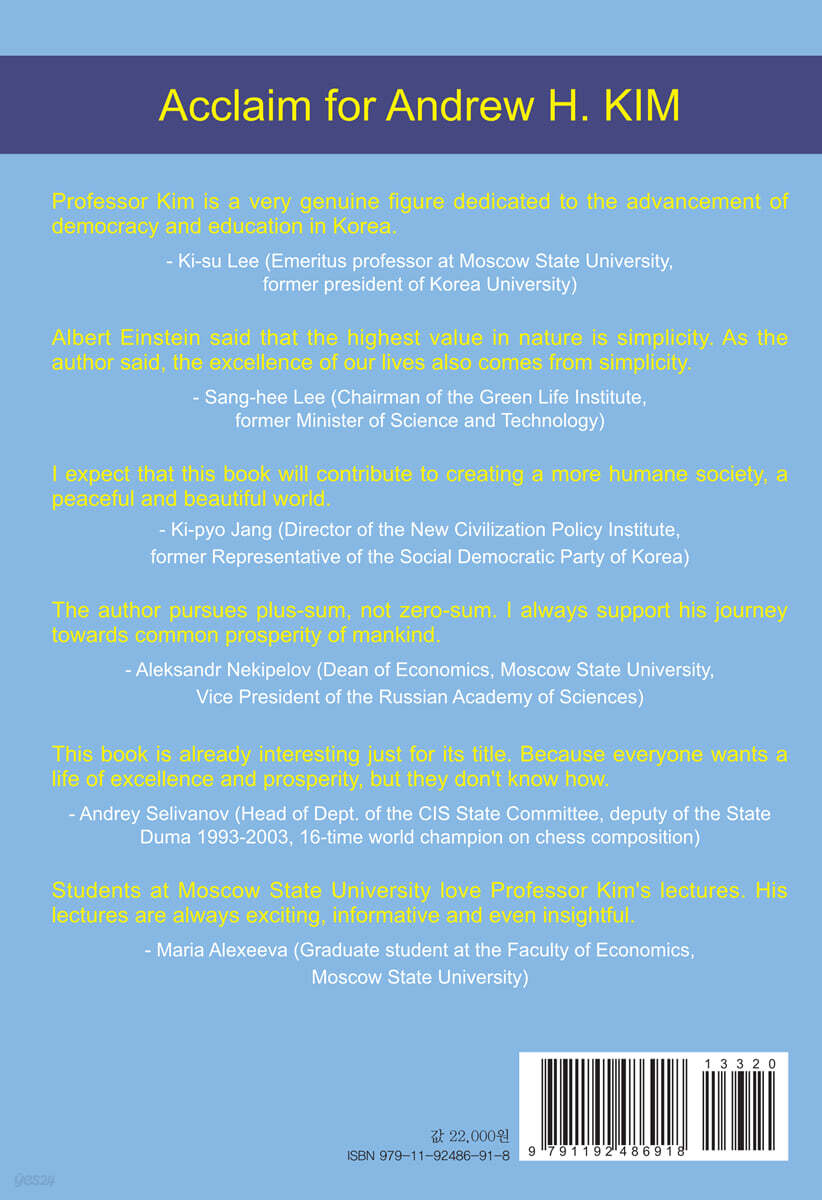
Professor Kim is a very genuine figure dedicated to the advancement of democracy and education in Korea. - Ki-su Lee (Emeritus professor at Moscow State University, former president of Korea University)
|
|
Albert Einstein said that the highest value in nature is simplicity. As the author said, the excellence of our lives also comes from simplicity. - Sang-hee Lee (Chairman of the Green Life Institute, former Minister of Science and Technology)
|
|
I expect that this book will contribute to creating a more humane society, a peaceful and beautiful world. - Ki-pyo Jang (Director of the New Civilization Policy Institute, former Representative of the Social Democratic Party of Korea)
|
|
The author pursues plus-sum, not zero-sum. I always support his journey towards common prosperity of mankind. - Aleksandr Nekipelov (Dean of Economics, Moscow State University, Vice President of the Russian Academy of Sciences)
|
|
This book is already interesting just for its title. Because everyone wants a life of excellence and prosperity, but they don't know how. - Andrey Selivanov (Head of Dept. of the CIS State Committee, deputy of the State Duma 1993-2003, 16-time world champion on chess composition)
|
|
Students at Moscow State University love Professor Kim's lectures. His lectures are always exciting, informative and even insightful. - Maria Alexeeva (Graduate student at the Faculty of Economics, Moscow State University)
|
사락 별점0
혜택 및 유의사항밑줄0
혜택 및 유의사항
20,900원
총 1개
20,900원