

소득공제
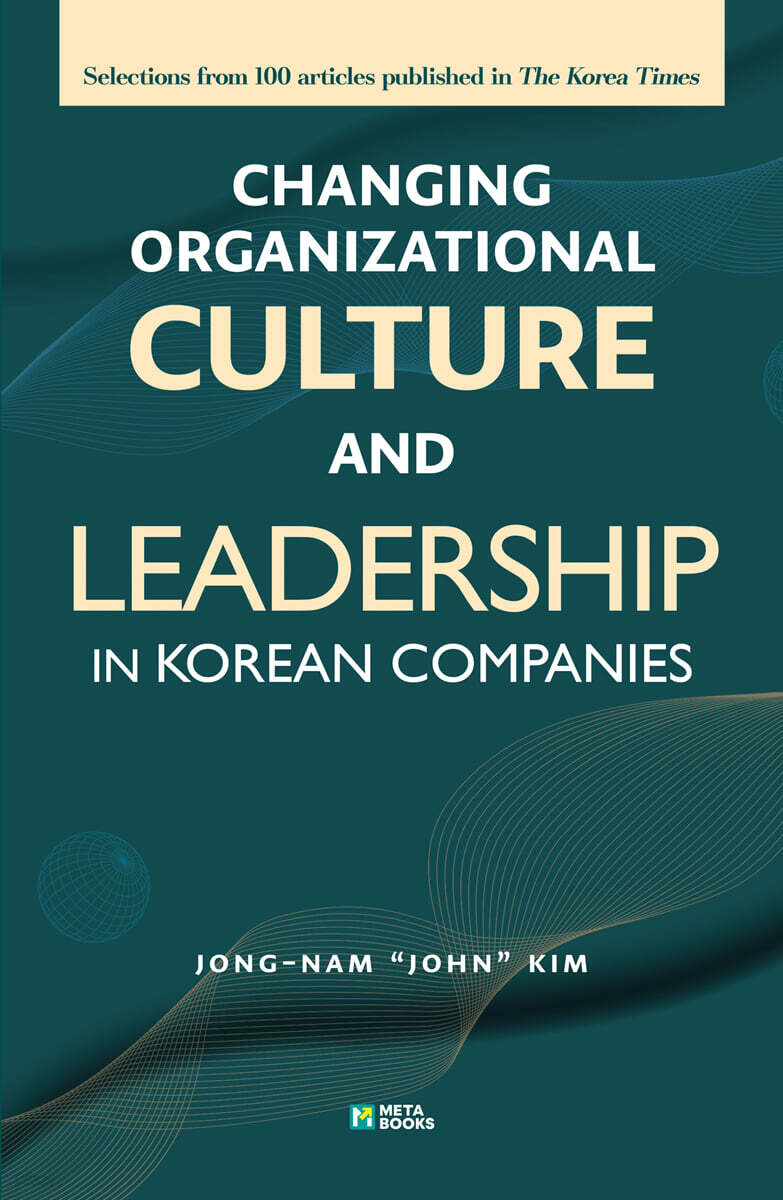
CHANGING ORGANIZATIONAL CULTURE AND LEADERSHIP IN KOREAN COMPANIES
김종남 저
METABOOKS(메타북스)
2023.11.08.
이미 소장하고 있다면 판매해 보세요.
- 국내배송만 가능
- 문화비소득공제 가능
책소개
목차
|
PART 1_Organizational Culture
1. Organizational culture and HR Managers?11 2. Executive team culture?17 3. How exceptions destroy culture?23 4. Meetings as incubators?28 5. HR and organizational culture?33 6. Trust, not diagnoses?39 7. The dangers of organizational practices?44 8. The dangers and opportunities of assumptions?50 9. Creating a strong virtual workplace culture?55 10. Creating an engaging culture?60 11. Culture of positivity?65 12. Corporate growth and culture?69 13. For cohesive inter-team culture?74 14. Global corporate culture - in English?79 15. Emotional detachment in the workplace?84 16. Emotionally intelligent culture?88 17. Three negative cultures?93 18. Self-reflective culture?98 19. New corporate learning culture?104 20. Corporate culture and employee engagement?110 21. Culture of productivity?116 22. How culture drives successful sales organizations?122 23. Corporate culture in 2017?128 24. Creating a high-performance culture?134 25. Prerequisites for horizontal culture?139 26. Industry 4.0 and horizontal culture?145 27. Praise and horizontal culture?149 28 Meetings - a skill or a culture??155 29. We need learning culture?160 30. Cultivating ‘questioning culture’?165 31. Coaching and horizontal culture?169 32. Horizontal corporate culture?174 PART 2_Ledership 1. Facilitative leadership?181 2. How leaders can help employee career development?186 3. Alignable leadership and culture?191 4. Leadership training for women?196 5. Leadership in times of grief?201 6. Learning leaders?207 7. Leadership that creates culture?212 8. Leadership style?216 9. Leadership philosophy?221 10. Training vs. growing leaders?226 11. Effective leadership?231 12. Developing leadership?236 13. Global HR professionals?243 14. Cultures change when leaders teach?249 15. Promoting employees’ competence?256 16. Team culture and horizontal leadership?261 17. Ggondae leadership?266 18. Establishing ‘CEO mindset’?270 19. True leadership?274 20. Lowering walls?279 PART 3_Diversity & Inclusion 1. The trap of uniformity?287 2. Defeating cultural bias?292 3. Beating microbullying?297 4. Favoritism in leaders?302 5. Collective generational biases?307 6. But this isn’t bias, right??312 7. The true self in the workplace?317 8. “Diversity or Inclusion”??322 9. Strategies for diversity in corporate culture?327 10. Fourth Industrial Revolution and diversity?332 11. Diversity and horizontal culture?339 PART 4_Organizational Development 1. Rational quitters?347 2. Looking inside as a team?352 3. Global organizational development?358 4. The roots of trust?363 5. Overcoming winter?368 6. Diagnosing diagnosis?372 7. Organizations without answers?377 8. Virtual performance management?384 9. The essence of a CS organization?389 10. Virtual communication?393 11. Remote employee engagement?398 12. Is your organization healthy??403 13. Collective philosophy?409 14. Viewing vs. understanding?413 15. Easy remedies for silos?418 16. Organizational lessons from ocean’s waves?423 17. In defense of ‘the old’?427 18. Lessons from small companies?431 19 Busting silos to unify?435 20. Firms need chief happiness officer?439 PART 5 Change Management 1. Pitfalls of cultural change?447 2. Tomorrow has already arrived?451 3. New wine in a new bottle?456 4. Working with millennials?461 5. Growing change agents effectively?466 6. Common delusions regarding change?472 7. Change before you change?476 8. Impatient cultural change?480 9. Changing the way we change?485 10. Changing corporate culture?491 |
저자 소개 1
John Kim, Kim Jong-nam
국내 조직문화를 일회성 행사가 아닌 과학적이고 전략적인 영역으로 전환시킨 선도적 전문가다. 미국 펜실베이니아대학에서 조직개발(OD)을 전공한 그는 미국과 유럽에서 연구를 거쳐 삼성전자, 현대자동차, SKT, LG, NH농협, 채드윅국제학교, 한국기계연구원 등 다양한 조직에서 450여 회의 진단과 변화 프로젝트를 수행하며 실질적인 성과를 만들어왔다. 비가시적인 ‘문화’를 데이터로 정량화하고 실행 가능한 전략으로 구현해낸 국내 유일의 전문가로 HR 업계에서 인정받고 있다. 그가 설립한 컬쳐엔진(Culture Engine)은 국내 최초로 ‘조직문화 전문가 자격 인증 과정(OCEC)’을
국내 조직문화를 일회성 행사가 아닌 과학적이고 전략적인 영역으로 전환시킨 선도적 전문가다. 미국 펜실베이니아대학에서 조직개발(OD)을 전공한 그는 미국과 유럽에서 연구를 거쳐 삼성전자, 현대자동차, SKT, LG, NH농협, 채드윅국제학교, 한국기계연구원 등 다양한 조직에서 450여 회의 진단과 변화 프로젝트를 수행하며 실질적인 성과를 만들어왔다. 비가시적인 ‘문화’를 데이터로 정량화하고 실행 가능한 전략으로 구현해낸 국내 유일의 전문가로 HR 업계에서 인정받고 있다. 그가 설립한 컬쳐엔진(Culture Engine)은 국내 최초로 ‘조직문화 전문가 자격 인증 과정(OCEC)’을 개발·운영하고 있으며 조직 내부에서 스스로 컬쳐핏을 진단·실행할 수 있는 ‘컬쳐핏 퍼실 리테이터 인증 워크숍’을 특허 출원 중이다. 김 대표는 조직문화를 ‘조직 내에서 끊임없이 생성, 소멸, 진화를 되풀이하는 정체성과 제도, 전략, 리더십, 감정과 정서의 혼합물’로 규정하며 한국 사회의 조직문화 패러다임을 ‘감’에서 ‘실체’로, ‘교육’에서 ‘변화’로, ‘일회성’에서 ‘지속성’으로 탈바꿈시키는 데 기여하고 있다. 또한, 인도네시아 자카르타에 KCG를 설립해 조직문화, 변화관리, 리더십, 이문화 컨설팅을 글로벌 차원에서 이끌며 아시아 전역에서 조직문화 혁신의 기준을 제시하고 있다.
김종남의 다른 상품
관련 분류
- 카테고리 분류
품목정보
- 발행일
- 2023년 11월 08일
- 쪽수, 무게, 크기
- 496쪽 | 140*210*30mm
- ISBN13
- 9791197435836
책 속으로
|
HR managers who work as culture managers in their organization are faced with many obstacles. If organizational culture is an organization-wide phenomenon, only people who have enough knowledge of and power in their organization can influence it.
--- p.15 HR policies are a kind of rulebook that explains why something in an organization is happening in a certain way. --- p.34 Even if leaders actually do want to make a change, they cannot do so successfully faced with this difference in point of view. There is a breakdown in communication and relationships. --- p.67 It goes without saying that Korean corporations are experiencing a lot of changes due to many different factors, such as the advancement of technology, the changing dynamics of the global market, changes in the economy and in labor laws, and a shifting population composition. --- p.91 Successful sales organizations have excellent leaders who drive good organizational performance. Excellent leaders are even more important in organizations in general. Interestingly, these leaders don’t need to be at the highest levels of the organization but can be middle managers and salespeople. --- p.123 It goes without saying that when organizations do not have corporate cultures that fit their business strategies, the visions of their leadership, and the demands of their customers and industries, their competitiveness will regress and they will eventually become dysfunctional. --- p.158 The HR department doesn’t need to make employees gather and attend classes. What it has to do is help employees learn about what they need. --- p.241 This improves employee flexibility and autonomy, even if it engenders a few disadvantages such as unclear roles, lack of accountability, and dedication to some extent. --- p.280 There may be many other occasions in which it is difficult to tell what is the result of bias and what isn’t. Human beings have a tendency to regard the status quo as trustworthy and reliable. --- p.316 Specifically, a lot of people believe that working from home will become much more normalized, and that engagement will change because of this. --- p.398 There are many approaches to busting silos in organizations. As Lynda Grantton, a management professor at the London Business School, wrote in the Harvard Business Review in 2007, assigning team leaders who are both task- and relationship oriented is important. --- p.437 Many organizations and people recognize that, in order to change, we need more than the mere desire to change: we must also have analytical as well as imaginative skills. --- p.476 |
출판사 리뷰
|
한국 기업들을 속속들이 이해하는데 필요한 관점들을 모으다!
그 조직을 이해하는데 가장 고려할 수 있는 핵심 요인으로는 조직문화, 리더십이 될 것이며, 이를 바탕으로 앞으로 어떻게 발전시켜야 할지에 대한 조직 개발 그리고 궁극적인 변화 관리의 방안일 것이다. 나아가 저자는 한국 기업들에 최근 불고 있는 바람 중에 하나인 다양성과 포용의 측면에서는 어떤 변화와 개선이 필요한지에 대해서도 나름의 관점을 들려 준다. 대기업, 외국계 기업, 공공기관, 스타트업 등 다양한 형태의 산업과 규모에 속하는 기업의 현장에서 조직개발의 전략을 제시하는 역할을 하는 저자의 시선은 한국 조직들을 이해하는데 필수적인 시각들을 다양하게 담고 있다. 특히 외국인 매니저 및 임원으로서 한국 기업에서 근무하는 경우, 독특하게 나타나는 문화와 리더십의 현상들에 대하여 보다 깊이 있는 이해와 변화 방향에 대해 공감하고자 한다면 충분히 도움이 될 수 있을 것이다. 지은이가 말하는_이 책을 쓴 목적 2010년 이후 지은이는 한국기업들의 진단과 변화 방향을 찾는 프로젝트를 수행해 오면서 약 300여개 기업들을 컨설팅한 경험이 있다. 매번 기업들을 방문하고 진단하면서, 우리 기업들의 현주소는 어디에 있고, 어떤 미래로 나아가야 하는지에 대해서 고민으로 충만한 기록을 남기고자 했고, 바로 이 책은 그 현장의 메모들을 모은 것이다. 모든 조직은 다양한 요소들이 얽키고 설켜서 나타나는 총체적인 결과로서 존재하며,문화는 그 현주소를 그대로 나타내고, 리더십은 그 현주소로 이끄는 가이드 역할을 한다. 지은이는 한국 기업들의 특성과 스타일 그리고 이를 불러오게 된 원인 요인을 분석하며, 앞으로 어떤 문화가 바람직하고, 어떤 리더십이 제대로 기능해야 하는지에 대해서 조직개발의 관점에서 제시한다. 한국 기업들을 깊이 있게 이해하고자 하는 한국인 임직원분들 뿐만 아니라 외국에서 부임해온 매니저 및 임원진들에게 이 책은 현실적으로 한국 기업들을 이해하는데 있어 충실한 바로미터 역할을 수행해 줄 것이다. |
