

소득공제
청년패스
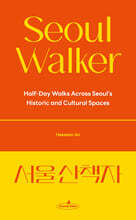
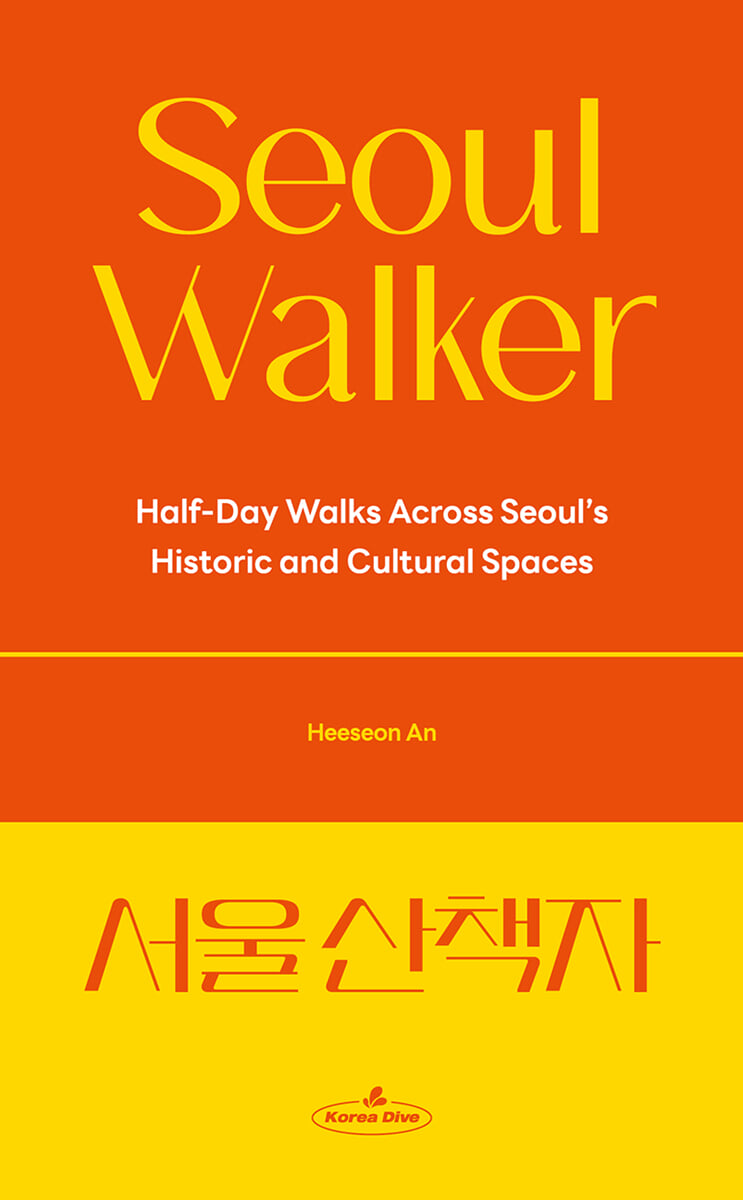
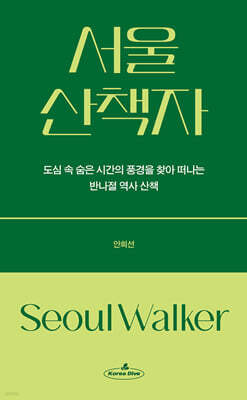
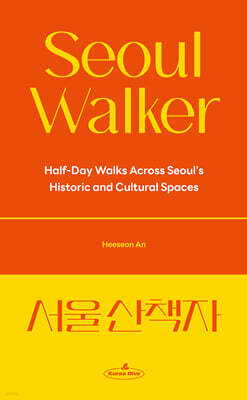
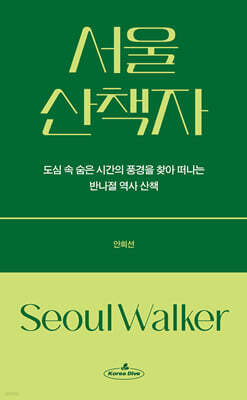
Seoul Walker (서울 산책자)
Half-Day Walks Across Seoul’s Historic and Cultural Spaces (서울의 역사와 문화를 탐방하는 반나절 역사 산책)
안희선 저
Korea Dive(코리아다이브)
2025.11.21.
이미 소장하고 있다면 판매해 보세요.
- 해외배송 가능?
- 문화비소득공제 가능
이 상품의 태그




책소개
목차
|
Prologue·004
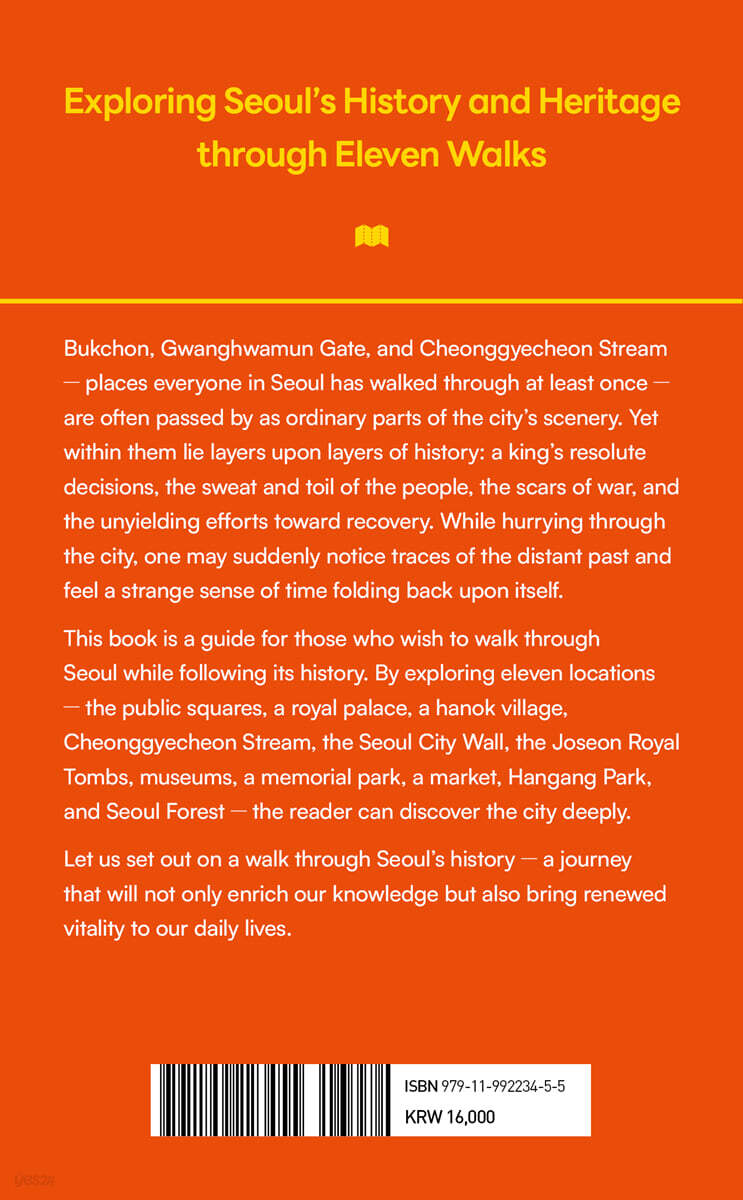
01 PUBLIC SQUARE·011 Songhyeon Green Plaza & Gwanghwamun Square & Seoul Plaza Walking Theme│A Stroll through Seoul’s History, Culture, and People Steps│4,000 Duration│1 hour 30 minutes 02 ROYAL PALACE·031 Changdeokgung Palace Walking Theme│ Want to Explore the Place Where Joseon Kings Once Lived? Steps│9,000 Duration│3 hours 03 HANOK VILLAGE·047 Bukchon Hanok Village Walking Theme│ A Time Travel Following the Stories Beyond Hanok Steps│6,000 Duration│2 hours 04 STREAM·069 Cheonggyecheon Stream Walking Theme│ A Calm Streamside Walk along the Currents of History Steps│5,000 Duration│1 hour 30 minutes 05 CITY WALL·085 Hanyangdoseong Walking Theme│ A Day Tracing the Footsteps of Old Seoul along the City Wall Steps│25,000 Duration│7 hours 06 JOSEON ROYAL TOMB·105 Seolleung & Jeongneung Walking Theme│ Strolling through Gangnam’s Most Auspicious Site Steps│6,000 Duration│2 hours 07 MUSEUM·125 National Museum of Korea & The War Memorial of Korea Walking Theme│ A Museum Tour with as Much to See Outdoors as Indoors Steps│20,000 Duration│7 hours 08 MEMORIAL PARK·149 Yanghwajin Foreign Missionary Cemetery Walking Theme│ A Journey to Meet Stars that Shine Even in the Daytime Steps│3,000 Duration│1 hour 09 MARKET·173 Dongmyo Flea Market Walking Theme│ In Search of a Lively Weekend Afternoon in Seoul Steps│4,000 Duration│1 hour 30 minutes 10 RIVERSIDE PARK·189 Yeouido Hangang Park Walking Theme│ A Place that Refreshes Life in Seoul, Filled with Everyday Joy Steps│6,000 Duration│2 hours 11 FOREST·205 Seoul Forest Walking Theme│ A Slow Stroll through a Green Haven in the Heart of the City Steps│4,000 Duration│1 hour 30 minutes References·220 |
저자 소개 1
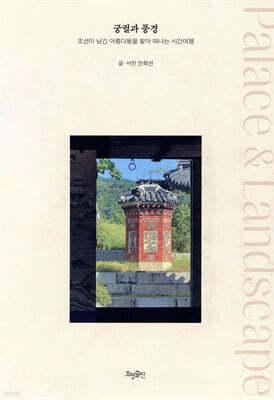
역사여행 가이드이자 투어 기획자. 역사여행 및 투어 전문 브랜드 히플레이드Hee:playde를 운영하고 있다. ‘역사와 문화가 있는 곳은 모두 놀이터가 된다’는 신념으로, 2019년부터 궁궐, 박물관, 서울의 골목 등에서 누구나 쉽게 즐길 수 있는 여행 프로그램을 기획하고 진행해 왔다. 기관과 기업 등 단체 대상 인사이트 문화투어와 지역 해설사 교육도 이어오고 있다. 특별한 감성과 시선으로 궁궐을 소개한 포토에세이 《궁궐과 풍경》을 출간했으며, 서울 브랜드북 《감각서울》 2호에 〈시간을 품은 궁궐의 정원들〉을 기고했다. 앞으로도 새롭고 낯선 시선으로 풍경 속에 숨겨진 시간의 이야
역사여행 가이드이자 투어 기획자. 역사여행 및 투어 전문 브랜드 히플레이드Hee:playde를 운영하고 있다. ‘역사와 문화가 있는 곳은 모두 놀이터가 된다’는 신념으로, 2019년부터 궁궐, 박물관, 서울의 골목 등에서 누구나 쉽게 즐길 수 있는 여행 프로그램을 기획하고 진행해 왔다. 기관과 기업 등 단체 대상 인사이트 문화투어와 지역 해설사 교육도 이어오고 있다. 특별한 감성과 시선으로 궁궐을 소개한 포토에세이 《궁궐과 풍경》을 출간했으며, 서울 브랜드북 《감각서울》 2호에 〈시간을 품은 궁궐의 정원들〉을 기고했다. 앞으로도 새롭고 낯선 시선으로 풍경 속에 숨겨진 시간의 이야기를 찾아 기록하고 나누고자 한다.
품목정보
- 발행일
- 2025년 11월 21일
- 쪽수, 무게, 크기
- 224쪽 | 212g | 114*184*10mm
- ISBN13
- 9791199223455
책 속으로
|
With Gyeongbokgung Palace on one side and Changdeokgung Palace on the other, it’s common to see foreign visitors dressed in hanbok crossing through Songhyeon Green Plaza. Behind their smiles, you can often catch a hint of travel-.weariness. A bench might tempt them to rest, but the sight of flowers blooming here and there entices them to keep walking, soon posing for photos with the blossoms as a backdrop.
On holidays, families fill the plaza as well. Children race freely across the wide lawn, and their parents follow ─ grateful, perhaps, for a place in the heart of Seoul where no one has to call out, “Don’t run!” Couples, breathing in the sweet scent of the flowers or leaning close for a photograph, find their affection deepening in this shared space. --- p.16 Consider the difference between the two. Gyeongbokgung, the main palace, was designed to project royal dignity. Its buildings are aligned in a straight north-south axis across a broad plain. While impressive, it can feel monotonous unless one has a deep interest in traditional architecture. Moreover, to see highlights such as the scenic ponds and pavilions, unpainted halls, and the royal library influenced by Qing China, visitors must walk all the way to the far end. Changdeokgung, by contrast, is built on a gentle slope that rises from west to east, following the ridges of Bugaksan Mountain. Believing that the natural terrain carried vital energy affecting human fortune, the builders preserved the land’s natural contours rather than leveling it. As a result, the structures do not follow a rigid pattern but are scattered irregularly, constantly shifting the visitor’s perspective. Walking deeper into the Secret Garden (후원, Huwon), one encounters a royal garden so refined it feels almost otherworldly. Among the five palaces of Seoul, Changdeokgung alone is inscribed as a UNESCO World Heritage Site. --- p.34 The five principal colors used in dancheong are blue, red, yellow, white, and black, together called Obangsaek (오방색) ─ each associated with one of the five directions in East Asian cosmology. Pigments were often derived from minerals and combined to create a wide palette, many shades of which are uncommon in Western traditions. The dancheong in Joseon palaces can be seen as a form of traditional Korean fine art, because it incorporates symbols and colors rooted in the dynasty’s philosophy. Motifs such as lotus blossoms, clouds, stylized pattern of climbing vines, and mythical creatures like dragons and phoenixes appear throughout interior and exterior surfaces. --- p.42 trust Seoul. Along the Hanyangdoseong Excursion Trail, you’ll find signposts at intersections and along sidewalks that point the way. Even foreigners can simply follow the English markers reading “Excursion Trail of Hanyangdoseong to XXX Gate.” At confusing dead ends or narrow alleys, you will invariably spot a black sign fixed to the wall, guiding you onward. Part of the joy of walking in Seoul comes from this quiet kindness ─ thoughtful signs standing in place, faithfully showing the way. --- p.89 Another remarkable space is the Room of Quiet Contemplation, devoted exclusively to two masterpieces of Korean Buddhist art: the Pensive Bodhisattva statues (반가사유상), dated to the 6th-7th century and designated National Treasures of Korea. Passing through a dim tunnel that feels as though time and space are distorted, you emerge into a chamber where the two statues sit side by side beneath a canopy of starlight from the ceiling. They depict the young prince of the Shakya clan in India seated in meditation, pondering human suffering in search of enlightenment. The serene smile playing at their lips suggests that they have already attained awakening. --- p.137 Yet this place of life and beauty also became a site of tragedy. In 1866, during the regency of Heungseon Daewongun (흥선대원군) for the young Seoul Walker King Gojong (고종, r. 1864-1907), Catholics were persecuted on the grounds that they threatened Confucian values. Nine out of twelve French missionaries and over 8,000 Korean Catholics were executed. The hill at Yanghwajin known as Jangdubong was the site where many were beheaded, and the area came to be called Jeoldusan (절두산, literally “Beheading Mountain”). Later, the Catholic Church designated Jeoldusan as a sacred site of martyrdom and erected a monument there. --- p.153 |
사락 별점0
혜택 및 유의사항밑줄0
혜택 및 유의사항
14,400원
총 1개
14,400원