
소득공제
수입
직수입양서
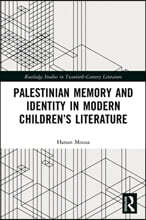
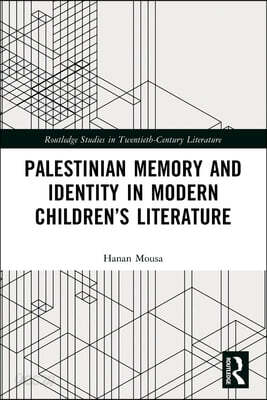
Palestinian Memory and Identity in Modern Children’s Literature
Paperback, 1st Edition
Mousa, Hanan
Routledge
2026.05.21.
이미 소장하고 있다면 판매해 보세요.
- 국내배송만 가능
- 해외 거래처 사정에 의하여 품절/지연 가능
- 도서 정보 중 미표기 사항 안내?
- 문화비소득공제 가능
Routledge Studies in Twentieth-Century Literature
-
 Lacanian Non-Rapport in the Novels of John Fowles 이동Lacanian Non-Rapport in the Novels of John Fowles10% 356,010원
 -
Music in Modern Japanese and Hebrew Literatures 이동Music in Modern Japanese and Hebrew Literatures10% 99,330원
-
Indeterminacy and the Reader’s Engagement in the Italian Novel 이동Indeterminacy and the Reader’s Engagement in the Italian Novel10% 356,010원
-
Feminist Science Fiction’s Sartorial Spaces 이동Feminist Science Fiction’s Sartorial Spaces10% 356,010원
-
Joseph Conrad and the Intersection of Narrative, Epistemology, and Cosmology 이동Joseph Conrad and the Intersection of Narrative, Epistemology, and Cosmology10% 356,010원
-
Literary Legacy of the Kennedy Assassination 이동Literary Legacy of the Kennedy Assassination10% 356,010원
-
Contemporary Japanese American and Mexican American Poets 이동Contemporary Japanese American and Mexican American Poets10% 356,010원
-
Palestinian Memory and Identity in Modern Children’s Literature 이동Palestinian Memory and Identity in Modern Children’s Literature10% 99,330원
-
Theodore Dreiser and the Cultures of Travel 이동Theodore Dreiser and the Cultures of Travel10% 356,010원
-
Silent Film Adaptations of Novels by British and American Women Writers, 1903-1929 이동Silent Film Adaptations of Novels by British and American Women Writers, 1903-192910% 99,330원
-
Understanding Sublimation in Freudian Theory and Modernist Writing 이동Understanding Sublimation in Freudian Theory and Modernist Writing10% 99,330원
-
Analysis of Jean-Paul Sartre’s Plays in Théâtre complet 이동Analysis of Jean-Paul Sartre’s Plays in Théâtre complet10% 99,330원
-
Disability, Illness, and the Vampire in Literature and Culture 이동Disability, Illness, and the Vampire in Literature and Culture10% 356,010원
-
D. H. Lawrence and Ambivalence in the Age of Modernity 이동D. H. Lawrence and Ambivalence in the Age of Modernity10% 99,330원
책소개
목차
|
Preface PART I Theoretical Section Chapter 1 – Introduction: The Features and Significance of Children’s Literature 1.1. The Term “Childhood” and its Conception 1.2. The Definition of Children’s Literature 1.3. Folk Heritage and Children’s Literature 1.4. The Use of Folk Heritage in Arabic Children’s Literature 1.5. The Relationship of Children’s Literature to Palestinian Folk Heritage 1.6. Summary Chapter 2 – The History of Palestinian Children’s Literature 2.1. Introduction 2.2. Palestinian Children’s Literature in the Mandate Era until 1948 2.3. The Development of Indigenous Palestinian Children’s Literature after 1948 2.4. Palestinian Children’s Literature in the Diaspora since 1948 2.5. Palestinian Children’s Literature in the West Bank and Gaza after 1967 Chapter 3 – Folk Heritage and its Forms 3.1. Introduction 3.2. Folk Heritage 3.2.1. Definition 3.2.2. The Interest in Folk Heritage: Beginnings and Trends 3.2.3. The Interest in Folk Heritage Among the Arabs 3.2.4.1. Palestinian Folk Heritage and its Significance 3.2.4.2. Palestinian Folk Heritage in the Orientalist Era until 1948 3.2.4.3. The First Period After the Nakba (1948–67) 3.2.4.4. The Second Period After the Nakba (1967–86) 3.2.4.5. The Period After the First Intifada Until Today 3.3. The Forms of Folk Heritage 3.3.1. Introduction 3.3.2. Folk Tales 3.3.2.1. The Folk Tale Concept 3.3.2.2. Folk Tales’ Features 3.3.2.3. Palestinian Folk Tales 3.3.3. Popular Proverbs 3.3.3.1. The Popular Proverb Concept 3.3.3.2. Popular Proverbs’ Features 3.3.3.3. Palestinian Popular Proverbs 3.3.4. Popular Songs 3.3.4.1. The Popular Song Concept 3.3.4.2. Popular Songs’ Features 3.3.4.3. Palestinian Popular Songs PART II Applied Section Chapter 4 – The Use of Folk Tales in Palestinian Children’s Literature 4.1. Introduction 4.2. The Use of Folk Tales 1967–87 4.2.1. Introduction 4.2.2. The Use of Folk Tale Features 4.2.2.1. The Use of Traditional Beginnings and Endings 4.2.2.2. The Use of Popular Expressions 4.2.2.3. The Use of Repetitive Styles 4.2.2.4. The Use of Descriptive Styles 4.2.2.5. The Use of Dialogic Styles 4.2.3. The Invocation of Folk Characters in Children’s Stories 4.2.3.1. Introduction 4.2.3.2. The Traditional Character Concept in Children’s Stories 4.2.3.3. The Invocation of the Ghūl 4.3. The Use of Folk Tales in the Period 1988–2015 4.3.1. Introduction 4.3.2. Reshaping Folk Tales 4.3.3. The Use of Narration in Folk Tales 4.3.3.1. Forms and Appearances of Narrator Presence in Children’s Stories 4.3.3.2. The Use of Narrator Styles in Children’s Stories 4.3.4. The Invocation of Traditional Characters in the Second Period 4.3.4.1. The Invocation of the Characters of Al-Shātir Hasan (Shater Hasan) and the Ghūl in Children’s Stories 4.3.5. The Use of Folk Tale Features in Children’s Stories 4.3.5.1. The Use of Styles of Beginning in Children’s Stories 4.3.5.2. The Use of Repetitive Styles in Children’s Stories 4.4. Summary Chapter 5 – The Use of Popular Proverbs in Palestinian Children’s Literature 5.1. Introduction 5.2. The Use of Popular Proverbs in the 1967–87 Period 5.2.1. Introduction 5.2.2. Citing Popular Proverbs in the Vernacular Dialect (al-ʿĀmmīya) Form 5.2.3. Citing Popular Proverbs via Converting Them into Classical Arabic (al-Fuṣḥa) 5.2.4. Citing Popular Proverbs as Titles of Children’s Stories (Paratextualism) 5.3. The Use of Popular Proverbs in the 1988–2015 Period 5.3.1. Introduction 5.3.2. Citing Popular Proverbs as Titles of Children’s Stories (Paratextualism) 5.3.2.1. Introduction 5.3.2.2. The Concept of Titles 5.3.2.3. Titles in Children’s Stories 5.3.2.4. Citing Popular Proverbs in Children’s Stories 5.3.2.5. The Dominance of Popular Proverbs and Their Prevalence over the Text 5.4. Summary Chapter 6 – The Use of Popular Songs in Palestinian Children’s Literature 6.1. Introduction 6.2. The Use of Popular Songs in the First Period (1967–87) 6.2.1. Introduction 6.2.2. The Use of Popular Song Names and Related Aspects (Allusion) in the First Period 6.2.3. The Citation of Popular Song Names Converted into Classical Arabic (al-Fuṣḥa) Form in the First Period 6.3. The Use of Popular Songs in the 1988–2015 Period 6.3.1. Introduction 6.3.2. The Use of Song Names and Related Aspects (Allusion) in the Second Period 6.3.3. The Use of Popular Songs in Vernacular Dialect (al-ʿĀmmīya) Form 6.3.4. The Use of Popular Songs Converted into Classical Arabic (al-Fuṣḥa)Form 6.3.5. Narration of Popular Song Styles 6.3.6. The Use of Popular Songs as Titles of Children’s Stories in the Second Period (Paratextualism) 6.3.7. Summary Conclusion Sources and References 1. List of Sources and References 1.1. Arabic-Language Sources 2. References 2.1. Arabic-Language References 2.2. Foreign-Language References Hebrew-Language References |
품목정보
- 발행일
- 2026년 05월 21일
- 쪽수, 무게, 크기
- 144쪽 | 290g | 150*230mm
- ISBN13
- 9781032765273
리뷰/한줄평0
상품정보안내
직수입외서의 경우, 해외거래처에서 제공하는 정보가 부족하여 제목, 표지, 가격, 유통상태 등의 정보가 미비하거나 변경되는 경우가 있습니다. 정확한 확인을 원하시는 경우, 일대일 상담으로 문의하여 주시면 답변 드리겠습니다.
(판형과 판수 등이 다양한 도서는 찾으시는 도서의 ISBN을 알려 주시면 보다 빠르고 정확한 안내가 가능합니다.)
해외거래처에서 품절인 경우, 2차 거래선을 통해 유럽과 미국 출판사로 직접 수입이 진행될 수 있습니다.
수입 진행 시점으로 부터 2~3주가 추가로 소요되며, 해외에서도 유통이 원활하지 않은 도서는 품절 안내가 지연될 수 있습니다.
해당 경우, 문자와 메일로 별도 안내를 드리고 있사오니 마이페이지에서 휴대전화번호와 메일주소를 다시 한번 확인해주시기 바랍니다.
(판형과 판수 등이 다양한 도서는 찾으시는 도서의 ISBN을 알려 주시면 보다 빠르고 정확한 안내가 가능합니다.)
해외거래처에서 품절인 경우, 2차 거래선을 통해 유럽과 미국 출판사로 직접 수입이 진행될 수 있습니다.
수입 진행 시점으로 부터 2~3주가 추가로 소요되며, 해외에서도 유통이 원활하지 않은 도서는 품절 안내가 지연될 수 있습니다.
해당 경우, 문자와 메일로 별도 안내를 드리고 있사오니 마이페이지에서 휴대전화번호와 메일주소를 다시 한번 확인해주시기 바랍니다.
99,330원
총 1개
99,330원