
소득공제
수입
직수입양서
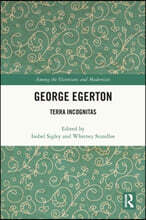
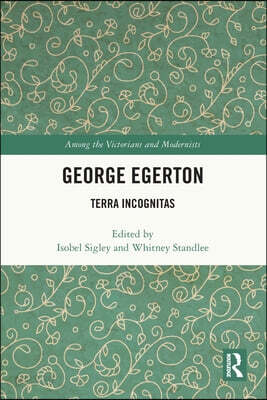
George Egerton
Terra Incognitas
Paperback, 1st Edition
Standlee, Whitney(EDT)
Routledge
2026.05.21.
이미 소장하고 있다면 판매해 보세요.
- 국내배송만 가능
- 해외 거래처 사정에 의하여 품절/지연 가능
- 도서 정보 중 미표기 사항 안내?
- 문화비소득공제 가능
Among the Victorians and Modernists
-
 Norwegian Literature as a Resource for Diversity in Education 이동Norwegian Literature as a Resource for Diversity in Education10% 356,010원
 -
Love, Despair, and Modernism in Literature 이동Love, Despair, and Modernism in Literature10% 356,010원
-
Form and Modernity in Women’s Poetry, 1895–1922 이동Form and Modernity in Women’s Poetry, 1895–192210% 99,330원
-
Towards an Aisthetics of the Victorian Novel 이동Towards an Aisthetics of the Victorian Novel10% 99,330원
-
Gender, Crime, and Murder in Victorian England 이동Gender, Crime, and Murder in Victorian England10% 122,100원
-
Maternal Image of God in Victorian Literature 이동Maternal Image of God in Victorian Literature10% 91,050원
-
Social Imagination of the Romantic Wife in Literature 이동Social Imagination of the Romantic Wife in Literature10% 356,010원
-
Form and Modernity in Women’s Poetry, 1895–1922 이동Form and Modernity in Women’s Poetry, 1895–192210% 356,010원
-
Critical Essays on Arthur Morrison and the East End 이동Critical Essays on Arthur Morrison and the East End10% 91,050원
-
Towards an Aisthetics of the Victorian Novel 이동Towards an Aisthetics of the Victorian Novel10% 356,010원
-
Gender, Crime, and Murder in Victorian England 이동Gender, Crime, and Murder in Victorian England10% 356,010원
-
Maternal Image of God in Victorian Literature 이동Maternal Image of God in Victorian Literature10% 356,010원
책소개
목차
|
Foreword: - Gerd Karin Bjørhovde, ‘Encountering George Egerton in the Scandinavian Context’ Introduction: – Isobel Sigley and Whitney Standlee Part1: Cosmopolitanism and Globalism 1. Peter Sjølyst-Jackson, ‘“A Foreign Element”: George Egerton, Scandinavian Literature and Knut Hamsun’s Hunger’ 2. Sravya Bhupatiraju, ‘The Flagrancy of the Flâneuse: George Egerton’s Rejection of the Ideology of Gendered Spheres’ 3. Paul March-Russell, ‘Between Nietzsche and Wagner: Egerton’s “Wounded Modernism”’ Part2: Sexual Identities and Queer Form 4. Heather Marcovitch, ‘George Egerton, John Lane, and Radical Friendship’ 5. Niels Caul, ‘The Wheel of God: An Irish Modernist Bildungsroman’ 6. Clare Stainthorp, ‘“Love is religion”: Spiritual, Esoteric and Epistolary Connection in Rosa Amorosa’ 7. Rachel O’ Nunain, ‘Between Feminism and Conformity: Staging Female Identity in The Backsliders (1911)’ Part3: Feminist Geopolitics 8. Nathalie Saudo-Welby, ‘“How we women digress”: Modernism, Feminism and Deviation in George Egerton’s short fiction of the 1890s’ 9. Whitney Standlee, ‘Medical and Legal Discourse and Varieties of “Unnatural” Parenthood in the Works of George Egerton’ 10. Isobel Sigley, ‘The Key Note: Reassessing Egerton’s Short Fiction through Ellen Key’s Concept of “Collective Motherliness”’ 11. Éadaoin Regan, ‘“I suppose you are Irish” “Half of me”: An exploration of Irish identity and its role in mental illness in selected works of George Egerton’ Part4: Influence and Legacy 12. Eleanor Fitzsimons, ‘George Egerton and the Liberation of Irish Women’ Afterword: Margaret D. Stetz, 'The Future of Egerton Studies' |
품목정보
- 발행일
- 2026년 05월 21일
- 쪽수, 무게, 크기
- 290쪽 | 570g | 150*230mm
- ISBN13
- 9781032532387
리뷰/한줄평0
상품정보안내
직수입외서의 경우, 해외거래처에서 제공하는 정보가 부족하여 제목, 표지, 가격, 유통상태 등의 정보가 미비하거나 변경되는 경우가 있습니다. 정확한 확인을 원하시는 경우, 일대일 상담으로 문의하여 주시면 답변 드리겠습니다.
(판형과 판수 등이 다양한 도서는 찾으시는 도서의 ISBN을 알려 주시면 보다 빠르고 정확한 안내가 가능합니다.)
해외거래처에서 품절인 경우, 2차 거래선을 통해 유럽과 미국 출판사로 직접 수입이 진행될 수 있습니다.
수입 진행 시점으로 부터 2~3주가 추가로 소요되며, 해외에서도 유통이 원활하지 않은 도서는 품절 안내가 지연될 수 있습니다.
해당 경우, 문자와 메일로 별도 안내를 드리고 있사오니 마이페이지에서 휴대전화번호와 메일주소를 다시 한번 확인해주시기 바랍니다.
(판형과 판수 등이 다양한 도서는 찾으시는 도서의 ISBN을 알려 주시면 보다 빠르고 정확한 안내가 가능합니다.)
해외거래처에서 품절인 경우, 2차 거래선을 통해 유럽과 미국 출판사로 직접 수입이 진행될 수 있습니다.
수입 진행 시점으로 부터 2~3주가 추가로 소요되며, 해외에서도 유통이 원활하지 않은 도서는 품절 안내가 지연될 수 있습니다.
해당 경우, 문자와 메일로 별도 안내를 드리고 있사오니 마이페이지에서 휴대전화번호와 메일주소를 다시 한번 확인해주시기 바랍니다.
99,330원
총 1개
99,330원