

이미 소장하고 있다면 판매해 보세요.
- 국내배송만 가능
- 문화비소득공제 가능
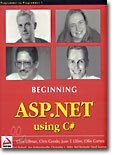
BEGINNING
-
 Beginning JSP 2: From Novice to Professional 이동Beginning JSP 2: From Novice to Professional67,980원
 -
Beginning SQL Server 2000 DBA: From Novice to Professional 이동Beginning SQL Server 2000 DBA: From Novice to Professional84,980원
책소개
목차
|
1. Getting Started With ASP.NET
2. Anatomy of an ASP.NET Page 3. Forms and HTML Server Controls 4. Storing Variable Data using C# 5. Introducing XML 6. Control Structures and Procedural Programming 7. Event-driven Programming and Postback 8. Introduction to Objects 9. Static Class Members and Class Relationships 10. Objects in ASP.NET 11. Objects and Structured Data 12. Reading from Data Sources 13. Manipulating Data Sources 14. ASP.NET Server Controls 15. Reusable Code for ASP.NET 16. .NET Assemblies and Custom Controls 17. Debugging & Error Handling 18. Web Services 19. Configuration and Optimization Appendix A : The Common System Namespaces Appendix B : References and Further Information Appendix C : Support, Errata, and p2p.wrox.com |
품목정보
- 발행일
- 2001년 11월 01일
- 쪽수, 무게, 크기
- 1000쪽 | 1340g | 크기확인중
- ISBN13
- 9781861006158
책 속으로
|
When your web browser sends an HTTP request to the web server, it replies with an HTTP response, including the HTML for the page. In addition to that content, we can add cookie data to the HTTP response, which the browser software will dutifully save to disk for us. When we request another page from the web server, whether it is a few seconds later of a few days later, the cookie data will be loaded from our hard drive by the web browser into the HTTP request. The result of this is that if we save cookie data to a visitor's hard drive, we get sent that data each time they come back to our web site.
--- p.410 |
사락 별점0
혜택 및 유의사항밑줄0
혜택 및 유의사항상품정보안내
직수입외서의 경우, 해외거래처에서 제공하는 정보가 부족하여 제목, 표지, 가격, 유통상태 등의 정보가 미비하거나 변경되는 경우가 있습니다. 정확한 확인을 원하시는 경우, 일대일 상담으로 문의하여 주시면 답변 드리겠습니다.
(판형과 판수 등이 다양한 도서는 찾으시는 도서의 ISBN을 알려 주시면 보다 빠르고 정확한 안내가 가능합니다.)
해외거래처에서 품절인 경우, 2차 거래선을 통해 유럽과 미국 출판사로 직접 수입이 진행될 수 있습니다.
수입 진행 시점으로 부터 2~3주가 추가로 소요되며, 해외에서도 유통이 원활하지 않은 도서는 품절 안내가 지연될 수 있습니다.
해당 경우, 문자와 메일로 별도 안내를 드리고 있사오니 마이페이지에서 휴대전화번호와 메일주소를 다시 한번 확인해주시기 바랍니다.
(판형과 판수 등이 다양한 도서는 찾으시는 도서의 ISBN을 알려 주시면 보다 빠르고 정확한 안내가 가능합니다.)
해외거래처에서 품절인 경우, 2차 거래선을 통해 유럽과 미국 출판사로 직접 수입이 진행될 수 있습니다.
수입 진행 시점으로 부터 2~3주가 추가로 소요되며, 해외에서도 유통이 원활하지 않은 도서는 품절 안내가 지연될 수 있습니다.
해당 경우, 문자와 메일로 별도 안내를 드리고 있사오니 마이페이지에서 휴대전화번호와 메일주소를 다시 한번 확인해주시기 바랍니다.