
이미 소장하고 있다면 판매해 보세요.
- 국내배송만 가능
- 문화비소득공제 가능
이 상품의 태그
책소개
목차
|
Acknowledgements 3
Introduction 5 Theoretical Groundworks 1 Modern Drama as a Project of Enlightenment 18 2 A Theoretical Excursion into the Postmodern Sublime 45 Book I I Modern Drama of Enlightenment 86 1 The Plot Structure of Bernard Shaw's Didactic Drama 86 2 he Dramatization of Habitus: A Bourdieun Reading of Pygmalion 106 3 Eugene O'Neill's Dramatization of Nietzsche's Idea of the Anti-Bourgeois Spirit 124 4 Political Unconscious Staged in J M Synge's The Playboy of the Western World 152 5 "Circe": A Modernist's Gesture to Stage the Sublime in the Human Psyche 176 Book II II Postmodern Drama of the Sublime 202 1 The Postmodern Drama as mise-en-scene of the Sublime 202 2 The Postmodern Politico-technological Sublime Staged in David Pledger's K 217 3 The Textual Sublime: Samuel Beckett's Endgame as A Postmodern Allegory on the Relationship between Man and Nature 235 4 The Political Sublime Staged in Harold Pinter's Late Plays 257 5-1 The Sublime Universe of Simulation in Beckett's Stage: Reflexivity as the Exchange of Signs within the Text 273 5-2 Theatereality as a Way of Simulating Virtual Reality on Stage 286 III Conclusion 319 Select Bibliography 324 Index 354 |
저자 소개 1
Hoon-sung Hwang
동국대학교 영문학과 명예교수이다. 서울대학교 영문과에서 학사, 석사를 마치고 미국 캘리포니아대학 데이비스 캠퍼스(UC Davis)에서 루비 콘(Ruby Cohn) 교수의 지도하에 사뮈엘 베게트(Samuel Beckett) 연구로 영문학 박사(Ph. D) 학위를 취득했다. 저서로는 『기호학으로 본 연극세계』(신아사, 1999), 『서양문학에 나타난 죽음』(서울대학교출판문화원, 2013), The Evolution of Modern English Drama: From Enlightenment to the Sublime(SNU Press, 2020) 등이 있으며, 주요 논문으로는 “O
동국대학교 영문학과 명예교수이다. 서울대학교 영문과에서 학사, 석사를 마치고 미국 캘리포니아대학 데이비스 캠퍼스(UC Davis)에서 루비 콘(Ruby Cohn) 교수의 지도하에 사뮈엘 베게트(Samuel Beckett) 연구로 영문학 박사(Ph. D) 학위를 취득했다. 저서로는 『기호학으로 본 연극세계』(신아사, 1999), 『서양문학에 나타난 죽음』(서울대학교출판문화원, 2013), The Evolution of Modern English Drama: From Enlightenment to the Sublime(SNU Press, 2020) 등이 있으며, 주요 논문으로는 “One Mirror is Not Enough in Beckett’s Footfalls and Ohio Impromptu”(Modern Drama 36.3, 1993), “Le gaspillage semiologique dans le theare de Oh Tae-Seok”(Degres 123.24, 2005) 등이 있다.
황훈성의 다른 상품
품목정보
- 발행일
- 2020년 02월 20일
- 쪽수, 무게, 크기
- 360쪽 | 153*225*30mm
- ISBN13
- 9788952129123
출판사 리뷰
|
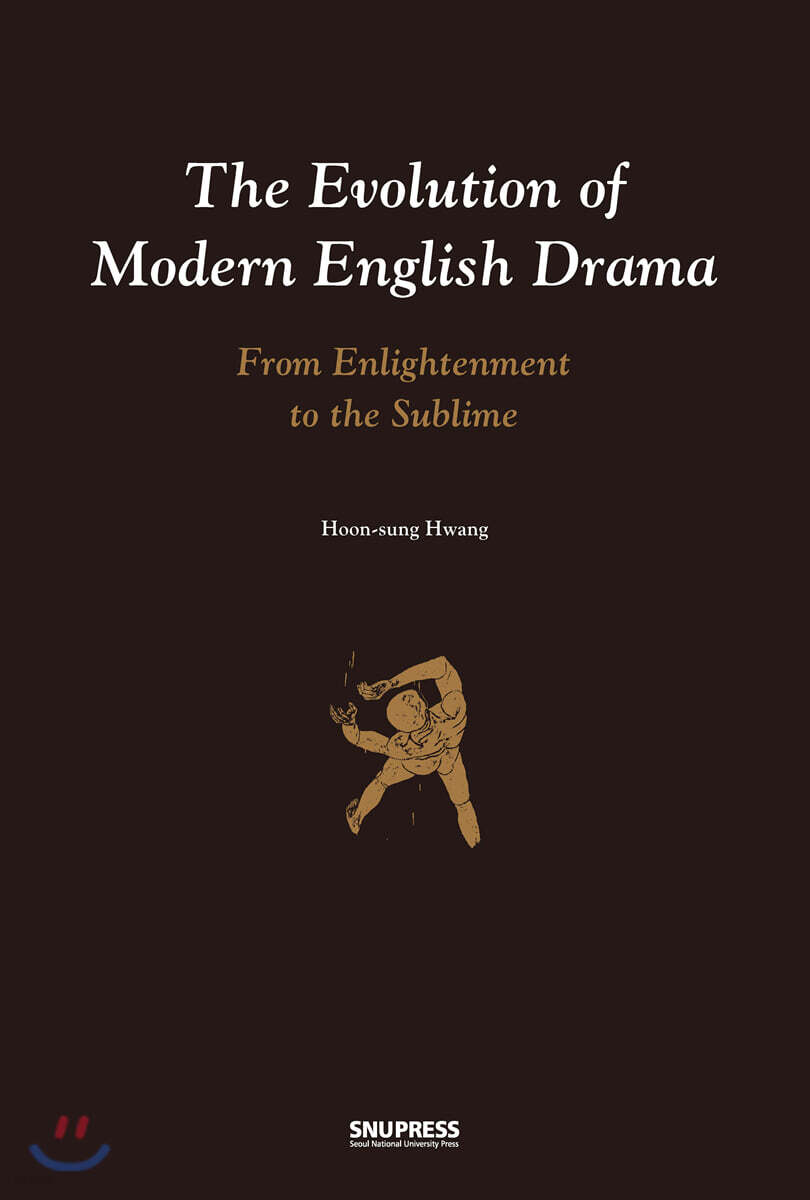
In theorizing the failure of the Enlightenment and the rise of the postmodern Sublime, this work encompasses all the major thinkers from Hegel, Nietzsche, Derrida, ?i?ek, Jameson, Adorno, Lyotard, Bauman to Baudrillard thereby tracing out the evolution of modernity to postmodernity substantiated in the dramatic works by Shaw, O’Neill, Synge, Joyce, Pledger, Pinter and Beckett.
This work tackles the compelling subject of the postmodern sublime, which renders objects, referents or the reality sublime i.e., unrecognizable and unpresentable beyond human imagination and understanding. Compared to preceding dramaturgical research on postmodern drama highlighting the two vital elements of mise-en- scene, i.e., playfulness and performativity, the thesis of this work is epistemological based on a tripartite taxonomy of the postmodern sublime: 1) the politico-economical sublime; 2) the textual sublime; 3) the technological sublime. The epistemological approach thus questions the nature of reality represented on stage in lieu of dramaturgical strategies or performance phenomena currently practiced among drama critics. |
추천평
|
Hoon-sung Hwang’s excellent systematic study of modern drama captures the historical, political, and aesthetic context of the great shift from modernity to postmodernity. In theorizing the failure of the Enlightenment and the rise of the postmodern Sublime, Hwang encompasses all the major thinkers from Hegel to Jameson, and from Derrida and Lyotard to Bourdieu. The (English) drama highlights the major shifts in human thinking about these concepts and also, according to Hwang is itself illuminated through these concepts. The genealogy traced through Shaw and O’Neill to Pinter and Beckett is compelling and insightful, and the volume will help specialists and non-specialists alike develop an understanding of the seismic changes in the philosophy and art of the last and present century. - Janelle Reinelt (Emeritus Professor of Theatre and Performance University of Warwick)
|
|
Professor Hoon-sung Hwang’s study of modern British drama in the context of Western thought from the Enlightenment to the present provides us with not only brilliant close readings of the work of playwrights from Shaw to Beckett but also valuable insights into the limits of our belief in “progress” and the possibilities of postmodern cultural critique. - Elaine Kim (Emeritus Professor of Asian American and Asian Diaspora Studies UC Berkeley)
|
사락 별점0
혜택 및 유의사항밑줄0
혜택 및 유의사항
58,000원
총 1개
58,000원