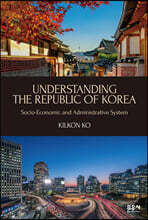

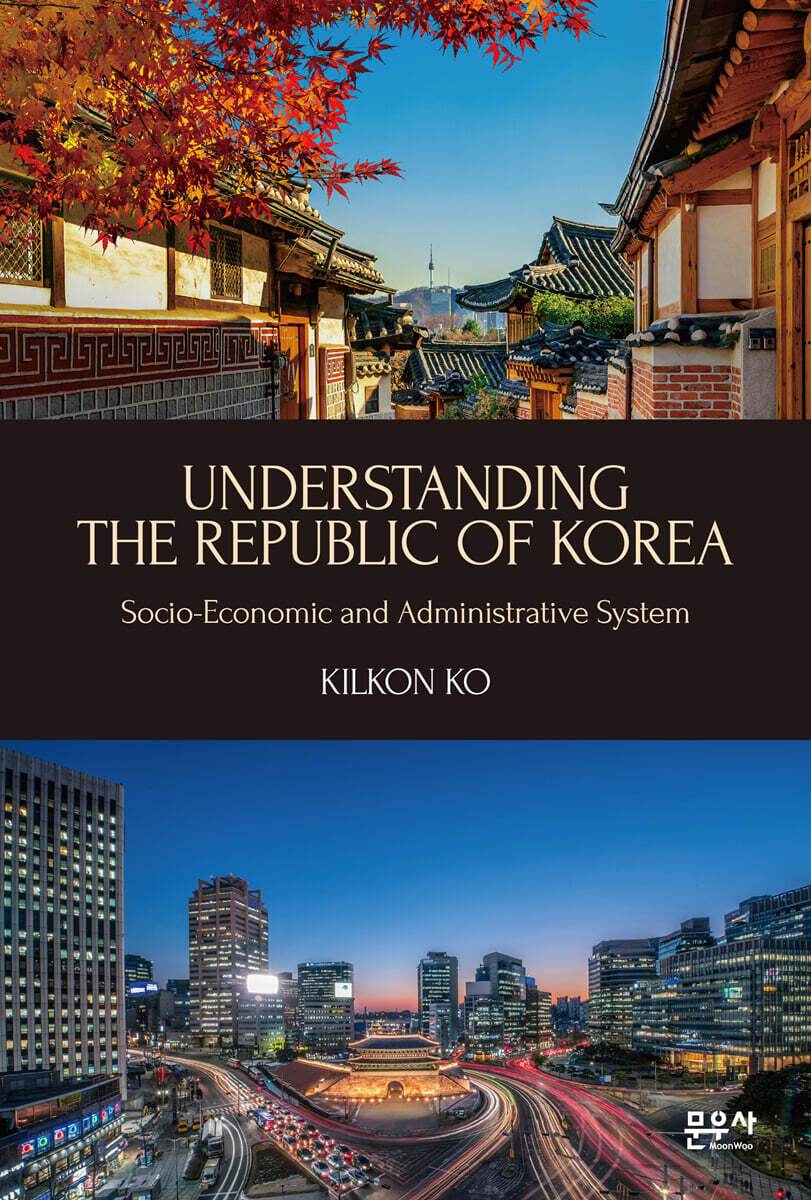
이미 소장하고 있다면 판매해 보세요.
- 국내배송만 가능
- 문화비소득공제 가능
목차
|
Ⅰ. Country Review
1. Background 2. Main Conditions and Indicators 1) Geography & Demography 2) Economy 3) Trade & Industry 4) Infrastructure 5) Welfare 6) Poverty 7) Health 8) Education & Human Development 9) Society & Culture 10) Environment 11) National Security & Safety 3. International Cooperation 1) International Relations 2) International Governance 3) Official Development Aid Ⅱ. Issues in Public Administration and Governance 1. Political Structure 1) How was democracy established in Korea? 2) What is the structure of the legislature, the administration, and the judiciary? 3) What value does the Constitution aim for? 4) Who has the power in the political/policy process? 5) What characterizes the Political Party System in South Korea? 2. The Constitution of Government 1) What are the administrative agencies in Korea? 2) How did Korea reorganize its administrative organization? 3) What is the governmental basis of organizational structural reform? 3. Personnel Management 1) What is the recent trend of personnel management in Korea? 2) How can you become a public servant? 3) Are public servants homogeneous or heterogeneous? How is diversity managed? 4) Is there a government employees pension system? How does it work? 4. Performance Management 1) How can we define ‘performance’ and ‘performance management’? Why do public servants have to accomplish performance? 2) What process does performance management (evaluation) go through? 3) How can we motivate public servants to achieve better and higher performance? 5. Budget Management 1) What organizations are involved in budget management? 2) What does the government budget in Korea consist of? 3) What process does the budget go through? 4) What efforts have been made in Korea for better budget management? 6. Local Administration & Decentralization 1) How has the local administration system evolved in Korea? 2) Which administrative districts have local government? 3) Do local governments maintain substantial authority? 7. Public Sector Reforms 1) Administrative reform in the early stage 2) Administrative reform after the democratization 8. NGO & Civil Society 1) How did NGOs emerge in Korea? 2) How has the status of NGOs changed? 3) Do citizens really trust NGOs? 4) How do citizens participate in the political (policy) process? 5) What is the level of civic engagement? 9. Major Research Institutes 1) What is the status of the research institutions in Korea? 2) How did research institutes develop and diversify in Korea? 3) Why is the role of private research institute regarded relatively insufficient in Korea? Ⅲ. Conclusion |
저자 소개 1
Kilkon Ko
연세대학교 응용통계학과를 나와 서울대학교 행정대학원 석사를 거쳐 미국 피츠버그 대학교에서 정책학 박사 학위를 받았다. 2007년부터 2011년까지 싱가포르 국립대학교 정치학과에서 교수 생활을 하였고, 2015년에는 초빙교수로 싱가포르 국립대학교에서 연구년을 보냈다. 우리나라뿐만 아니라 중국을 비롯한 아시아 국가들의 정치·행정 시스템 내면에 숨어 있는 역사적·사회적·경제적 문제에 대한 고민을 해오고 있다. 2011년부터 서울대학교 행정대학원 교수로 재직 중이며, Asian Journal of Political Science의 편집장을 비롯하여 각종 학술지의 편집위원으로 활동하면서
연세대학교 응용통계학과를 나와 서울대학교 행정대학원 석사를 거쳐 미국 피츠버그 대학교에서 정책학 박사 학위를 받았다. 2007년부터 2011년까지 싱가포르 국립대학교 정치학과에서 교수 생활을 하였고, 2015년에는 초빙교수로 싱가포르 국립대학교에서 연구년을 보냈다. 우리나라뿐만 아니라 중국을 비롯한 아시아 국가들의 정치·행정 시스템 내면에 숨어 있는 역사적·사회적·경제적 문제에 대한 고민을 해오고 있다. 2011년부터 서울대학교 행정대학원 교수로 재직 중이며, Asian Journal of Political Science의 편집장을 비롯하여 각종 학술지의 편집위원으로 활동하면서 다수의 책과 논문을 써왔다.
Kilkon Ko is a professor of the Graduate School of Public Administration at Seoul National University, South Korea. He is also a director of the Asia Regional Information Center, SNUAC, and is the editor-in-chief of the Asian Journal of Political Science. He is specialized in data analytics, program evaluation, policy analysis, and corruption. He has published numerous books and articles including “Mediation & Moderation Effect”, “The change of administrative capacity in Korea: contemporary trends and lessons”, and “Estimation of Impact of Comprehensive Tests of the COVID-19 in South Korea”.
Kilkon Ko is a professor of the Graduate School of Public Administration at Seoul National University, South Korea. He is also a director of the Asia Regional Information Center, SNUAC, and is the editor-in-chief of the Asian Journal of Political Science. He is specialized in data analytics, program evaluation, policy analysis, and corruption. He has published numerous books and articles including “Mediation & Moderation Effect”, “The change of administrative capacity in Korea: contemporary trends and lessons”, and “Estimation of Impact of Comprehensive Tests of the COVID-19 in South Korea”.
고길곤의 다른 상품
품목정보
출판사 리뷰
|
Preface
Many countries are curious to know more about South Korea, particularly regarding its remarkable economic growth following the devastation of the Korean War that occurred between 1950-1953. The democratic system that South Korea managed to achieve post the military dictatorship era from the 1960s through to the 1980s has been praised internationally. In more recent years, South Korea has been in the global spotlight for its production of movies, songs, dramas and other cultural influences. Most people around the world have heard of BTS, Black Pink, Squid Game, the Parasite, Dae Jang Geum, or Gangnam style. Such popularity of Korean pop culture is not simply a symbol of the successful entertainment business. Korean pop culture has gone beyond just ‘entertainment’ and has managed to deliver messages containing universal values such as democracy, human rights, and care of the privileged and marginalized people around us. South Korea’s efforts to spread such messages have garnered the interest of the international society. In the midst of such growing interest in South Korea, an important question is: where should people access accurate information about South Korea? There are some people who confuse South Korea to be part of China or Japan. Moreover, very few people know that South Korea was the country that the United Nations Conference on Trade and Development (UNCTAD) raised a country’s status from a developing economy to a developed one since its inception in 1964. It is less known that South Korea has one of the world’s sophisticated e-government systems. The successful COVID-19 response of South Korea is arguably indebted to its advanced administrative system and mature citizenship. A problem that we have found is that many international students who study in South Korea do not have the opportunity to systematically learn about the numerous innovative public administration and policies that South Korea has developed over years. Although there are wonderful tourist guidebooks such as Lonely Planet Korea, they do not sufficiently introduce South Korea’s socio-economic system. This book is predominantly designed for young students and also for anyone who has a desire to various issues of South Korea. As the director of the Global Masters of Public Administration (GMPA) of Graduate School of Public Administration, Seoul National University, I have been fortunate enough to interact with many international students who come to study in Korea. From these students, I have been asked similar questions on many occasions regarding the current status of South Korea. Unfortunately, I have been unable to recommend an existing book or series on the socio-economics and administrative system of South Korea as there is yet to be one published. This is not to say that there are no books published as many can be found that cover very specific topics. However, such books are highly specialized, making it difficult for students outside these fields to understand them. A bigger problem is that many of the published books are outdated. As South Korea is a rapidly changing county, books that have been published five years ago are not sufficient to study the contemporary status of South Korea. This book, therefore, aims to provide a general yet comprehensive analysis of South Korea, specifically in terms of its socio-economics and administrative system. This book is the outcome of a ‘knowledge-base’ project that was named “country report.” I began this project in 2019 with a group of researchers to accumulate local knowledge through the lens of public officials of developing countries who are enrolled in the KOICA GMPA program at Seoul National University. I asked international students to write about their countries’ public administration, policy, political, social, and other contemporary issues. Many students worked relentlessly to share their knowledge of their countries, and as a result, we were able to build a preliminary country report series covering more than 26 countries. However, improving the quality of the country reports proved to be a challenge and so I decided it would be beneficial to first write a standard country report on South Korea. This book offers the following merits. First, we have referred to as many social indicators as possible for an objective description of the administrative and policy issues. Based on the database constructed using Statistics Korea, OECD, World Bank, UN, and IMF, we managed to pull out relevant information. Thus, all the information we have gathered and used can be updated anytime if necessary. Second, we prepared a manuscript through a collaboration platform, Google Docs. Our research staff meet regularly, and they revised the manuscript and gave comments then and there. Third, we have made an effort to offer as many references as possible so that readers can refer to them and use them for their further research. K-developedia (https://www.kdevelopedia.org/) offers a comprehensive literature depository but we tried to provide more statistics and documents. Finally, we adopted a question-driven format in our writing which means that each section starts with a key question, followed by a section that looks into the addressed question. The outcome of this book has proven that the impossible can become possible. My editorial board members, Yeobin Yoon, Juran Kim, Bum Kim, Minjun Hong, and Jeongmin Park each and collectively contributed in the processes of collecting data, exchanging ideas, and drafting the manuscript. When we first began this book project, many were skeptical about the need of a book on introducing Korean socio-economics and its administrative system. We also lacked adequate funding and were short of time but the entire team worked very hard and completed each chapter one by one. I cannot find the words to describe my gratitude to them. One thing I can say for sure is that the small step that we have made today will enable a great leap for Koreanology contributed by public administration scholars. My special thanks go to professors, Jongwon Choi, Junki Kim, Huck-Ju Kwon and Minkyo Goo who set the foundation of the GMPA program of Seoul National University. Their entrepreneurship, encouragement, and dedication to public administration training for developing countries should be remembered. With respect to the GMPA program, I would like to express my appreciation towards KOICA who have been wonderful partners and financial supporters of the GMPA program. Sincere thanks also go to Dr. Jungwon Huh, Dr. Minjae Zoh, and Dr. Suyeon Lee who offered many critical ideas to this book. Last but certainly not the least, I thank to Prof. Soojin Park who is the director of Seoul National University Asia Center for supporting the establishment of the Asia Regional Information Center which enabled us to launch this book project. Finally, we hope that our country report series of other developing countries will follow shortly and play an important role in increasing our understanding of the world’s various socio-economic and administrative system better. Professor Kilkon Ko, Graduate School of Public Administration, Seoul National University Director of Asia Regional Information Center, Seoul National University Asia Center |
사락 별점0
혜택 및 유의사항밑줄0
혜택 및 유의사항
25,000원
총 1개
25,000원