
소득공제
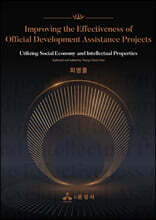
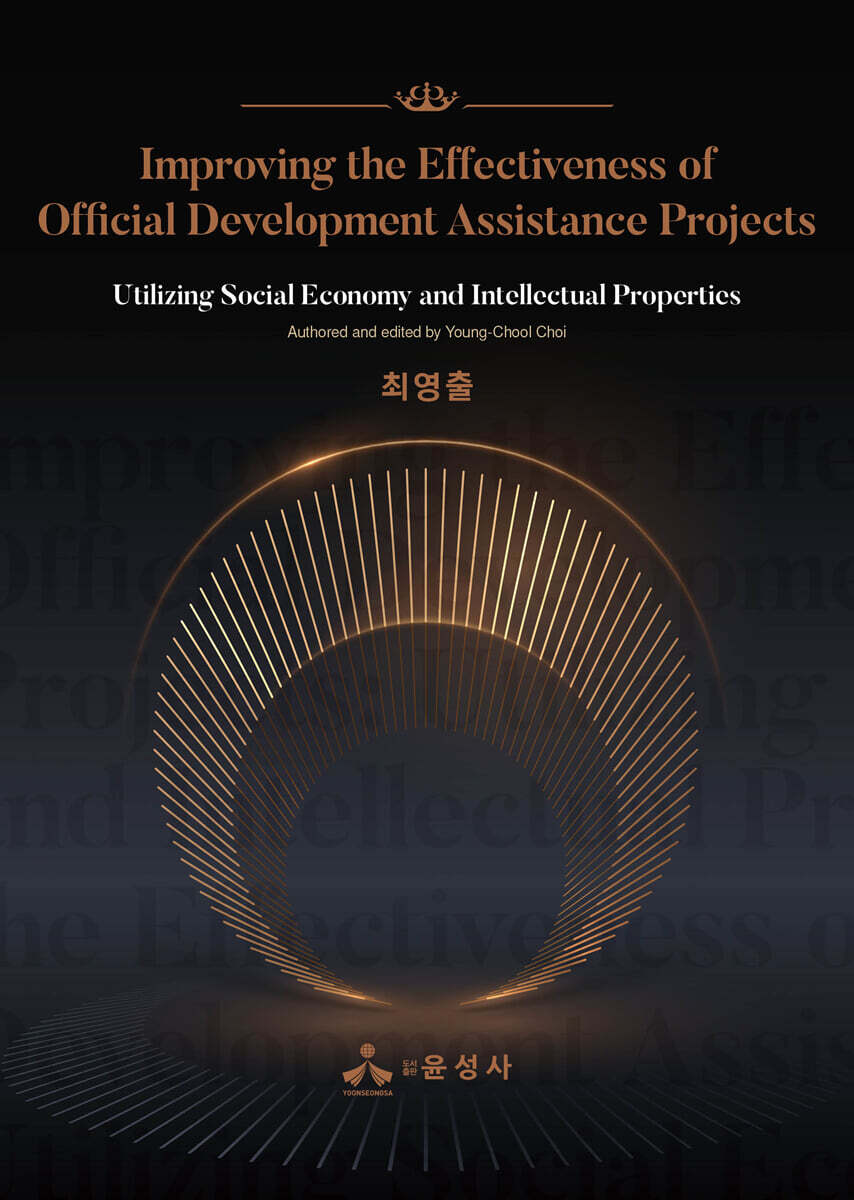
Improving the Effectiveness of Official Development Assistance Projects
Utilizing Social Economy and Intellectual Properties
이미 소장하고 있다면 판매해 보세요.
- 국내배송만 가능
- 문화비소득공제 가능
책소개
목차
|
Part 1 Conditions for Successful ODA Projects
Chapter 1 Analyzing Research Trends in Official Development Assistance Chapter 2 What Are the Combinations of Factors Enhancing the Effectiveness of ODA? Chapter 3 A Preliminary Study of the Monitoring System for ODA Projects for Vietnam Chapter 4 A Methodological Approach to Portfolio Evaluation for ODA Projects, with Special Reference to Contribution Analysis Part 2 ODA and Social Economy Chapter 5 Attributes of the Concept of Social Value and Major Issues Related to It Chapter 6 Policy Considerations for Utilizing Social Enterprises for ODA Projects: Application of Text Mining Analysis Chapter 7 Valuation of the Talent Donation Projects for Rural People in Korea Chapter 8 Strategies for Revitalizing Educational Donation in Korea: Application of System Dynamics Chapter 9 Network Analysis Regarding International Organisations and Donors of Humanitarian Aid: A Korean Perspective Part 3 Appropriate Technology and Intellectual Property Chapter 10 Exploring Strategies for Utilizing Appropriate Technologies (AT) for ODA Projects Chapter 11 Analysing Core Themes and Co-Author Patterns on the Connection between Intellectual Property Rights and Social Enterprises Chapter 12 Utilization of Intellectual Property in Official Development Assistance (ODA) Projects for Developing Countries Chapter 13 Appropriate Resource Allocation of Korea’s ICT ODA to Africa: Using Optimization Simulation Chapter 14 Prioritizing Korean ICT ODA Project Areas and Project Types for Africa Part 4 Restructuring the ODA Policies for Recipient Countries Chapter 15 Identification of Social Issues Following the Coronavirus Pandemic in Korea: Topic Analysis and Ego Network Analysis of Public Health Chapter 16 Searching for Social Characteristics and Policy Measures for Each Stage of the Corona Spread in Korea: Social Network Analysis and Systems Thinking |
저자 소개 1
현 직 충북대학교 행정학과 교수
학 력 충북대학교 행정학과(행정학사)
서울대학교 대학원 행정대학원 행정학과(행정학석사)
영국 University of Newcastle(정책학박사)
주요 경력 한국정책분석평가학회 회장
행정안전부 지방자치단체 합동평가단장/합동평가위원회 위원장
대통령직속 지역발전위원회 위원(공공기관 지방이전 분과위원장)
교육부 외국인유학생관리인증제위원회 위원장
주요 저서 Improving the Effectiveness of Official Development Assistance Projects(Yeunseongsa Publishing, 2022)
현 직 충북대학교 행정학과 교수
학 력 충북대학교 행정학과(행정학사)
서울대학교 대학원 행정대학원 행정학과(행정학석사)
영국 University of Newcastle(정책학박사)
주요 경력 한국정책분석평가학회 회장
행정안전부 지방자치단체 합동평가단장/합동평가위원회 위원장
대통령직속 지역발전위원회 위원(공공기관 지방이전 분과위원장)
교육부 외국인유학생관리인증제위원회 위원장
주요 저서 Improving the Effectiveness of Official Development Assistance Projects(Yeunseongsa Publishing, 2022)
근린자치제도론(공저, 박영사, 2015)
지역경쟁력 강화와 로컬거버넌스(공저, 대영문화사, 2006)
The Dynamics of Public Service Contracting: The British Experiences(The Policy Press, UK, 1999)
연구 분야 정책분석 및 평가, 지방거버넌스, 국제개발, 교육정책
Young-Chool Choi is Director of International Development Institute and Professor of Public Administration at Chungbuk National University, Korea. His main academic interests are policy analysis and evaluation, international development cooperation, and educational policies. He received his Ph.D. degree from the University of Newcastle upon Tyne, UK. He worked as Senior Policy Analyst at the Northern Development Agency, a regional development agency in the UK, and previously as a Senior Research Fellow at the Korea Research Institute for Local Administration, Korea. He is currently the President of Korean Association for Comparative Government Studies.
학 력 충북대학교 행정학과(행정학사)
서울대학교 대학원 행정대학원 행정학과(행정학석사)
영국 University of Newcastle(정책학박사)
주요 경력 한국정책분석평가학회 회장
행정안전부 지방자치단체 합동평가단장/합동평가위원회 위원장
대통령직속 지역발전위원회 위원(공공기관 지방이전 분과위원장)
교육부 외국인유학생관리인증제위원회 위원장
주요 저서 Improving the Effectiveness of Official Development Assistance Projects(Yeunseongsa Publishing, 2022)
근린자치제도론(공저, 박영사, 2015)
지역경쟁력 강화와 로컬거버넌스(공저, 대영문화사, 2006)
The Dynamics of Public Service Contracting: The British Experiences(The Policy Press, UK, 1999)
연구 분야 정책분석 및 평가, 지방거버넌스, 국제개발, 교육정책
Young-Chool Choi is Director of International Development Institute and Professor of Public Administration at Chungbuk National University, Korea. His main academic interests are policy analysis and evaluation, international development cooperation, and educational policies. He received his Ph.D. degree from the University of Newcastle upon Tyne, UK. He worked as Senior Policy Analyst at the Northern Development Agency, a regional development agency in the UK, and previously as a Senior Research Fellow at the Korea Research Institute for Local Administration, Korea. He is currently the President of Korean Association for Comparative Government Studies.
최영출의 다른 상품
품목정보
- 발행일
- 2022년 06월 15일
- 쪽수, 무게, 크기
- 328쪽 | 173*243*30mm
- ISBN13
- 9791191503722
출판사 리뷰
|
Preface
This book is focuses on the overseas development aid provided by Korea to developing countries, exploring in particular how the effectiveness of this aid might be strengthened. In this context, it discusses how Korea’s excellent intellectual properties can be integrated with applied social and economic methodologies, so that they can be of service in underdeveloped countries. The ultimate goal of official development assistance is to improve the incomes and quality of life of the citizens of the underdeveloped countries receiving aid. Job creation is of cardinal importance here in bringing about improvements in incomes, and ultimately, support should be provided to improve equality of life in various different fields. However, even if a range of facilities are installed in underdeveloped countries and equipment is transferred, ultimately, if local residents cannot use these to create new jobs so as to bring about stable income improvements, the aid will have had no results. Countries are constantly being forced to depend on foreign aid. The virtuous circle of rapid economic growth, job creation and personal income improvement in the 1960s and 1970s is the reason why Korea is the only country in the world to have received aid in the past which is itself able to provide aid today. Its example leads us to conclude that one of the important directions that aid to underdeveloped countries should take lies in creating an abundance of jobs in the recipient countries. If Korean aid can create numerous jobs in the recipient countries, and can contribute to income improvements in those countries while at the same time allowing the development of industries in the international development co-operation sector in Korea which provides the aid, this will represent a highly desirable direction for international development co-operation to take in the future. With this aim in view, the present writer is engaged in academic research employing a range of methodologies, in the hope that the products of Korea’s outstanding intellectual capital can be grafted onto the social economy and revitalized, not only in the recipient countries, but also in Korea itself. If Korea’s excellent intellectual attainments can contribute to job creation and income growth for residents of recipient countries, and if at the same time industries that utilize this intellectual property in a social and economic capacity are revitalized in Korea, this will provide a strong opportunity to create a new field of international development cooperation. Conceived against this background, this book is a compilation of articles the writer has published in various academic journals. It is published with the help of the Support Program for the Humanities and the Social Sciences Research Institute which the National Research Foundation of Korea has provided. I wish to express my deep gratitude to the Foundation for supporting the publication of this book. My hope is that, if it can contribute even a little to the field of Korea’s aid projects to developing countries, these projects, which are daily growing in size, may become more effective in the future. Young-Chool Choi, Cheongju City, April 2022 |
사락 별점0
혜택 및 유의사항밑줄0
혜택 및 유의사항
24,000원
총 1개
24,000원