
소득공제
수입
직수입양서
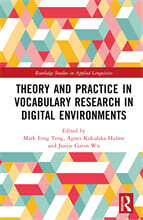
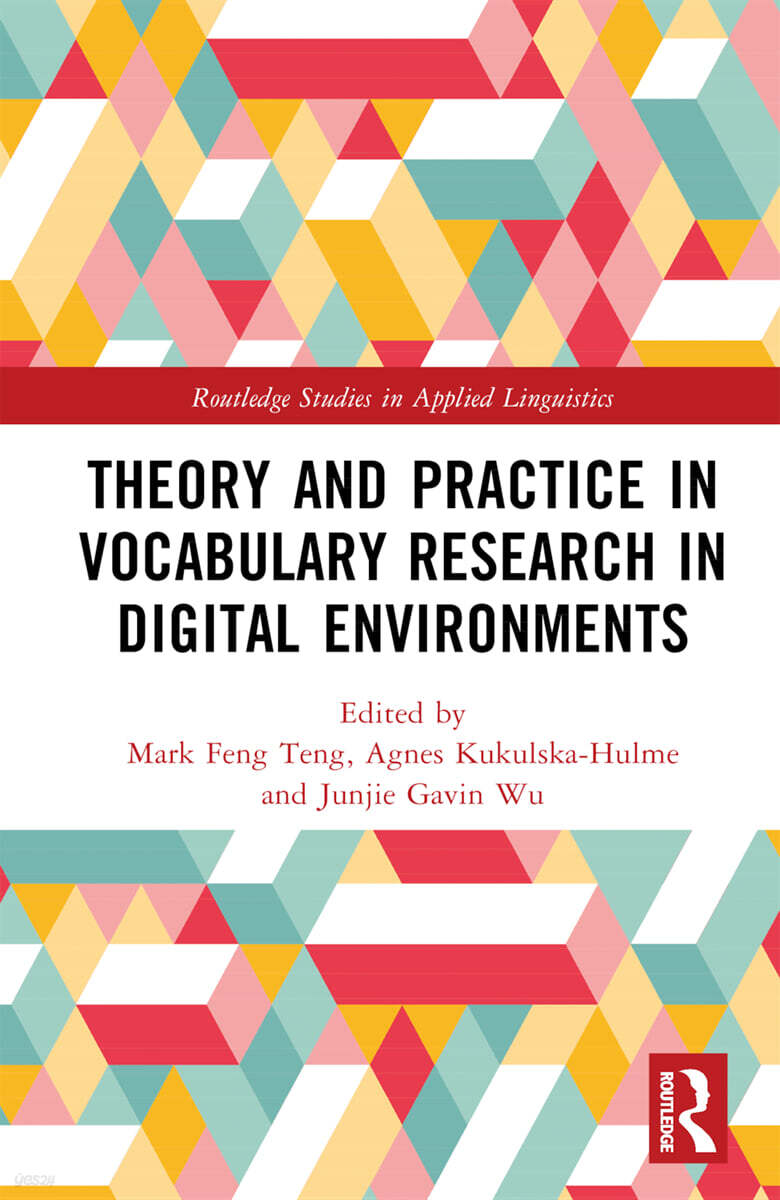
Theory and Practice in Vocabulary Research in Digital Environments
Hardback, 1st Edition
Feng Teng, Mark / Kukulska-Hulme, Agnes / Wu, Junjie Gavin
Routledge
2024.12.27.
이미 소장하고 있다면 판매해 보세요.
- 국내배송만 가능
- 해외 거래처 사정에 의하여 품절/지연 가능
- 도서 정보 중 미표기 사항 안내?
- 문화비소득공제 가능
Routledge Studies in Applied Linguistics
-
 Interdisciplinary Approaches to the Psychology of Multilingual Learners and Teachers 이동Interdisciplinary Approaches to the Psychology of Multilingual Learners and Teachers10% 363,750원
 -
Theories and Methodologies of Individual Differences in Reading 이동Theories and Methodologies of Individual Differences in Reading10% 363,750원
-
Theory and Practice in Vocabulary Research in Digital Environments 이동Theory and Practice in Vocabulary Research in Digital Environments10% 101,490원
-
Cultural Impacts of English as the Scientific Lingua Franca 이동Cultural Impacts of English as the Scientific Lingua Franca20% 323,330원
-
Lesser-Taught Languages in Multilingual Contexts 이동Lesser-Taught Languages in Multilingual Contexts20% 323,330원
-
Mapping Writing Revisions through Keystroke Logging 이동Mapping Writing Revisions through Keystroke Logging20% 323,330원
-
Post-Truth Era and English Language Education 이동Post-Truth Era and English Language Education20% 323,330원
-
Legal and Cultural Dimensions in Arbitration Language 이동Legal and Cultural Dimensions in Arbitration Language20% 323,330원
-
Narratives of English Language Learners in Private Tutoring 이동Narratives of English Language Learners in Private Tutoring20% 323,330원
-
Transnational Approaches to Bilingual and Second Language Teacher Education 이동Transnational Approaches to Bilingual and Second Language Teacher Education10% 101,490원
-
Language for Legislation and Legislation through Language 이동Language for Legislation and Legislation through Language20% 323,330원
-
Decolonizing Academic Writing through Translingualism 이동Decolonizing Academic Writing through Translingualism20% 323,330원
-
Multimodality across Epistemologies in Second Language Research 이동Multimodality across Epistemologies in Second Language Research10% 101,490원
-
Interdisciplinary Research and Innovation in Bilingual and Second Language Teacher Education 이동Interdisciplinary Research and Innovation in Bilingual and Second Language Teacher Education10% 101,490원
-
Current Approaches to Language Ideology and Metalinguistic Discourse 이동Current Approaches to Language Ideology and Metalinguistic Discourse20% 323,330원
-
Theory and Practice in Vocabulary Research in Digital Environments 이동Theory and Practice in Vocabulary Research in Digital Environments10% 363,750원
책소개
목차
|
Contents List of Contributors Preface Mark Feng Teng (Macao Polytechnic University, China) Introduction Introduction to Theory and Practice in Vocabulary Research in Digital Environments Mark Feng Teng1 and Junjie Gavin Wu2 Part I Theories and synthesis Chapter 2. Intentional vocabulary learning through captioned viewing: Comparing Vanderplank’s ‘cognitive-affective model’ with Gesa and Miralpeix (2023) Robert Vanderplank and Mark Feng Teng. Chapter 3. Mapping the Digital Game-Based Vocabulary Learning Landscape: A Comprehensive Bibliometric Exploration Zhaoyang Xiong1, Junjie Gavin Wu1 and Di Zou2 Chapter 4. Development of gloss studies in vocabulary and CALL research Makoto Yoshii Part II Pedagogical practices Chapter 5. A Corpus-based Study of Learners’ Language Learning Trajectories with Captioned Viewing: Implications for Vocabulary Learning Practices Mark Feng Teng and Jesse W. C. Yip Chapter 6. L2 vocabulary learning with an AI chatbot: From linguistic, affective, and cognitive perspectives Sangmin-Michelle Lee Chapter 7. Training to use machine translation for vocabulary learning Yijen Wang and Glenn Stockwell Chapter 8. Korean EFL learners’ vocabulary development through asynchronous CMC and synchronous CM2C in content courses Sung-Yeon Kim Chapter 9. The Anatomy of Word Lists in New Word Level Checker: Description and Comparison Atsushi Mizumoto Chapter 10. Mobile-Assisted Vocabulary Learning in an EAP Context Jeong-Bae Son Chapter 11. Vocabulary learning with Netflix: Exploring intraformal learning practices through the lens of complex dynamic systems theory Antonie Alm andYuki Watanabe Chapter 12. Using TikTok for vocabulary learning: Multimodal implications Yeong-Ju Lee Conclusion Chapter 13. Conclusion: The next generation of studies in multimodal, multilingual and multi-agent vocabulary learning Agnes Kukulska-Hulme Index |
관련 분류
품목정보
- 발행일
- 2024년 12월 27일
- 쪽수, 무게, 크기
- 260쪽 | 560g | 150*230mm
- ISBN13
- 9781032434858
리뷰/한줄평0
상품정보안내
직수입외서의 경우, 해외거래처에서 제공하는 정보가 부족하여 제목, 표지, 가격, 유통상태 등의 정보가 미비하거나 변경되는 경우가 있습니다. 정확한 확인을 원하시는 경우, 일대일 상담으로 문의하여 주시면 답변 드리겠습니다.
(판형과 판수 등이 다양한 도서는 찾으시는 도서의 ISBN을 알려 주시면 보다 빠르고 정확한 안내가 가능합니다.)
해외거래처에서 품절인 경우, 2차 거래선을 통해 유럽과 미국 출판사로 직접 수입이 진행될 수 있습니다.
수입 진행 시점으로 부터 2~3주가 추가로 소요되며, 해외에서도 유통이 원활하지 않은 도서는 품절 안내가 지연될 수 있습니다.
해당 경우, 문자와 메일로 별도 안내를 드리고 있사오니 마이페이지에서 휴대전화번호와 메일주소를 다시 한번 확인해주시기 바랍니다.
(판형과 판수 등이 다양한 도서는 찾으시는 도서의 ISBN을 알려 주시면 보다 빠르고 정확한 안내가 가능합니다.)
해외거래처에서 품절인 경우, 2차 거래선을 통해 유럽과 미국 출판사로 직접 수입이 진행될 수 있습니다.
수입 진행 시점으로 부터 2~3주가 추가로 소요되며, 해외에서도 유통이 원활하지 않은 도서는 품절 안내가 지연될 수 있습니다.
해당 경우, 문자와 메일로 별도 안내를 드리고 있사오니 마이페이지에서 휴대전화번호와 메일주소를 다시 한번 확인해주시기 바랍니다.
363,750원
총 1개
363,750원