
소득공제
수입
직수입양서
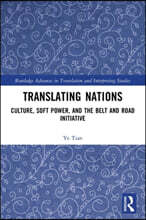
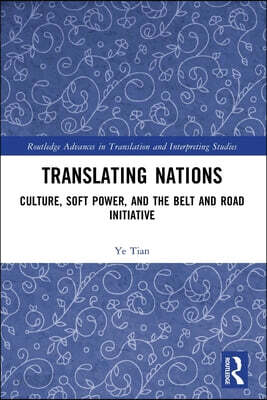
Translating Nations
Culture, Soft Power, and the Belt and Road Initiative
Paperback, 1st Edition
Tian, Ye
Routledge
2026.05.21.
이미 소장하고 있다면 판매해 보세요.
- 국내배송만 가능
- 해외 거래처 사정에 의하여 품절/지연 가능
- 도서 정보 중 미표기 사항 안내?
- 문화비소득공제 가능
Routledge Advances in Translation and Interpreting Studies
-
 Multilingual Practices and Monolingual Mindsets 이동Multilingual Practices and Monolingual Mindsets10% 96,630원
 -
Chinese Political Discourse in Translation 이동Chinese Political Discourse in Translation10% 96,630원
-
Perspectives on Technology and Interpreting 이동Perspectives on Technology and Interpreting10% 346,330원
-
Reimagining Conference Interpreting in the Age of AI 이동Reimagining Conference Interpreting in the Age of AI15% 327,090원
-
Lessons Experimental Translators Can Learn from Finnegans Wake 이동Lessons Experimental Translators Can Learn from Finnegans Wake15% 47,520원
-
Self-Care, Translation Professionalization, and the Translator’s Ethical Agency 이동Self-Care, Translation Professionalization, and the Translator’s Ethical Agency15% 91,260원
-
Bergsonian Approach to Translation and Time 이동Bergsonian Approach to Translation and Time15% 91,260원
-
Mapping the Research Landscape of Interpreter and Translator Education 이동Mapping the Research Landscape of Interpreter and Translator Education15% 91,260원
-
Mapping Crowdsourcing Translation in China 이동Mapping Crowdsourcing Translation in China15% 91,260원
-
Canonisation through Translation and Retranslation 이동Canonisation through Translation and Retranslation15% 327,090원
-
Mapping Meaning in Translation through Force Dynamics 이동Mapping Meaning in Translation through Force Dynamics15% 327,090원
-
Languages, Cultures, and Health in a Global City 이동Languages, Cultures, and Health in a Global City15% 327,090원
책소개
목차
|
Contents Acknowledgements Introduction 0.1 Purpose 0.2 Main thesis of the book 0.3 Chapter overview Chapter 1 Map-Sketching as an Interdisciplinary Method: Against Map, Linearity, and Mastery 1.1 Map and power: Inspirations from critical cartography 1.1.1 Critical cartography, maps, and power 1.1.2 The map of TS and its problems 1.2 Sketch map as a method: Line, meshwork, and rhizomatic epistemology 1.2.1 Sketch map and lines of a meshwork 1.2.2 Rhizome 1.2.3 Serendipity and translation 1.3 Conclusion Part I: Culture as Defined by Translation Chapter 2 Culture as Meaning Making 2.1 Culture as a lifestyle 2.2 Culture as a system 2.3 Culture as signs and meanings Chapter 3 Culture function and translation 3.1 Culture differentiates 3.1.1 An anthropological account 3.1.2 A sociological account 3.2 Culture assimilates 3.2.1 Cultural assimilation 3.2.2 Deculturation and acculturation 3.2.3 Cultural fusion 3.3 Overview of culture function: Re-examining globalisation, deculturation, and glocalisation 3.3.1 Globalisation as cosmopolitanism 3.3.2 Globalisation as deculturation Entanglement 1: Culture and Translation Part II: Soft Power, Nation Branding, and Translation Chapter 4 Power and Translation 4.1 Defining power 4.2 Soft power and translation 4.2.l Culture as the resource for soft power 4.2.2. Instruments of soft power 4.2.3 Overview: soft power and translation Chapter 5 Nation Branding as Translation 5.1 Constructability of national identity 5.2 Branding 5.3 Nation branding 5.3.1 Nation branding compared with commercial branding 5.3.2 Nation branding conveying national identity: Nation branding as touching 5.3.3 Soft power as a resource for nation branding: Nation branding as communication and development Entanglement 2: Translation, Power, and Branding Part III: China’s Nation Branding as Translation Chapter 6 Introduction to the BRI: A Geo-Economic, Geo-Political, Geo-Cultural, or Interconnective Initiative? 6.1 The BRI as a geo-economic initiative 6.2 The BRI as a geo-political initiative 6.3 The BRI as a geo-cultural initiative 6.3.1 The BRI and the concept of He: The peace-building and interconnectivity outlook of the BRI 6.3.2 The BRI as eco-translation Chapter 7 The “What” Question: Framing, Reframing, and Stereotypes 7.1 Translation as framing 7.2 Framing in nation branding 7.2.1 Framing as stereotyping 7.2.2 Framing as selecting information 7.2.3 Framing in the BRI: Framing history as an example 7.3 Conclusion: Framing the Silk Road as translatio studii et imperii Chapter 8 The “Who” Question: Translation and Identity in China’s Nation Branding 8.1 Self and otherness 8.2 The self and otherness in TS 8.3 The self and otherness for China 8.3.1 A philosophical exploration 8.3.2 An anthropological exploration 8.4 The self and otherness in BRI branding 8.4.1 From the periphery to the centre 8.4.2 Who is allowed to translate? 8.5 Conclusion: Choose translators with otherness in mind Chapter 9 The “How” Question: How do Nations Communicate their Brands to Others? 9.1 Development communication: An overview 9.1.1 Empowerment 9.1.2 Participatory development 9.2 Development communication and nation branding 9.3 Development communication in the BRI 9.3.1 China’s communication for development: The case of Confucius Institute 9.3.2 China’s communication about development 9.3.3 China’s communication of development 9.4 Conclusion: Development translation Entanglement 3: Who, what, and how to brand a nation from a translational perspective Chapter 10 Translation Studies as Knowledge, Method, and Meta-Discipline 10.1 Revisiting research questions 10.1.1 Translation as connection 10.1.2 Translation as differentiation and assimilation 10.1.3 Translation as criticism of authority 10.1.4 Translation as a process rather than a product 10.2 Implications 10.2.1 Translation knowledge 10.2.2 Translation as a method 10.2.3 TS as a meta-discipline 10.3 Potential for future research Bibliography Index |
관련 분류
품목정보
- 발행일
- 2026년 05월 21일
- 쪽수, 무게, 크기
- 238쪽 | 460g | 150*230mm
- ISBN13
- 9781032663258
사락 별점0
혜택 및 유의사항밑줄0
혜택 및 유의사항상품정보안내
직수입외서의 경우, 해외거래처에서 제공하는 정보가 부족하여 제목, 표지, 가격, 유통상태 등의 정보가 미비하거나 변경되는 경우가 있습니다. 정확한 확인을 원하시는 경우, 일대일 상담으로 문의하여 주시면 답변 드리겠습니다.
(판형과 판수 등이 다양한 도서는 찾으시는 도서의 ISBN을 알려 주시면 보다 빠르고 정확한 안내가 가능합니다.)
해외거래처에서 품절인 경우, 2차 거래선을 통해 유럽과 미국 출판사로 직접 수입이 진행될 수 있습니다.
수입 진행 시점으로 부터 2~3주가 추가로 소요되며, 해외에서도 유통이 원활하지 않은 도서는 품절 안내가 지연될 수 있습니다.
해당 경우, 문자와 메일로 별도 안내를 드리고 있사오니 마이페이지에서 휴대전화번호와 메일주소를 다시 한번 확인해주시기 바랍니다.
(판형과 판수 등이 다양한 도서는 찾으시는 도서의 ISBN을 알려 주시면 보다 빠르고 정확한 안내가 가능합니다.)
해외거래처에서 품절인 경우, 2차 거래선을 통해 유럽과 미국 출판사로 직접 수입이 진행될 수 있습니다.
수입 진행 시점으로 부터 2~3주가 추가로 소요되며, 해외에서도 유통이 원활하지 않은 도서는 품절 안내가 지연될 수 있습니다.
해당 경우, 문자와 메일로 별도 안내를 드리고 있사오니 마이페이지에서 휴대전화번호와 메일주소를 다시 한번 확인해주시기 바랍니다.
96,630원
총 1개
96,630원