

소득공제
수입
직수입양서
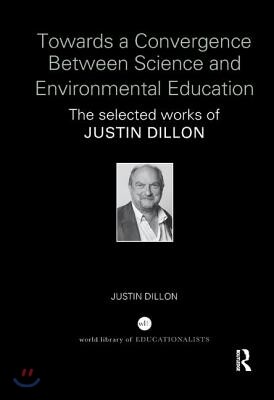
Towards a Convergence Between Science and Environmental Education
The selected works of Justin Dillon
Paperback, 1st Edition
Dillon, Justin
Routledge
2019.04.15.
이미 소장하고 있다면 판매해 보세요.
- 국내배송만 가능
- 해외 거래처 사정에 의하여 품절/지연 가능
- 도서 정보 중 미표기 사항 안내?
- 문화비소득공제 가능
World Library of Educationalists
-
 Gender and Environmental Education: Feminist and Other(ed) Perspectives 이동Gender and Environmental Education: Feminist and Other(ed) Perspectives10% 94,620원
-
Phenomenological Perspectives on Place, Lifeworlds, and Lived Emplacement 이동Phenomenological Perspectives on Place, Lifeworlds, and Lived Emplacement10% 88,570원
-
Gender and Environmental Education: Feminist and Other(ed) Perspectives 이동Gender and Environmental Education: Feminist and Other(ed) Perspectives15% 327,090원
-
Ideological, Cultural, and Linguistic Roots of Educational Reforms to Address the Ecological Crisis 이동Ideological, Cultural, and Linguistic Roots of Educational Reforms to Address the Ecological Crisis10% 94,620원
-
Phenomenological Perspectives on Place, Lifeworlds, and Lived Emplacement 이동Phenomenological Perspectives on Place, Lifeworlds, and Lived Emplacement10% 293,980원
-
Sociology of Assessment: Comparative and Policy Perspectives 이동Sociology of Assessment: Comparative and Policy Perspectives10% 84,550원
-
Critical Literacy, Schooling, and Social Justice 이동Critical Literacy, Schooling, and Social Justice10% 88,570원
-
Communicative Competence, Classroom Interaction, and Educational Equity 이동Communicative Competence, Classroom Interaction, and Educational Equity10% 88,570원
-
Sociology of Assessment: Comparative and Policy Perspectives 이동Sociology of Assessment: Comparative and Policy Perspectives10% 346,330원
-
Writing Performance, Identity, and Everyday Life 이동Writing Performance, Identity, and Everyday Life10% 94,620원
-
Dysconscious Racism, Afrocentric Praxis, and Education for Human Freedom: Through the Years I Keep on Toiling 이동Dysconscious Racism, Afrocentric Praxis, and Education for Human Freedom: Through the Years I Keep on Toiling10% 94,620원
-
Language and the Joint Creation of Knowledge 이동Language and the Joint Creation of Knowledge10% 100,660원
-
Educating Young Children: A Lifetime Journey into a Froebelian Approach 이동Educating Young Children: A Lifetime Journey into a Froebelian Approach10% 346,330원
-
Language and the Joint Creation of Knowledge 이동Language and the Joint Creation of Knowledge10% 346,330원
-
Towards a Convergence Between Science and Environmental Education 이동Towards a Convergence Between Science and Environmental Education10% 94,620원
-
Education, Ethnicity, Society and Global Change in Asia 이동Education, Ethnicity, Society and Global Change in Asia10% 100,660원
-
Ideological, Cultural, and Linguistic Roots of Educational Reforms to Address the Ecological Crisis 이동Ideological, Cultural, and Linguistic Roots of Educational Reforms to Address the Ecological Crisis10% 346,330원
-
Writing Performance, Identity, and Everyday Life 이동Writing Performance, Identity, and Everyday Life10% 346,330원
책소개
목차
|
Contents Preface Introduction Section 1: On Habitus
Section 2: On methodological issues Section 3: Developing theories of learning, identity and culture Section 4: Challenges and opportunities - science, the environment and the outdoors Section 5: Classroom issues - the emergence of Science|Environment|Health Section 6: Science engagement and communication Section 7: Science, Environment and sustainability The final section sets out my position on the relationship between science, the environment and sustainability. #22 is a critique of simplistic thinking about the relationship between science and environmental education. #23 is a critique of education for sustainable development. #24 lays out my current thinking on the need for a convergence of science and environmental education. Final thoughts |
관련 분류
품목정보
- 발행일
- 2019년 04월 15일
- 쪽수, 무게, 크기
- 380쪽 | 476g | 150*230mm
- ISBN13
- 9781138345324
사락 별점0
혜택 및 유의사항밑줄0
혜택 및 유의사항상품정보안내
직수입외서의 경우, 해외거래처에서 제공하는 정보가 부족하여 제목, 표지, 가격, 유통상태 등의 정보가 미비하거나 변경되는 경우가 있습니다. 정확한 확인을 원하시는 경우, 일대일 상담으로 문의하여 주시면 답변 드리겠습니다.
(판형과 판수 등이 다양한 도서는 찾으시는 도서의 ISBN을 알려 주시면 보다 빠르고 정확한 안내가 가능합니다.)
해외거래처에서 품절인 경우, 2차 거래선을 통해 유럽과 미국 출판사로 직접 수입이 진행될 수 있습니다.
수입 진행 시점으로 부터 2~3주가 추가로 소요되며, 해외에서도 유통이 원활하지 않은 도서는 품절 안내가 지연될 수 있습니다.
해당 경우, 문자와 메일로 별도 안내를 드리고 있사오니 마이페이지에서 휴대전화번호와 메일주소를 다시 한번 확인해주시기 바랍니다.
(판형과 판수 등이 다양한 도서는 찾으시는 도서의 ISBN을 알려 주시면 보다 빠르고 정확한 안내가 가능합니다.)
해외거래처에서 품절인 경우, 2차 거래선을 통해 유럽과 미국 출판사로 직접 수입이 진행될 수 있습니다.
수입 진행 시점으로 부터 2~3주가 추가로 소요되며, 해외에서도 유통이 원활하지 않은 도서는 품절 안내가 지연될 수 있습니다.
해당 경우, 문자와 메일로 별도 안내를 드리고 있사오니 마이페이지에서 휴대전화번호와 메일주소를 다시 한번 확인해주시기 바랍니다.
94,620원
총 1개
94,620원
