
이미 소장하고 있다면 판매해 보세요.
- 해외배송 가능?
- 문화비소득공제 가능
목차
|
Foreword David McCann
PART I SIJO: Korea’s Poetry Form 1 The Sijo and Performance David McCann 3 2 Korean Sijo, Chinese Jueju, and Japanese Haiku Mark Peterson 15 3 Sijo in the USA Lucy Park 25 4 Contemporary Sijo Poets in Korea and North America Lucy Park 33 5 Sijo Written in Other Languages Lucy Park 63 6 Sijo and Music Lucy Park 77 7 Cultural Dimension in Sijo Translation and Variations of Sijo Format Seong-Kon Kim 93 8 Sijo Makes You Smarter Linda Sue Park 101 PART II Sijo Lesson Plans 1 Sijo in an American Classroom: Writing, Editing, Working Virtually and In-Person Elizabeth Jorgensen 111 2 Sijo Lesson Plan for Elementary School Students Elizabeth Jorgensen 141 3 Sijo: Why Teaching Korean Poetry Matters in a History Class Deborah Holland 147 4 Reading and Writing Sijo Tracy Kaminer 155 5 Writing Haiku and Sijo: Two East Asian Poetry Forms Chuck Newell 165 6 Sijo Teaching Guide for Children Seo Kwan-ho (Adapted by Lucy Park) 171 PART III My Favorite Sijo Drawings by Wonsook Kim 1 Dreams on a Lake Michael Chung (2008) David McCann 189 2 Untitled Creasy Clauser (2009) David McCann 191 3 Secret Song Taylor Edwards (2009) David McCann 193 4 Sijo Sijo Alex Griffin (2011) Molly Gaudry 195 5 I Have Heard Hollister Rhone (2012) Emily Yoon 197 6 Still American Roberto Santos (2013) Mary Connor and Elgin-Bokari T. Smith 200 7 Untitled Hapshiba Kwon (2014) Lee Herrick and Ivanna Yi 203 8 Overcoming the Limitations Zion Kim (2015) Joonok Huh 206 9 Emma Austin Snell (2016) Mark Peterson 210 10 The Sanctuary Bella Dalton-Fenkl (2016) Lucy Park 213 11 Back in New Orleans Dante Kirkman (2016) Lucy Park 215 12 Untitled Clint Gersabeck (2017) Chuck Newell 218 13 Untitled Aidan Boyle (2017) Deb Holland 220 14 Season That Never Comes Bryce Toussaint (2018) Elizabeth Jorgensen 222 15 Belated Breakfast Toni Smith (2018) Elizabeth Jorgensen 225 16 Abandoned Lily Daniels (2019) David Krolikoski 227 17 A Kisaeng’s Sijo Hye In Lee (2019) Elizabeth Jorgensen 230 18 Lost Letters Andy Zhao (2020) Mark Peterson 234 19 Untitled Alice Davidson (2020) Mark Peterson 236 20 Social Distancing Julie Shute (2020) Nick Chiarkas 238 21 Coming home Trace Morrissey (2020) Seong-Kon Kim 240 22 In Middle School Esther Kim (2020) Seong-Kon Kim 243 23 but today, I hear Hannah Kim (2020) Robert Yune and Christine Hyung-Oak Lee 246 24 Nature Walk Jeffrey Bolognese (2020) Tracy Kaminer 249 Contributors 253 Index of Poems 259 References 269 |
저자 소개 11
Deborah Holland is a history teacher at D’Evelyn High School in the Denver metro area, and has also taught in Arizona and Venezuela. She currently teaches Eastern Civilizations, which includes a three-week unit on Korea, and AP Psychology. She first learned about sijo at the 2014 Korean Academy for Educators Seminar in Los An
Deborah Holland is a history teacher at D’Evelyn High School in the Denver metro area, and has also taught in Arizona and Venezuela. She currently teaches Eastern Civilizations, which includes a three-week unit on Korea, and AP Psychology. She first learned about sijo at the 2014 Korean Academy for Educators Seminar in Los Angeles and has taught it ever since. She has shared her enthusiasm of sijo by teaching other educators about the poetry at an NCTA workshop, a Korean War Legacy workshop, and at the National Council of Social Studies. Besides her work with the Sejong Cultural Society, she is a teacher fellow with Qatar Foundation International, which promotes education about the Middle East, as well as with the Engaging Eurasia Teacher Fellowship through Harvard.
Elizabeth Jorgensen is a writer and teacher. She has presented on sijo at a variety of conferences, including National Council of Teachers of English, Wisconsin State Reading Association, Wisconsin Writers Association, and elsewhere. Her articles on sijo have been published in English Journal, Azalea, Edutopia, Teachers & Wri
Elizabeth Jorgensen is a writer and teacher. She has presented on sijo at a variety of conferences, including National Council of Teachers of English, Wisconsin State Reading Association, Wisconsin Writers Association, and elsewhere. Her articles on sijo have been published in English Journal, Azalea, Edutopia, Teachers & Writers Magazine, and Whale Road Review, among others. Jorgensen has received numerous awards, including Carroll University’s Graduate of the Last Decade, Arrowhead Union High School’s teacher of the year, and The Henry Ford’s Innovation Nation Teacher Innovator Award. She was a Lucille S. Pooley Award winner (for Successful Techniques in Teaching Composition in the Schools of Wisconsin) and the Jarvis E. Bush winner from the Wisconsin Council of Teachers of English. Learn more on her website: lizjorgensen.weebly.com
Tracy Kaminer is a retired English teacher who has taught at Marist School in Atlanta and Randolph-Macon Academy in Front Royal, Virginia. She specialized in teaching world literature in high school and at community colleges. She also taught ESL in Egypt and in the US. Now she and her husband live near Charlottesville, Virgin
Tracy Kaminer is a retired English teacher who has taught at Marist School in Atlanta and Randolph-Macon Academy in Front Royal, Virginia. She specialized in teaching world literature in high school and at community colleges. She also taught ESL in Egypt and in the US. Now she and her husband live near Charlottesville, Virginia, and she works part time in undergraduate admissions for the University of Virginia.
Seong-Kon Kim is a professor emeritus of Seoul National University and a visiting scholar at Dartmouth College. From 2012 to 2017, Kim was President of the Literary Translation Institute of Korea (a ministerial appointment with the Government of the Republic of Korea). On May 19, 2017, Kim received an Honorary Doctorate of Hu
Seong-Kon Kim is a professor emeritus of Seoul National University and a visiting scholar at Dartmouth College. From 2012 to 2017, Kim was President of the Literary Translation Institute of Korea (a ministerial appointment with the Government of the Republic of Korea). On May 19, 2017, Kim received an Honorary Doctorate of Humane Letters from the State University of New York "in recognition of the profound impact Professor Kim has had as a cultural and literary bridge between Korea and the United States.”
Professor Kim received his Ph.D. in English from SUNY/Buffalo under Professor Leslie A. Fiedler and studied comparative literature at Columbia University under Professor Edward W. Said. Professor Kim has received, among others, the SUNY/Buffalo Internationally Distinguished Alumni Award, CU Distinguished Alumnus Award, and the Fulbright Distinguished Alumnus Award.
He was the founding president of the Korean Association of Literature and Film from 1998 to 2001, and was president of the International Association of Comparative Korean Studies from 2001 to 2003, president of the Korean Association of Modern Fiction in English from 2004 to 2006, and president of the American Studies Association of Korea from 2007 to 2008. Kim was chairman of the Development and Promotion Council of the English Language and Literature Association of Korea from 2004 to 2005.
A prizewinning literary critic, Kim initiated the debate on literary postmodernism for the first time in Korea in the late 1970s and early 1980s. He was also a pioneer in postcolonialism and cultural studies in Korea. His books on postmodernism, postcolonialism, and cultural studies have greatly influenced Korean writers and scholars. In 2008, Kim received the prestigious Kim Hwantae Award for Literary Criticism and in 2014 the Woo Ho Humanities Award.
Kim was the editor of literary journals such as Literature & Thought, 21st Century Literature, Contemporary World Literature and Korea Journal. In addition, Kim has been a regularly featured columnist for the Korea Herald since 2003. His Herald columns have frequently appeared in international media such as The Nation, The China Post, AsiaOne, Pakistan Observer, The Star, Yahoo! News, The Straits Times, The Kathmandu Post, The Statesman, The World Weekly and others. He served as co-editor of Korea Journal published by the Korean National Commission for UNESCO for 2015-2016. Kim was appointed as head judge of the prestigious Ho-am Prize Selection Committee, a Korean version of the Nobel Prize, and also the Segye Ilbo Literary Prize. Presently, he is a judge for two prestigious literary awards: the Yi Sang Literary Award and the Park Kyungni Literary Prize.
Professor Kim received his Ph.D. in English from SUNY/Buffalo under Professor Leslie A. Fiedler and studied comparative literature at Columbia University under Professor Edward W. Said. Professor Kim has received, among others, the SUNY/Buffalo Internationally Distinguished Alumni Award, CU Distinguished Alumnus Award, and the Fulbright Distinguished Alumnus Award.
He was the founding president of the Korean Association of Literature and Film from 1998 to 2001, and was president of the International Association of Comparative Korean Studies from 2001 to 2003, president of the Korean Association of Modern Fiction in English from 2004 to 2006, and president of the American Studies Association of Korea from 2007 to 2008. Kim was chairman of the Development and Promotion Council of the English Language and Literature Association of Korea from 2004 to 2005.
A prizewinning literary critic, Kim initiated the debate on literary postmodernism for the first time in Korea in the late 1970s and early 1980s. He was also a pioneer in postcolonialism and cultural studies in Korea. His books on postmodernism, postcolonialism, and cultural studies have greatly influenced Korean writers and scholars. In 2008, Kim received the prestigious Kim Hwantae Award for Literary Criticism and in 2014 the Woo Ho Humanities Award.
Kim was the editor of literary journals such as Literature & Thought, 21st Century Literature, Contemporary World Literature and Korea Journal. In addition, Kim has been a regularly featured columnist for the Korea Herald since 2003. His Herald columns have frequently appeared in international media such as The Nation, The China Post, AsiaOne, Pakistan Observer, The Star, Yahoo! News, The Straits Times, The Kathmandu Post, The Statesman, The World Weekly and others. He served as co-editor of Korea Journal published by the Korean National Commission for UNESCO for 2015-2016. Kim was appointed as head judge of the prestigious Ho-am Prize Selection Committee, a Korean version of the Nobel Prize, and also the Segye Ilbo Literary Prize. Presently, he is a judge for two prestigious literary awards: the Yi Sang Literary Award and the Park Kyungni Literary Prize.
Wonsook Kim (Artist) was born in 1953 in Busan, Korea. She began drawing at a young age. Some of her earliest influences came from Korean folk stories and Christian Bible stories. She studied traditions of art in high school and college in Korea, and graduated with a B.S. and Master of Fine Arts degree from Illinois State Uni
Wonsook Kim (Artist) was born in 1953 in Busan, Korea. She began drawing at a young age. Some of her earliest influences came from Korean folk stories and Christian Bible stories. She studied traditions of art in high school and college in Korea, and graduated with a B.S. and Master of Fine Arts degree from Illinois State University in 1978. After graduation, she moved to New York City to pursue a career as a painter and exhibiting artist.
Kim is renowned for the symbolic narratives reflected in her drawings, prints, paintings, sculptures, and books. Kim’s artworks are the result of her lifetime experiences in Korea and the United States, and have been shown in over sixty solo exhibitions around the world. She was awarded an honorary Doctor of Arts degree to recognize her artistic achievements during Illinois State University’s Founders Day on February 21, 2019.
Illinois State University’s College of Fine Arts and the School of Art was named the Wonsook Kim College of Fine Arts and the Wonsook Kim School of Art on September 12, 2019, in recognition of Kim’s generosity to her alma mater. She is married to Thomas Park Clement, a Korean-American adoptee, who is a medical device inventor and entrepreneur.
Kim is renowned for the symbolic narratives reflected in her drawings, prints, paintings, sculptures, and books. Kim’s artworks are the result of her lifetime experiences in Korea and the United States, and have been shown in over sixty solo exhibitions around the world. She was awarded an honorary Doctor of Arts degree to recognize her artistic achievements during Illinois State University’s Founders Day on February 21, 2019.
Illinois State University’s College of Fine Arts and the School of Art was named the Wonsook Kim College of Fine Arts and the Wonsook Kim School of Art on September 12, 2019, in recognition of Kim’s generosity to her alma mater. She is married to Thomas Park Clement, a Korean-American adoptee, who is a medical device inventor and entrepreneur.
David McCann taught Korean literature at Harvard University until his retirement in 2014. He particularly enjoyed teaching his class Writing Asian Poetry, a creative writing class exploring the Classical Chinese, Japanese haiku, and Korean sijo forms for English-language poetry. His more recent books include Urban Temple, a c
David McCann taught Korean literature at Harvard University until his retirement in 2014. He particularly enjoyed teaching his class Writing Asian Poetry, a creative writing class exploring the Classical Chinese, Japanese haiku, and Korean sijo forms for English-language poetry. His more recent books include Urban Temple, a collection of his English-language sijo poems from Bo-Leaf Press in 2010, published in a dual-language, Korean and English edition by Changbi Publishers in Seoul in 2012; Slipping Away, a Korean p’ansori-style narrative poem from Finishing Line Press, a chapbook published in 2013; and Same Bird, new and selected poems from Moon Pie Press in 2016. One of his haiku poems published in Acorn haiku journal received The Haiku Foundation Touchstone Award in 2014 and is included in Haiku 2015, from Modern Haiku Press. McCann translated the poems included in the collection The Temple of Words: An Anthology of Modern Korean Buddhist Poetry published by the Jogye Order of Korean Buddhism, Seoul, in 2017.
Chuck Newell is an English teacher at Notre Dame High School and an award-winning sijo poet. He has taught sijo writing for the past nine years. He first became interested in Korea and Korean poetry because of the many Korean students who have attended his high school over the years. He has attended many seminars about Korean
Chuck Newell is an English teacher at Notre Dame High School and an award-winning sijo poet. He has taught sijo writing for the past nine years. He first became interested in Korea and Korean poetry because of the many Korean students who have attended his high school over the years. He has attended many seminars about Korean culture and has even traveled to Korea. He has three adult children and lives with his wife and two cats in Chattanooga, Tennessee. His cats are often the subject of his poetry.
Linda Sue Park
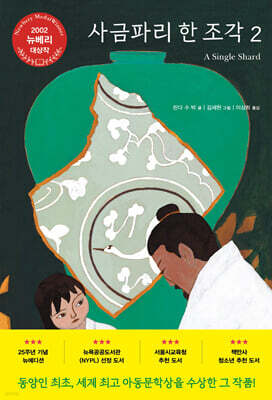
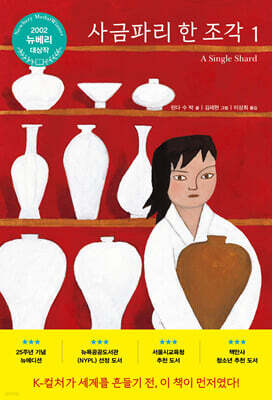
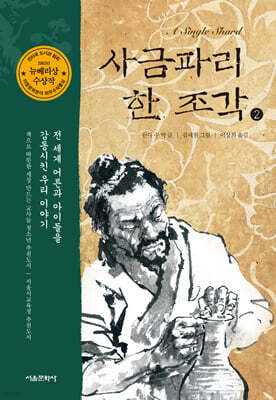
미국 일리노이즈에서 태어나고 자랐지만 한국인 부모님을 둔 엄연한 한국인이다. 스팬포드대 영문학과를 졸업한 후, 음식 칼럼니스트로 활발하게 활동했다. 1999년부터 출간된 작품 『널뛰는 아가씨(seesaw girl)』, 2000년에 출간된 『연싸움(The Kite Fighters)』에는 바로 한국의 옛이야기가 담겨 있다. 그리고 고려 청자 이야기를 담은 『사금라피 한 조각』으로 미국 최고의 아동문학상인 뉴베리상을 수상했다.
린다 수 박의 다른 상품
Lucy Park is one of the founding members of the Sejong Cultural Society, a non-profit organization founded in 2004. As Executive Director, she oversees all programs including the Sejong Music Competition, Sejong Writing Competition, and sijo education programs. She has been very active in teaching about sijo to teachers, stud
Lucy Park is one of the founding members of the Sejong Cultural Society, a non-profit organization founded in 2004. As Executive Director, she oversees all programs including the Sejong Music Competition, Sejong Writing Competition, and sijo education programs. She has been very active in teaching about sijo to teachers, students, and adults throughout the US for over ten years. She developed and compiled extensive reference materials on the basics of English sijo writing, sijo samples, and teaching sijo on the Sejong Cultural Society’s website and YouTube Channel. She pioneered the Sejong Cultural Society's Sijo and Music program, organizing concerts and commissioning composers and songwriters to write sijo music in a variety of musical genres.
Dr. Park has been a faculty member of the University of Illinois at Chicago College of Medicine for over thirty years. She specializes in pediatric allergy, immunology, and pulmonology and received her M.D. from Seoul National University in Korea.
Dr. Park has been a faculty member of the University of Illinois at Chicago College of Medicine for over thirty years. She specializes in pediatric allergy, immunology, and pulmonology and received her M.D. from Seoul National University in Korea.
Mark Peterson (professor emeritus of Korean history, literature and language, Department of Asian and Near Eastern Languages. Brigham Young University, Provo, UT) received B.A. in Asian Studies and Anthropology from Brigham Young University in 1971. He received his M.A. in 1973 and his Ph.D. in 1987, both from Harvard Univers
Mark Peterson (professor emeritus of Korean history, literature and language, Department of Asian and Near Eastern Languages. Brigham Young University, Provo, UT) received B.A. in Asian Studies and Anthropology from Brigham Young University in 1971. He received his M.A. in 1973 and his Ph.D. in 1987, both from Harvard University in the field of East Asian Languages and Civilization. Prior to coming to BYU in 1984 he was the director of the Fulbright program in Korea from 1978 to 1983. He has been the coordinator of the Asian Studies Program and was the director of the undergraduate programs in the David M. Kennedy Center for International Studies. Dr. Peterson is a member of the Association for Asian Studies, where he was formerly the chair of the Korean Studies Committee; was also the book review editor for The Journal of Asian Studies for Korean Studies books. He is also a member of the Royal Asiatic Society, the International Association for Korean Language Education, the International Korean Literature Association, and the American Association of Korean Teachers. He served as past editor-in-chief for the Korea Journal, published by UNESCO in Korea, from 2015 to 2017. Currently he is working with a research center he founded called The Frog Outside the Well Research Center, which publishes an active YouTube channel by that name. He also writes a weekly column for The Korea Times.
Seo, Kwan-ho and is the founder and publisher of Children’s Sijo World (어린이 시조나라) magazine. Seo has published seven anthologies of sijo for children and received numerous accolades as a poet, educator and publisher. He is a dedicated educator who has taught sijo to children for several decades. Seo has also presented at works
Seo, Kwan-ho and is the founder and publisher of Children’s Sijo World (어린이 시조나라) magazine. Seo has published seven anthologies of sijo for children and received numerous accolades as a poet, educator and publisher. He is a dedicated educator who has taught sijo to children for several decades. Seo has also presented at workshops where he coaches educators in how to teach sijo to children.
품목정보
- 발행일
- 2022년 02월 20일
- 쪽수, 무게, 크기
- 284쪽 | 422g | 151*224*16mm
- ISBN13
- 9791130314099
출판사 리뷰
|
Foreword
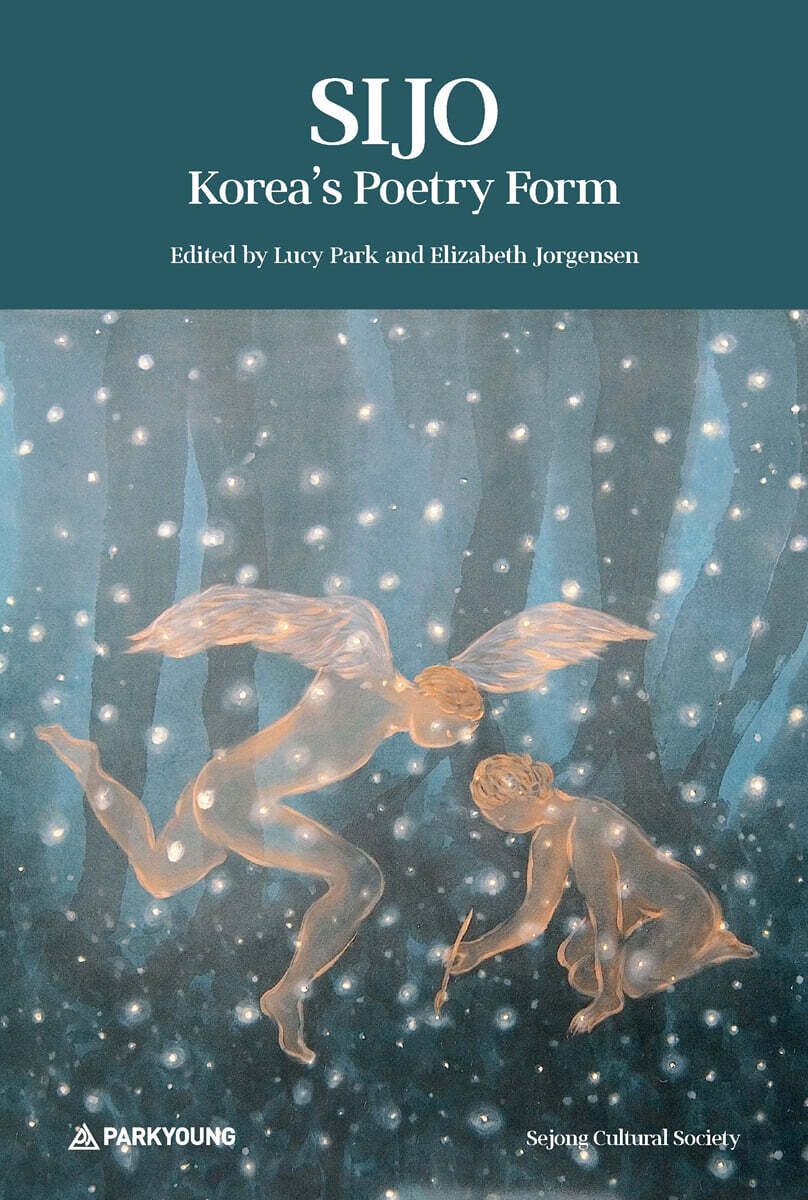
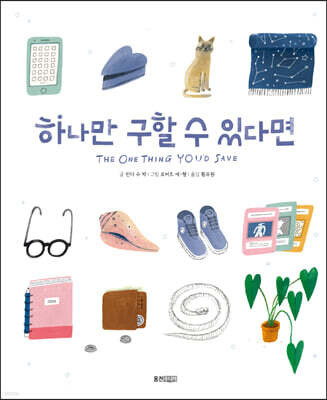
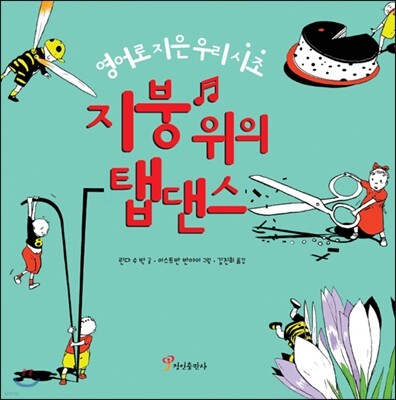
David McCann The Sejong Cultural Society (SCS) in Chicago has played a key role in developing awareness, interest, and involvement in the Korean sijo verse form. Since 2008, the Society has sponsored an annual sijo-writing contest, as well as workshops for teachers to explore ways to bring the sijo into their classrooms. The SCS website provides information, articles, video lectures, performances, and other materials to assist learning about the sijo, writing it and teaching others how to write it. The present volume brings these resources and more into a single unified set for teachers and writers in Part Ⅰ and Ⅱ, followed by an array of sijo poems from the SCS’ annual contest. The contributors to this volume have worked to promote a better understanding of Korean culture and history. I taught Korean literature at Cornell University and Harvard University and turned to writing my own sijo in English relatively recently. My chapter explores sijo’s performance dimensions, not only as a verse form that was sung, but also as a dramatically active, engaged form of literary culture. Linda Sue Park (author of two wonderful collections of sijo poems: Tap Dancing on the Roof, with illustrations by Istvan Banyai, and The One Thing You’d Save, with illustrations by Robert Sae-Heng) presents her reflections on her own discovery and writing of sijo. Dr. Mark Peterson has been involved with numerous international studies programs at Brigham Young University, as Director of the Fulbright Commission in Korea, and with other organizations in Korea and the United States. He sets the Korean sijo alongside the Chinese quatrain, jueju, and Japanese haiku. Elizabeth Jorgensen has worked with the Sejong Cultural Society in their teacher workshops and other activities. A teacher at Arrowhead Union High School in Wisconsin, her chapters present plans for teaching, editing, and virtual presentation of sijo. Dr. Lucy Park and the Sejong Cultural Society have organized workshops in Chicago and other cities, involved with not only the Society’s sijo projects, but also a wide range of other musical, artistic, and community efforts. Her chapters examine the sijo in contemporary music practice, the range of sijo poets in the contemporary literature scenes in Korea and North America, and the expanding range of the sijo’s practice and appeal in languages other than English. The sijo lesson plans present suggestions from teachers who have worked with students at all levels, from elementary through high school and college. Part III of this volume comprises a selection of sijo poems chosen from the annual Sejong Cultural Society contests going back to 2008. Delightful in and of themselves as poems, they also provide examples of what it takes to win a sijo contest, and reflections from experts on what they found appealing about the poems. The contributors to the volume, through a variety of efforts and approaches, share a lively dedication to the recognition and practice of sijo as a Korean verse form having many centuries of history, and to the encouragement of its present and future practice in other languages and cultures. Let us join the gathering! |
사락 별점0
혜택 및 유의사항밑줄0
혜택 및 유의사항
16,000원
총 1개
16,000원