


소득공제
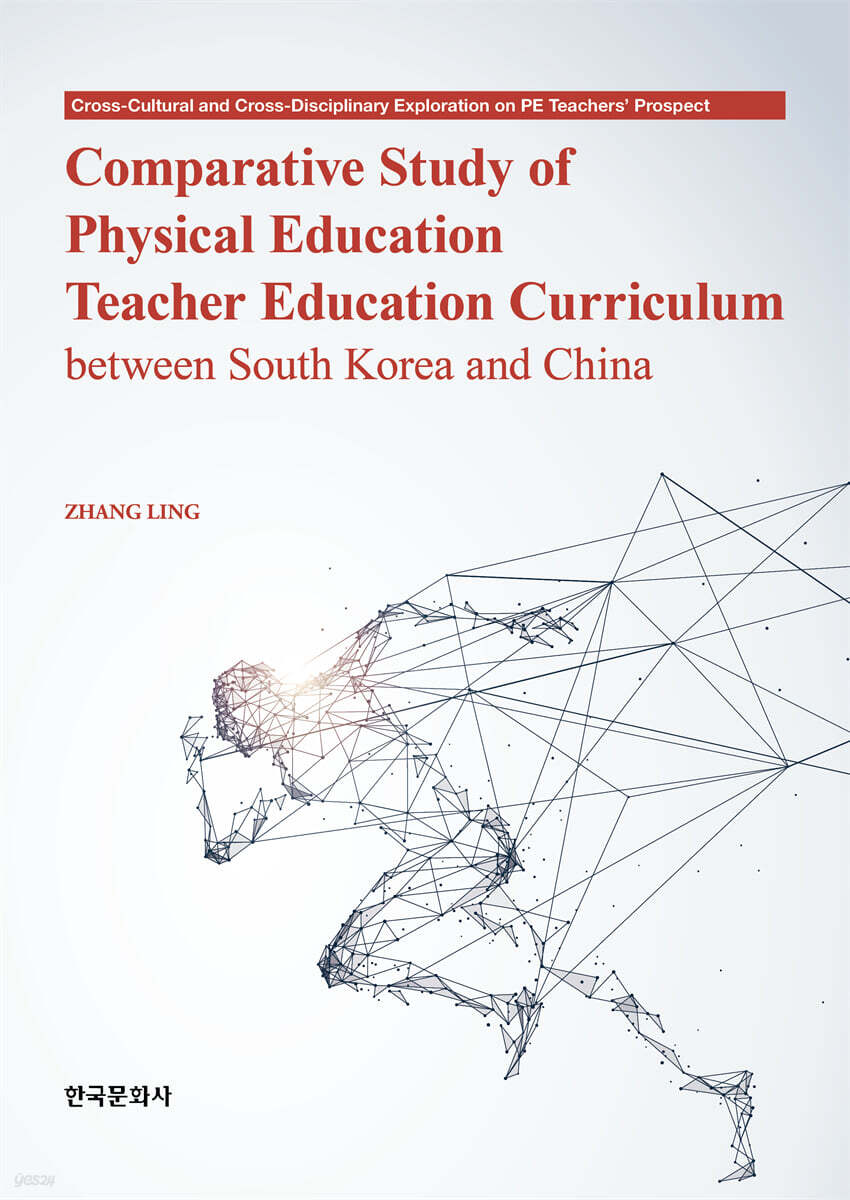
Comparative Study of Physical Education Teacher Education Curriculum between South Korea and China
한국문화사
2023.11.30.
이미 소장하고 있다면 판매해 보세요.
- 국내배송만 가능
- 문화비소득공제 가능
이 상품의 태그









책소개
목차
|
Preface
LIST OF TABLES LIST OF FIGURES CHAPTER 1 Introduction 1. Necessity 1.1. The changes in the social environment 1.2. The basic education reform movement 1.3. The higher education reform movement 1.4. The improvement of the teacher's quality 1.5. The need for curriculum development and reform 1.6. Current issues of PETE 1.7. The importance of comparison between South Korea and China 1.8. Summary 2. Purpose and significance of the research 2.1. Purpose of the research 2.2. Significance of the research 3. Research questions 3.1. What are the similarities and differences between the two countries' PETE curriculum in cultivating objectives? 3.2. What are the similarities and differences between the two countries' PETE curriculum in categories? 3.3. What are the similarities and differences between the countries' PETE curriculum in knowledge structure? 3.4. What are the issues of China PETE curriculum? 4. Definition of concep 4.1. Physical Education Teacher Education (PETE 4.2. Curriculum 4.3. Curriculum program 4.4. Cultivating objective 4.5. Curriculum category 4.6. Curriculum knowledge structure 5. Limitations CHAPTER 2 Review Literature 1. The origin of the curriculum 2. The evolution of the curriculum 3. The development of curriculum theory 4. The development of PETE curriculum 4.1. Development in the world 4.2. Development in China 4.3. Development in South Korea 5. Overview of previous studies 5.1. Overview of previous studies in South Korea 5.2. Overview of previous studies in China 5.3. Summary CHAPTER 3 Methods 1. Research design 1.1. Research procedure 1.2. Research phases 1.3. Implementation steps 2. Data collection 3. Data analysis 3.1. Inductive 3.2. Statistics 4. Data authenticity 4.1. Date source approach 4.2. Data multiview verification CHAPTER 4 Results and Discussion 1. Comparison of cultivating objectives of PETE curriculum between South Korea and China 1.1. The cultivating objectives of South Korea PETE curriculum 1.2. The cultivating objectives of China PETE curriculum 1.3. Comparison of cultivating objectives 1.4. Discussion 2. Comparison of categories of PETE curriculum between South Korea and China 2.1. The categories of South Korea PETE curriculum· 2.2. The categories of China PETE curriculum 2.3. Comparison of categories 2.4. Discussion 3. Comparison of knowledge structure of PETE curriculum between South Korea and China 3.1. The knowledge structure of South Korea PETE curriculum 3.2. The knowledge structure of China PETE curriculum 3.3. Comparison of knowledge structure 3.4. Discussion 4. The issues of China PETE curriculum· 4.1. The credit requirements for each part of the course are too stric 4.2. The methods of teaching practicum are single and not enough 4.3. Lack of teaching profession courses in category, and not enough emphasis on pedagogy courses 4.4. The proportion of optional courses is low, and there are fewer choice courses 4.5. Discussion 5. Comprehensive discussion CHAPTER 5 Conclusions and Suggestions 1. Conclusions 1.1. Cultivating objective 1.2. Curriculum category 1.3. Knowledge structure 1.4. The issues of China PETE curriculum 2. Suggestions 2.1. Enrich the methods of teaching practicum to improve practice effectiveness 2.2. Add physical education safety education 2.3. Pay attention to special groups such as handicapped 2.4. Extend the scope of elective courses CHAPTER 6 The Development Prospect of Future PE Teachers 1. Improving digital skills is a basic requirement for future PE teachers 1.1. Improving digital skills can help PE teachers make better use of digital tools and resources to teach 1.2. Improving digital skills can help PE teachers better conduct instructional assessment and feedback 1.3. Improving digital skills can facilitate the sharing and exchange of educational resources 1.4. Improving digital skills can improve the competitiveness and career development of PE teachers 2. Establishing a digital platform is an important task for future PE teachers 2.1. The establishment of a digital platform can provide more teaching resources 2.2. Establishing a digital platform can promote teachers' professional growth 2.3. The establishment of a digital platform can improve the teaching effect 2.4. The establishment of a digital platform can promote the sharing and exchange of educational resources 3. Building a multidisciplinary cross-knowledge knowledge system is the key path for the development of PE teachers in the future· 3.1. Building a multidisciplinary cross-knowledge knowledge system can improve the professional quality of PE teachers 3.2. Building a multidisciplinary cross-disciplinary knowledge system can promote integration and interaction between disciplines 3.3. Building a multidisciplinary cross-knowledge system can meet the diverse needs of students 3.4. Building a multidisciplinary cross-disciplinary knowledge system can promote the innovation and development of physical education 4. Discovering local and characteristic physical education is an important content for future PE teachers 4.1. Exploring local and characteristic physical education can improve the quality of physical education 4.2. Discover that local and characteristic physical education can meet the diverse needs of students 4.3. Discovering local and characteristic physical education can inherit local culture 4.4. Discover that local and characteristic physical education can promote social developmen 5. Innovative educational concepts and teaching methods are important abilities for future PE teachers 5.1. Innovative educational concepts can help PE teachers better understand and respond to the needs of students 5.2. Innovative teaching methods can improve teaching effectiveness and teaching quality 5.3. Innovative educational concepts and teaching methods can promote teachers' professional development and professional growth References Appendix |
저자 소개 1
장링 박사는 1982년 6월 중국 산둥성 허즈시에서 태어났습니다. 산둥이과기대학 체육대학 조교수, 체육학 박사, 우슈타오루 국가급 심판. 연구 관심사: 체육, 전통적인 국가 스포츠 문화 소통. 학문적 성과: 중국 교육부의 1개 사업, 2개 성(省)의 2개 사업을 주재하여 중국어와 영어로 10편 이상의 논문을 발표하고 국제 및 국내 학회에서 3편의 구술 논문을 발표했습니다. 한국에서의 박사과정 동안 그는 중국과 한국의 체육과 스포츠 문화의 비교 연구에 전념했습니다.
Zhang Ling, male, Ph.D., was born in June 1982 in Heze City, S
장링 박사는 1982년 6월 중국 산둥성 허즈시에서 태어났습니다. 산둥이과기대학 체육대학 조교수, 체육학 박사, 우슈타오루 국가급 심판. 연구 관심사: 체육, 전통적인 국가 스포츠 문화 소통. 학문적 성과: 중국 교육부의 1개 사업, 2개 성(省)의 2개 사업을 주재하여 중국어와 영어로 10편 이상의 논문을 발표하고 국제 및 국내 학회에서 3편의 구술 논문을 발표했습니다. 한국에서의 박사과정 동안 그는 중국과 한국의 체육과 스포츠 문화의 비교 연구에 전념했습니다.
Zhang Ling, male, Ph.D., was born in June 1982 in Heze City, Shandong Province, China. Assistant Professor of School of Physical Education, Shandong University of Science and Technology, Doctor of Physical Education, National Level Referee of Wushu Taolu. Research interests: physical education, traditional national sports culture communication. Academic achievements: published more than ten papers in Chinese and English, presided over 1 project of the Ministry of Education of China, 2 provincial projects, presented 3 oral papers at international and domestic conferences. During his doctoral studies in South Korea, he devoted himself to the comparative study of physical education and sports culture in China and South Korea.
Zhang Ling, male, Ph.D., was born in June 1982 in Heze City, Shandong Province, China. Assistant Professor of School of Physical Education, Shandong University of Science and Technology, Doctor of Physical Education, National Level Referee of Wushu Taolu. Research interests: physical education, traditional national sports culture communication. Academic achievements: published more than ten papers in Chinese and English, presided over 1 project of the Ministry of Education of China, 2 provincial projects, presented 3 oral papers at international and domestic conferences. During his doctoral studies in South Korea, he devoted himself to the comparative study of physical education and sports culture in China and South Korea.
품목정보
- 발행일
- 2023년 11월 30일
- 쪽수, 무게, 크기
- 278쪽 | 182*257*13mm
- ISBN13
- 9791169191654
리뷰/한줄평0
27,000원
총 1개
27,000원