
소득공제
수입
직수입양서
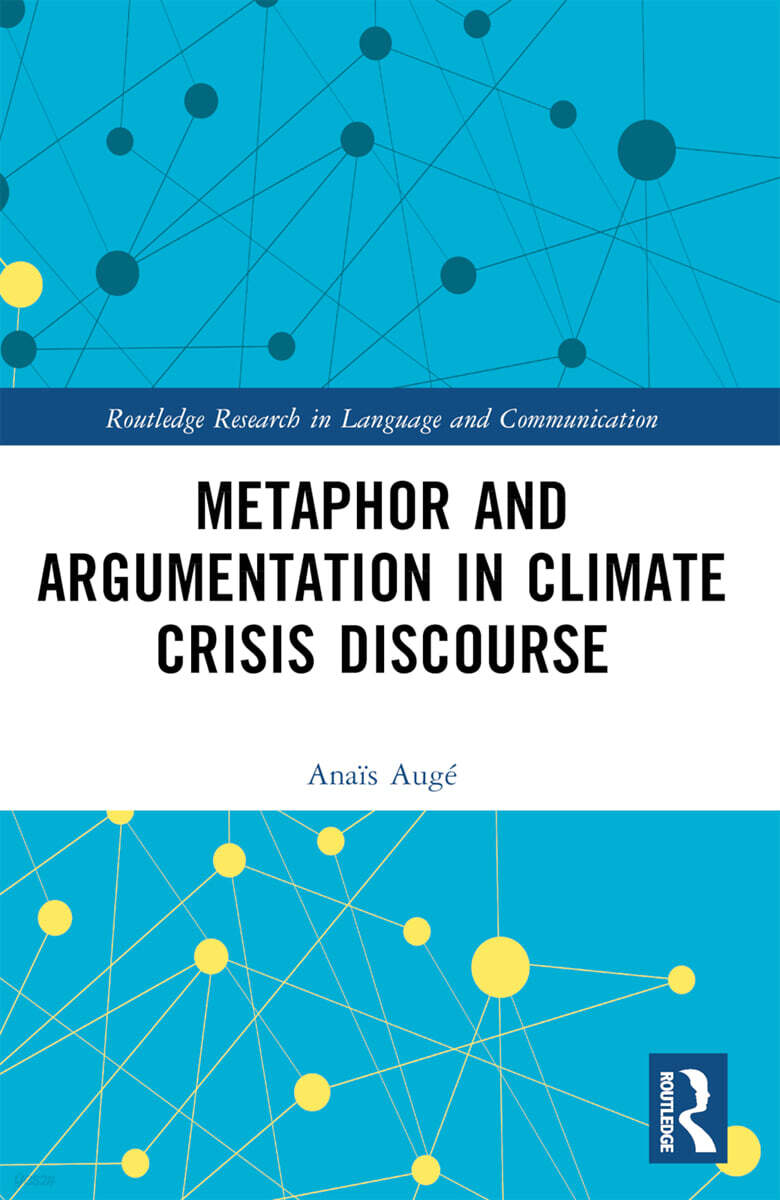
Metaphor and Argumentation in Climate Crisis Discourse
Paperback, 1st Edition
Anaïs Aug
Routledge
2024.11.29.
이미 소장하고 있다면 판매해 보세요.
- 국내배송만 가능
- 해외 거래처 사정에 의하여 품절/지연 가능
- 도서 정보 중 미표기 사항 안내?
- 문화비소득공제 가능
Routledge Research in Language and Communication
-
 On the Past, Present, and Future of Semioethics 이동On the Past, Present, and Future of Semioethics10% 50,590원
 -
Framing Sustainability in Language and Communication 이동Framing Sustainability in Language and Communication10% 97,170원
-
Interdisciplinary Approach to Discourse on Populism 이동Interdisciplinary Approach to Discourse on Populism10% 348,270원
-
Digital Genres for Academic and Professional Communication 이동Digital Genres for Academic and Professional Communication15% 328,920원
-
Multidisciplinary Views on Discourse Genre 이동Multidisciplinary Views on Discourse Genre15% 86,030원
-
Multidisciplinary Approaches to the Discourses of Extremism 이동Multidisciplinary Approaches to the Discourses of Extremism15% 91,770원
-
Discourse of Comfort in Chinese Online Medical Consultations 이동Discourse of Comfort in Chinese Online Medical Consultations15% 328,920원
-
On the Past, Present, and Future of Semioethics 이동On the Past, Present, and Future of Semioethics15% 130,020원
-
Framing Sustainability in Language and Communication 이동Framing Sustainability in Language and Communication15% 328,920원
-
Metaphor and Argumentation in Climate Crisis Discourse 이동Metaphor and Argumentation in Climate Crisis Discourse10% 95,140원
-
Perspectives on Teaching Workplace English in the 21st Century 이동Perspectives on Teaching Workplace English in the 21st Century10% 89,070원
-
Discursive Construction of Place in the Digital Age 이동Discursive Construction of Place in the Digital Age10% 89,070원
-
Multidisciplinary Views on Discourse Genre 이동Multidisciplinary Views on Discourse Genre10% 295,620원
-
Revisiting Trustworthiness in Social Interaction 이동Revisiting Trustworthiness in Social Interaction10% 89,070원
-
Political Myth-making, Nationalist Resistance and Populist Performance 이동Political Myth-making, Nationalist Resistance and Populist Performance10% 89,070원
-
Communicative Spaces in Bilingual Contexts 이동Communicative Spaces in Bilingual Contexts10% 89,070원
-
Multidisciplinary Approaches to the Discourses of Extremism 이동Multidisciplinary Approaches to the Discourses of Extremism10% 348,270원
-
Impact of Plain Language on Legal English in the United Kingdom 이동Impact of Plain Language on Legal English in the United Kingdom10% 89,070원
책소개
목차
|
Table of Contents Table of Contents Acknowledgements Chapter 1: Conceptualisations of the environment 1.1. Introduction 1.2. The complexity of the climate crisis and its metaphors 1.3. Metaphorical arguments in discourse: Narratives and Scenarios 1.4. Overview of the content Chapter 2: Cognitive bias and argumentation: the personification of the environment 2.1. Introduction 2.2. The ORGANS and BODY COMPONENTS of the environment 2.3. The HEALTH of the planet 2.4. NATURE AS A PERSON 2.5. Summary Chapter 3: The role of metaphors in the climate change debate: the political relevance of the topic 3.1. Introduction 3.2. The metaphor of the Cathedral 3.3. The conceptualisation of ANTAGONISTIC RELATIONSHIPS 3.4. ACTIVISM AS A (FAKE) RELIGION 3.5. Summary Chapter 4: Metaphors in argumentative texts: a corpus study 4.1. Introduction 4.2. Metaphors and literary genres: from science to (social) media 4.3. Metaphors in corpus: a case study 4.4. Argumentation through metaphorical exploitation: the selection of data 4.5. Summary Chapter 5: Metaphors of environmental optimism: climate change mitigation 5.1. Introduction 5.2. Green politics: COP26, a journey to a cleaner, greener future 5,3, Green solutions? Nuclear power and the "Rainforest Chernobyl" 5.5. Green solutions or greenwashing? The misuse of optimistic metaphors 5.6. Summary Chapter 6: Metaphors of environmental pessimism: uncontrollable climate crisis 6.1. Introduction 6.2. Activism through metaphor: "There is no Planet B" 6.3. Activism or alarmism? Misrepresentation of activists and "deniers" 6.4. Scientific uncertainties: "Incriminating fingerprint" 6.5. Summary Chapter 7: Global climate (in)justice: metaphorical emphasis on responsibilities 7.1. Introduction 7.2. Debates over (inter-)national responsibilities: the greenhouse world 7.3. Climate justice: definition(s) 7.4. Legal implications: ecocide and eco-terrorism 7.5. Summary Chapter 8: "Earth to COP": international dialogue with the Most Affected People and Areas (MAPA) 8.1. Introduction 8.2. The need to change international discourse about the climate crisis: "words can reframe worlds" 8.3. Promotion of cultures and traditions: the survival of the lands and the survival of the communities 8.4. The "North-South" Divide 8.5. Summary Chapter 9: Climate justice: overlapping crises in metaphorical discourse 9.1. Introduction 9.2. "The climate crisis is not gender neutral": metaphors of ecofeminism 9.3. "Climate change is racist": metaphorical views on environmental racism 9.4. "Let’s talk about climate migrants, not climate refugees": overlapping discourses and metaphors 9.5. Summary Chapter 10: Conclusion 10.1. Introduction 10.2. Arguments through metaphors in climate crisis discourse 10.3. Local climate crises: promotion of global solidarity 10.4. Further perspectives: activism, artivism, and the role of controversies Index |
품목정보
- 발행일
- 2024년 11월 29일
- 쪽수, 무게, 크기
- 190쪽 | 370g | 150*230mm
- ISBN13
- 9781032379807
사락 별점0
혜택 및 유의사항밑줄0
혜택 및 유의사항상품정보안내
직수입외서의 경우, 해외거래처에서 제공하는 정보가 부족하여 제목, 표지, 가격, 유통상태 등의 정보가 미비하거나 변경되는 경우가 있습니다. 정확한 확인을 원하시는 경우, 일대일 상담으로 문의하여 주시면 답변 드리겠습니다.
(판형과 판수 등이 다양한 도서는 찾으시는 도서의 ISBN을 알려 주시면 보다 빠르고 정확한 안내가 가능합니다.)
해외거래처에서 품절인 경우, 2차 거래선을 통해 유럽과 미국 출판사로 직접 수입이 진행될 수 있습니다.
수입 진행 시점으로 부터 2~3주가 추가로 소요되며, 해외에서도 유통이 원활하지 않은 도서는 품절 안내가 지연될 수 있습니다.
해당 경우, 문자와 메일로 별도 안내를 드리고 있사오니 마이페이지에서 휴대전화번호와 메일주소를 다시 한번 확인해주시기 바랍니다.
(판형과 판수 등이 다양한 도서는 찾으시는 도서의 ISBN을 알려 주시면 보다 빠르고 정확한 안내가 가능합니다.)
해외거래처에서 품절인 경우, 2차 거래선을 통해 유럽과 미국 출판사로 직접 수입이 진행될 수 있습니다.
수입 진행 시점으로 부터 2~3주가 추가로 소요되며, 해외에서도 유통이 원활하지 않은 도서는 품절 안내가 지연될 수 있습니다.
해당 경우, 문자와 메일로 별도 안내를 드리고 있사오니 마이페이지에서 휴대전화번호와 메일주소를 다시 한번 확인해주시기 바랍니다.
95,140원
총 1개
95,140원