
소득공제
수입
직수입양서
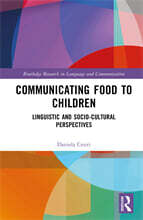
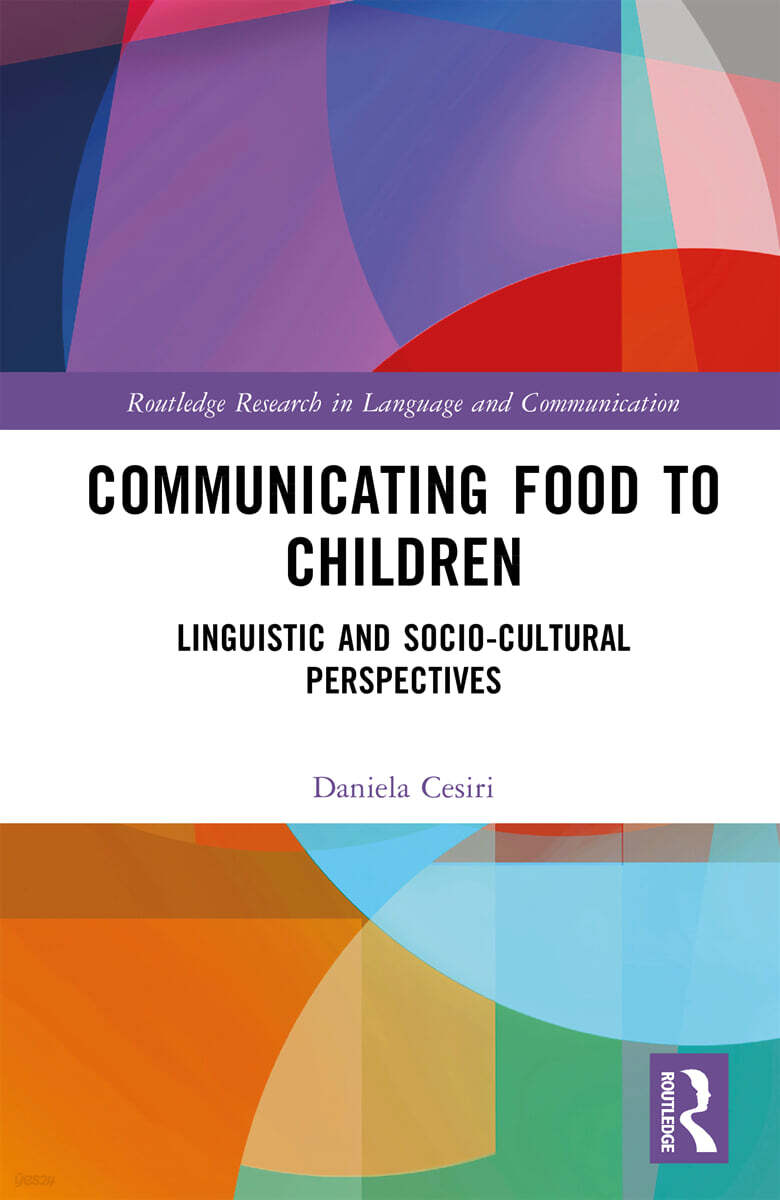
Communicating Food to Children
Linguistic and Socio-Cultural Perspectives
Hardback, 1st Edition
Daniela Cesir
Routledge
2025.09.28.
이미 소장하고 있다면 판매해 보세요.
- 국내배송만 가능
- 해외 거래처 사정에 의하여 품절/지연 가능
- 도서 정보 중 미표기 사항 안내?
- 문화비소득공제 가능
Routledge Research in Language and Communication
-
 On the Past, Present, and Future of Semioethics 이동On the Past, Present, and Future of Semioethics10% 50,590원
 -
Framing Sustainability in Language and Communication 이동Framing Sustainability in Language and Communication10% 97,170원
-
Interdisciplinary Approach to Discourse on Populism 이동Interdisciplinary Approach to Discourse on Populism10% 348,270원
-
Digital Genres for Academic and Professional Communication 이동Digital Genres for Academic and Professional Communication15% 328,920원
-
Multidisciplinary Views on Discourse Genre 이동Multidisciplinary Views on Discourse Genre15% 86,030원
-
Multidisciplinary Approaches to the Discourses of Extremism 이동Multidisciplinary Approaches to the Discourses of Extremism15% 91,770원
-
Discourse of Comfort in Chinese Online Medical Consultations 이동Discourse of Comfort in Chinese Online Medical Consultations15% 328,920원
-
On the Past, Present, and Future of Semioethics 이동On the Past, Present, and Future of Semioethics15% 130,020원
-
Framing Sustainability in Language and Communication 이동Framing Sustainability in Language and Communication15% 328,920원
-
Metaphor and Argumentation in Climate Crisis Discourse 이동Metaphor and Argumentation in Climate Crisis Discourse10% 95,140원
-
Perspectives on Teaching Workplace English in the 21st Century 이동Perspectives on Teaching Workplace English in the 21st Century10% 89,070원
-
Discursive Construction of Place in the Digital Age 이동Discursive Construction of Place in the Digital Age10% 89,070원
-
Multidisciplinary Views on Discourse Genre 이동Multidisciplinary Views on Discourse Genre10% 295,620원
-
Revisiting Trustworthiness in Social Interaction 이동Revisiting Trustworthiness in Social Interaction10% 89,070원
-
Political Myth-making, Nationalist Resistance and Populist Performance 이동Political Myth-making, Nationalist Resistance and Populist Performance10% 89,070원
-
Communicative Spaces in Bilingual Contexts 이동Communicative Spaces in Bilingual Contexts10% 89,070원
-
Multidisciplinary Approaches to the Discourses of Extremism 이동Multidisciplinary Approaches to the Discourses of Extremism10% 348,270원
-
Impact of Plain Language on Legal English in the United Kingdom 이동Impact of Plain Language on Legal English in the United Kingdom10% 89,070원
책소개
목차
|
List of figures List of tables Introduction 0.1. General Premise 0.2. Literature Review 0.2.1. Food, culture, and media 0.2.2. Socio-cultural factors in food-related communication 0.2.3. Culinary Linguistics 0.3. This book: rationale, structure, intended audience Reference Part1. Food and Children: Representations and Products Chapter One. Food and Children. An Overview 1.1. General Introduction 1.2. Food for Children: Shaping Identities, Representations and Consumers’ Choices 1.2.1. Marketing Food to Children: selling products and shaping lifestyles 1.2.2. Food in Media for Children: opposing the trend and promoting healthy food choices 1.3. Representing Food to Children 1.3.1. Food in Children’s Literature 1.3.2. The Discourse of Food for Children in Linguistics and Communication Studies References 2.1. Introduction 2.2. The Dataset 2.3. Organization of the Volume 2.4. Methods of Investigation 2.4.1. Critical Discourse Analysis 2.4.2. Multimodal Discourse Analysis 2.4.3. Corpus-Based Analysis References Part2. Food and Children: Technical Products Chapter Three. Case Study One: A Critical Discourse Analysis of Gender-Based Stereotypes in Food Blog Recipes 3.1. Introduction 3.2. Critical Discourse Analysis 3.3. The Language in the Kitchen is Gendered: State-Of-The-Art 3.4. The Case Study: Rationale and Dataset 3.4.1. The ‘About Sections’ in Food Blogs 3.5. Analysis 3.5.1. General Observations 3.5.2. The Weelicious 3.5.3. Healthy Little Foodies 3.5.4. My Kids Lick The Bowl 3.5.5. Yummy Toddler Food 3.5.6. Kids Cook Real Food 3.5.7. Happy Kids Kitchen 3.6. Discussion 3.7. Conclusions References Part3. Food and Children: Commercial Products Chapter Four. Promoting nutritional and socio-cultural values through convenience products: a diachronic, contrastive multimodal discourse analysis of Nutella®’s advertisements as a case study 4.1. Introduction 4.1.1 Convenience Products and a History of Nutella® 4.2. Multimodal Discourse Analysis 4.3. The Dataset 4.4. Analysis 4.4.2. Advertisements in Italian (1970-1979) 4.4.3. Advertisements in Italian (1980-2020) 4.4.4. Advertisements in English 4.5. Discussion 4.6. Conclusions References Part4. Food and Children: Institutional Products Chapter Five. Institutional Communication to Families with Children: Communicating International Guidelines through Digital Booklets and Webpages 5.1. Introduction 5.1.1. The World Health Organization (WHO) 5.1.2. The Food and Agriculture Organization (FAO) 5.1.3. The World Food Programme (WFP) 5.2. Dataset and Method of Investigation 5.2.1. Reference Corpus: Uses and Information 5.3. Quantitative Analysis 5.4. Qualitative Analysis 5.4.3. Key keywords in the FAO Corpus 5.4.4. Concordance Analysis ? the FAO Corpus 5.4.5. Key keywords in the WFP Corpus 5.4.6. Concordance Analysis ? the WFP Corpus 5.5. Concordance Analysis of Child/Children in the Orgs Corpus 5.6. Discussion 5.7. Conclusions References Conclusions Index |
품목정보
- 발행일
- 2025년 09월 28일
- 쪽수, 무게, 크기
- 162쪽 | 480g | 150*230mm
- ISBN13
- 9781032394350
사락 별점0
혜택 및 유의사항밑줄0
혜택 및 유의사항상품정보안내
직수입외서의 경우, 해외거래처에서 제공하는 정보가 부족하여 제목, 표지, 가격, 유통상태 등의 정보가 미비하거나 변경되는 경우가 있습니다. 정확한 확인을 원하시는 경우, 일대일 상담으로 문의하여 주시면 답변 드리겠습니다.
(판형과 판수 등이 다양한 도서는 찾으시는 도서의 ISBN을 알려 주시면 보다 빠르고 정확한 안내가 가능합니다.)
해외거래처에서 품절인 경우, 2차 거래선을 통해 유럽과 미국 출판사로 직접 수입이 진행될 수 있습니다.
수입 진행 시점으로 부터 2~3주가 추가로 소요되며, 해외에서도 유통이 원활하지 않은 도서는 품절 안내가 지연될 수 있습니다.
해당 경우, 문자와 메일로 별도 안내를 드리고 있사오니 마이페이지에서 휴대전화번호와 메일주소를 다시 한번 확인해주시기 바랍니다.
(판형과 판수 등이 다양한 도서는 찾으시는 도서의 ISBN을 알려 주시면 보다 빠르고 정확한 안내가 가능합니다.)
해외거래처에서 품절인 경우, 2차 거래선을 통해 유럽과 미국 출판사로 직접 수입이 진행될 수 있습니다.
수입 진행 시점으로 부터 2~3주가 추가로 소요되며, 해외에서도 유통이 원활하지 않은 도서는 품절 안내가 지연될 수 있습니다.
해당 경우, 문자와 메일로 별도 안내를 드리고 있사오니 마이페이지에서 휴대전화번호와 메일주소를 다시 한번 확인해주시기 바랍니다.
328,920원
총 1개
328,920원
