

소득공제
수입
직수입양서
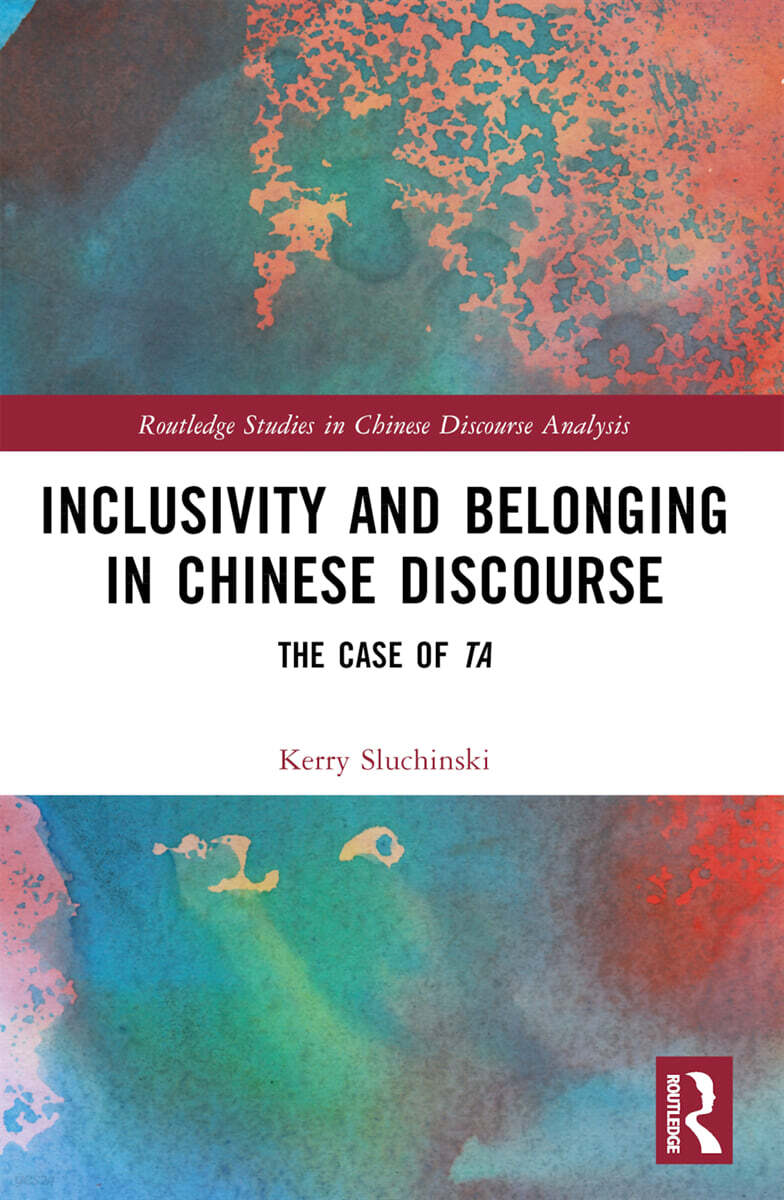
Inclusivity and Belonging in Chinese Discourse
The Case of ta
Paperback, 1st Edition
Kerry Sluchinski
Routledge
2025.05.27.
이미 소장하고 있다면 판매해 보세요.
- 국내배송만 가능
- 해외 거래처 사정에 의하여 품절/지연 가능
- 도서 정보 중 미표기 사항 안내?
- 문화비소득공제 가능
Routledge Studies in Chinese Discourse Analysis
-
 Meaning Generation in Chinese Official Media Discourse 이동Meaning Generation in Chinese Official Media Discourse10% 99,330원
 -
Feminist Subversion of Linguistic Sexism in Contemporary China 이동Feminist Subversion of Linguistic Sexism in Contemporary China10% 356,010원
-
Narratives of the Hong Kong Sovereignty Transfer 이동Narratives of the Hong Kong Sovereignty Transfer10% 356,010원
-
Meaning Generation in Chinese Official Media Discourse 이동Meaning Generation in Chinese Official Media Discourse10% 356,010원
-
Inclusivity and Belonging in Chinese Discourse 이동Inclusivity and Belonging in Chinese Discourse10% 99,330원
-
Notional Analysis of Chinese Academic Discourse on China 이동Notional Analysis of Chinese Academic Discourse on China10% 99,330원
-
Language of Nation-State Building in Late Qing China 이동Language of Nation-State Building in Late Qing China10% 91,050원
-
Inclusivity and Belonging in Chinese Discourse 이동Inclusivity and Belonging in Chinese Discourse10% 356,010원
-
Notional Analysis of Chinese Academic Discourse on China 이동Notional Analysis of Chinese Academic Discourse on China10% 356,010원
-
Language and Gesture in Chinese Conversation 이동Language and Gesture in Chinese Conversation10% 91,050원
-
Currency Wars with China and Japan in Western Newsmagazines 이동Currency Wars with China and Japan in Western Newsmagazines10% 97,260원
-
Language Socialization in Chinese Diasporas 이동Language Socialization in Chinese Diasporas10% 91,050원
-
Language of Nation-State Building in Late Qing China 이동Language of Nation-State Building in Late Qing China10% 302,190원
-
China's Contemporary Image and Rhetoric Practice 이동China's Contemporary Image and Rhetoric Practice10% 99,330원
-
Language and Gesture in Chinese Conversation 이동Language and Gesture in Chinese Conversation10% 356,010원
-
Currency Wars with China and Japan in Western Newsmagazines 이동Currency Wars with China and Japan in Western Newsmagazines10% 356,010원
-
Language Socialization in Chinese Diasporas 이동Language Socialization in Chinese Diasporas10% 356,010원
-
China's Contemporary Image and Rhetoric Practice 이동China's Contemporary Image and Rhetoric Practice10% 356,010원
-
News Framing through English-Chinese Translation 이동News Framing through English-Chinese Translation10% 99,330원
-
News Framing through English-Chinese Translation 이동News Framing through English-Chinese Translation10% 356,010원
책소개
목차
|
List of Figures List of Tables Preface and Acknowledgements PART 1: From Deviation to Conventionalization: A Genealogy of ta and (Chinese) Gender Identities 1. Introduction 1.1 From Classical to Modern: Third-Person Pronoun Syntactic Behaviour and Orthography up to 2003 and Beyond 1.1.1 Third-Person Pronoun Development 1.1.2 Syntactic Behaviour of the Third-Person Pronoun in Written Chinese 1.2 Early Beginnings: A Sample of Syntactic Structures of the ta Phenomenon in CMC 1.2.1 A Quantitative Look at Conventionalization: Syntactic Constructions of ta 1.2.2 A Quantitative Look at Conventionalization: Sentence Types 1.3 Modern Investigations: Discursive and Psycholinguistic Evidence Towards Conventionalization 2. Deviant or Conventional? Constructing Gender Identities in China and at Large 2.1 Homosociality vs Homosexuality 2.2 Tongzhi: The Genderless Comrades of Communism and Sexuality 2.3 X也 and 无也: ta’s Less Ubiquitous Counterpart and Most Recent Contender 2.4 Pronouns and Pragmatics: The Problem 2.4.1 Constructing Identity: Speaker, Addressee …Other? 2.4.2 Constructing Identity: Third-Person Pronoun and Referential Form Use by the Other 2.4.3 Constructing Identity: Third-Person Pronoun and Third-Person Noun Phrase Use for the Other 2.5 Research Questions PART 2: Analytical Framework, Data, and Classification 3. Theoretical Underpinnings 3.1 Theories 3.1.1 A Framing, Positioning, and Stance Theories Framework 3.1.2 Adapted Appraisal Theory and Co-Reference Chains 3.1.3 Membership Categorization and Indexicality 3.2 Corpus 3.2.1 Data Origin and Software 3.2.2 Data Collection Procedure and Categorization 3.2.3 Discourse Types and Texts 4. Who is ta? A comparison of Pro- and Anti-LGBTQ Community Usage 4.1 Ta Categorization Schema ? Methodology and Layers 1-2 4.2 Layer 3 - Quantitative Referent Categorization 4.2.1 Ta Categorization Schema in the Context of the Entire Corpus 4.2.2 Ta Categorization Schema Community by Community 4.3 Layer 3 - Qualitative Presentation of Quantitative Lexical Referents 4.4 Interim Summary PART 3: Othering 5. Political Non-Belonging: ‘Othering’ and ‘Vagueness’ of ta in Anti- and Pro-LGBTQ Communities 5.1 Negative Stance and Non-Belonging 5.2 Explicit Othering: Analysis and Discussion 5.2.1 Refusing to Recognize an LGBTQ Individual’s Self-Ascribed Identity 5.2.2 Dehumanizing an LGBTQ Member 5.2.3 Downgrading Social Integrity 5.2.4 Co-Constructing ‘Other’ Identity 5.3 Implicit Othering: Analysis and Discussion 5.3.1 Implicit Othering: Pro-Community Usage 5.3.2 Implicit Othering: Anti-Community Usage 5.4 Explicit and Implicit Othering: Interim Conclusion PART 4: (A-)Political Belonging 6. (A-)Political Belonging: What makes ta’s Belonging (A-)Political? 6.1 Neutral/Positive vs. Negative Stance and (A-)Political Belonging 6.2 Data Set Compositions 6.3 ta Usage for LGBTQ Pronoun 6.3.1 Apolitical Usage 6.3.2 Political Usage 6.4 ta Usage for Comprehensive Group Inclusion 6.4.1 Apolitical Usage 6.4.2 Political Usage 6.5 Interim Summary 7. Apolitical Belonging: When ta’s Third-Person Attributes Don’t Matter 7.1 Neutral/Positive Stance and Apolitical Belonging 7.2 Data Set Compositions 7.3 ta Usage for Unknown Circumstances via Information Seeking Discourse 7.4 ta usage for General 3PP via Opinion Discourse 7.5 ta Usage for Unknown Circumstances and General 3PP 7.5.1 Guidebook/Advice Discourse 7.5.2 Partner Advertisement Discourse 7.6 Interim Summary PART 5: Political Belonging 8. Political Belonging: How ta Belongs in Relation to 'You' 8.1 Positive Stance and Political Belonging 8.2 Data Set Composition 8.3 ta Usage for Open in Relation to ‘You’ 8.3.1 Essay Discourse 8.3.2 Information Seeking Discourse 8.3.3 Guidebook/Advice Discourse 8.4 ta Usage for Self- and Third-Person Identity Construction 8.4.1 Narrative Discourse 8.5 ta Usage for ‘You’ and Identity via Opinion Discourse 8.6 Interim Summary 9. Getting Back with ta, Your (Homosexual) Partner - Chain Post Discourse Discussion 9.1 Positive Stance and Political Belonging 9.2 Data Composition and Features 9.3 Example 1: ta Usage for LGBT Pronoun and Identity Construction for Any ‘Homosexual’ 9.4 Example 2: ta Usage for LGBTQ Pronoun and Identity Construction for ‘Female Homosexual’ 9.5 Example 3: ta Usage for LGBTQ Pronoun and Identity Construction for ‘Male Homosexual’ 9.6 Summary and Implications for Corpus PART 6: Conclusion 10. Synthesis and Conclusion 10.1 Synthesis 10.1.1 Discourse Distribution within Usage Type 10.1.2 Usage Type Distribution within Community 10.2 Implications for Readers and Further Research References Appendix A: List of Omitted Categorizations Included in Ta Categorization Schema Appendix B: Table of Third-Person Singular Pronouns (Brief ta-Focused Historical Summary) Index |
관련 분류
품목정보
- 발행일
- 2025년 05월 27일
- 쪽수, 무게, 크기
- 262쪽 | 440g | 160*230mm
- ISBN13
- 9781032504322
리뷰/한줄평0
상품정보안내
직수입외서의 경우, 해외거래처에서 제공하는 정보가 부족하여 제목, 표지, 가격, 유통상태 등의 정보가 미비하거나 변경되는 경우가 있습니다. 정확한 확인을 원하시는 경우, 일대일 상담으로 문의하여 주시면 답변 드리겠습니다.
(판형과 판수 등이 다양한 도서는 찾으시는 도서의 ISBN을 알려 주시면 보다 빠르고 정확한 안내가 가능합니다.)
해외거래처에서 품절인 경우, 2차 거래선을 통해 유럽과 미국 출판사로 직접 수입이 진행될 수 있습니다.
수입 진행 시점으로 부터 2~3주가 추가로 소요되며, 해외에서도 유통이 원활하지 않은 도서는 품절 안내가 지연될 수 있습니다.
해당 경우, 문자와 메일로 별도 안내를 드리고 있사오니 마이페이지에서 휴대전화번호와 메일주소를 다시 한번 확인해주시기 바랍니다.
(판형과 판수 등이 다양한 도서는 찾으시는 도서의 ISBN을 알려 주시면 보다 빠르고 정확한 안내가 가능합니다.)
해외거래처에서 품절인 경우, 2차 거래선을 통해 유럽과 미국 출판사로 직접 수입이 진행될 수 있습니다.
수입 진행 시점으로 부터 2~3주가 추가로 소요되며, 해외에서도 유통이 원활하지 않은 도서는 품절 안내가 지연될 수 있습니다.
해당 경우, 문자와 메일로 별도 안내를 드리고 있사오니 마이페이지에서 휴대전화번호와 메일주소를 다시 한번 확인해주시기 바랍니다.
99,330원
총 1개
99,330원