
소득공제
수입
직수입양서
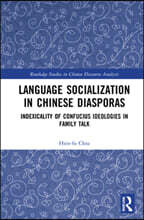
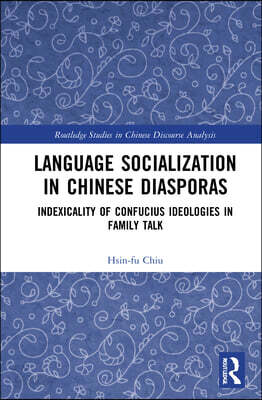
Language Socialization in Chinese Diasporas
Indexicality of Confucian Ideologies in Family Talk
Hardback, 1st Edition
Chiu, Hsin-Fu
Routledge
2021.09.17.
이미 소장하고 있다면 판매해 보세요.
- 국내배송만 가능
- 해외 거래처 사정에 의하여 품절/지연 가능
- 도서 정보 중 미표기 사항 안내?
- 문화비소득공제 가능
Routledge Studies in Chinese Discourse Analysis
-
 Meaning Generation in Chinese Official Media Discourse 이동Meaning Generation in Chinese Official Media Discourse10% 99,330원
 -
Feminist Subversion of Linguistic Sexism in Contemporary China 이동Feminist Subversion of Linguistic Sexism in Contemporary China10% 356,010원
-
Narratives of the Hong Kong Sovereignty Transfer 이동Narratives of the Hong Kong Sovereignty Transfer10% 356,010원
-
Meaning Generation in Chinese Official Media Discourse 이동Meaning Generation in Chinese Official Media Discourse10% 356,010원
-
Inclusivity and Belonging in Chinese Discourse 이동Inclusivity and Belonging in Chinese Discourse10% 99,330원
-
Notional Analysis of Chinese Academic Discourse on China 이동Notional Analysis of Chinese Academic Discourse on China10% 99,330원
-
Language of Nation-State Building in Late Qing China 이동Language of Nation-State Building in Late Qing China10% 91,050원
-
Inclusivity and Belonging in Chinese Discourse 이동Inclusivity and Belonging in Chinese Discourse10% 356,010원
-
Notional Analysis of Chinese Academic Discourse on China 이동Notional Analysis of Chinese Academic Discourse on China10% 356,010원
-
Language and Gesture in Chinese Conversation 이동Language and Gesture in Chinese Conversation10% 91,050원
-
Currency Wars with China and Japan in Western Newsmagazines 이동Currency Wars with China and Japan in Western Newsmagazines10% 97,260원
-
Language Socialization in Chinese Diasporas 이동Language Socialization in Chinese Diasporas10% 91,050원
-
Language of Nation-State Building in Late Qing China 이동Language of Nation-State Building in Late Qing China10% 302,190원
-
China's Contemporary Image and Rhetoric Practice 이동China's Contemporary Image and Rhetoric Practice10% 99,330원
-
Language and Gesture in Chinese Conversation 이동Language and Gesture in Chinese Conversation10% 356,010원
-
Currency Wars with China and Japan in Western Newsmagazines 이동Currency Wars with China and Japan in Western Newsmagazines10% 356,010원
-
Language Socialization in Chinese Diasporas 이동Language Socialization in Chinese Diasporas10% 356,010원
-
China's Contemporary Image and Rhetoric Practice 이동China's Contemporary Image and Rhetoric Practice10% 356,010원
-
News Framing through English-Chinese Translation 이동News Framing through English-Chinese Translation10% 99,330원
-
News Framing through English-Chinese Translation 이동News Framing through English-Chinese Translation10% 356,010원
책소개
목차
|
Figures Tables Illustrations Excerpts Preface Acknowledgements I. Theoretical Standpoint, Methodology, and Ethnography of Data Corpus 1. Theoretical standpoints 1.1 Overview of the book 1.2 Bourdieusian approach second language acquisition in the transnational context 1.3 Language socialization as a conceptual paradigm 1.4 Participation framework 1.5 Conversation analysis as an analytic apparatus 1.6 Outline of the book 2. Ethnography of participating families 2.1 Collection of digital data 2.2 Ethnography of participating families 2.2.1 The Culver City Family (A) 2.2.2 The Pasadena Family (B) 2.2.3 The Diamond Bar Family (C) 2.3 Transcription of digital data 2.4 Points of departure for analyses II. Becoming a Member of Chinese Diasporas in the U.S. 3. Power Asymmetry as Process of Socialization to Filial Piety and Obedience 3.1 Introduction 3.2 Interdisciplinary approach to power in interaction 3.3 Co-construction of authoritarian practices 3.3.1 Actions of deference by Children 3.3.2 Mitigated moves of resistance against privilege denials 3.3.3 Compliance adjacent to effective power 3.3.4 Conditional threats as aggravated words of control 3.4 Co-construction of authoritative practices 3.4.1 Actions that threaten parental esteem 3.4.2 Recycles of commands 3.4.3 Shepherding as aggravated embodied control 3.5 Concluding remarks 4. Epistemic Asymmetry as Process of Socialization to Humbleness and Shame 4.1 Introduction 4.2 Membership categorization, positioning, and socialization to identity 4.2.1 From negativity to interdependent self 4.3.1 Positive assessable values downplayed 4.3.2 Negative assessable as a joint focus of attention 4.3.3 Epistemic asymmetry underscored over actions of contrast 4.4 Socialization techniques in the shame-socialized culture 4.5 Socialization to individualistic self-esteem 4.6 Concluding remarks III. Indexical Ideologies of Confucian Thoughts 5. Interpersonal Selflessness as the Basis for Harmonious Kin Relations 5.1 An issue with competing opinions 5.2 Socialization to the interpersonal self 5.3 Co-constriction of harmonious kin relations 5.3.1 Embodied displays of adoration in parent-child relations 5.3.2 Embodied displays of cohesion among siblings 5.4 Harmony kin relations in disguise 5.5 Concluding remarks 6. Conclusion and Discussion 6.1 A recap of the major findings 6.2 Indexical orders of Confucian ideologies 6.3 Implications for heritage-language socialization and instruction Bibliography Index |
관련 분류
품목정보
- 발행일
- 2021년 09월 17일
- 쪽수, 무게, 크기
- 194쪽 | 421g | 160*230mm
- ISBN13
- 9781032028668
리뷰/한줄평0
상품정보안내
직수입외서의 경우, 해외거래처에서 제공하는 정보가 부족하여 제목, 표지, 가격, 유통상태 등의 정보가 미비하거나 변경되는 경우가 있습니다. 정확한 확인을 원하시는 경우, 일대일 상담으로 문의하여 주시면 답변 드리겠습니다.
(판형과 판수 등이 다양한 도서는 찾으시는 도서의 ISBN을 알려 주시면 보다 빠르고 정확한 안내가 가능합니다.)
해외거래처에서 품절인 경우, 2차 거래선을 통해 유럽과 미국 출판사로 직접 수입이 진행될 수 있습니다.
수입 진행 시점으로 부터 2~3주가 추가로 소요되며, 해외에서도 유통이 원활하지 않은 도서는 품절 안내가 지연될 수 있습니다.
해당 경우, 문자와 메일로 별도 안내를 드리고 있사오니 마이페이지에서 휴대전화번호와 메일주소를 다시 한번 확인해주시기 바랍니다.
(판형과 판수 등이 다양한 도서는 찾으시는 도서의 ISBN을 알려 주시면 보다 빠르고 정확한 안내가 가능합니다.)
해외거래처에서 품절인 경우, 2차 거래선을 통해 유럽과 미국 출판사로 직접 수입이 진행될 수 있습니다.
수입 진행 시점으로 부터 2~3주가 추가로 소요되며, 해외에서도 유통이 원활하지 않은 도서는 품절 안내가 지연될 수 있습니다.
해당 경우, 문자와 메일로 별도 안내를 드리고 있사오니 마이페이지에서 휴대전화번호와 메일주소를 다시 한번 확인해주시기 바랍니다.
356,010원
총 1개
356,010원
