
소득공제
수입
직수입양서
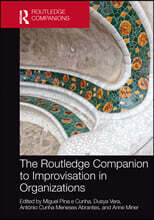
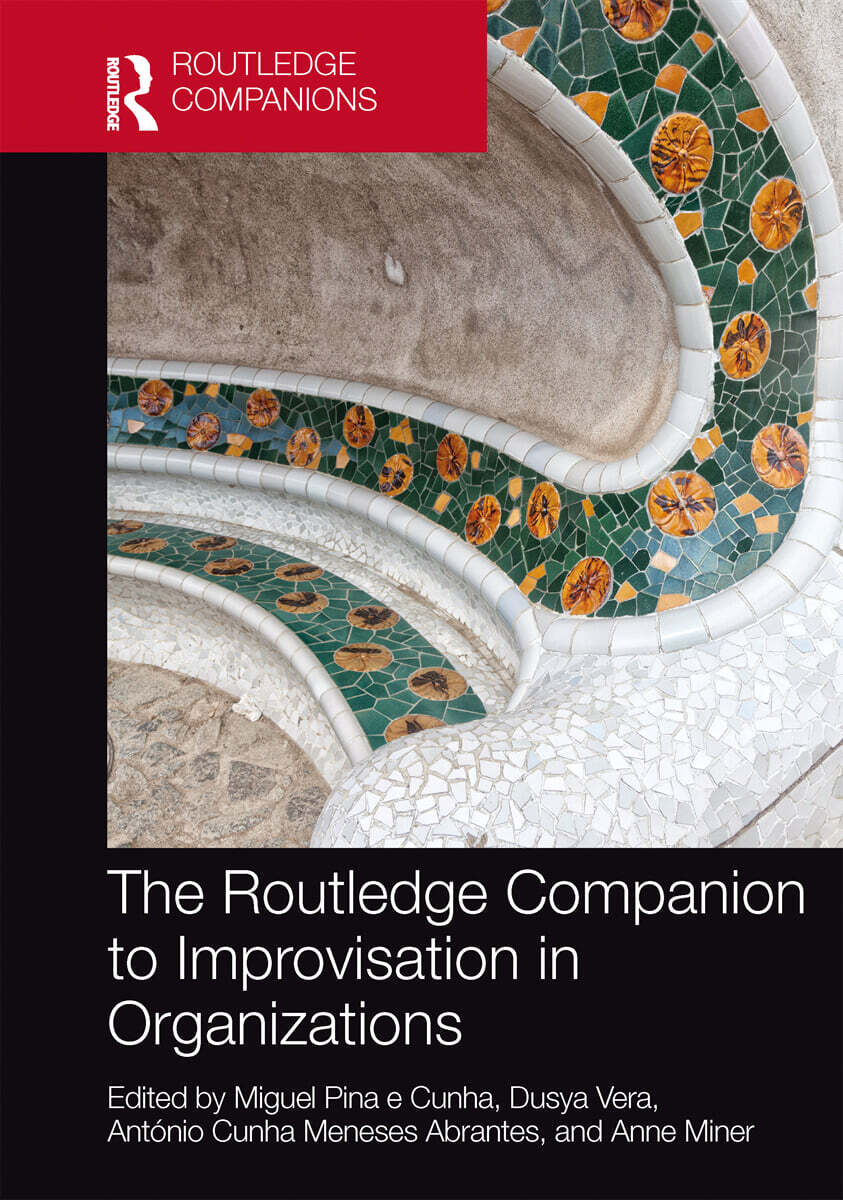
Routledge Companion to Improvisation in Organizations
Paperback, 1st Edition
Miguel Pina e Cunha, Dusya Vera, Antonio Cunha Meneses Abrantes, Anne Miner
Routledge
2025.06.27.
이미 소장하고 있다면 판매해 보세요.
- 국내배송만 가능
- 해외 거래처 사정에 의하여 품절/지연 가능
- 도서 정보 중 미표기 사항 안내?
- 문화비소득공제 가능
Routledge Companions in Business, Management and Marketing
-
 Routledge Companion to Fashion and Business 이동Routledge Companion to Fashion and Business10% 541,120원
 -
Routledge Companion to Governance in the Arts World 이동Routledge Companion to Governance in the Arts World10% 112,360원
-
Routledge Companion to Disability and Work 이동Routledge Companion to Disability and Work10% 112,360원
-
Routledge Companion to International Law and Responsible Business 이동Routledge Companion to International Law and Responsible Business10% 541,120원
-
Routledge Companion to Cross-Cultural Management 이동Routledge Companion to Cross-Cultural Management10% 541,120원
-
Routledge Companion to Corporate Sustainability 이동Routledge Companion to Corporate Sustainability10% 541,120원
-
Routledge Critical Companion to Leadership Studies 이동Routledge Critical Companion to Leadership Studies10% 112,360원
-
Routledge Companion to Responsible Business 이동Routledge Companion to Responsible Business10% 541,120원
-
Routledge Companion to Improvisation in Organizations 이동Routledge Companion to Improvisation in Organizations15% 106,120원
-
Routledge Companion to Mental Health at Work 이동Routledge Companion to Mental Health at Work15% 106,120원
-
Routledge Companion to Management Information Systems 이동Routledge Companion to Management Information Systems15% 511,060원
-
Routledge Companion to the Future of Management Research 이동Routledge Companion to the Future of Management Research15% 106,120원
-
Routledge Companion to Governance in the Arts World 이동Routledge Companion to Governance in the Arts World15% 511,060원
-
Routledge Companion to Disability and Work 이동Routledge Companion to Disability and Work15% 511,060원
-
Routledge Companion to Leadership and Change 이동Routledge Companion to Leadership and Change20% 90,620원
-
Routledge Companion to International Management Education 이동Routledge Companion to International Management Education10% 101,950원
-
Routledge Companion to Accounting, Reporting and Regulation 이동Routledge Companion to Accounting, Reporting and Regulation10% 101,950원
-
Routledge Companion to Accounting Education 이동Routledge Companion to Accounting Education10% 101,950원
-
Routledge Companion to Managing Digital Outsourcing 이동Routledge Companion to Managing Digital Outsourcing10% 108,190원
-
Routledge Companion to Technology Management 이동Routledge Companion to Technology Management20% 90,620원
-
Routledge Critical Companion to Leadership Studies 이동Routledge Critical Companion to Leadership Studies15% 511,060원
-
Routledge Companion to Knowledge Management 이동Routledge Companion to Knowledge Management20% 94,320원
-
Routledge Companion to Organization Theory and HRM 이동Routledge Companion to Organization Theory and HRM10% 270,550원
-
Routledge Companion to Mental Health at Work 이동Routledge Companion to Mental Health at Work10% 541,120원
-
Routledge Companion to Management and Workplace Spirituality 이동Routledge Companion to Management and Workplace Spirituality10% 106,110원
-
Routledge Companion to Nonprofit Management 이동Routledge Companion to Nonprofit Management10% 106,110원
-
Routledge Companion to Anthropology and Business 이동Routledge Companion to Anthropology and Business10% 106,110원
책소개
목차
|
Introduction - Improvisation in organizations: A convocation, a celebration and an invitation Anne S. Miner, Antonio Cunha Meneses Abrantes, Dusya Vera, and Miguel Pina e Cunha Part1. Conceptual linkages 1. Improvisation and bricolage: Similarities and differences between two approaches to resource scarcity Ricardo Coelho da Silva, Leid Zejnilovic, and Pedro Oliveira 2. Eight paradoxical tensions of organizational improvisation Miguel Pina e Cunha, Medhanie Gaim, and Stewart Clegg 3. The Importance of Referents for Advancing Improvisation Theory and Methods Jay O’Toole, Indria Handoko, and Hendro A. Tjaturpriono 4. The improvisation-serendipity nexus Miguel Pina e Cunha and Marco Berti Part2. Improvisation process: Before, during and after 5. The improvisational arc: A sensemaking perspective Antonio Cunha Meneses Abrantes and Olivier Berthod 6. Preparing to be spontaneous for effective organizational improvisation Ace V. Simpson and Stewart Clegg 7. Character and improvisation: A recursive relationship Corey Crossan, Mary Crossan, and Cassie Ellis 8. Improvisational decision making: Context, antecedents, and outcomes Dusya Vera, Pooya Tabesh, Susana Velez-Castrillon, Ariff Kachra, and Steve Werner 9. Improvisation, routine dynamics, and temporal regularity Kenneth T. Goh and Claus Rerup 10. Practising strategizing: Novelty as a leap of faith expanding learning and improvising Elena P. Antonacopoulou Part3. Improvisation in specific contexts 11. Improvisation in Africa Emanuel Gomes 12. Locating improvisation in public service management: Past, present, and future research directions Ian R. Hodgkinson and Paul Hughes 13. Organizational improvisation in project management Stephen A. Leybourne 14. Professional service firms: Why is improvisation so important? Muriel Faden 15. Team leadership, momentum, and improvisation in extreme contexts Bjarke Aage and Stefan Meisiek 16. Managing improvisation in dispersed settings Massimo Magni and Likoebe Maruping Part4. Improvisational theater beyond metaphor 17. Improvisation as a design for organizational emergence Lukas Zenk, Ralf Wetzel, and Markus F. Pesch 18. Improvisational theater in organizations: Between company expectations and effects on individuals and teams Cynthia Zabel and Rene Mauer 19. Theatrical improvisation for organizational improvisation education Eduardo P. B. Davel and Fernanda P. M. Barbosa Part5. Improvisation and new organizational forms 20. Improvising around and about boundaries in open organizations Antonio Daood and Luca Giustiniano 21. Agility and improvisation Allegre L. Hadida and Nathan O. Odiase 22. Flow with the go: Real-time continuous improvisation in digital business ecosystems Pernille Ryden and Omar A. El Sawy 23. Advancing improvisation within entrepreneurship research Michael P. Ciuchta, Lani Faith Gacula, and Cintya Gajardo-Vejar Part6. Conceptual expansions and conclusions 24. Improvisation: A taste of chaos in the middle of order and a taste of order in the middle of chaos Pedro Marques-Quinteiro and Rita Rueff-Lopes 25. Strategic improvisation in loosely coupled systems Victor Meyer Jr. and Diorgenes Falcao Mamedio 26. Improvisation in organizations: A review with a phenomenological research agenda Demetris Hadjimichael 27. Why ever stop improvising? Why endings matter for theory and practice Anne S. Miner and Jay O’Toole Epilogue - Improvisation in organizations: Looking ahead Dusya Vera, Antonio Cunha Meneses Abrantes, Anne S. Miner, and Miguel Pina e Cunha |
품목정보
- 발행일
- 2025년 06월 27일
- 쪽수, 무게, 크기
- 512쪽 | 990g | 170*250mm
- ISBN13
- 9780367775193
리뷰/한줄평0
상품정보안내
직수입외서의 경우, 해외거래처에서 제공하는 정보가 부족하여 제목, 표지, 가격, 유통상태 등의 정보가 미비하거나 변경되는 경우가 있습니다. 정확한 확인을 원하시는 경우, 일대일 상담으로 문의하여 주시면 답변 드리겠습니다.
(판형과 판수 등이 다양한 도서는 찾으시는 도서의 ISBN을 알려 주시면 보다 빠르고 정확한 안내가 가능합니다.)
해외거래처에서 품절인 경우, 2차 거래선을 통해 유럽과 미국 출판사로 직접 수입이 진행될 수 있습니다.
수입 진행 시점으로 부터 2~3주가 추가로 소요되며, 해외에서도 유통이 원활하지 않은 도서는 품절 안내가 지연될 수 있습니다.
해당 경우, 문자와 메일로 별도 안내를 드리고 있사오니 마이페이지에서 휴대전화번호와 메일주소를 다시 한번 확인해주시기 바랍니다.
(판형과 판수 등이 다양한 도서는 찾으시는 도서의 ISBN을 알려 주시면 보다 빠르고 정확한 안내가 가능합니다.)
해외거래처에서 품절인 경우, 2차 거래선을 통해 유럽과 미국 출판사로 직접 수입이 진행될 수 있습니다.
수입 진행 시점으로 부터 2~3주가 추가로 소요되며, 해외에서도 유통이 원활하지 않은 도서는 품절 안내가 지연될 수 있습니다.
해당 경우, 문자와 메일로 별도 안내를 드리고 있사오니 마이페이지에서 휴대전화번호와 메일주소를 다시 한번 확인해주시기 바랍니다.
106,120원
총 1개
106,120원