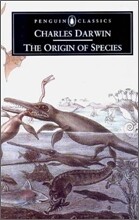

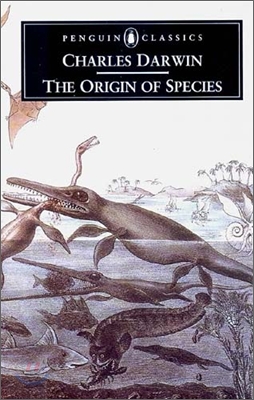
- 외국도서 특성상 해외 배송으로 인한 경미한 손상이 있을 수 있습니다. (해당 사유 반품/교환 불가)
이미 소장하고 있다면 판매해 보세요.
- 국내배송만 가능
- 문화비소득공제 가능
Penguin Classics
-
 The Penguin Book of the Undead: Fifteen Hundred Years of Supernatural Encounters 이동The Penguin Book of the Undead: Fifteen Hundred Years of Supernatural Encounters18% 27,260원
 -
Peter Pan: Peter and Wendy and Peter Pan in Kensington Gardens 이동Peter Pan: Peter and Wendy and Peter Pan in Kensington Gardens20% 11,200원
-
A Christmas Carol and Other Christmas Writings 이동A Christmas Carol and Other Christmas Writings20% 10,080원
-
The Strange Case of Dr Jekyll and MR Hyde: And Other Tales of Terror 이동The Strange Case of Dr Jekyll and MR Hyde: And Other Tales of Terror20% 11,200원
-
In Search of Lost Time, Volume 1 : The Way by Swann's 이동In Search of Lost Time, Volume 1 : The Way by Swann's15% 7,650원
-
Capital: A Critique of Political Economy, Volume 3 이동Capital: A Critique of Political Economy, Volume 320% 27,360원
책소개
목차
|
Editor's Introduction
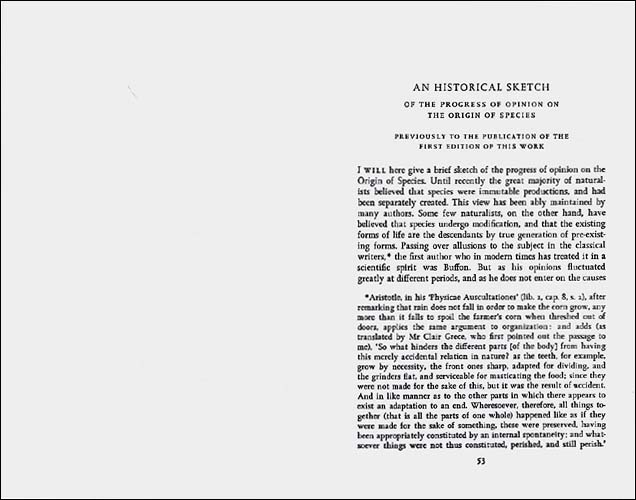
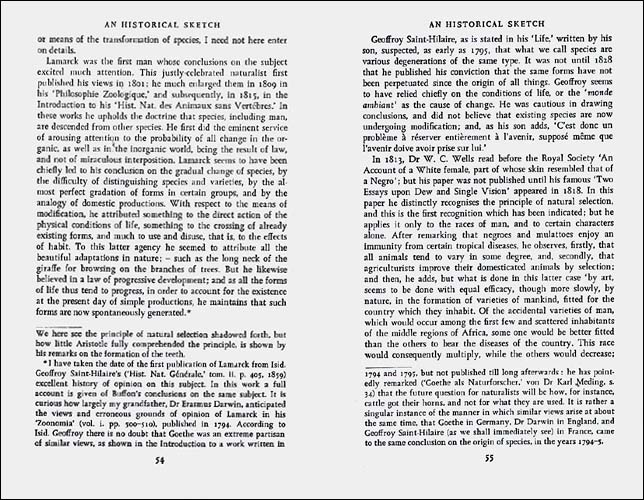
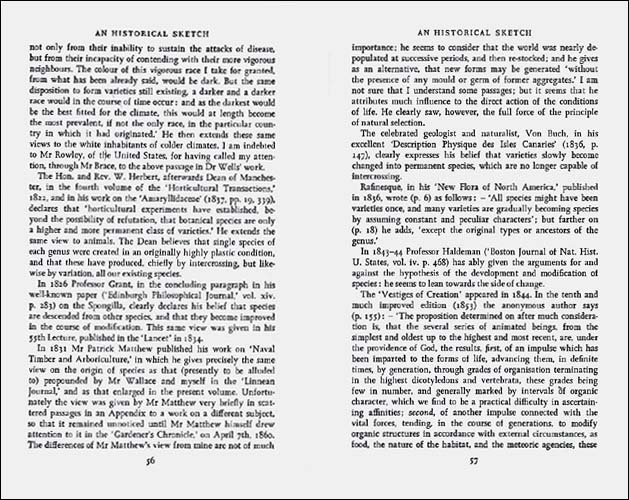
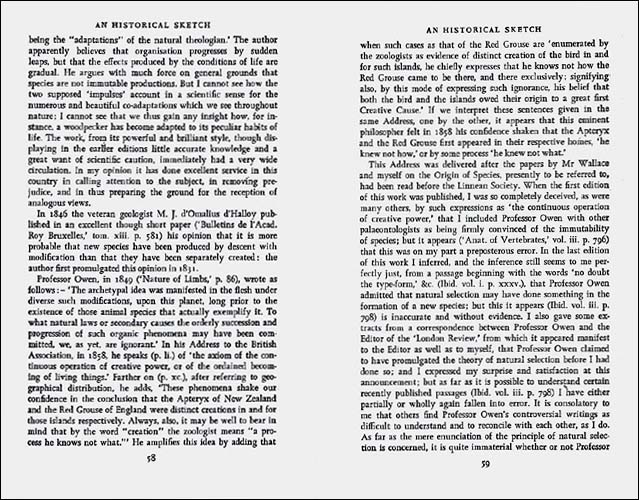
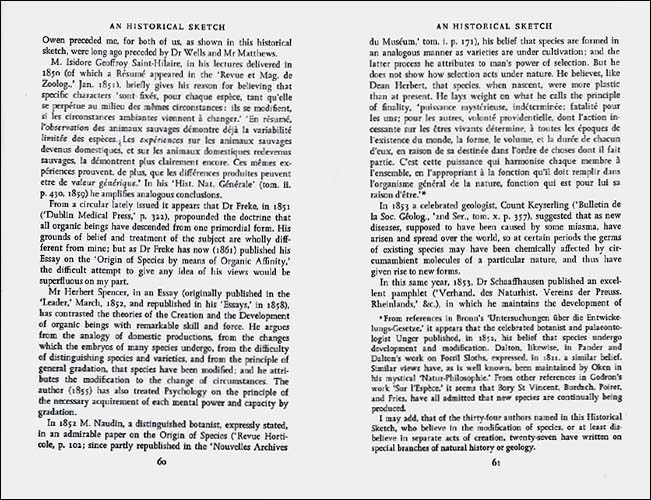
Note on This Edition An Historical Sketch Introduction Chapter One: Variation Under Domestication Causes of Variability - Effects of Habit - Correlation of Growth - Inheritance - Character of Domestic Varieties - Difficulty of distinguishing between Varieties and Species - Origin of Domestic Varieties from one or more Species - Domestic Pigeons, their Differences and Origin - Principle of Selection anciently followed, its Effects - Methodical and Unconscious Selection - Unknown Origin of our Domestic Productions - Circumstances favourable to Man's power of Selection Chapter Two: Variation Under Nature Variability - Individual differences - Doubtful species - Wide ranging, much diffused, and common species vary most - Species of the larger genera in any country vary more than the species of the smaller genera - Many of the species of the larger genera resemble varieties in being very closely, but unequally, related to each other, and in having restricted ranges Chapter Three: Struggle for Existence Bears on natural selection - The term used in a wide sense - Geometrical powers of increase - Rapid increase of naturalised animals and plants - Nature of the checks to increase - Competition universal - Effects of climate - Protection from the number of individuals - Complex relations of all animals and plants throughout nature - Struggle for life most severe between individuals and varieties of the same species; often severe between species of the same genus - The relation of organism to organism the most important of all relations Chapter Four: Natural Selection Natural Selection - its power compared with man's selection - its power on characters of trifling importance - its power at all ages and on both sexes - Sexual Selection - On the generality of intercrosses between individuals of the same species - Circumstances favourable and unfavourable to Natural Selection, namely, intercrossing, isolation, number of individuals - Slow action - Extinction caused by Natural Selection - Divergence of Character, related to the diversity of inhabitants of any small area, and to naturalisation - Action of Natural Selection, through Divergence of Character and Extinction, on the descendents from a common parent - Explains the Grouping of all organic beings Chapter Five: Laws of Variation Effects of external conditions - Use and disuse, combined with natural selection; organs of flight and of vision - Acclimatisation - Correlation of growth - Compensation and economy of growth - False correlations - Multiple, rudimentary, and lowly organised structures variable - Parts developed in an unusual manner are highly variable: specific characters more variable than generic: secondary sexual characters variable - Species of the same genus vary in an analogous manner - Reversions to long-lost characters - Summary Chapter Six: Difficulties on Theory Difficulties on the theory of descent with modification - Transitions - Absence or rarity of transitional varieties - Transitions in habits of life - Diversified habits in the same species - Species with habits widely different from those of their allies - Organs of extreme perfection - Means of transition - Cases of difficulty - Natura non facit saltum - Organs of small importance - Organs not in all cases absolutely perfect - The law of Unity of Type and of the Conditions of Existence embraced by the theory of Natural Selection Chapter Seven: Instinct Instincts comparable with habits, but different in their origin - Instincts graduated - Aphides and ants - Instincts variable - Domestic instincts, their origin - Natural instincts of the cuckoo, ostrich, and parasitic bees - Slave-making ants - Hive-bee, its cell-making instinct - Difficulties on the theory of the Natural Selection of instincts - Neuter or sterile insects - Summary Chapter Eight: Hybridism Distinction between sterility of first crosses and of hybrids - Sterility various in degree, not universal, affected by close inter-breeding, removed by domestication - Laws governing the sterility of hybrids - Sterility not a special endowment, but incidental on other differences - Causes of the sterility of first crosses and of hybrids - Parallelism between the effects of changed conditions of life and crossing - Fertility of varieties when crossed and of their mongrel offspring not universal - Hybrids and mongrels compared independently of their fertility - Summary Chapter Nine: On the Imperfection of the Geological Record On the absence of intermediate varieties at the present day - On the nature of extinct intermediate varieties; on their number - On the last vast lapse of time, as inferred from the rate of deposition and of denudation - On the poorness of our palaeontological collections - On the intermittence of geological formations - On the absence of intermediate varieties in any one formation - On the sudden appearance of groups of species - On their sudden appearance in the lowest known fossiliferous strata Chapter Ten: On the Geological Succession of Organic Beings On the slow and successive appearance of new species - On their different rates of change - Species once lost do not reappear - Groups of species follow the same general rules in their appearance and disappearance as do single species - On Extinction - On simultaneous changes in the forms of life throughout the world - On the affinities of extinct species to each other and to living species - On the state of development of ancient forms - On the succession of the same types within the same areas - Summary of preceding and present chapters Chapter Eleven: Geographical Distribution Present distribution cannot be accounted for by differences in physical conditions - Importance of barriers - Affinity of the productions of the same continent - Centres of creation - Means of dispersal, by changes of climate and of the level of the land, and by occasional means - Dispersal during the Glacial period co-extensive with the world Chapter Twelve: Geographical Distribution continued Distribution of fresh-water productions - On the inhabitants of oceanic islands - Absence of Batrachians and of terrestrial Mammals - On the relation of the inhabitants of islands to those of the nearest mainland - On colonisation from the nearest source with subsequent modification - Summary of the last and present chapters Chapter Thirteen: Mutual Affinities of Organic Beings: Morphology: Embryology: Rudimentary Organs Classification, groups subordinate to groups - Natural system - Rules and difficulties in classification, explained on the theory of descent with modification - Classification of varieties - Descent always used in classification - Analogical or adaptive characters - Affinities, general, complex and radiating - Extinction separates and defines groups - Morphology, between members of the same class, between parts of the same individual - Embryology, laws of, explained by variations not supervening at an early age, and being inherited at a corresponding age - Rudimentary organs, their origin explain - Summary Chapter Fourteen: Recapitulation and Conclusion Recapitulation of the difficulties on the theory of Natural Selection - Recapitulation of the general and special circumstances in its favour - Causes of the general belief in the immutability of species - How far the theory of natural selection may be extended - Effects of its adoption on the study of Natural history - Concluding remarks Bibliography Glossary |
저자 소개
저자 : 찰스 다윈 (Charles Darwin)
영국의 박물학자이자 진화론자. 1809년 시류즈버리에서 의사의 아들로 태어남. 에딘버러대학 의학부룰 중퇴하고, 케임브리지 대학 신학부를 졸업하였다. 졸업 후 영국 해군 측량선비글호에 승선하여 남반구를 항해한다. 이때 그는 남미의 여러 섬과 뉴질랜드의 지질 및 동식물에 대한 세밀한 관찰을 통해 생물의 진화를 확신하게 되고, 10여년 걸친 연구 끝에 1859년 11월 진화론 사상 가장 중요한 고전인 『종의 기원』을 펴낸다.
주요 저서로는 『인간과 동물의 감정표현에 대하여』를 미롯하여 『가축과 재배 식물의 변이』『인간의 유래』등이 있다.
Charles Darwin was born in Shrewsbury in 1809 and was educated at Shrewsbury School, Edinburgh University and Christ’s College Cambridge. He took his degree in 1831 and in the same year embarked on a five-year voyage on HMS Beagle as a companion to the captain; the purpose of the voyage was to chart the coasts of Patagonia and Tierra del Fuego, and to carry a chain of chronometric readings round the world. While he was away some of his letters on scientific matters were privately published, and on his return he at once took his place among the leading men of science. In 1839 he was elected a Fellow of the Royal Society. Most of the rest of his life was occupied in publishing the findings of the voyage and in documenting his theory of the transmutation of species. On the origin of species by means of natural selection appeared in 1859. Darwin spent many years with his wife - his cousin Emma Wedgwood, whom he had married in 1839 - and their children at Down House in Kent. He died in 1882, and was buried in Westminster Abbey.
주요 저서로는 『인간과 동물의 감정표현에 대하여』를 미롯하여 『가축과 재배 식물의 변이』『인간의 유래』등이 있다.
Charles Darwin was born in Shrewsbury in 1809 and was educated at Shrewsbury School, Edinburgh University and Christ’s College Cambridge. He took his degree in 1831 and in the same year embarked on a five-year voyage on HMS Beagle as a companion to the captain; the purpose of the voyage was to chart the coasts of Patagonia and Tierra del Fuego, and to carry a chain of chronometric readings round the world. While he was away some of his letters on scientific matters were privately published, and on his return he at once took his place among the leading men of science. In 1839 he was elected a Fellow of the Royal Society. Most of the rest of his life was occupied in publishing the findings of the voyage and in documenting his theory of the transmutation of species. On the origin of species by means of natural selection appeared in 1859. Darwin spent many years with his wife - his cousin Emma Wedgwood, whom he had married in 1839 - and their children at Down House in Kent. He died in 1882, and was buried in Westminster Abbey.
관련 분류
- 카테고리 분류
품목정보
리뷰/한줄평0
상품정보안내
직수입외서의 경우, 해외거래처에서 제공하는 정보가 부족하여 제목, 표지, 가격, 유통상태 등의 정보가 미비하거나 변경되는 경우가 있습니다. 정확한 확인을 원하시는 경우, 일대일 상담으로 문의하여 주시면 답변 드리겠습니다.
(판형과 판수 등이 다양한 도서는 찾으시는 도서의 ISBN을 알려 주시면 보다 빠르고 정확한 안내가 가능합니다.)
해외거래처에서 품절인 경우, 2차 거래선을 통해 유럽과 미국 출판사로 직접 수입이 진행될 수 있습니다.
수입 진행 시점으로 부터 2~3주가 추가로 소요되며, 해외에서도 유통이 원활하지 않은 도서는 품절 안내가 지연될 수 있습니다.
해당 경우, 문자와 메일로 별도 안내를 드리고 있사오니 마이페이지에서 휴대전화번호와 메일주소를 다시 한번 확인해주시기 바랍니다.
(판형과 판수 등이 다양한 도서는 찾으시는 도서의 ISBN을 알려 주시면 보다 빠르고 정확한 안내가 가능합니다.)
해외거래처에서 품절인 경우, 2차 거래선을 통해 유럽과 미국 출판사로 직접 수입이 진행될 수 있습니다.
수입 진행 시점으로 부터 2~3주가 추가로 소요되며, 해외에서도 유통이 원활하지 않은 도서는 품절 안내가 지연될 수 있습니다.
해당 경우, 문자와 메일로 별도 안내를 드리고 있사오니 마이페이지에서 휴대전화번호와 메일주소를 다시 한번 확인해주시기 바랍니다.