

- 외국도서 특성상 해외 배송으로 인한 경미한 손상이 있을 수 있습니다. (해당 사유 반품/교환 불가)
이미 소장하고 있다면 판매해 보세요.
- 국내배송만 가능
- 해외 거래처 사정에 의하여 품절/지연 가능
- 도서 정보 중 미표기 사항 안내?
- 문화비소득공제 가능
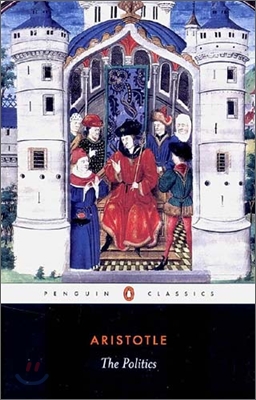
Penguin Classics
-
 The Penguin Book of the Undead: Fifteen Hundred Years of Supernatural Encounters 이동The Penguin Book of the Undead: Fifteen Hundred Years of Supernatural Encounters18% 26,480원
 -
Peter Pan: Peter and Wendy and Peter Pan in Kensington Gardens 이동Peter Pan: Peter and Wendy and Peter Pan in Kensington Gardens20% 11,200원
-
A Christmas Carol and Other Christmas Writings 이동A Christmas Carol and Other Christmas Writings20% 10,080원
-
The Strange Case of Dr Jekyll and MR Hyde: And Other Tales of Terror 이동The Strange Case of Dr Jekyll and MR Hyde: And Other Tales of Terror20% 11,200원
-
In Search of Lost Time, Volume 1 : The Way by Swann's 이동In Search of Lost Time, Volume 1 : The Way by Swann's15% 7,650원
-
Capital: A Critique of Political Economy, Volume 3 이동Capital: A Critique of Political Economy, Volume 320% 27,360원
책소개
목차
|
Translator's Introduction by T. A. Sinclair
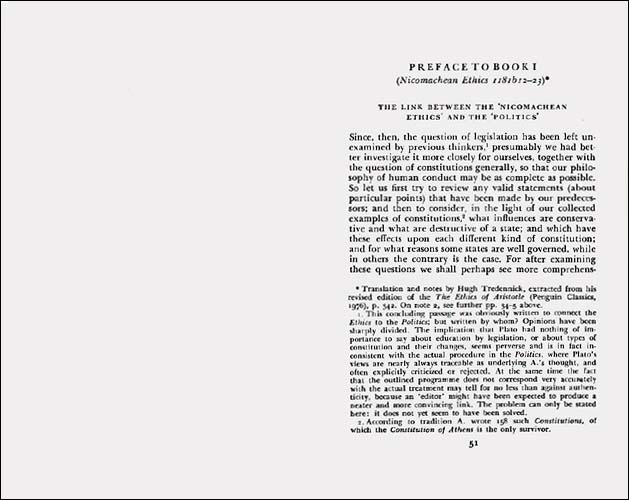
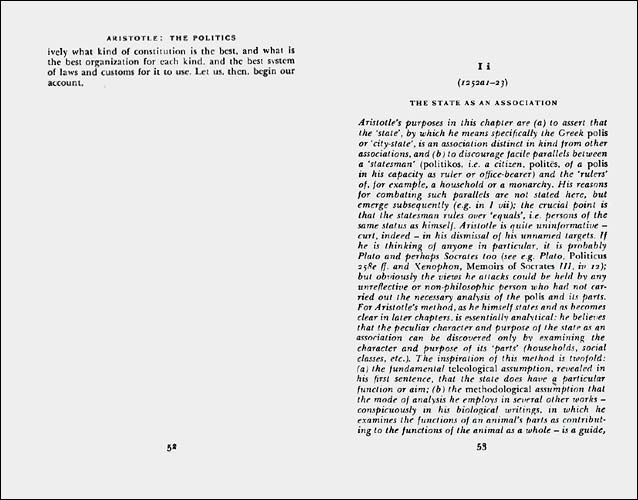
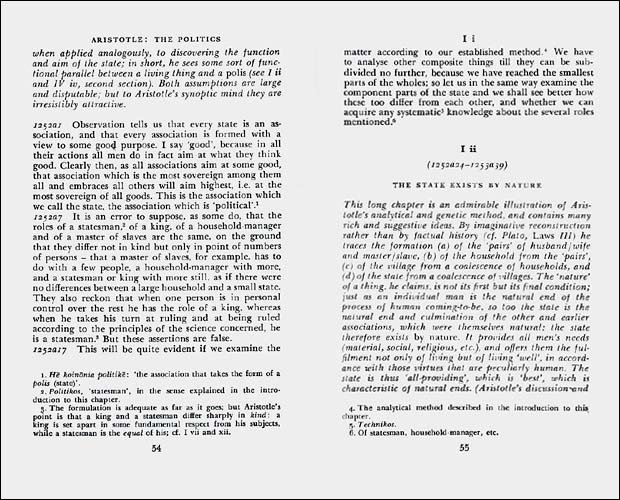
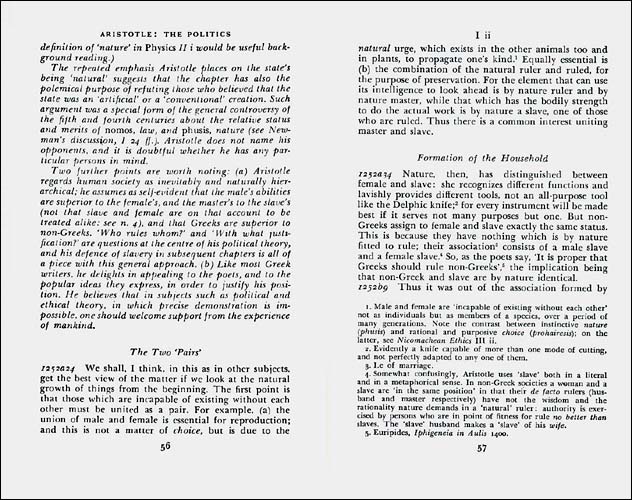
Aristotle's Life and Works Aristotle's Politics in the Past Aristotle's Politics Today Notes by the Reviser Reviser's Introduction, by T. J. Saunders A Modern Report on the Politics Teaching and Research in the Lyceum The Contents and Structure of the Politics Aristotle's Philosophical Assumption Why Read the Politics? The Revised Translation Principles of Revision Translation of Key Terms Refractory Terms Italicized Prefaces to Chapters Numerical References Footnotes Bibliographies Table of Contents and Index of Names Acknowledgments THE POLITICS Book I Preface to Book I i. The State as an Association ii. The State Exists by Nature The Two "Pairs" Formation of the Household Formation of the Village Formation of the State The State and the Individual iii. The Household and Its Slaves iv. The Slave as a Tool v. Slavery as Part of a Universal Natural Pattern vi. The Relation between Legal and Natural Slavery vii. The Nature of Rule over Slaves viii. The Natural Method of Acquiring Goods ix. Natural and Unnatural Methods of Acquiring Goods x. The Proper Limits of Household-Management; The Unnaturalness of Money-lending xi. Some Practical Considerations, Especially on the Creation of Monopoly xii. Brief Analysis of the Authority of Husband and Father xiii. Morality and Efficiency in the Household Book II i. Introduction to Ideal States: How Far Should Sharing Go? ii. Extreme Unity in Plato's Republic iii. Extreme Unity is Impracticable iv. Further Objections to Community of Wives and Children v. The Ownership of Property vi. Criticisms of Plato's Laws vii. The Constitution of Phaleas viii. The Constitution of Hippodamus ix. Criticism of the Spartan Constitution The Helots Spartan Women Property The Ephors The Board of Elders The Kings Some Common Meals Some Further Criticisms x. Criticism of the Cretan Constitution xi. Criticism of the Carthaginian Constitution xii. Solon and Some Other Lawgivers Book III i. How Should We Define "Citizen"? ii. A Pragmatic Definition of "Citizen" iii. Continuity of Identity of the State iv. How Far Should the Good Man and the Good Citizen Be Distinguished? v. Ought Workers to Be Citizens? vi. Correct and Deviated Constitutions Distinguished vii. Classification of Correct and Deviated Constitutions viii. An Economic Classification of Constitutions ix. The Just Distribution of Political Power x. Justice and Sovereignty xi. The Wisdom of Collective Judgments xii. Justice and Equality xiii. The Sole Proper Claim to Political Power xiv. Five Types of Kingship xv. The Relation of Kingship and Law (1) xvi. The Relation of Kingship and Law (2) xvii. The Highest Form of Kingship xviii. The Education of the Ideal King Book IV i. The Tasks of Political Theory ii. Consitutions Placed in Order of Merit iii. Why There are Several Constitutions iv. The Parts of the State and the Classification of Democracies Definitions of Democracy and Oligarchy The Parts of the State, and Resulting Variety among Constitutions (1) Plato on the Parts of the State The Parts of the State, and Resulting Variety among Constitutions (2) Varieties of Democracy v. The Classification of Oligarchies vi. Four Types of Democracy and Four of Oligarchy vii. Varieties of Aristocracy viii. Polity Distinguished from Aristocracy ix. Polity as a Mixture of Oligarchy and Democracy x. Three Forms of Tyranny xi. The Merits of the Middle Constitution xii. Why Democrats and Oligarchs Should Cultivate the Middle Ground xiii. Right and Wrong Strategems to Ensure a Majority for the Constitution xiv. The Deliberative Element in the Constitution xv. The Executive Element in the Constitution xvi. The Judicial Element in the Constitution Book V i. Equality, Justice, and Constitutional Change ii. Sources of Constitutional Change (1) iii. Sources of Constitutional Change (2) iv. The Immediate Occasions of Constitutional Change v. Why Democracies Are Overthrown vi. Why Oligarchies Are Overthrown vii. The Causes of Factions in Aristocracies viii. How Constitutions May Be Preserved (1) ix. How Constitutions May Be Preserved (2) x. The Origins and Downfall of Monarchy xi. Methods of Preserving Monarchies, with Particular Reference to Tyranny xii. The Impermanence of Tyrannies; Plato on Constitutional Change Book VI i. How Do Constitutions Function Best? ii. Principles and Practices of Democracies iii. Ways of Achieving Equality iv. The Best Democracy v. How Democracies May be Preserved vi. The Preservation of Oligarchies (1) vii. The Preservation of Oligarchies (2) viii. A Comprehensive Review of Officialdom Book VII i. The Relation between Virtue and Prosperity ii. The Active Life and the Philosophic Life (1) iii. The Active Life and the Philosophic Life (2) iv. The Size of the Ideal State v. The Territory of the Ideal State vi. The Importance of the Sea vii. The Influence of Climate viii. Membership and Essential Functions of the State ix. Citizenship and Age-Groups x. The Food-Supply and the Division of the Territory xi. The Siting and Defence of the City xii. The Siting of Markets, Temples and Communal Refectories xiii. Happiness as the Aim of the Constitution xiv. Education for Citizenship xv. The Proper Education for Cultured Leisure xvi. Sex, Marriage and Eugenics xvii. The Main Periods of Education; Censorship Book VIII i. Education as a Public Concern ii. Controversy about the Aims of Education iii. Leisure Distinguished from Play; Education in Music (1) iv. The Limits of Physical Training v. Education in Music (2) vi. Gentlemen versus Players vii. Melodies and Modes in Education Select Bibliographies Glossaries: Greek-English English-Greek Index of Names |
저자 소개
저자 : 아리스토텔레스
기원전 384년 스타기로스에서 태어나, 322년 칼키스에서 죽었다. 열일곱 살 되던 해에 아카데미아에 들어가 플라톤의 제자가 된 후 20년 동안 그의 영향을 받으며 강연과 저술 활동을 하였다. 남다른 탐구욕과 경험적 사유, 기존 이론에 대한 비판을 바탕으로 차츰 독자적인 이론을 세웠고, 334년에는 자신의 학원인 리케이온을 설립했다. '오르가논'을 통해 논리학과 학문 방법론을 완성하였으며, 『자연학』『영혼론』,『형이상학』,『니코마코스 윤리학』,『정치학』,『수사학』『시학』등의 책을 저술함으로써 인식론, 존재론, 심리론 심리한, 윤리학, 정치학, 문예 이론 등 여러 분야에 걸쳐 서양 철학과 학문의 토대로 마련했다.
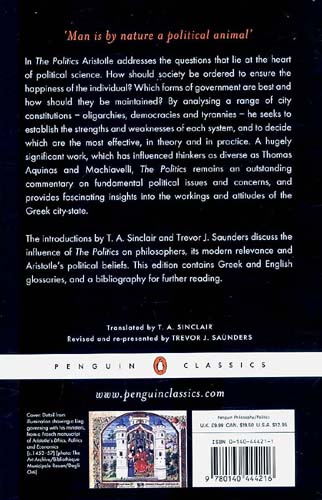
Aristotle was born at Stageira, in the dominion of the kings of Macedonia, in 384 BC. For twenty years he studied at Athens in the Academy of Plato, on whose death in 347 he left, and, some time later, became tutor of the young Alexander the Great. When Alexander succeeded to the throne of Macedonia in 335, Aristotle returned to Athens and established his school and research institute, the Lyceum, to which his great erudition attracted a large number of scholars. After Alexander's death in 323, anti-Macedonian feeling drove Aristotle out of Athens, and he fled to Chalcis in Euboea, where he died in 322. His writings, which were of extraordinary range, profoundly affected the whole course of ancient and medieval philosophy, and they are still eagerly studied and debated by philosophers today. Very many of them have survived and among the most famous are the Ethics and the Politics.
Aristotle was born at Stageira, in the dominion of the kings of Macedonia, in 384 BC. For twenty years he studied at Athens in the Academy of Plato, on whose death in 347 he left, and, some time later, became tutor of the young Alexander the Great. When Alexander succeeded to the throne of Macedonia in 335, Aristotle returned to Athens and established his school and research institute, the Lyceum, to which his great erudition attracted a large number of scholars. After Alexander's death in 323, anti-Macedonian feeling drove Aristotle out of Athens, and he fled to Chalcis in Euboea, where he died in 322. His writings, which were of extraordinary range, profoundly affected the whole course of ancient and medieval philosophy, and they are still eagerly studied and debated by philosophers today. Very many of them have survived and among the most famous are the Ethics and the Politics.
품목정보
- 발행일
- 2013년 05월 28일
- 쪽수, 무게, 크기
- 512쪽 | 299g | 130*200*20mm
- ISBN13
- 9780140444216
사락 별점0
혜택 및 유의사항밑줄0
혜택 및 유의사항상품정보안내
직수입외서의 경우, 해외거래처에서 제공하는 정보가 부족하여 제목, 표지, 가격, 유통상태 등의 정보가 미비하거나 변경되는 경우가 있습니다. 정확한 확인을 원하시는 경우, 일대일 상담으로 문의하여 주시면 답변 드리겠습니다.
(판형과 판수 등이 다양한 도서는 찾으시는 도서의 ISBN을 알려 주시면 보다 빠르고 정확한 안내가 가능합니다.)
해외거래처에서 품절인 경우, 2차 거래선을 통해 유럽과 미국 출판사로 직접 수입이 진행될 수 있습니다.
수입 진행 시점으로 부터 2~3주가 추가로 소요되며, 해외에서도 유통이 원활하지 않은 도서는 품절 안내가 지연될 수 있습니다.
해당 경우, 문자와 메일로 별도 안내를 드리고 있사오니 마이페이지에서 휴대전화번호와 메일주소를 다시 한번 확인해주시기 바랍니다.
(판형과 판수 등이 다양한 도서는 찾으시는 도서의 ISBN을 알려 주시면 보다 빠르고 정확한 안내가 가능합니다.)
해외거래처에서 품절인 경우, 2차 거래선을 통해 유럽과 미국 출판사로 직접 수입이 진행될 수 있습니다.
수입 진행 시점으로 부터 2~3주가 추가로 소요되며, 해외에서도 유통이 원활하지 않은 도서는 품절 안내가 지연될 수 있습니다.
해당 경우, 문자와 메일로 별도 안내를 드리고 있사오니 마이페이지에서 휴대전화번호와 메일주소를 다시 한번 확인해주시기 바랍니다.
23,960원
총 1개
23,960원