

소득공제
청년패스
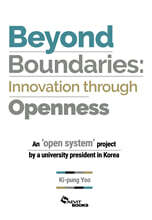
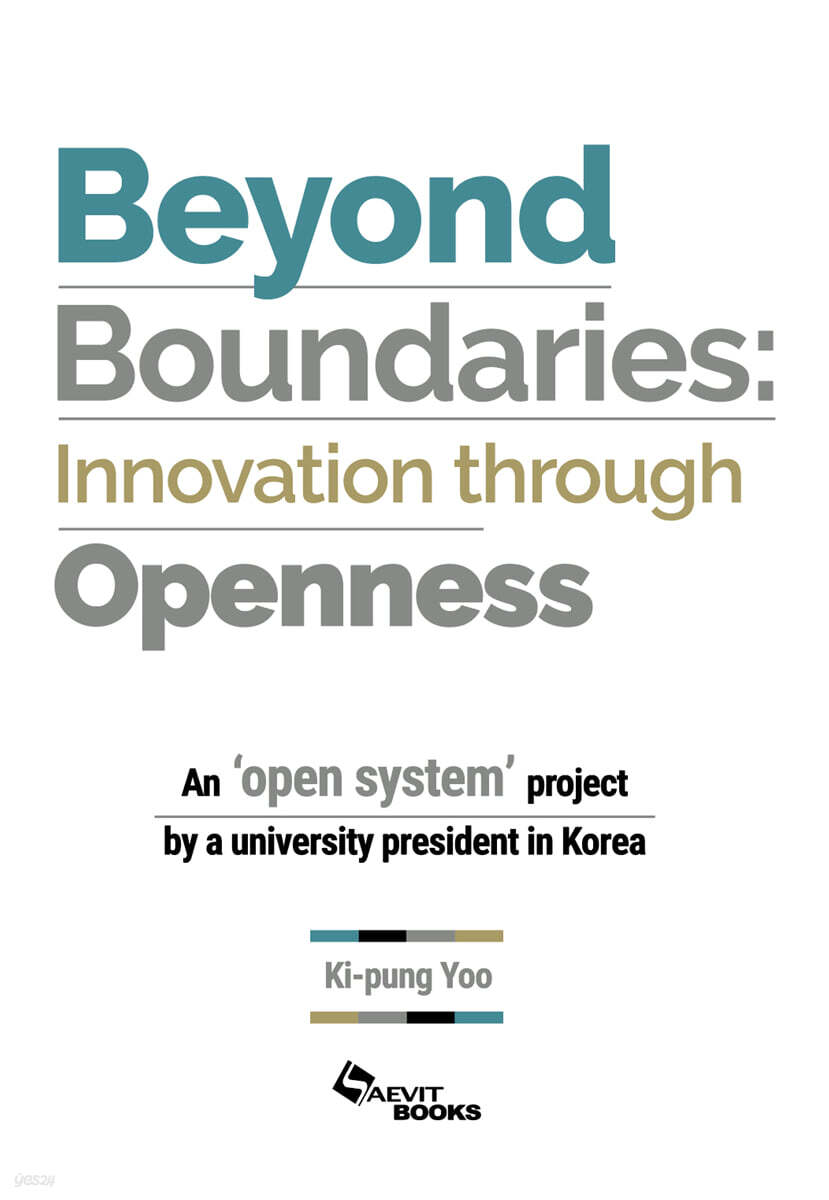
Beyond Boundaries: Innovation through Openness
경계를 넘어 : 열린계를 통한 혁신
영문판
- 베스트
- 창조적사고/두뇌계발 top100 2주
이미 소장하고 있다면 판매해 보세요.
- 국내배송만 가능
- 문화비소득공제 가능
이 상품의 태그









책소개
목차
|
Foreword by
Chan J. Wu [Literary Critic, Loyola Library Director, Sogang University] Woo-hyun Lee [Chairman, OCI Holdings, Co., Ltd., Korea] Tae Joo Kim [Chairman, Plantynet, Co., Ltd., Korea] Young-ho Oh [Colleague Professor at Sogang University] Prologue Keywords to Encounter an Open System. 1. Steve Jobs Keywords to Encounter an Open System. 2. M.O.O.C Keywords to Encounter an Open System. 3. Google Definition of an Open System Ch.1 The Beginning of an Open System | Are you Closed or Open? - Curiosity and challenge are the keys to unlocking closed boundaries. - The first step towards an open system: prestigious universities stepping outside the classroom. - The Mpemba effect: Breaking down prejudices is the first step toward an open system. - Yes, let's occasionally look at ourselves on Earth from outside the Earth. - You think that's amazing? That's just a closed system. - Learning is a process of going against the natural order of evolution. - To become a prestigious university, we must break down the closed boundaries. - Joseon dynasty under Heungseon Daewongun was a quintessential closed society. - An open system is the fundamental strength needed for fusion, convergence, and open innovation. - Venerable Jikji was a leader who embodied the principles of an open system. Ch.2 The Application of Open Systems | Open-Minded People, An Open World - An Open System in Academics: Take Cross-Disciplinary Courses (Humanities and Sciences) - An Open System in History: The Silk Road, Marco Polo's Travels, and the Open Encounters Between East and West - A Nation as an Open System: The Netherlands, Home to Hiddink, is a Prime Example of an Open Society - An Open System in Science: The God Particle, Unveiling the Invisible Ch.3 The History of Open Systems | Open Sciences, Open Humanities - Open-minded Western scientists who sought to learn from closed-off China - Chinese science was at a level that the West couldn't match until the 15th century. - China's astronomy, rooted in philosophy, is a prime example of an open system. - China's three great inventions revolutionized Western history. - Sejong the Great, who employed Jang Yeong-sil, was an open-minded monarch. - The Jesuits served as an open bridge between Eastern and Western - The Western scientific revolution, though later than China's, surpassed it through its openness. - Newton, Turing, Nobel - open-minded leaders who spearheaded the Western scientific revolution - The opening and closing of scientific systems in the East and West - How about adding a science subject to the national civil service exam? - Can the humanities solve the crisis in science and technology? - The humanities must stand firm in their own place. - Are the humanities and science, or the East and West, as distant as the Cowherd and the Weaver Girl? - Are you saying that humanities students don't need to know science? - Education that cannot foster dreams is a closed education. - The crisis in the humanities in Korea is as severe as the crisis in science. - Both the humanities and natural sciences are closed systems without imagination. Ch.4 Challenges in Open Systems | Seek and Ye shall find - The Challenge of an Open World, a World of Open Challenges - The spirit of challenge is paramount in an open system. - Instead of seeking employment, start a business; change the scale of your challenge. - In an era of studying failure, let's break through closed systems with challenges. - Dreaming of the birth of a Korean Steve Jobs... - Open systems for people in their 20s: Find out what you want to do! Ch.5 Leaders of Open Systems | Forefront Figures of Open Systems - The Open System of Soccer - Versatile Player Park Ji-sung - The Open System of Business - SoftBank's Son Masayoshi - The Open System of Employment - Job Hunting Beyond Common Sense - The Open System in Engineering - Attracting Genius Engineering Talent - The Open System of the Internet - The Internet of Things - 30 Tips for an Open System Lifestyle Epilogue |
저자 소개 1
Ki-pung Yoo,Ki-pung Yoo
고려대학교 화학공학과를 졸업하고 미국 코네티컷대학교에서 화학공학 박사 학위를 받았다. 제14대 서강대학교 총장, 고려대학교 석좌교수, 제4대 한국전력국제원자력대학원대학교(KINGS) 총장을 역임하며 공학 교육과 대학 행정 혁신을 이끌어 2022년 청조근정훈장을 수훈했다.
에너지와 열역학, 혼합물 이론, 초임계유체 기술 분야에서 수많은 SCI 논문을 발표하며 국내외 전공 소사이어티에서 학자적 족적을 남긴 그는, 평생 열역학적 지혜와 과학·인문학의 융합을 탐구해 온 시니어 학자다. 전공 서적 집필은 물론, 열역학적 통찰을 담은 다수의 과학 수필집을 펴내며 지식의 지평을 넓혀왔다.
고려대학교 화학공학과를 졸업하고 미국 코네티컷대학교에서 화학공학 박사 학위를 받았다. 제14대 서강대학교 총장, 고려대학교 석좌교수, 제4대 한국전력국제원자력대학원대학교(KINGS) 총장을 역임하며 공학 교육과 대학 행정 혁신을 이끌어 2022년 청조근정훈장을 수훈했다.
에너지와 열역학, 혼합물 이론, 초임계유체 기술 분야에서 수많은 SCI 논문을 발표하며 국내외 전공 소사이어티에서 학자적 족적을 남긴 그는, 평생 열역학적 지혜와 과학·인문학의 융합을 탐구해 온 시니어 학자다. 전공 서적 집필은 물론, 열역학적 통찰을 담은 다수의 과학 수필집을 펴내며 지식의 지평을 넓혀왔다.
현재 ㈜OH Technology 고문으로 재직 중이며, AI 시대로 인한 문명사적 전환과 일자리 소멸 위기 속에서 이를 돌파할 핵심 대안으로 ‘블루 테크놀로지’의 비전과 ‘블루 잡’의 실천적 해법을 제시하는 데 깊은 열정을 쏟고 있다.
에너지와 열역학, 혼합물 이론, 초임계유체 기술 분야에서 수많은 SCI 논문을 발표하며 국내외 전공 소사이어티에서 학자적 족적을 남긴 그는, 평생 열역학적 지혜와 과학·인문학의 융합을 탐구해 온 시니어 학자다. 전공 서적 집필은 물론, 열역학적 통찰을 담은 다수의 과학 수필집을 펴내며 지식의 지평을 넓혀왔다.
현재 ㈜OH Technology 고문으로 재직 중이며, AI 시대로 인한 문명사적 전환과 일자리 소멸 위기 속에서 이를 돌파할 핵심 대안으로 ‘블루 테크놀로지’의 비전과 ‘블루 잡’의 실천적 해법을 제시하는 데 깊은 열정을 쏟고 있다.
유기풍의 다른 상품


관련 분류
- 카테고리 분류
품목정보
- 발행일
- 2025년 02월 05일
- 쪽수, 무게, 크기
- 288쪽 | 150*220*20mm
- ISBN13
- 9791191517910
책 속으로
|
These days, integration and creative convergence are frequently emphasized. Few, however, understand their true importance. But where and how should we integrate and converge? The possibilities seem endless. I would argue that an open-minded attitude is the primary prerequisite. Integration, convergence, and open innovation are not the products of a closed, insular mindset.
요즘도 여기저기서 통섭이나 창조적 융합을 강조하곤 합니다. ‘열린계’의 긍정성은 많은 이들이 공감하지만, 대체 어디서 어떻게 통섭하고 융합해야 하는가?에 답을 제시해 보는 노력은 미흡하지만, 열린계에서의 긍정적인 진화의 길은 사방으로 열려 있습니다. 저는 그 으뜸 되는 선결조건으로 열린계의 자세를 꼽고 싶습니다. 유아독존식의 닫힌 태도가 아니라 자신을 활짝 열어 보이는 자세는 통섭과 융합, 그리고 열린 혁신의 기초체력을 갖추어야 합니다. 열린계 정신없이 통섭과 융합, 열린 혁신을 기대하는 것은 연목구어입니다. 저는 이 불확정성의 시대 우리나라는 물론 전 세계의 청년들에게 더 큰 세상으로 마음껏 뻗어 나갈 열린 자기 혁신의 기초체력이 넉넉하기를 청합니다. 열린계의 시각으로 닫힌 울타리를 넘어 온 세상을 자유롭게 휘젓고 다녔으면 합니다. 그리하여 제한된 생각과 전공의 경직된 경계를 과감하게 무너뜨려갈 전 세계의 젊은이들과 같이 호흡하기 위해 이 책을 씁니다. How should we view the universe as a system? Is its boundary infinitely open, or closed and isolated? Let's postpone that discussion for a moment and consider its scale. Given the infinite vastness of the universe, imagine a tiny grain of sand within that space representing the galaxy our solar system belongs to. Within that galaxy, the observable space is the size of our solar system. And within that solar system, a speck of dust represents the size of Earth. On a point on the Korean Peninsula-itself a minuscule point on Earth-we are born human and live out our brief lives. When you consider this, a human life seems insignificant. But are we living accordingly? A thousand years ago, the chinese poet Baekgeo seems to have understood this, expressing his feelings in a poem over a drink. 우주란 계를 어떻게 보아야 할까요? 그 경계는 무한하게 열려있는 우주일까요, 닫히고 고립된 우주일까요? 이에 대한 논의는 나중으로 미루고 개략적으로 그 크기를 짐작해 봅니다. 아마도 우주라는 공간은 무한하게 클 것이라 할 때, 이 무한한 우주 공간에서 작은 모래알 크기만 한 한 점의 공간을 우리 태양계가 속해있는 은하계 공간이라 한다면, 이 은하계 공간에서 티끌만 한 공간을 태양계, 그 태양계 공간 속에서의 먼지만 한 아주 작은 점의 공간을 지구의 크기라 해도 좋을 것입니다. 이 지구의 아주 작은 어느 점(계)에서 우리는 인간이란 동물로 태어나 그야말로 너무나 짧은 순간에 생노병사하며 생명을 마감합니다. 어찌 생각하면 한 인간의 일생이 별것도 아닌데 우린 이렇게 아옹다옹하며 살고 있는 것일지도 모릅니다. 천 년 전 백거이 시인은 인생의 덧없음을 잘 알고 술 한 잔 마시며 시로 토해내었나 봅니다. A system's characteristics can mean the difference between life and death. Consider, too, the case of an ordinary person freely exchanging consciousness with their surroundings. It's easy to see how a person's mental openness or closedness affects their social interactions. It's also clear that those who choose the extreme path of suicide are often extremely closed-minded. Those who dominate in their fields tend to have open personalities. This difference stems from the boundary characteristics of the system. 체계의 경계 특성이 한 인간을 살릴 수도 있고 죽음에 이르게 할 수도 있습니다. 또, 의식주의 일체를 주위와 자유롭게 교환하는 체계 속의 보통 사람의 경우를 생각해 보지요. 성격의 측면에서 정신적으로 열려있는 사람과 닫혀있는 사람 중 어느 사람이 더불어 사는 세상에 사회성이 높은지를 쉽게 알 수 있을 것입니다. 쉽게 자살이란 극단적인 방법으로 죽음을 선택하는 대부분의 사람이 극히 폐쇄적 성격의 소유자들이란 점을 알 수 있습니다. 세상을 지배하는 사람들의 성격은 개방적입니다. 그 연유를 짐작할 수 있는 대목이 바로 열린계의 경계 특성입니다. What are the requirements for our universities to survive and evolve beyond domestic competition, and to compete effectively with international universities? Above all, we must eliminate the physical and conceptual barriers that enclose universities and pursue a thoroughly open system. Fresh talent, excellent faculty, projects, information on education around the world, educational resources and supplies, experimental and audiovisual equipment, electricity, water, energy, visiting scholars, and researchers must constantly flow in. Undergraduate and graduate students (master's and doctoral) should not linger within the university but be released into the world in a timely manner. Waste, research results, and academic information must also continuously flow outward. Professors should not be complacent in their laboratories but actively engage in academic interaction with the wider world outside the university, through conferences and business trips, and actively seek external information. Of course, there must be a system in place where faculty negligent in education and research, and students who are not studying, can be expelled at any time. Meanwhile, systems within those open boundaries must always remain in a state of non-equilibrium dynamic tension. 우리의 대학들이 자국 내의 경쟁은 물론 국제적인 대학들과 무한 경쟁에서 살아남거나 그 이상으로 진화하려면 그 경계의 조건은 어떠해야 할까요? 무엇보다 대학의 경계인 물리적 울타리를 없애고 철저하게 열린계를 지향해야 합니다. 신입생, 우수한 교수진, 프로젝트, 전 세계 교육의 정보, 교육에 필요한 재원과 각종 물자, 실험과 시청각 기자재, 전기, 물, 에너지, 방문학자와 연구원 등은 끊임없이 유입되어야 합니다. 학부-대학원 석ㆍ박사 학위 졸업생은 오래 머물지 말고 제때 학교 경계 밖으로 내보내야 합니다. 폐기물, 연구결과, 학문정보도 계속해 경계 밖으로 나가야 합니다. 교수는 연구실에만 안주할 것이 아니라 학교 밖 넓은 세상과 학문적으로 교류하고 출장 가고 밖의 정보를 열심히 끌어들여야 합니다. 물론 교육과 연구에 소홀한 교수진도, 공부 안 하는 학생도 언제든 퇴출되는 시스템이 있어야 합니다. 그러는 가운데 경계 내의 체계는 항상 일정 수준의 긴장 속에 비평형의 상태를 유지시켜야 합니다. --- 본문 중에서 |
출판사 리뷰
|
An inspiring and open-minded message to young people hesitating at their perceived limits!
The desire for knowledge and creativity beyond boundaries can change the world. In the course of our lives, we constantly encounter limitations. However, some people look beyond those limits, while others falter before them. Limitations signify boundaries-the dividing lines between one world and another. If you cannot overcome the constraints of these rigid boundaries, you cannot lead change in the world. This book provides the vision and motivating energy to surpass those boundaries. It is written by an individual who is not only an engineering professor but also a leader who has headed both public and private universities. Having served as president of two universities-Sogang University and the Korea International Nuclear Graduate School (KINGS)-each with distinct founding philosophies, the author is a practical academic who has spearheaded a quiet transformation within the academic community, driven by a spirit of pragmatism. In this era of the Fourth Industrial Revolution, he has eschewed the traditional one-way, professor-centered, and input-driven education model, instead advocating for a two-way, open education system that provides each student with self-directed motivation and empowers them to acquire knowledge independently. The term "open system" comes from thermodynamics, which is Dr. Yoo's major. It can be conceptualized as an isolated system, a closed system, or an open system depending on the characteristics of the boundary that distinguishes it from the outside world. "Integration" and "convergence" were once popular terms. Indeed, these keywords still carry significant weight and drive change in the world. However, the fundamental basis prior to this integration and convergence is the "open system." Integration, convergence, and open innovation cannot be expected if the spirit of an open world is not in place. In this book, the author hopes to instill in young people of this era the fundamental strength for integration, convergence, and open self-innovation to expand into the greater world. In Korean society, the practice of closed-minded education often begins in middle and high school. The very notion or system that separates the sciences and humanities is a mindset trapped within a closed system. By dividing academic fields and isolating them from one another, creativity cannot take flight. Confined within the perceived limits of their respective disciplines, individuals cannot even dream of new challenges or attempts. The author sharply criticizes this flawed educational system. He also provides detailed historical examples of how Chinese science, which was historically superior to that of the West, was at some point reversed. Recently, the humanities have been fluctuating between popularity and perceived crisis. He points out that the problem with the humanities is also their disconnect from science and technology. He argues that the humanities excluding science and technology, and science and technology excluding the humanities, cannot properly develop. The best way to put the spirit of an open system into practice at universities is through MOOCs (Massive Open Online Courses). MOOCs (along with various similar open lecture sources like OCW and edX, which are rapidly expanding online) refer to open online classes. The author introduces them as one of the most important tools for Korean university students to communicate with the world, freely listen to lectures at prestigious universities, and voluntarily upgrade their own value. Fixing the characteristics of the boundary that determines whether the world is open or closed can be autonomous or due to external, imposed forces. However, one thing is clear: for a system to evolve or develop, it must be an "open system" with an "open boundary." This is precisely the core theme the author wants to address in this book. This book uses diverse examples of the rise and fall of humans and civilizations to explain to young people why systems and boundaries must be open. The beginning of an open world should start with reversing the patterns of prejudice and common sense. Common sense blocks common sense, and prejudice attracts another prejudice. An open system can only be properly opened when prejudices against science and prejudices against nature are overturned. Through various cases of human and civilizational progress and decline, this book tells young people around the world why systems and boundaries need to be open. The author also introduces open systems in various fields-the open nation of the Netherlands, the open system of Park Ji-sung in sports, and the open system of Son Jeong-ui in business-and argues for the spread of open system projects of innovation in all areas of our lives, breaking down closed common sense. Through the book's "Open System Project," the author says he wants to bring together new trends of common sense, convergence, and fusion in one place, enabling talented individuals who transcend common sense and limitations to open their minds together, not only in Korea but also for young people all over the world, and to take vigorous flight throughout the world. 한계 앞에서 망설이는 젊은이들에게 영감을 주는 열린 마음의 메시지! 경계를 넘어서는 지식과 창의력에 대한 열망이 세상을 바꿀 수 있습니다. 우리는 살아가면서 늘 한계에 부딪힙니다. 그러나 그 한계를 넘어 보는 사람이 있고, 그 한계 앞에서 주저앉는 사람이 있습니다. 한계는 경계를 의미합니다. 이 세계와 저 세계를 구분하는 경계, 그 경직된 경계의 한계를 넘어서지 못하면 세상의 변화를 주도할 수 없습니다. 이 책은 그 경계를 넘어서는 비전과 의욕적 에너지를 주는 책입니다. 공대 출신의 교수이자 공/사립 대학의 최고경영자를 지냈던 이가 이 책을 썼습니다. 서강대와, 한국전력국제원자력대학원대학교란 건학이념이 다른 두 대학의 총장을 지냈던 저자는 실용정신으로 대학가에 조용한 변혁을 주도했던 실천적 학자입니다. 4차 산업혁명 시기에 교수 중심의 단일방향 주입식 교육을 지양하며, 학생 각자에 자발적 동기를 부여를 하고, 스스로 지식을 습득하게 하는 양방향 열린 교육을 지향해온 사람입니다. ‘열린계’라는 용어는 유기풍 총장의 전공인 열역학에서 나온 말입니다. 외부 세상과 구분하는 경계의 특성에 따라 고립된 계, 닫힌계, 열린계로 개념 지을 수 있다고 합니다. 한때 통섭과 융합이 유행한 적이 있었습니다. 아니 지금도 이 키워드들은 묵직한 힘을 지니고 세상의 변화를 주도하고 있습니다. 그런데 이 통섭과 융합 이전의 기초체력이 열린계라고 할 수 있습니다. 열린계 정신이 갖춰지지 않으면 통섭과 융합, 그리고 열린 혁신은 기대할 수 없습니다. 저자는 이 책에서 이 시대 온 세상의 청년들에게 더 큰 세상으로 마음껏 뻗어 나갈 통섭, 융합, 그리고 열린 자기 혁신의 기초체력을 심어주기를 희망하고 있습니다. 한국 사회에서 중고교 시절부터 닫힌 시각적 교육 관행이 시작되곤 합니다. 이과와 문과를 서로 갈라 놓은 그 발상이나 시스템 자체가 닫힌계에 갇혀버린 사고입니다. 학문의 영역을 편가르고 서로 닫아 놓으니 창의력이 날개를 펼 수가 없습니다. 스스로 학문 간 영역의 한계에 갇혀 있으니 새로운 도전과 시도는 꿈도 꿀 수가 없었습니다. 저자는 이런 잘못된 교육 시스템을 날카롭게 지적합니다. 또한 역사적으로 서양보다 한수 위였던 중국의 과학이 어느 순간 역전되었는지도 역사적 사례를 들어 상세하게 설명하고 있습니다. 최근 인문학은 인기와 위기 사이를 왔다 갔다 하고 있습니다. 그 인문학의 문제도 과학기술 분야와의 단절이라고 지적합니다. 과학기술을 배제한 인문학, 인문학을 배제한 과학기술은 제대로 발전할 수 없다고 주장합니다. 대학에서 열린계 정신을 실천하기 위해 가장 좋은 것이 M.O.O.C 온라인 강의입니다. M.O.O.C(이와 유사한 OCW, EDX 등 다양한 오픈 강의 소스가 온라인에 무섭게 확장중)는 온라인 공개수업을 말하는 데 우리나라 대학생들이 세계와 소통하고, 세계 명문대 강의를 자유롭게 들으며 자발적으로 자신의 가치를 업그레이드 시킬 수 있는 아주 중요한 도구 중의 하나라고 소개합니다. 세계가 열려 있느냐 닫혀 있느냐를 결정짓는 경계의 특성을 고정하는 일은 자율적일 수도 있고 타율적인 강제에 의할 수도 있습니다. 그렇지만 한 가지 분명한 것은, 계가 진화하거나 발전하기 위해서는 ‘열린 경계’를 갖고 있는 ‘열린계’여야 합니다. 바로 이 점이 저자가 이 책에서 말하고자 하는 핵심 주제입니다. 이 책에서는 인간이나 문명의 흥망성쇠의 다양한 예를 들어봄으로써, 젊은이들에게 계와 경계가 왜 열려있어야 하는가에 대해서 얘기해 주고자 합니다. 열린계의 시작은 편견과 상식의 패턴을 뒤집는 데에서 시작해야 합니다. 상식이 상식을 가로막고 편견이 또 다른 편견을 끌어들이게 됩니다. 열린계는 과학에 대한 편견, 자연에 대한 편견을 뒤집어야 제대로 열릴 수 있습니다. 이 책에서는 인간이나 문명의 진보와 퇴보의 다양한 사례를 통해서 전 세계의 젊은이들에게 계와 경계가 왜 열려있어야 하는가에 대해서 이야기하고 있습니다. 저자는 또한 국가의 열린계 네덜란드, 스포츠의 열린계 박지성, 비즈니스의 열린계 손정의 등 각 분야의 열린계를 소개하며 우리 삶 곳곳에서 닫힌 상식을 깨고 혁신의 열린계 프로젝트가 퍼져가기를 주장합니다. 저자는 이 책의 “열린계 프로젝트”를 통해 통섭, 융합, 퓨전의 새로운 트렌드를 한곳에 모아 상식과 한계를 넘어서는 인재들이 대한민국은 물론 전 세계 젊은이들이 함께 마음을 열어가며 세계 방방곡곡에서 활달하게 비상하게 하고 싶다고 말합니다. |
추천평
|
This book's questions are very challenging. It is a carefully crafted book that transcends East and West with an open mind, traverses various academic fields, and seeks new levers of hope. As a chemical engineer who majored in thermodynamics, the book introduced me to the new frontier of the global academic scale. As a former president of prestigious private and public universities in Korea, the book is even more reliable as it contains the author's life story, which dynamically led university innovation. I hope that the "Open System" project proposed in this book will enable young people in the 21st century to actively open up an open world, open hope, and an open future together.
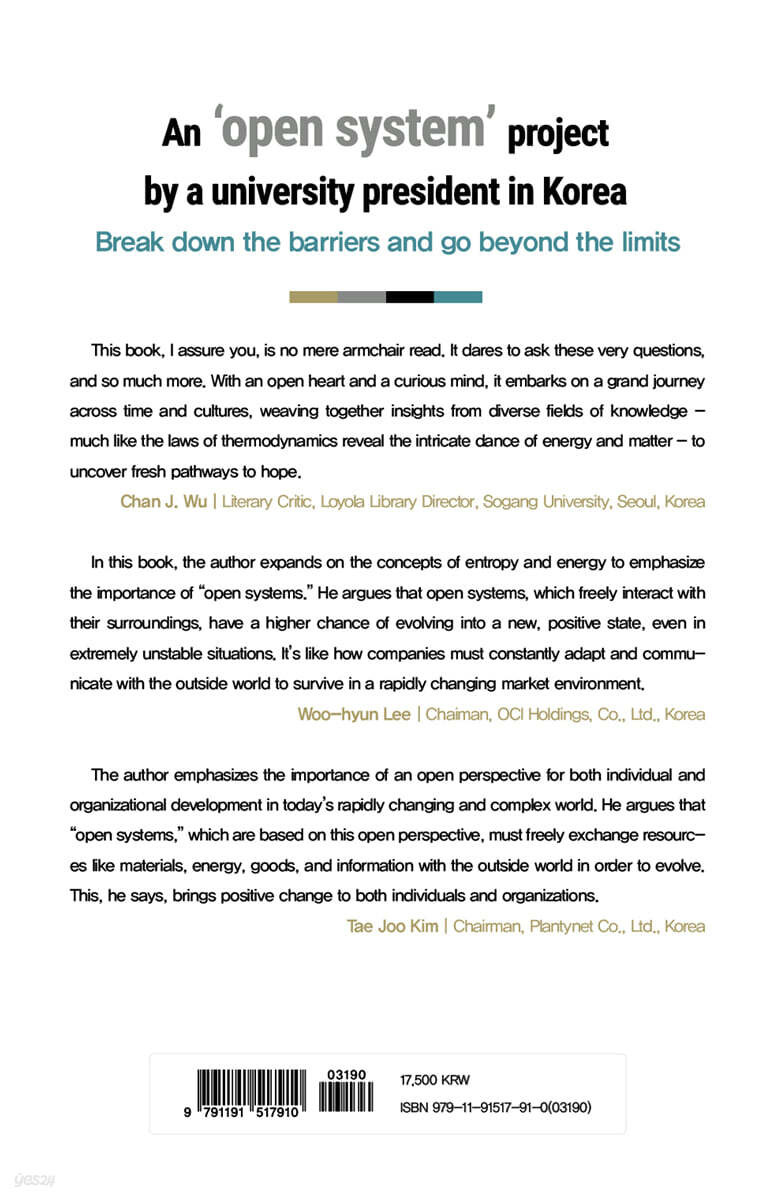
이 책의 질문은 매우 도전적이다. 열린 마음으로 동서고금을 넘나들고, 다양한 학문 영역을 가로지르며, 새로운 희망의 지렛대를 모색하려고 공들인 책이다. 열역학을 전공한 화공학자로서 글로벌 학문 척도의 새로운 전위를 알게 했고, 한국의 명문 사립과 공립대학의 총장으로서 대학 혁신을 역동적으로 주도했던 저자의 일생이 담긴 책이어서 더욱 미덥다. 이 책에서 제안하는 ‘열린계’ 프로젝트가, 21세기 청년들과 함께 열린 세계, 열린 희망, 열린 미래를 활달하게 열어나갈 수 있기를 소망한다. - 우찬제 ((Chan J. Wu) 문학평론가,서강대학교 로욜라 도서관장/Literary Critic, Loyola Library Director, Sogang University, Korea) |
|
In this book, the author expands on the concept of energy and entropy evolution, emphasizing the positive importance of individuals or groups having an "open system" perspective. He argues that an open system, which freely interacts with its surrounding environment, has a higher probability of evolving into another positive structure even in extremely unstable situations. It can be said that this provides a fundamental reason why companies must constantly adapt and communicate with the outside world to survive in a rapidly changing market environment. This book is definitely worth reading.
저자는 이 책에서 에너지와 엔트로피 진화 개념을 확장하여 개인이나 집단이 '열린계'의 관점을 갖는 것의 긍정적인 중요성을 강조한다. 그는 주변 환경과 자유롭게 상호 작용하는 열린계는 극도로 불안정한 상황에서도 또 다른 긍정적인 구조로 진화할 가능성이 더 높다고 주장한다. 급변하는 시장 환경에서 살아남기 위해 기업이 끊임없이 적응하고 외부와 소통해야 하는 근본적인 이유를 제시해 준다고 할 수 있다. 필독할 가치가 충분한 책이다. - 이우현 ((Woo-hyun Lee) ㈜OCI 홀딩스 회장/Chaiman, OCI Holdings, Co., Ltd., Korea) |
|
Based on his lifelong theme of "thermodynamics," which the author taught and researched at the College of Engineering, and his experience as a university CEO, the book emphasizes the importance of an open perspective for the development of individuals and organizations in today's complex and rapidly changing world. He argues that in order to evolve into an "open system" based on this open perspective, both individuals and organizations can achieve positive development and evolution only if they can freely exchange resources such as matter, energy, goods, and information with the outside world. This book is a must-read for business people living in an age of uncertainty.
공과대학에서 강의하고 연구하던 저자의 평생의 테마, ‘열역학’의 응용과 대학 최고경영자의 경험을 바탕으로 복잡하게 급변하는 오늘날의 세상에서 개인과 조직의 발전을 위한 열린 관점의 중요성을 강조한다. 그는 이러한 열린 관점에 기반한 ‘열린계’로 진화하기 위해서는 물질, 에너지, 상품, 정보 등 자원을 외부와 자유롭게 교환할 수 있어야 개인과 조직 모두 긍정적인 발전과 진화가 가능하다고 말한다. 불확실성의 시대를 사는 기업인들에게 일독을 권한다. - 김태주 ((Tae Joo Kim) ㈜플랜티넷 회장/Chairman, Plantynet Co., Ltd., Korea) |
사락 별점0
혜택 및 유의사항밑줄0
혜택 및 유의사항
15,750원
총 1개
15,750원