
소득공제
수입
직수입양서
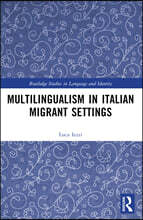
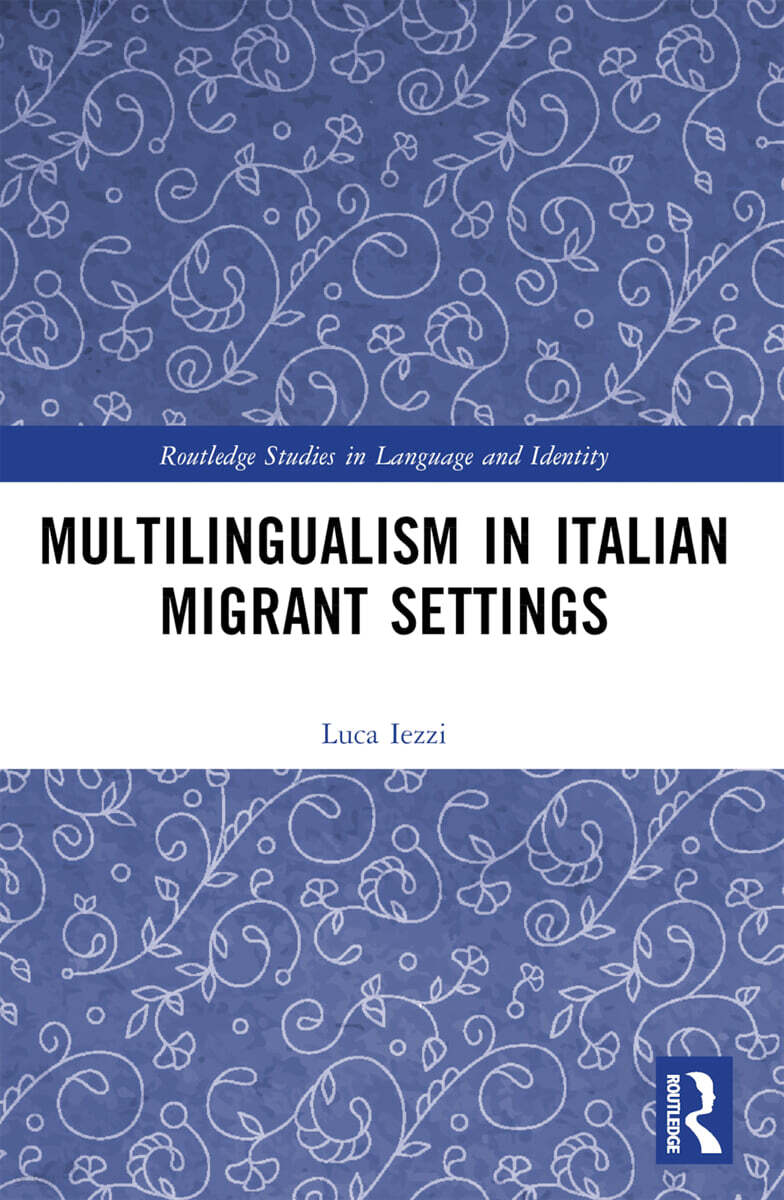
Multilingualism in Italian Migrant Settings
Paperback, 1st Edition
Luca Iezzi
Routledge
2026.01.30.
이미 소장하고 있다면 판매해 보세요.
- 국내배송만 가능
- 해외 거래처 사정에 의하여 품절/지연 가능
- 도서 정보 중 미표기 사항 안내?
- 문화비소득공제 가능
Routledge Studies in Language and Identity
-
 Language, Teaching, and Politics in Arabic and Chinese 이동Language, Teaching, and Politics in Arabic and Chinese10% 348,270원
 -
Language, Teaching, and Politics in Arabic and Chinese 이동Language, Teaching, and Politics in Arabic and Chinese10% 80,970원
-
Ethnographic Landscapes and Language Ideologies in the Spanish State 이동Ethnographic Landscapes and Language Ideologies in the Spanish State10% 97,170원
-
Multilingualism in Italian Migrant Settings 이동Multilingualism in Italian Migrant Settings10% 91,090원
-
New Approaches to Language and Identity in Contexts of Migration and Diaspora 이동New Approaches to Language and Identity in Contexts of Migration and Diaspora10% 97,170원
-
Linguistic Landscape in Israel through Palestinian Eyes 이동Linguistic Landscape in Israel through Palestinian Eyes10% 348,270원
-
Ethnographic Landscapes and Language Ideologies in the Spanish State 이동Ethnographic Landscapes and Language Ideologies in the Spanish State10% 348,270원
-
Multilingualism in Italian Migrant Settings 이동Multilingualism in Italian Migrant Settings10% 295,620원
-
New Approaches to Language and Identity in Contexts of Migration and Diaspora 이동New Approaches to Language and Identity in Contexts of Migration and Diaspora10% 348,270원
-
Language, Identity, and Syrian Political Activism on Social Media 이동Language, Identity, and Syrian Political Activism on Social Media10% 97,170원
-
Research Companion to Language and Country Branding 이동Research Companion to Language and Country Branding10% 105,270원
-
Linguistic Identities in the Arab Gulf States 이동Linguistic Identities in the Arab Gulf States10% 348,270원
-
Linguistic Identities in the Arab Gulf States 이동Linguistic Identities in the Arab Gulf States10% 87,040원
-
Linguistic Choices in the Contemporary City 이동Linguistic Choices in the Contemporary City10% 78,940원
-
Linguistic Choices in the Contemporary City 이동Linguistic Choices in the Contemporary City10% 348,270원
-
Languages, Identities and Intercultural Communication in South Africa and Beyond 이동Languages, Identities and Intercultural Communication in South Africa and Beyond10% 348,270원
-
Languages, Identities and Intercultural Communication in South Africa and Beyond 이동Languages, Identities and Intercultural Communication in South Africa and Beyond10% 85,020원
-
Research Companion to Language and Country Branding 이동Research Companion to Language and Country Branding10% 526,500원
-
Language, Identity, and Syrian Political Activism on Social Media 이동Language, Identity, and Syrian Political Activism on Social Media10% 348,270원
책소개
목차
|
List of figures and tables Acknowledgements INTRODUCTION: Beyond borders: global changes and linguistic challenges in migratory contexts CHAPTER 1: The European migrant crisis 1.1 Migrations and migratory policies in Europe 1.2 Unauthorised migrations in Italy 1.3 Migration and language CHAPTER 2: The sociolinguistics of (im)migration 2.1 Multilingualism, speech community, and repertoires 2.2 The sociolinguistics of (im)migration across time and space 2.3 Multilingualism in postcolonial countries 2.4 Status and function of a language 2.4.1 Geopolitical factors 2.4.2 Socio-demographical factors 2.4.3 Linguistic factors 2.5 Language ideologies and attitudes CHAPTER 3: Language contact 3.1 Language maintenance and shift 3.2 Contact in speech 3.2.1 Structural approaches to CS 3.2.2 Functional approaches to CS 3.3 From CS to grammaticalisation 3.4 Contact in language 3.4.1 Matter replication 3.4.2 At the boundary between switching and matter replication 3.4.3 Pattern replication 3.5 Structure, function and cognition: the usage-based approach CHAPTER 4: Linguistic ethnography and multilingualism 4.1 Objectives of the research 4.1.1 Research methods 4.2 Data transcription 4.2.1 Language transcription 4.2.2 Graphic and phonetic correspondences 4.2.3 Morphemic glossing 4.3 The pilot study 4.3.1 The CAS 4.3.2 Methodology 4.3.3 Data analysis 4.3.4 Discussion 4.4 The main study 4.4.1 Informants and linguistic biographies 4.4.2 Other subjects CHAPTER 5: The urban variety of Punjabi 5.1 Population in Pakistan 5.2 The languages of the Pakistan 5.2.1 English, the conquerors’ language 5.2.2 The privileging of Urdu as national language 5.2.3 Urdu and Punjabi 5.3 Urban Punjabi 5.3.1 Borrowing vs CS 5.3.2 Instances of switching phenomena within the urban variety 5.4 Discussion CHAPTER 6: Italian within the speech community 6.1 Code choice in the CAS (centro di accoglienza straordinaria) 6.2 Instances of code mixing within the urban variety 6.3 Discussion CHAPTER 7: Ideologies and attitudes 7.1 Language proficiency in the CAS(centro di accoglienza straordinaria) 7.2 Interviews 7.3 Ideologies and attitudes 7.3.1 Urdu 7.3.2 English 7.3.3 Italian 7.3.4 Minority languages 7.4 Some reflections on the linguistic repertoire of the migrants CONCLUSIONS: Beyond challenge: understanding multilingualism in a time of change References Appendix I: Questionnaire Appendix II: GDPR Index |
품목정보
- 발행일
- 2026년 01월 30일
- 쪽수, 무게, 크기
- 146쪽 | 290g | 160*230mm
- ISBN13
- 9781032684666
사락 별점0
혜택 및 유의사항밑줄0
혜택 및 유의사항상품정보안내
직수입외서의 경우, 해외거래처에서 제공하는 정보가 부족하여 제목, 표지, 가격, 유통상태 등의 정보가 미비하거나 변경되는 경우가 있습니다. 정확한 확인을 원하시는 경우, 일대일 상담으로 문의하여 주시면 답변 드리겠습니다.
(판형과 판수 등이 다양한 도서는 찾으시는 도서의 ISBN을 알려 주시면 보다 빠르고 정확한 안내가 가능합니다.)
해외거래처에서 품절인 경우, 2차 거래선을 통해 유럽과 미국 출판사로 직접 수입이 진행될 수 있습니다.
수입 진행 시점으로 부터 2~3주가 추가로 소요되며, 해외에서도 유통이 원활하지 않은 도서는 품절 안내가 지연될 수 있습니다.
해당 경우, 문자와 메일로 별도 안내를 드리고 있사오니 마이페이지에서 휴대전화번호와 메일주소를 다시 한번 확인해주시기 바랍니다.
(판형과 판수 등이 다양한 도서는 찾으시는 도서의 ISBN을 알려 주시면 보다 빠르고 정확한 안내가 가능합니다.)
해외거래처에서 품절인 경우, 2차 거래선을 통해 유럽과 미국 출판사로 직접 수입이 진행될 수 있습니다.
수입 진행 시점으로 부터 2~3주가 추가로 소요되며, 해외에서도 유통이 원활하지 않은 도서는 품절 안내가 지연될 수 있습니다.
해당 경우, 문자와 메일로 별도 안내를 드리고 있사오니 마이페이지에서 휴대전화번호와 메일주소를 다시 한번 확인해주시기 바랍니다.
91,090원
총 1개
91,090원