
소득공제
수입
직수입양서
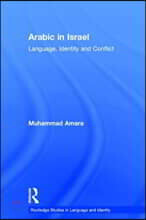
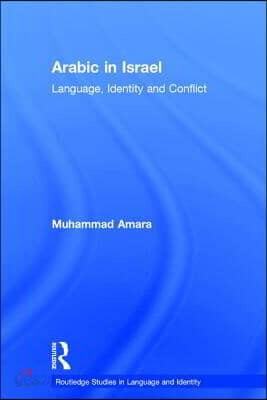
Arabic in Israel
Language, Identity and Conflict
Hardback, 1st Edition
Amara, Muhammad
Routledge
2017.09.18.
이미 소장하고 있다면 판매해 보세요.
- 국내배송만 가능
- 해외 거래처 사정에 의하여 품절/지연 가능
- 도서 정보 중 미표기 사항 안내?
- 문화비소득공제 가능
Routledge Studies in Language and Identity
-
 Language, Teaching, and Politics in Arabic and Chinese 이동Language, Teaching, and Politics in Arabic and Chinese10% 348,270원
 -
Language, Teaching, and Politics in Arabic and Chinese 이동Language, Teaching, and Politics in Arabic and Chinese10% 80,970원
-
Ethnographic Landscapes and Language Ideologies in the Spanish State 이동Ethnographic Landscapes and Language Ideologies in the Spanish State10% 97,170원
-
Multilingualism in Italian Migrant Settings 이동Multilingualism in Italian Migrant Settings10% 91,090원
-
New Approaches to Language and Identity in Contexts of Migration and Diaspora 이동New Approaches to Language and Identity in Contexts of Migration and Diaspora10% 97,170원
-
Linguistic Landscape in Israel through Palestinian Eyes 이동Linguistic Landscape in Israel through Palestinian Eyes10% 348,270원
-
Ethnographic Landscapes and Language Ideologies in the Spanish State 이동Ethnographic Landscapes and Language Ideologies in the Spanish State10% 348,270원
-
Multilingualism in Italian Migrant Settings 이동Multilingualism in Italian Migrant Settings10% 295,620원
-
New Approaches to Language and Identity in Contexts of Migration and Diaspora 이동New Approaches to Language and Identity in Contexts of Migration and Diaspora10% 348,270원
-
Language, Identity, and Syrian Political Activism on Social Media 이동Language, Identity, and Syrian Political Activism on Social Media10% 97,170원
-
Research Companion to Language and Country Branding 이동Research Companion to Language and Country Branding10% 105,270원
-
Linguistic Identities in the Arab Gulf States 이동Linguistic Identities in the Arab Gulf States10% 348,270원
-
Linguistic Identities in the Arab Gulf States 이동Linguistic Identities in the Arab Gulf States10% 87,040원
-
Linguistic Choices in the Contemporary City 이동Linguistic Choices in the Contemporary City10% 78,940원
-
Linguistic Choices in the Contemporary City 이동Linguistic Choices in the Contemporary City10% 348,270원
-
Languages, Identities and Intercultural Communication in South Africa and Beyond 이동Languages, Identities and Intercultural Communication in South Africa and Beyond10% 348,270원
-
Languages, Identities and Intercultural Communication in South Africa and Beyond 이동Languages, Identities and Intercultural Communication in South Africa and Beyond10% 85,020원
-
Research Companion to Language and Country Branding 이동Research Companion to Language and Country Branding10% 526,500원
-
Language, Identity, and Syrian Political Activism on Social Media 이동Language, Identity, and Syrian Political Activism on Social Media10% 348,270원
책소개
목차
|
List of tables, figure, pictures and mapsPreface Acknowledgements Chapter 1 Language, identity and conflict 1.1 Introduction 1.1 Identity and identities 1.1.1 Conflicting identities: Palestinian-Jewish relationships inside Israel 1.2 Language and social identity 1.2.1 The Arabic language and social identity 1.2.2 Language and identity in Israel 1.3 The vitality of Arabic in Israel 1.4 Language and conflict 1.4.1 The role of language in the Arab-Israeli conflict 1.5 Conclusion Chapter 2 Internal and external challenges of the Arabic language 2. Introduction 2.1 Internal challenges 2.1.1 Diglossia: old and new challenges 2.1.2 Modernization and the Arabic language 2.2 External challenges 2.2.1 Colonialism, globalization and the Arabic language 2.3 Policy towards Arabic in the Arab world: .encountering challenges 2.4 Conclusion Chapter 3 Internal and regional contexts and the Arabic language in Israel 3. Introduction 3.1 Internal contexts 3.2 Regional contexts 3.3 Conclusion Chapter 4 The status of the Arabic language in Israel 4.1 The linguistic situation in Israel 4.2 The status of Arabic in Israel 4.3 Conclusion Chapter 5 Features of the Arabic language in Israel 5.1 Introduction 5.2 Arabic in Israel 5.2.1 Is there a unique variety of Arabic in Israel? 5.2.2 Influences from other Arabic varieties 5.3 Conclusion Chapter 6 Arabic in the shadow of Hebraization 6.1 Hebrew is the dominant language in Israel 6.1.1 Building the new Jewish Israeli identity 6.1.2 Putting Hebrew on the national agenda 6.1.3 Teaching Hebrew 6.1.4 Hebraization consequences 6.2 Ideologized Hebrew and its teaching to Palestinian pupils in Israel 6.2.1 Attitudes towards teaching Hebrew to Palestinian Arabs 6.2.2 The Policy of teaching Hebrew: goals and curricula 6.2.3 A new curriculum 6.2.4 Textbooks and contents 6.2.5 Consequences of Hebraization for teaching 6.3 The penetration of Hebrew into the ‘heart of Arabic’: borrowing 6.3.1 Introduction 6.3.2 Culture contact and its linguistic reflections 6.3.3 The importance of the study of Hebrew 6.3.4 The knowledge and use of Hebrew 6.3.5 Borrowing lexical items from Hebrew: integration and diffusion 6.3.6 Borrowing and its linguistic characteristics 6.3.7 The consequences of Hebraization on borrowing Chapter 7 English in the Palestinian linguistic repertoire in Israel 7.1 Introduction 7.2 English teaching in the Palestinian schools in Israel 7.2.1 The current English curriculum 7.2.2 Textbooks 7.2.3 Achievements 7.3 Borrowing from English 7.4 Globalization and English 7.5 Writing with Latin and Hebrew letters 7.6 Conclusion Chapter 8 Hebraization of Arabic place names 8.1 Introduction 8.2 Hebraizing names: the translation of ideological orientation and political thinking 8.3 Conclusion Chapter 9 The current linguistic landscape in the Palestinian Arab localities in Israel 9.1 Linguistic landscape: a brief background 9.1.1 Studies on linguistic landscape in Israel 9.2 The Palestinian Arab linguistic landscape in Israel 9.2.1 Hebrew and Hebraization 9.2.2 Palestinian Arab uniqueness 9.2.3 Conclusion 9.3 The linguistic landscape from a different perspective: Umm-el-Fahm as a case study 9.3.1 Umm-el-Fahm: background 9.3.2 The linguistic landscape in the city 9.3.3 Conclusion Chapter 10 The Arabic language in the Palestinian Arab education system 10.1 Introduction 10.2 The effect of the Arabic curricula on the Palestinian Arab identity 10.3 The hurdles blocking the achievement of high competence in Standard Arabic 10.4 What is the role of the Arabic language in the Palestinian Arab education system? 10.5 Conclusion Chapter 11 Teaching Arabic in Jewish schools: language of the neighbour or the enemy? 11.1 Introduction 11.2 Teaching the Arabic language 11.3 Jewish attitudes towards the Arabic language 11.4 Goals of teaching Arabic 11.5 Bilingual schools: the Hand-in-Hand schools 11.6 Conclusion Chapter 12 Language ideology and attitudes: Arabic language academies and future vision documents 12.1 Language ideology and attitudes towards Arabic 12.1.1 The Communist party and the Democratic Front 12.1.2 Balad 12.1.3 The Islamic Movement 12.1.4 Civil organizations 12.2 Survey 12.3 Conclusion 12.4 Arabic language academies in the Israeli context: between the research role and nationalist aspirations 12.4.1Arabic language academies 12.4.2 Arabic language academies in Israel 12.4.3 Conclusion 12.5 The role of Arabic according to future vision documents 12.5.1 Introduction 12.5.2 Arabic in the future vision documents 12.5.3 Conclusion Chapter 13 Epilogue: facing the challenges 13.1 Challenges of the Arabic language 13.2 Facing the challenges 13.2.1 Arabic as a strategic choice for building an Arab knowledge society 13.2.2 Meeting the challenges: building a framework 13.3 Practical proposals 13.4 Conclusion Index |
관련 분류
품목정보
- 발행일
- 2017년 09월 18일
- 쪽수, 무게, 크기
- 208쪽 | 460g | 160*230mm
- ISBN13
- 9781138063549
사락 별점0
혜택 및 유의사항밑줄0
혜택 및 유의사항상품정보안내
직수입외서의 경우, 해외거래처에서 제공하는 정보가 부족하여 제목, 표지, 가격, 유통상태 등의 정보가 미비하거나 변경되는 경우가 있습니다. 정확한 확인을 원하시는 경우, 일대일 상담으로 문의하여 주시면 답변 드리겠습니다.
(판형과 판수 등이 다양한 도서는 찾으시는 도서의 ISBN을 알려 주시면 보다 빠르고 정확한 안내가 가능합니다.)
해외거래처에서 품절인 경우, 2차 거래선을 통해 유럽과 미국 출판사로 직접 수입이 진행될 수 있습니다.
수입 진행 시점으로 부터 2~3주가 추가로 소요되며, 해외에서도 유통이 원활하지 않은 도서는 품절 안내가 지연될 수 있습니다.
해당 경우, 문자와 메일로 별도 안내를 드리고 있사오니 마이페이지에서 휴대전화번호와 메일주소를 다시 한번 확인해주시기 바랍니다.
(판형과 판수 등이 다양한 도서는 찾으시는 도서의 ISBN을 알려 주시면 보다 빠르고 정확한 안내가 가능합니다.)
해외거래처에서 품절인 경우, 2차 거래선을 통해 유럽과 미국 출판사로 직접 수입이 진행될 수 있습니다.
수입 진행 시점으로 부터 2~3주가 추가로 소요되며, 해외에서도 유통이 원활하지 않은 도서는 품절 안내가 지연될 수 있습니다.
해당 경우, 문자와 메일로 별도 안내를 드리고 있사오니 마이페이지에서 휴대전화번호와 메일주소를 다시 한번 확인해주시기 바랍니다.
348,270원
총 1개
348,270원