
이미 소장하고 있다면 판매해 보세요.
- 국내배송만 가능
- 문화비소득공제 가능
우리공예 디자인리소스북
-
 Geumbak : Korean Traditional Gold Leaf Imprinting 이동Geumbak : Korean Traditional Gold Leaf Imprinting10% 14,400원
 -
Jewa : Korean Traditional Handmade Roof Tile 이동Jewa : Korean Traditional Handmade Roof Tile10% 14,400원
-
Soban: Korean Traditional Portable Dining Table 이동Soban: Korean Traditional Portable Dining Table10% 14,400원
-
Maedeup : Korean Traditional Decorative Knotting 이동Maedeup : Korean Traditional Decorative Knotting16,000원
-
Ipsa : Korean Traditional Silver or Gold Inlaying 이동Ipsa : Korean Traditional Silver or Gold Inlaying16,000원
상세 이미지
책소개
목차
|
Chapter 1. About Ottchil
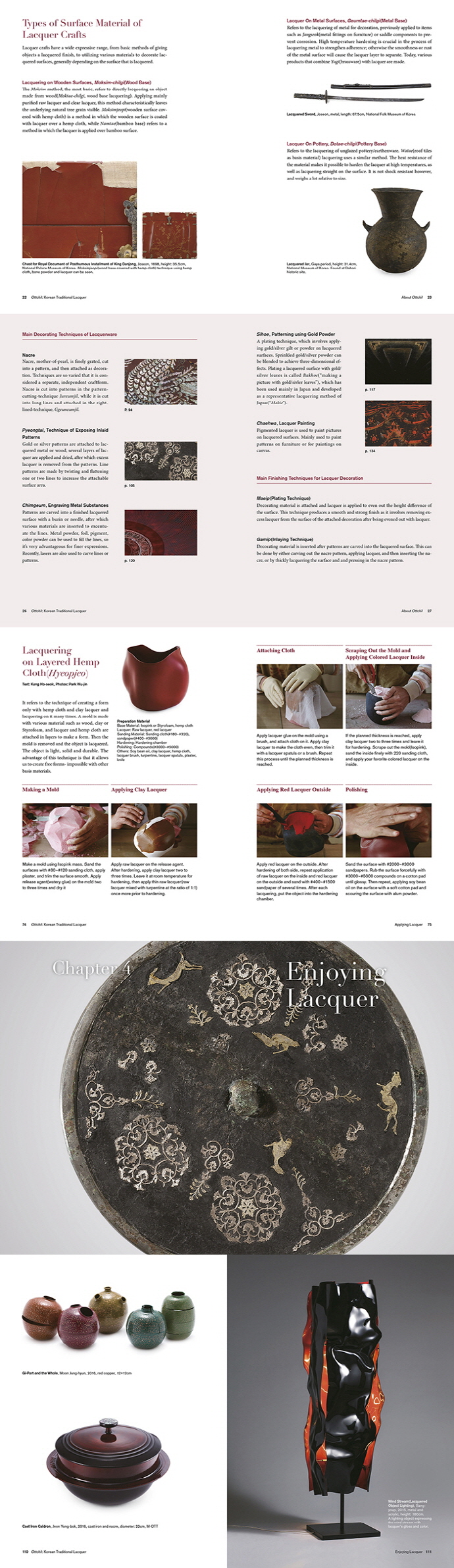
Defining Lacquer 14 Characteristics of Lacquer 16 Types of Lacquer 18 Types of Surface Material of Lacquer Crafts 22 History of Lacquer 28 Lacquer in China, Japan, Vietnam and Myanmar 36 Chapter 2. Tools and Material for Lacquering Collecting Lacquer 44 Beginning Lacquer 48 Chapter 3. Applying Lacquer Lacquering on Wood Base(Moksim) 56 Lacquering on Metal Base(Geumtae) 66 Lacquering on Pottery Base(Dotae) 70 Lacquering on Layered Hemp Cloth(Hyeopjeo) 74 Painting with Colored Lacquer(Chaehwa) 76 Chaper 4. Enjoying Lacquer Wood Base Lacquering: Solidity and Beauty in Daily Life 82 Metal Base Lacquering: Adding Gloss to Shine 104 Pottery Base Lacquering: Fusing Together with Earth 112 Layered Cloth Base Lacquering: Feeling Free to Form 116 Hanji Base Lacquering: Giving a New Birth to Korean Paper 124 Leather Base Lacquering: Balancing between Toughness and Solidity 130 Lacquer Painting: Making Things Bloom 134 Appendix List of Masters 144 Craft & Design Map 145 List of Plates 146 Bibliography 149 Collaborators 150 Index 151 |
품목정보
- 발행일
- 2018년 03월 15일
- 쪽수, 무게, 크기
- 152쪽 | 152*210mm
- ISBN13
- 9788997252923
책 속으로
|
Lacquer trees maintain a certain amount of sap internally and excrete it to protect itself when its bark is breached, which is referred to as ‘lacquer sap’.
To collect lacquer sap, the bark of living trees is removed, exposing the sap secreting organ, which is breached to encourage the sap to ooze out. Raw lacquer sap contains various substances such as urushiol, nitrogen, gum, water, etc. The ash colored milky sap has a bittersweet taste and oxidizes into a brown color. Prolonged oxidization hardens the surface into a dark brown colored cover that prevents further oxidization, which is why lacquer sap is described as having ‘hardening’ and ‘drying’ characteristics. -from. 'Chapter 1. About Ottchil' Lacquer sap is hand-collected from early June to late October from standing trees. The trees should be at least six years old; the best age for harvest is between eight to ten years. While Jichil(arborization: cutting off branches and collecting lacquer from them) and Hwachil(collecting lacquer by heating lacquer tree) techniques were mainly used in the past, ‘collecting lacquer and cutting off’, ‘collecting and curing’, ‘collecting from upper and below parts at the same time’ methods are the main collecting techniques used today. -from. 'Chapter 2. Tools and Material for Lacquering' Wood is the most frequently used material for lacquer work. To prevent warping and cracking during the lacquering process, the wood base must be tough, hard and wellseasoned. Here are three examples of wood base treatment: Jeopchil(lacquering by rubbing-in), Ottchil-oligi(overcoating) and Moksimjeopi(hemp-cloth covering). -from. 'Chapter 3. ‘Applying Lacquer Pottery in the early time was fragile and inconvenient, mainly due to lower firing temperature and its water-absorbing property. Lacquer was one of the finest ways to complement those weaknesses. Lacquer makes earthenware solid and water-repelling. Nowadays, pottery and porcelain are lacquered mainly for widening the aesthetical expression, accordingly the technique and material to unite both extraordinary expression tools are diversifying. ---본문 중에서 |
출판사 리뷰
|
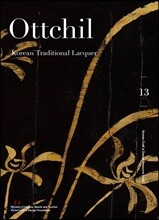
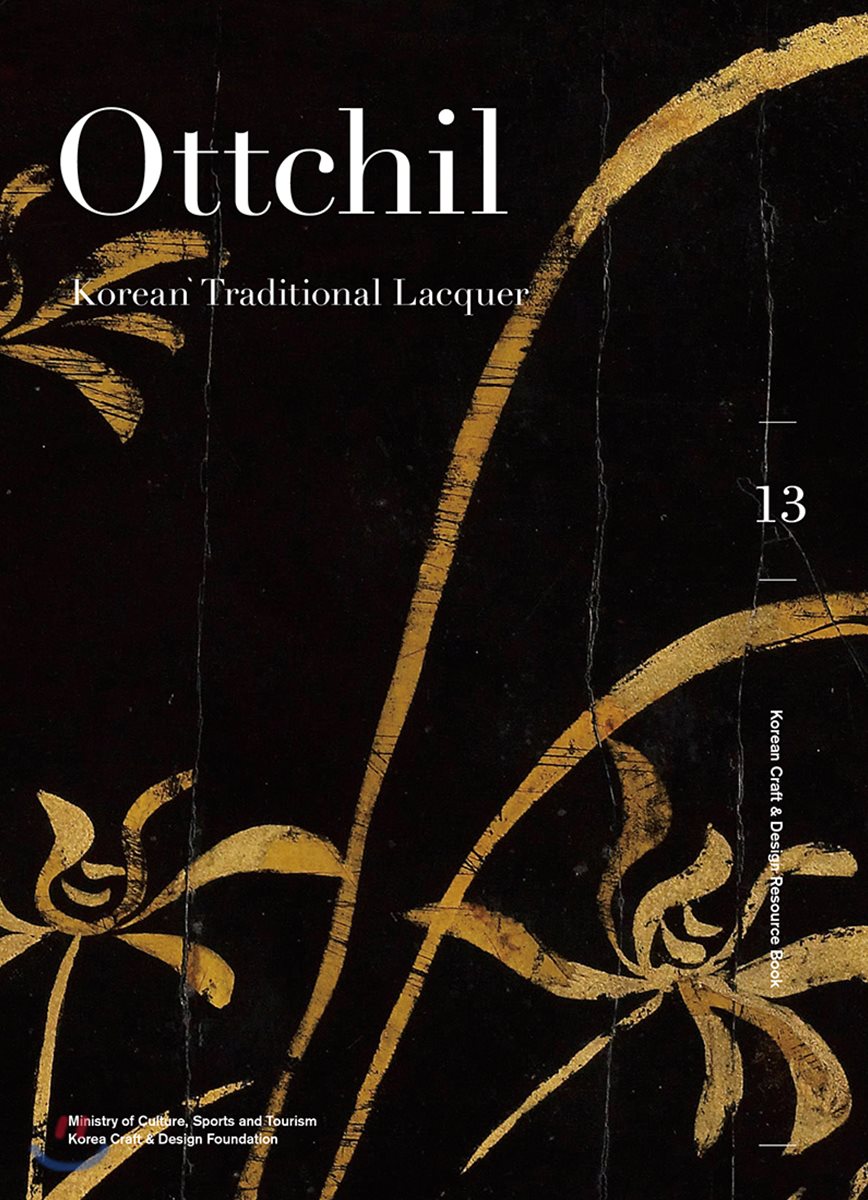
The publication of Korea Craft & Design Foundation, “Korean Craft & Design Resource Book” series, aims at distributing the knowledge on the traditional craftsmanship and technology of Korea, and at providing them not only to experts of relevant fields, but also to the public.
Despite the use of lacquer as the finest pigment since ancient times, few domestic publications detail its techniques, while the technical jargon makes existing publications inaccessible for the general public or apprentices to the craft. The emphasis on nontoxic environments and household items for healthy living amongst today’s rapidly aging population is enhancing the value of lacquer for its various beneficial properties. Additionally, Korea’s recovering economy is enabling the consumption of luxury items such as hand-crafted, high-end lacquer ware and art products among the general public. Ottchil, Korean Traditional Lacquering, details various techniques used in lacquerware crafting processes with visuals and simple explanations, introducing the general public to the value of lacquer ware, while providing hands-on guidance for apprentices to the craft. [이 책의 독자] Students majoring in traditional?crafts Amateurs interested in traditional?crafts Foreigners interested in Korean culture |