
이미 소장하고 있다면 판매해 보세요.
- 국내배송만 가능
- 문화비소득공제 가능
우리공예 디자인리소스북
-
 Geumbak : Korean Traditional Gold Leaf Imprinting 이동Geumbak : Korean Traditional Gold Leaf Imprinting10% 14,400원
 -
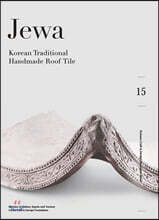
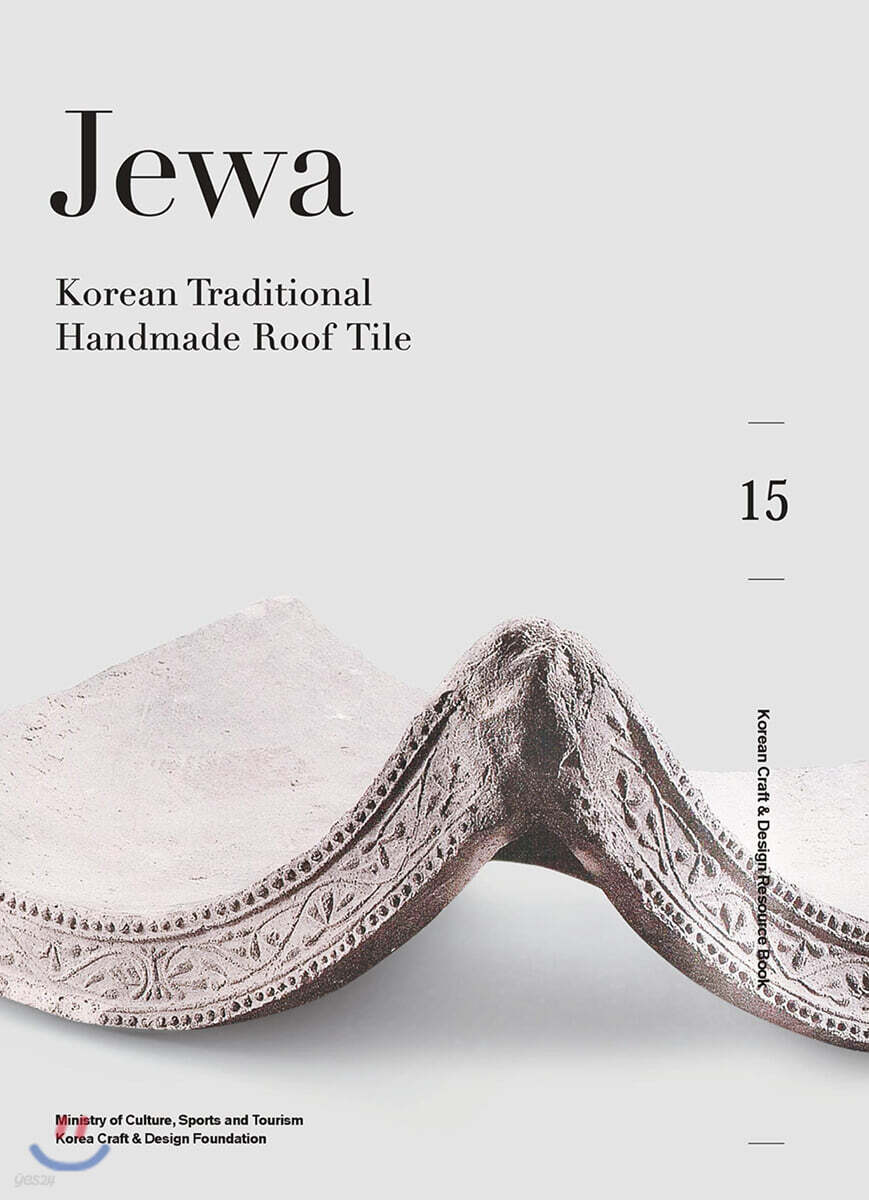
Jewa : Korean Traditional Handmade Roof Tile 이동Jewa : Korean Traditional Handmade Roof Tile10% 14,400원
-
Soban: Korean Traditional Portable Dining Table 이동Soban: Korean Traditional Portable Dining Table10% 14,400원
-
Maedeup : Korean Traditional Decorative Knotting 이동Maedeup : Korean Traditional Decorative Knotting16,000원
-
Ipsa : Korean Traditional Silver or Gold Inlaying 이동Ipsa : Korean Traditional Silver or Gold Inlaying16,000원
책소개
목차
|
Chapter 1. Introduction to Giwa
Significance of the Korean Giwa Types of Giwa Chapter 2. Giwa in Korean History Korean Giwa: Past and Present Chapter 3. Production of Giwa Production System of Giwa The Lifespan of Giwa Chapter 4. Making Traditional Giwa Production of Traditional Giwa Panel Discussion Giwa, the Art of Earth and Fire Appendix List of Masters Craft & Design Map List of Illustrations Bibliography Advisory Persons and Organizations Index |
저자 소개 1
품목정보
- 발행일
- 2018년 12월 07일
- 쪽수, 무게, 크기
- 168쪽 | 152*210*20mm
- ISBN13
- 9791189321079
책 속으로
|
The Korean traditional Giwa known as the giwa (瓦, roof tile) is an essential component of a building that was made by molding fine clay and baking it in high temperature in a kiln. The Chinese character “wa” 瓦, a logogram representing a roof covering, initially referred to earthenware vessels but its meaning gradually changed to signify the ceramic tiles that were used to cover the roof of a wooden building. Experts believe that the form or shape of the character meaning “roof tile” was made to depict the shape of a curved earthenware utensil overlapped with a pair of tiles.
--- 「Chapter 1. Introduction to Giwa」중에서 Archaeological evidence shows that Goguryeo (37 BCE - 668), one of the three ancient kingdoms that once dominated the Korean peninsula, began to use Giwa sometime between the second and third century, playing a leading role in the development of Giwa in Korea. The tiles of Goguryeo discovered thus far exhibit a remarkable diversity, encompassing ornamental roof-end and ridge-end roof tiles, some with inscriptions, as well as plain convex and concave tiles. The tiles unearthed mainly at the sites of Goguryeo tombs at Gungnaeseong Fortress in present-day Jian and Pyeongyang, the capitals of early and late Goguryeo, also show that the Goguryeo tile makers preferred cloud and lotus motifs in particular to decorate the tiles used to finish the edges of a tiled roof. --- 「Chapter 2. Giwa in Korean History」중에서 The system of roof tile production refers to the generalized production, supply, and laying of Giwa under a production system based around the royal kilns, which were managed by the dynasty or the state. In principle, the production of Giwa should be determined by the principle of supply and demand; however, the government and a tile making organization regulated it to some extent. During the Joseon Dynasty, the system of roof tile production was organized by organizations responsible for making Giwa, which included the jowaso (roof tile factory) and wagong (roof tile maker). --- 「Chapter 3. Production of Giwa」중에서 The first stage of Giwa making involves finding and gathering fine-quality clay, and then mixing it with sandy soil to make a refined clay that is ready to use. The clay is then mixed with water and kneaded by the tile maker and his assistant(s), although in the Joseon period the work was sometimes conducted by an ox. --- 「Chapter 4. Making Traditional Giwa」중에서 |
