
이미 소장하고 있다면 판매해 보세요.
- 국내배송만 가능
- 문화비소득공제 가능
이 상품의 태그
상세 이미지

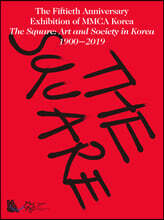
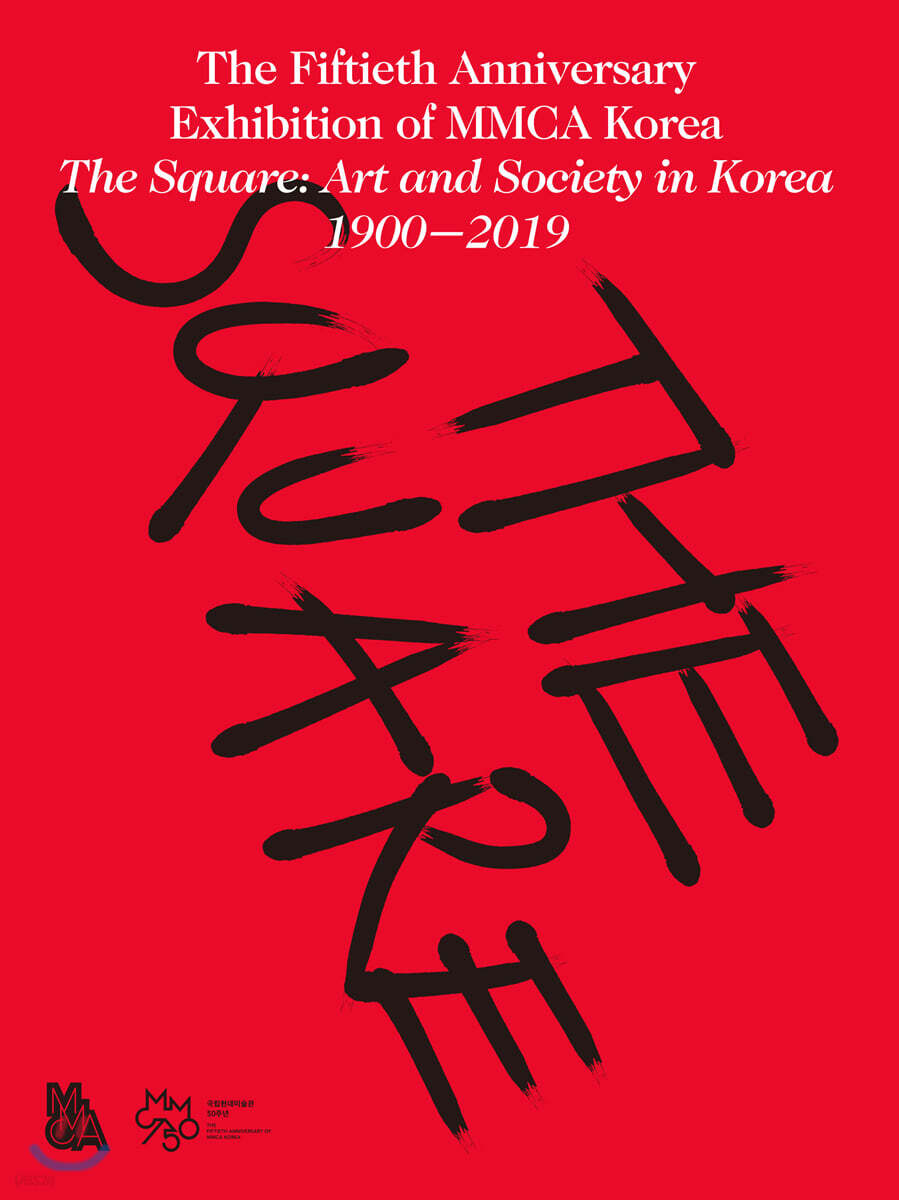
책소개
목차
|
8 Youn Bummo, Director’s Foreword
12 Kang Seungwan, “On The Square: Art and Society in Korea 1900-2019” Part I. 1900-1950 22 Kim Inhye, “The Role of Artists in Times of Darkness” 27 1. Records of the Righteous 29 Choi Youl, “The Struggle of Symbols: The Patriot’s Soul and the Flame of Modern Times” 65 2. Art and Enlightenment 67 Kim Mee Young, “Challenge and Resistance: Korean Art and Culture after the March 1st Movement until the 1930s” 111 3. Sound of the People 113 Hong Jisuk, “Ideology and Development of Korea’s Proletarian Art Movement in the Japanese Colonial Period” 159 4. Mind of Korea 161 Kim Hyunsook, “The Trajectory of the Paintings Presenting Joseon” Part II. 1950-2019 196 Kang Soojung, “The Square: Art and Society in Korea 1900-2019 Part II. 1950-2019: Opposing Chronic Historical Interpretation Syndrome” 209 Kwon Boduerae, “The Public Square Set Forth in The Square: Firm Individuals and Flexible Community” 215 1. Blackened Sun 231 2. Han-gil (One Path) 241 3. Gray Caves 257 4. Painful Sparks 275 Shin Chunghoon, “In Search of a Language of Necessity: Korea’s Art Discourses during the Second Half of the Twentieth Century” 287 Kim Hak-lyang, “The Draft of Monsters Biography in Modern and Contemporary Korean Art: “Jungmi [精美; Clean and Pure Beauty]”, Abstraction, Hangukhwa[Korean Painting], Minjung Art, and Fine Art?” 299 5. Blue Desert 313 6. Arid Sea 325 Chung Dahyoung, Lee Hyunju, Yoon Sorim, “Applied Art: The Zone of Criticism Sparked by Craft, Design, and Architecture” 333 7. White Bird 343 Kim Won, “Memory, Erasure, and Their Complicity: Forgotten Ghosts and Their Representation” Part III. 2019 354 1. I and the Other 355 Lee Sabine, “The Square, 2019” 393 Yang Hyosil, “The Square: Emergence of Bodies and Politics of Art” 400 Lim Jade Keunhye, “New Discourses on Art Museums as the ‘Square’” 409 2. Museum, Square and Theater 410 Sung Yonghee, “Is the Public Square Possible?” 419 Lee Kyungmi, “The Evaporation of the Real and the Creation of a Nonconforming Theater Space” 425 The list of works for the exhibition 455 The list of artists for the exhibition 459 Glossary 465 Installation View |
저자 소개 1
National Museum of Modern and Contemporary Art, Korea
1969년 경복궁에서 개관한 국립현대미술관은 이후 1973년 덕수궁 석조전 동관으로 이전하였다가 1986년 현재의 과천 부지에 국제적 규모의 시설과 야외조각장을 겸비한 미술관을 완공, 개관함으로써 한국 미술문화의 새로운 장을 열었다.
1998년에는 서울 도심에 위치한 덕수궁 석조전 서관을 국립현대미술관의 분관인 덕수궁미술관으로 개관하여 근대미술관으로서 특화된 역할을 수행하고 있다. 그리고 2013년 11월 과거 국군기무사령부가 있었던 서울 종로구 소격동에 전시실을 비롯한 프로젝트갤러리, 영화관, 다목적홀 등 복합적인 시설을 갖춘 국립현대미술관 서울을 건립·개관함으로써 다양한
1969년 경복궁에서 개관한 국립현대미술관은 이후 1973년 덕수궁 석조전 동관으로 이전하였다가 1986년 현재의 과천 부지에 국제적 규모의 시설과 야외조각장을 겸비한 미술관을 완공, 개관함으로써 한국 미술문화의 새로운 장을 열었다.
1998년에는 서울 도심에 위치한 덕수궁 석조전 서관을 국립현대미술관의 분관인 덕수궁미술관으로 개관하여 근대미술관으로서 특화된 역할을 수행하고 있다. 그리고 2013년 11월 과거 국군기무사령부가 있었던 서울 종로구 소격동에 전시실을 비롯한 프로젝트갤러리, 영화관, 다목적홀 등 복합적인 시설을 갖춘 국립현대미술관 서울을 건립·개관함으로써 다양한 활동을 통해 한국의 과거, 현재, 미래의 문화적 가치를 구현하고 있다. 또한 2018년에는 충청북도 청주시 옛 연초제조창을 재건축한 국립현대미술관 청주를 개관하여 중부권 미술문화의 명소로 자리잡고 있다.
1998년에는 서울 도심에 위치한 덕수궁 석조전 서관을 국립현대미술관의 분관인 덕수궁미술관으로 개관하여 근대미술관으로서 특화된 역할을 수행하고 있다. 그리고 2013년 11월 과거 국군기무사령부가 있었던 서울 종로구 소격동에 전시실을 비롯한 프로젝트갤러리, 영화관, 다목적홀 등 복합적인 시설을 갖춘 국립현대미술관 서울을 건립·개관함으로써 다양한 활동을 통해 한국의 과거, 현재, 미래의 문화적 가치를 구현하고 있다. 또한 2018년에는 충청북도 청주시 옛 연초제조창을 재건축한 국립현대미술관 청주를 개관하여 중부권 미술문화의 명소로 자리잡고 있다.
국립현대미술관의 다른 상품
품목정보
- 발행일
- 2019년 12월 24일
- 쪽수, 무게, 크기
- 509쪽 | 182*240*32mm
- ISBN13
- 9791196777128
출판사 리뷰
|
Held at MMCA Deoksugung, Part I considers the role and relationship of Korean art with the liberation movement during the Japanese colonial period. Considering the overall theme of how historical conditions influence the art of a given era, this part is divided into four sections: “Records of the Righteous,” “Art and Enlightenment,” “Sound of the People,” and “Mind of Korea.” “Records of the Righteous” recalls the individuals who found their own ways to bravely uphold the nation’s honor and autonomy during Japan’s initial encroachment into Korea and eventual colonial rule: literati scholars who vehemently asserted the need to maintain Confucian tradition and the isolationist policy; members of the resistance militia; people who risked everything to join the front line of the independence movement; people who chose to go into hiding to nurture future generations; and the martyrs who made the ultimate sacrifice by giving their life to the cause. Through Chae Yongshin’s magnificent portraits of these patriots, as well as their own excellent works of calligraphy and painting, this section looks back at how the thwarted dream of building an autonomous modern state led to resistance activities and dreams of enlightenment. This leads to the next section, “Art and Enlightenment,” which presents educational resources, illustrations from newspapers and magazines, and works by the Gaehwapa, a group dedicated to the reform and empowerment of Korea. Visitors can also trace the changing coverage of independence activities in art magazines published before and after the March 1st Movement of 1919. “Sound of the People” reviews how various international art trends were introduced through posters, magazines, and prints, while also examining Korea’s relations with global socialist and proletariat art movements. Notably, this section includes works by Pen Varlen and Yim Yongryun, two master artists who were exiled from their homeland due to colonial rule. Finally, “Mind of Korea” presents works by the pioneers of Korean modern art, such as Lee Qoede, Kim Whanki, and Lee Jungseob, showing how their passion for life and attitude towards art shone through their art, even during times of the darkest despair.
Although many of Korea’s first modern cities had public squares from the time of their establishment, the contemporary concept of the square had not yet arisen in this period. In the early twentieth century, the social and political role of the square was typically filled by the streets or marketplaces instead, where most people met and conversed. However, the artists and freedom fighters who resisted the loss of national sovereignty and struggled to enact a new era never abandoned the collectivism of a public space for the individualism of the back room. There were many possible paths between the back room and the square: some were narrow and winding, some were wide straight boulevards, while others led to a dead end. But no matter which path they chose, they were headed towards the ‘square’ of freedom and liberation, sharing the same vision of restoring Korea’s identity and autonomy. Held at MMCA Gwacheon, Part II deals with the era of modernization, democratization, and globalization, from the Korean War to the present. Rather than a straight chronological presentation, this part has a mixed arrangement to allow for the intersection and coexistence of the back room, street, and square. To highlight the overarching theme of the exhibition, the title of each section is based on keywords from Choi Inhun’s novel The Square. In particular, this part invokes Choi’s symbolic and metaphorical use of color, especially black, gray, blue, and white. The displays are divided into a total of seven sections: six to the right of the main ramp and one to the left. The six sections on the right are “Blackened Sun”, “Han-gil(One Path)”, “Gray Caves”, “Painful Sparks”, “Blue Desert”, “Arid Sea” In addition, the right side includes a square dedicated to the May 18 Uprising in Gwangju. Finally, the section on the left is “White Bird,” a space for mourning and placing a wreath. Visitors are encouraged to move from right to left, following a roughly chronological path from the 1950s to the present with the square in the center. Focusing on the 1950s, “Blackened Sun” begins with works by Jeongju An and Kang Yo-bae depicting wounds from the Korean War and the NorthSouth division. Next, “Han-gil(One Path)” explores how the rapid economic development of the 1960s was instigated by the military regime’s imperious push for progress and restoration, prioritizing national production at the expense of individual freedom and expression. By enforcing a uniform standard, the military government effectively denounced both the back room (individual freedom) and the square (autonomy of community). Featuring abstract works by Chung Kyu, Yoo Young-Kuk, and Kim Chong Yung, and experimental works by Kim Ku Lim and Lee Kun-yong, this section also includes separate corners for Yun Isang and Lee Ungno, both of whom were imprisoned for ideological conflicts. “Gray Caves” revisits the “gray” period of the 1970s, when Korea continued its incredible economic growth, even while suffering from extreme social oppression under the Yushin regime. In the novel The Square, the “gray cave” was a back room which became the only refuge where protagonist Yi Myeongjun and his lover Eunhye could hide. This period, when Koreans were forced to remain in the back room and could not enter the square, is represented by hyperrealist works, documentary paintings of the Vietnam War by military correspondent artists, and “Dansaekhwa” (“Korean monochrome”) paintings by Park Seo-Bo, Ha Chong Hyun, and Yun Hyong-keun. “Painful Sparks” is based on a political gathering in a square filled with citizens fueled by the flaming desire for democratization. Thus, this section introduces the 1980s, the decade defined by the rise of Minjung art (“People’s art”) and the tight interweaving of ideology, politics, and culture. Notably, it was also in this period that the square came to be seen as the site for realizing the ideal of community, with a proliferation of group activities based on collective identities of class, nationality, and ideology. This spirit was evoked by poet Bak Chunseok in her book I Gathered in the Square, when she wrote, “In order to leave the square, I went to the square every single day.”1 Containing works by artists such as Shin Hak Chul, Kim Jung Heun, Lim Ok-Sang, Oh Yoon, Yun Suk Nam, and Bae Youngwhan, as well as Liberation of Work, a geolgae painting (hanging painting) by Choi Byungsoo, this section transfers an actual square into the museum. Meanwhile, artists Kang Honggu and Im Minuk used their works to disclose the social and structural contradictions that were hidden in the shadow of urban growth and economic development, even after the achievement of democracy. Moving closer to contemporary times, “Blue Desert” covers the 1990s, while “Drought-colored Sea” takes us into the twenty-first century. First, the 1990s were the decade in which Korea leapt onto the international stage while initiating many profound domestic changes. Beginning from the 1988 Summer Olympics in Seoul, Korea successfully transitioned from a military government to a democracy, while also riding the wave of globalization. This wave made great ripples in the Korean art world, starting with the launch of the international art biennales in Gwangju and Busan in the mid1990s. A sharp increase in international art exchanges and communications helped many Korean artists enter the global spotlight. These developments corresponded to major social changes around the world, particularly the fall of the Soviet Bloc that began 1989 and the end of the Cold War, which brought on a global paradigm shift. Suddenly freed from its binary conflict with socialism, capitalism strengthened its hold on the world order and social structure. However, just a year after joining the Organisation for Economic Co-operation and Development (OECD), Korea suffered a crippling financial crisis that resulted in an IMF bailout in 1997. Hence, the “blue square” (represented by the sea) that offered the last bastion of hope in the novel The Square no longer exists, having been replaced by a “Blue Desert” and a “Arid Sea.” The transition from a sea to a desert, and from blue to the color of drought, would seem to be a dark foreboding for the future, but signs of optimism can still be detected in works from these two sections. In the 1980s, the public square of Korea was filled with ideological protests and displays of defiance, but in the 1990s, many of those disputes fell by the wayside, enabling artists to focus on other issues. “Blue Desert” features works by the new crop of 1990s artists-such as Choi Jeonghwa, Lee Bul, and Ahn Sang-soo-who were part of the first Korean generation to experience the expansion of popular consumer culture and the liberation from ideological conflicts. Starting in the 1990s, more Korean artists began focusing on issues related to pluralization and the micro-oppression of daily life, showing an increased interest in human rights, social minorities (e.g., women, the disabled, immigrants, and homosexuals), and crises caused by neoliberalism and globalization (e.g., labor conditions, poverty, and the environment). This section contains works by Kim Youngchul and Lee Yunyop, who used their art to resist the cultural monopoly and empowerment of capitalism. In the “Drought-colored Sea” section, the shadow of fear and anxiety inherent to a post-capitalist society is cast over works by Kim Sunghwan, Im Heungsoon, Gimhongsok, and Kim Sora. In the novel The Square, Yi Myeongjun is led to the “blue square” by two white birds-his lover Eunhye and their unborn child-who tragically die together. “White Bird,” the last section of Part II, is a memorial to the victims of Korean contemporary history, whether they met their fate in the back room, the street, or the public square. These victims include the comfort women; the expelled; independence activists; victims of the Korean War, the Vietnam War, and the May 18 Democratic Uprising; Miseon and Hyosun, who were killed by a US military vehicle; and finally, the unjustified and concealed deaths of the Sewol ferry. Perhaps these victims can experience a moment of healing by having their wounds tended by the works of Oh Jaewoo, jang minseung, Che Onejoon, and Nikolai Sergeevich Shin. Finally, at MMCA Seoul, Part III confronts the here and now, addressing the contemporaneity of ourselves while simultaneously pondering the future significance of the square. Touching upon fundamental issues of the individual, community, and society, this part is organized along the following themes: I and the Other; portraits of community; the online square (time becomes space); changing communities; and the museum as the square. Presented in Galleries 3, 4, and 8, as well as in the hallway and outdoors, the works comprise various formats and media, including photography, video, performance, and even a collection of seven short stories, (also entitled The Square) written especially for this exhibition by seven writers. In an era when anderheit (“otherness”) is supposedly dissolving, the portrait photographs of Oh Heinkuhn and Yokomizo Shizuka remind us of the unfamiliar experience of meeting and recognizing the Other. The people in the photographs remain inside their own private space-their back room- while the artists look at them from the street, the middle ground between the back room and the square. By maintaining such distance and refusing to form a mutually exclusive relationship, the photographers newly objectify their subjects, thus restoring anderheit. 전시는 1부(1900-1950, 국립현대미술관 덕수궁), 2부(1950-2019, 국립현대미술관 과천), 3부(2019, 국립현대미술관 서울)의 세 부분으로 구성한다. 이는 편의상의 구분일 뿐, 이 전시는 단순히 미술사의 연대기적 흐름을 좆는 것이 아니라, 한 세기가 넘는 기간 동안의 ‘광장’을 둘러싼 다양한 주제들을 전개하는 구성으로 되어 있다. 전시는 각기 다른 시기를 다루며 다른 공간 조건에서 다른 기획자에 의해 실행된다는 점에서 독립적이다. 하지만 ‘광장’이라는 개념을 통해 미술이 역사와 사회를 반영, 해석하고 변화시키는 상이한 관점과 방식을 제시하면서 세 개의 독자적인 전시를 유기적으로 연결시키려 한다는 점에서 하나로 통합되는 전시로도 볼 수 있다. 전시는 국립현대미술관의 50년의 성과를 보여주는 여러 매체의 소장품들을 중심으로, 주제에 맞춰 제작 의뢰한 신작들, 대여 작품들과 다양한 시청각 자료들을 포함하는 입체적인 구성으로 이루어진다. 《광장: 1부 미술과 사회 1900-1950》는 식민 지배에서 해방까지의 미술과 민족해방, 민족저항운동의 관계와 흐름을 따라간다. ‘역사적 상황과 시대적 요구가 예술에 어떤 영향을 미쳤는가’를 ‘의(義)로운 이들의 기록’, ‘예술과 계몽’, ‘민중의 소리’, ‘조선의 마음’의 네 개의 섹션을 통해 덕수궁 전관에서 살펴본다. ‘의로운 이들의 기록’은 조선의 국운 쇠락과 국권 찬탈의 위기의 시대에 바른 도리를 위해 각기 다른 방식으로 저항했던 의인들을 소환한다. 위정척사파의 유림들, 의병들, 최전선에서 독립운동에 가담했던 이들, 은거와 자결을 택했던 이들이 남긴 서화들과 채용신이 그린 의인들의 초상들을 전시한다. 자생적 근대국가 건립의 좌절된 꿈은 저항과 더불어 계몽에 대한 열망으로 이어진다. ‘예술과 계몽’은 의인들과는 다른 방식으로 나라를 세우고자 했던 개화파들의 작품들, 교육 자료, 신문, 잡지의 삽화들을 포함한다. 또한 문예지를 통해 3.1 만세 운동 이전과 이후 저항운동들의 면모를 볼 수 있다. ‘민중의 소리’는 사회주의, 프롤레타리아 미술운동의 국제적인 흐름과 관계망을 보여주는 포스터, 잡지 표지, 판화 등과 식민으로 인해 이산의 삶을 살았던 변월룡, 임용련 등의 작품들을 전시한다. 마지막으로 ‘조선의 마음’은 근대기 거장인 이쾌대, 김환기, 이중섭 등의 작품들을 통해 절망의 시대에도 감출 수 없었던 예술에 대한 열정과 삶에 대한 태도를 읽을 수 있다. 《광장: 2부 미술과 사회 1950-2019》는 한국전쟁 이후 현재까지의 근대화, 민주화, 세계화의 시기를 다룬다. 밀실, 길, 광장이 교체하거나 때로는 밀실과 광장이 혼재해 있는 2부의 전시 구성은 전체 기획 의도를 부각시키기 위해 최인훈의 『광장』에서 중심어를 차용하거나 변조해 섹션별 주제어를 설정한다. 검정색, 회색, 푸른색, 하얀색 등 여기서 색은 그 시대를 상징하는 주요한 은유로 작용한다. 과천관 1층 램프 코어를 기준으로 우측 전시 공간에는 ‘검은 해’, ‘회색 동굴’, ‘시린 불꽃’, ‘푸른 사막’, ‘가뭄 빛 바다’의 다섯 개 섹션들과 광주항쟁과 민주화의 ‘사각형 광장’을 구성하며, 램프코어 좌측 전시 공간에는 ‘하얀 새’의 애도와 헌화의 ‘원형 광장’을 구성한다. 전체 동선은 우측에서 좌측으로 이동하면서 ‘광장’을 중심으로 1950년대에서 현재에 이르는 역사의 흐름을 따라가도록 한다. 《광장: 3부 미술과 사회 2019》는 그렇다면 ‘현재 우리는?’이라는 동시대성을 내포하며 동시에 미래의 ‘광장’의 의미에 대한 질문을 던진다. ‘개인과 타인’, ‘공동체’라는 본질적인 문제를 건드리는 네 개의 섹션들 ‘나와 타인들’, ‘광장, 시간이 장소가 되는 곳’, ‘변화하는 공동체’, ‘광장으로서의 미술관’은 서울관의 3, 4, 8전시실과 복도, 야외 공간을 따라서 사진, 영상, 퍼포먼스, 일곱 명의 소설가들이 만든 단편소설 『광장』 등 다양한 매체와 형식의 작품들로 구성된다. 오형근, 요코미조 시즈카(Yokomizo Shizuka)는 초상사진이라는 형식을 통해 타자성이 희박해지고 붕괴되어 가는 시대에 타자를 만나고 인식하게 되는 낯선 경험을 제공한다. 피사체들은 그들 자신의 공간인 밀실에 머무르고 있고, 작가는 밀실과 광장 사이에 있는 길에서 그들을 바라보고 있다. 인물과 관람객은 서로 배타적인 관계가 아니며 타자가 처한 상황을 거리를 두고 객관화시키는 과정을 통해 타자성이 회복된다. |
리뷰/한줄평0
35,000원
총 1개
35,000원