

이미 소장하고 있다면 판매해 보세요.
- 국내배송만 가능
- 문화비소득공제 가능
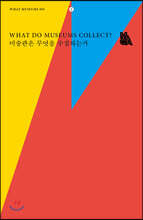
미술관은 무엇을 하는가 시리즈

책소개
목차
|
5 Foreword
7 Introduction to What Do Museums Collect? I. COLLECTING OTHERS IN CONTEMPORARY ART MUSEUMS: DIVERSITY AND INCLUSION BEYOND POST-COLONIAL DISCOURSES 17 Re-collecting, Re-classifying, Re-ordering: Indigenous Art and the Contemporary Australian Art Field / Tony Bennett 41 Museum Collecting: The Origin of the Concept and the Acceptance of Contemporary Otherness / Shan Lim 51 What Does the MMCA Collect? / Yup Jang 77 Global Korea, Multiculturalism, and Discourses of Otherness: Cosmopolitanism and Contemporary Art Exhibits / Kristina Dziedzic Wright 95 Unsettling the Center/The Other Divide: Collection Building and the Curatorial Strategy at the National Gallery Singapore / Lisa Horikawa 107 Recalibrating a Collection: Guggenheim UBS MAP Global Art Initiative / Joan Young 119 Postmodern Praxis: Representation of the Dilemma in Representing the Other / Hyosil Yang II. STRATEGIES AND REMEDIATION OF COLLECTING IN CONTEMPORARY ART MUSEUMS: REWRITING ART/HISTORY, DIGITAL HUMANITIES, AND DESTINATION OF ARTWORKS 135 Why Collect Now? If So, How?: Challenges to Modern and Contemporary Art Museums / Terry Smith 161 A Survey of the Exhibition Hello World: Revising a Collection / Sven Beckstette 177 When Archives Become Form: Collections, Information, and Access / Emily Pugh 191 New Materialities and New Collecting: Future Exhibiting and Audiences after New Media Art / Beryl Graham 207 Life and Death of Works of Art / Sunhee Jang 225 Towards a Sustainable Art Practice / Inhwan Oh |
저자 소개 1
National Museum of Modern and Contemporary Art, Korea
1969년 경복궁에서 개관한 국립현대미술관은 이후 1973년 덕수궁 석조전 동관으로 이전하였다가 1986년 현재의 과천 부지에 국제적 규모의 시설과 야외조각장을 겸비한 미술관을 완공, 개관함으로써 한국 미술문화의 새로운 장을 열었다.
1998년에는 서울 도심에 위치한 덕수궁 석조전 서관을 국립현대미술관의 분관인 덕수궁미술관으로 개관하여 근대미술관으로서 특화된 역할을 수행하고 있다. 그리고 2013년 11월 과거 국군기무사령부가 있었던 서울 종로구 소격동에 전시실을 비롯한 프로젝트갤러리, 영화관, 다목적홀 등 복합적인 시설을 갖춘 국립현대미술관 서울을 건립·개관함으로써 다양한
1969년 경복궁에서 개관한 국립현대미술관은 이후 1973년 덕수궁 석조전 동관으로 이전하였다가 1986년 현재의 과천 부지에 국제적 규모의 시설과 야외조각장을 겸비한 미술관을 완공, 개관함으로써 한국 미술문화의 새로운 장을 열었다.
1998년에는 서울 도심에 위치한 덕수궁 석조전 서관을 국립현대미술관의 분관인 덕수궁미술관으로 개관하여 근대미술관으로서 특화된 역할을 수행하고 있다. 그리고 2013년 11월 과거 국군기무사령부가 있었던 서울 종로구 소격동에 전시실을 비롯한 프로젝트갤러리, 영화관, 다목적홀 등 복합적인 시설을 갖춘 국립현대미술관 서울을 건립·개관함으로써 다양한 활동을 통해 한국의 과거, 현재, 미래의 문화적 가치를 구현하고 있다. 또한 2018년에는 충청북도 청주시 옛 연초제조창을 재건축한 국립현대미술관 청주를 개관하여 중부권 미술문화의 명소로 자리잡고 있다.
1998년에는 서울 도심에 위치한 덕수궁 석조전 서관을 국립현대미술관의 분관인 덕수궁미술관으로 개관하여 근대미술관으로서 특화된 역할을 수행하고 있다. 그리고 2013년 11월 과거 국군기무사령부가 있었던 서울 종로구 소격동에 전시실을 비롯한 프로젝트갤러리, 영화관, 다목적홀 등 복합적인 시설을 갖춘 국립현대미술관 서울을 건립·개관함으로써 다양한 활동을 통해 한국의 과거, 현재, 미래의 문화적 가치를 구현하고 있다. 또한 2018년에는 충청북도 청주시 옛 연초제조창을 재건축한 국립현대미술관 청주를 개관하여 중부권 미술문화의 명소로 자리잡고 있다.
국립현대미술관의 다른 상품

품목정보
- 발행일
- 2019년 12월 13일
- 쪽수, 무게, 크기
- 240쪽 | 150*230*20mm
- ISBN13
- 9788963032252
책 속으로
|
The writings of the thirteen contributors, which include art historians, aestheticians, curators, and authors in Part 1 and Part 2 of this book, contain analysis, criticism, and suggestions on theories and practices surrounding the museum collection. As today’s society changes rapidly and develops complexly, contemporary art, which represents such social changes, also continues to experiment with various themes and media. And museums, which flexibly accommodate these arts and mediate with the audience, have no choice but to constantly change their systems. What Do Museums Collect? presents and discusses an agenda that can be expanded into research topics rather than solutions to the problems surrounding museums and collections. I hope that this book will help invigorate researchers’ activities for knowledge production regarding this subject.
--- 「Sunhee Jang (Associate Curator, National Museum of Modern and Contemporary Art, Korea), INTRODUCTION TO WHAT DO MUSEUMS COLLECT?」중에서 Why do we reveal self-conscious desires for the past which disappears through collecting? Perhaps we want to obtain guidance for the future like Noah. To borrow historian David Lowenthal’s expression, it may be that we want to find an “alternative to the present” that is not satisfactory or cannot be accepted.2 Human beings’ intentional process wants to give meaning and value to the past that we remember as we look back at the present condition and define the existence of oneself. For this, objects and materials are often used. They become tools of memory that recall past social and personal identities, while at the same time linking today’s people with the past and allowing them to fill the intellectual gap. --- 「Shan Lim, MUSEUM COLLECTING: THE ORIGIN OF THE CONCEPT AND THE ACCEPTANCE OF CONTEMPORARY OTHERNESS」중에서 |
출판사 리뷰
|
This book is based on the content of an international symposium entitled “What Do Museums Collect?” It was held by the National Museum of Modern and Contemporary Art, Korea (MMCA) from November 30 to December 1, 2018 and was organized by adding certain texts to further the theme on top of the presenters’ writings. The symposium was the second initiative of the MMCA Research Project “What Museums Do” series, which was designed to reflect on the role of contemporary museums and discuss the newly required functions of museums.
While organizing the academic event, and later the accompanying book titled What Do Museums Collect?, I focused on two factors: the first has to do with the “others” that were created by people of different races and/or cultures, and have been somewhat marginalized; the second includes various issues arising from media and formal changes in contemporary art. Part 1 explores the relationship between the discourses on the “others” and the museum collection under the theme of “Collecting Others in Contemporary Art Museums: Diversity and Inclusion beyond Post-colonial Discourses.” It is true that discourses about the “others” are unfamiliar to most Koreans?those who existed as objects rather than subjects of dominance?during the colonial period in the twentieth century, and were educated under a former nationalist ideology. However, almost 30 years after the world’s new international order emerged through the paradigm shift into neoliberalism and globalization with the collapse of the Eastern Bloc in the early 1990s, it is changing the topography of the global art world in various ways and requires us to critically accept and understand the discourse of the “other.” Recently, large museums in Western Europe and North America began collecting art from local communities after opening branches throughout the Middle East and Asia. Can we see this as Western society’s active embrace of different cultures? Is there any possibility for this to be interpreted as the reproduction of the colonial order and its cultural expansion? Such critical reflection is also required in Korea. In recent years, the number of foreign workers, students, and immigrants to Korea is increasing, and art from the Middle East, South America, and Africa?places that Koreans are not traditionally familiar with?is being introduced through various institutions, including the MMCA. This requires us to overcome a previous discourse that discussed the “others” within the realm of a hierarchy, and to gain an in-depth understanding and embracement of other cultures. Accordingly, Part 1 covers a variety of issues, ranging from the role of contemporary museums surrounding cultural diversity and the practice of inclusion to the nature and changes of the collection right through to domestic multicultural policies and the representation of the “others” after the paradigm shift that was a result of globalization. Part 2 focuses on the remediation of collections in contemporary museums, as well as the media and formal changes in contemporary art under the theme of “Strategies and Remediation of Collecting in Contemporary Art Museums: Rewriting Art-History, Digital Humanities, and the Destination of Artworks.” Contemporary artists go beyond paintings and sculptures to mixed media and installations, performances and new media, and continue to experiment with artworks. In addition, museums that take on these changes present new standards of value through collections as well as exhibitions, and then link them with various programs related to archiving, education, and conservation. Moreover, the way they link them is also being digitized in large part, which is changing the way we approach and study museum collections and archive data. These rapid changes around the overall art institutions require the reconsideration of the value system as well as the physical system in the museum. When considering the restoration of media art, which has been discussed in various institutions recently, the decision regarding the technical methodology of “how to restore artworks” is based on the matter of what values will be pursued in the persuasion process. For example, is it proper to realize the medium that the artist used when alive, or to adapt the artwork focusing on the artist’s philosophy that they displayed while using a newly invented medium? As a result, Part 2 deals with things such as the reason why collecting is important again in contemporary art, various methodologies surrounding the remediation of collections, and the change of the museum’s infrastructure according to the change of contemporary art itself. ‘미술관은 무엇을 수집하는가’라는 제목으로 학술 행사를, 이후 책자를 기획하며, 현대미술을 다루는 미술관의 수집 방향에 있어 두 가지 요소에 중점을 두었다. 첫 번째는 바로 우리와 다른 인종 혹은 문화권에 속하며 다소 소외되어 왔던 ‘타자’, 두 번째는 ‘현대미술의 매체와 형식적 변화’에서 비롯되는 다양한 이슈이다. 1부는 ‘미술관과 타자의 수집: 후기식민주의를 넘어서는 다양성과 포용성’이라는 주제로, 타자에 대한 담론과 미술관 수집의 관계를 모색한다. 1990년대 초반 동구권의 붕괴와 함께 등장한 신자유주의, 그리고 세계화라는 패러다임을 통해 국제 질서가 재편되어 온 지 30여 년이 지난 지금, 이는 세계 미술계의 지형을 다각도로 변화시키고 있으며, 타자에 대한 담론의 비판적 수용과 이해 또한 요구하고 있다. 이에 따라 1부는 세계화라는 패러다임으로의 전환 이후, 문화적 다양성과 포용성의 실천을 둘러싼 동시대 미술관의 역할, 수집의 본질과 변화, 국내의 다문화 정책, 타자의 재현까지 다양한 글을 포괄한다. 2부는 ‘미술관 수집의 전략과 재매개: 다시 쓰는 미술-역사, 디지털 휴머니티, 작품의 운명’을 주제로, 동시대 미술관에서 소장품을 재매개하는 방식 및 현대미술의 매체와 형식적 변화를 중심으로 살펴본다. 동시대 작가들은 회화와 조각을 넘어, 복합 매체와 설치, 그리고 퍼포먼스와 뉴미디어까지, 작품을 통해 다양한 실험을 지속하고 있다. 또 이를 적극적으로 수용하는 미술관은 수집을 통해 새로운 가치의 기준을 제시하며 이를 다양한 프로그램과 연동한다. 나아가 연동하는 방식 또한 상당 부분 디지털화되어 가고 있는데, 이는 미술관의 소장품 및 아카이브 자료에 접근하고 연구하는 방식 자체를 변화시키고 있다. 따라서 2부는 현대미술에서 수집이 다시금 중요해지는 근거, 소장품의 재매개는 물론이고 복원을 둘러싼 다양한 방법론, 그리고 현대미술 자체의 변화에 따른 미술관의 인프라스트럭처의 변화 등의 의제를 다룬다. |