
- 표지 스크래치, 내지 잉크 튐은 제작 과정 중 자연스럽게 발생할 수 있어 교환 대상이 아닙니다.
이미 소장하고 있다면 판매해 보세요.
- 국내배송만 가능
- 문화비소득공제 가능
이 상품의 시리즈 199









































상세 이미지

책소개
목차
|
02 INTRO
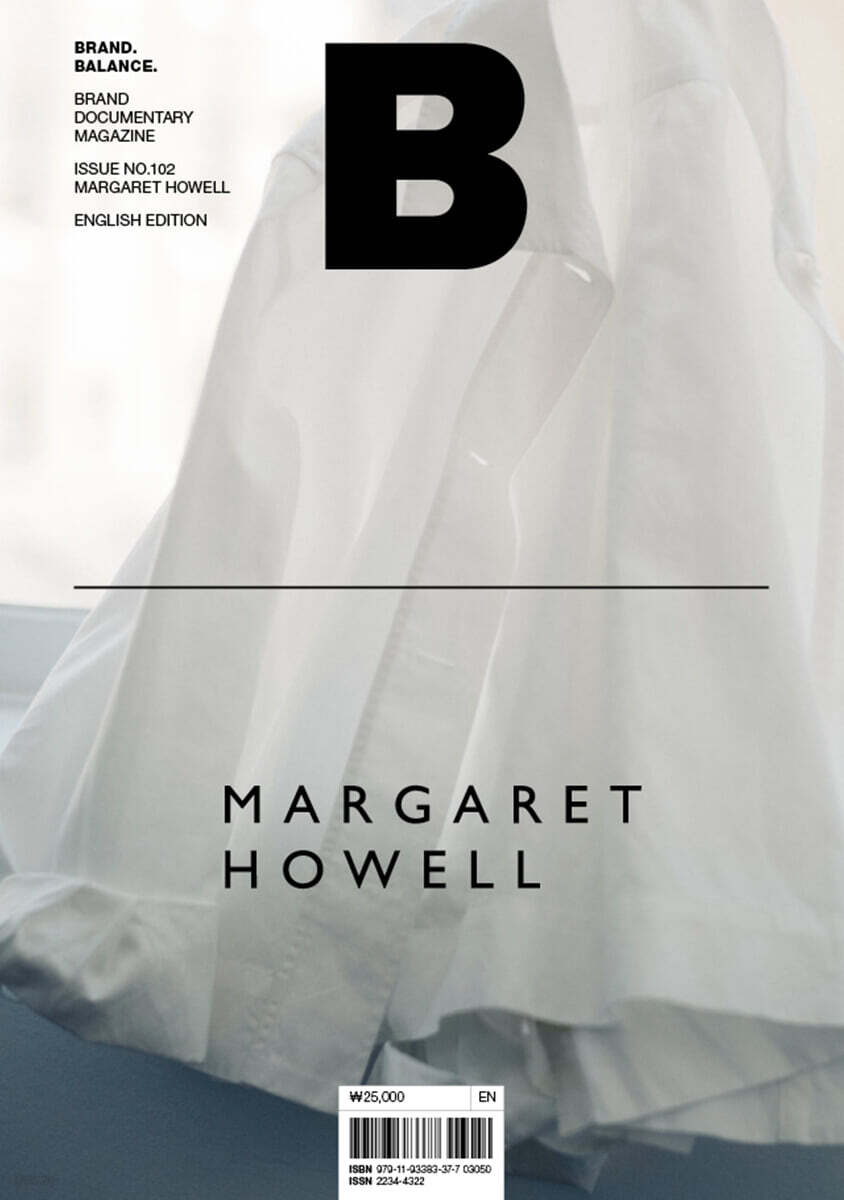
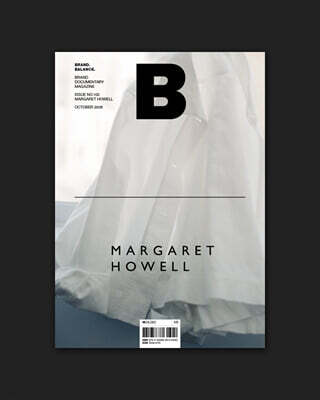
08 EDITOR’S LETTER 12 PLACES OF INSPIRATION The Suffolk coast that inspires Margaret Howell, a self-described “beachcomber” 18 AT HOME WITH MARGARET HOWELL Margaret Howell on her home, the life and memories it holds, and her approach to design 32 OBJECTS OF AFFECTION Everyday objects Margaret Howell has selected alongside her clothes 40 OPINION: BEN EVANS Fashion historian Ben Evans reflects on Margaret Howell’s place in British fashion 46 THE SHIRT Inside the London Workroom, where every detail of the shirt is considered from pattern cutting to sewing 54 ARTIFACTS OF THE PROCESS Archive pieces that show the process of experimentation and refinement in pursuit of better clothing 60 THE INTERACTIVE ARCHIVE The design archive on Margaret Street in London, recording and carrying forward Margaret Howell’s design language 66 AN ENGLISH WARDROBE Ten signature garments from Margaret Howell and MHL. that embody the British lifestyle and everyday needs 78 IN GOOD HANDS British textile makers whose distinctive production methods and exceptional quality are integral to Margaret Howell’s designs: Harris Tweed Hebrides and Fox Brothers 90 OPINION: DAVID HITNER A Common Purpose Studio’s Creative Director David Hitner on translating the simplicity of Margaret Howell into a visual language 96 34 WIGMORE STREET The Wigmore Street flagship that houses retail, design, and office spaces together 102 COMMON THREADS Collaborators across architecture, craft, and film comment on Margaret Howell’s design world and the values they share 118 SMALL THINGS A lifestyle collection selected for quality materials and practicality 126 OPINION: HIROFUMI KURINO United Arrows cofounder Hirofumi Kurino reflects on Margaret Howell’s place in Japan through a social and cultural perspective 132 NEIGHBORHOOD Four Margaret Howell stores in London and Tokyo that have been shaped by long-standing ties to their neighborhoods 140 WELL-MADE Five people in Tokyo and Seoul who wear Margaret Howell and make well-made a standard for everyday life 152 BRAND STORY Margaret Howell, a brand that established a distinctive style amid the upheaval of British fashion in the 1970s 158 FUNCTION TO FORM The practicality of British fashion, where function and utility give rise to style 164 INTERVIEW: CAROLINE ATTWOOD Managing Director Caroline Attwood on charting the brand’s future while building on its heritage 168 DIGEST Books, spaces, people, and brands that align with Margaret Howell’s aesthetic and lifestyle 171 OUTRO |
품목정보
- 발행일
- 2026년 10월 30일
- 쪽수, 무게, 크기
- 174쪽 | 170*240*20mm
- ISBN13
- 9791193383377
출판사 리뷰
|
5 Key Takeaways from Issue no.102
* The Brand Story in Margaret Howell’s Own Words Margaret Howell describes herself as a ‘designer’ rather than a ‘fashion designer’. For more than half a century, the brand has been guided by a consistent approach to design that encompasses clothing, objects and spaces. Centred on an interview at her London home, B traces how her ideas take shape, from the Suffolk coast that inspires her work to the Wigmore Street flagship in London and stores in Japan. The chairs, lighting and shelving in her home and stores reflect the same emphasis on materials, proportion and function that defines her clothing. While known for her commitment to enduring values, Howell has consistently challenged retail conventions and explored new roles for her stores. The issue examines how making clothes, selecting objects and creating spaces come together to shape the brand. * Behind the Basics: The London Workroom and Archive How have Margaret Howell and its casual line MHL., known for quiet luxury and refined utility, built distinctive styles around the basics? B visits the London workroom and archive to find out. In the workroom devoted to shirts, a team of 17 produces around 4,000 shirts a year, carrying out most stages by hand, from pattern-making and cutting to sewing and finishing. On Margaret Street, the archive holds experimental shirts, drawings, samples, labels and catalogues: a record of 50 years of ideas and experiments in pursuit of better clothes. The design team revisits past collections, looking for ways to refine familiar forms for today. Together, the two spaces reveal the thinking behind designs that are simple yet never simplistic. * Timeless Design Starts with Good Cloth Long before ‘collaboration’ became a familiar term in fashion, Margaret Howell was working with British makers. For nearly half a century, partnerships with heritage names such as Harris Tweed Hebrides and Fox Brothers have helped shape the brand’s identity. Their expertise, regional heritage and commitment to quality over efficiency underpin her designs. The same eye for materials and craftsmanship extends to the homeware collection. Carefully chosen furniture and everyday objects reflect a commitment to rediscovering good design and ensuring it endures. The annual printed calendar carries this idea forward, featuring artists’ and designers’ work and highlights from British design history. It is both a way to track the year and a small archive of good design. * Quintessentially British, Beloved in Japan What links Margaret Howell’s understated style to punk? Fashion historian Ben Evans revisits her early work in 1970s London. As punk swept the city, she challenged fashion conventions, freely exploring form and how clothes could be worn. United Arrows co-founder Hirofumi Kurino recalls discovering her classic clothes as a fresh alternative in the 1980s. He traces the brand’s deep roots in Japan to the country’s affinity for British culture and Howell’s respect for Japanese craftsmanship. Through these two perspectives, B explores what makes the brand distinctly British and how it found a special place in Japan. * 50 Years On, 50 Ahead How can a brand grow globally while preserving craftsmanship and analogue values in a digital age? Managing director Caroline Attwood brings more than 30 years of experience, including roles at Mulberry, Anya Hindmarch and Ally Capellino. Having seen the power of a founder at a brand’s centre, she is laying the groundwork to carry Howell’s philosophy into the next generation. She addresses issues raised by staff while preparing for global growth. David Hitner, creative director of long-standing brand partner A Common Purpose, describes the brand’s approach as ‘evolution, not revolution’. As AI reshapes creative work, he expects greater demand for the human touch and creative sensibility. Their interviews explore what the brand will preserve and what needs to change. |