

- 표지 스크래치, 내지 잉크 튐은 제작 과정 중 자연스럽게 발생할 수 있어 교환 대상이 아닙니다.
이미 소장하고 있다면 판매해 보세요.
- 국내배송만 가능
- 문화비소득공제 가능
이 상품의 시리즈 197

![매거진 F (격월) : 3월 영문판 [2024년]](https://image.yes24.com/Goods/126804059/L)
![매거진 B : No.39 Breville 브레빌 국문판 [2022]](https://image.yes24.com/Goods/112233622/L)
![매거진 B : No.16 Aesop 에이솝 국문판 [2022]](https://image.yes24.com/Goods/111100708/L)






![매거진 B (월간) : 7, 8월 국문판 [2019년]](https://image.yes24.com/Goods/76894194/L)
![매거진 B (월간) : 6월 국문판 [2019년]](https://image.yes24.com/Goods/74315893/L)
![매거진 B (월간) : 5월 국문판 [2019년]](https://image.yes24.com/Goods/73047293/L)
![매거진 B (월간) : 4월 국문판 [2019년]](https://image.yes24.com/Goods/72121823/L)
![매거진 B (월간) : 3월 국문판 [2019년]](https://image.yes24.com/Goods/70921242/L)
![매거진 B (월간) : 1,2월 국문판 [2019년]](https://image.yes24.com/Goods/69310511/L)
![매거진 B (월간) : 12월 국문판 [2018년]](https://image.yes24.com/Goods/67513299/L)
![매거진 B (월간) : 11월 국문판 [2018년]](https://image.yes24.com/Goods/66916206/L)
![매거진 B (월간) : 10월 국문판 [2018년]](https://image.yes24.com/Goods/65447464/L)
![매거진 B (월간) : 9월 국문판 [2018년]](https://image.yes24.com/Goods/64341113/L)
![매거진 B (월간) : 7월 영문판 [2018년]](https://image.yes24.com/Goods/69505570/L)
![매거진 B (월간) : 7,8월 합본호 국문판 [2018년]](https://image.yes24.com/Goods/62199157/L)
![매거진 B (월간) : 6월 국문판 [2018년]](https://image.yes24.com/Goods/61387625/L)
![매거진 B : No.65 LE LABO 영문판 [2018]](https://image.yes24.com/Goods/149676523/L)
![매거진 B (월간) : 5월 국문판 [2018년]](https://image.yes24.com/Goods/60744440/L)
![매거진 B (월간) : 4월 영문판 [2018년]](https://image.yes24.com/Goods/60513594/L)
![매거진 B (월간) : 4월 [2018년]](https://image.yes24.com/Goods/59658653/L)
![매거진 B (월간) : 3월 영문판 [2018년]](https://image.yes24.com/Goods/59400137/L)
![매거진 B (월간) : 3월 [2018년]](https://image.yes24.com/Goods/59158799/L)
![매거진 B (월간) : 2월 영문판 [2018년]](https://image.yes24.com/Goods/58478809/L)
![매거진 B (월간) : 1,2월 [2018년]](https://image.yes24.com/Goods/58074709/L)
![매거진 B (월간) : 12월 영문판 [2017년]](https://image.yes24.com/Goods/57914973/L)
![매거진 B (월간) : 12월 [2017년]](https://image.yes24.com/Goods/57572010/L)
![매거진 B (월간) : 11월 영문판 [2017년]](https://image.yes24.com/Goods/57503422/L)
![매거진 B (월간) : 11월 [2017년]](https://image.yes24.com/Goods/56682896/L)
![매거진 B (월간) : 10월 영문판 [2017년]](https://image.yes24.com/Goods/55998041/L)
![매거진 B (월간) : 10월 [2017년]](https://image.yes24.com/Goods/53232680/L)
![매거진 B (월간) : 9월 영문판 [2017년]](https://image.yes24.com/Goods/50263862/L)
![매거진 B (월간) : 9월 [2017년]](https://image.yes24.com/Goods/45546468/L)
![매거진 B (월간) : 7월 영문판 [2017년]](https://image.yes24.com/Goods/44275430/L)
![매거진 B (월간) : 7,8월 [2017년]](https://image.yes24.com/Goods/43870035/L)
![매거진 B (월간) : 6월 영문판 [2017년]](https://image.yes24.com/Goods/43620247/L)
![매거진 B (월간) : 6월 [2017년]](https://image.yes24.com/Goods/42493396/L)
![매거진 B (월간) : 5월 [2017년]](https://image.yes24.com/Goods/40144365/L)
![매거진 B (월간) : 4월 영문판 [2017년]](https://image.yes24.com/Goods/39002663/L)
![매거진 B (월간) : 4월 [2017년]](https://image.yes24.com/Goods/38880813/L)
![매거진 B (월간) : 3월 영문판 [2017년]](https://image.yes24.com/Goods/37252051/L)
![매거진 B (월간) : 3월 [2017년]](https://image.yes24.com/Goods/37007457/L)
![매거진 B (월간) : 2월 영문판 [2017년]](https://image.yes24.com/Goods/37009698/L)
![매거진 B (월간) : 1,2월 [2017년]](https://image.yes24.com/Goods/35121164/L)
![매거진 B (월간) : 12월 [2016년]](https://image.yes24.com/Goods/33713933/L)
![매거진 B (월간) : 11월 영문판 [2016년]](https://image.yes24.com/Goods/35219445/L)
![매거진 B (월간) : 11월 [2016년]](https://image.yes24.com/Goods/33179955/L)
![매거진 B (월간) : 10월 영문판 [2016년]](https://image.yes24.com/Goods/35219443/L)
![매거진 B (월간) : 10월 [2016년]](https://image.yes24.com/Goods/32542292/L)
![매거진 B (월간) : 9월 영문판 [2016년]](https://image.yes24.com/Goods/35219424/L)
![매거진 B (월간) : 9월 [2016년]](https://image.yes24.com/Goods/30743139/L)
![매거진 B TRAVEL PACKAGE [2016년]](https://image.yes24.com/Goods/30393008/L)
![매거진 B (월간) : 7월 영문판 [2016년]](https://image.yes24.com/Goods/35219417/L)
![매거진 B (월간) : 7,8월 합본판 [2016년]](https://image.yes24.com/Goods/29254901/L)
![매거진 B (월간) : 6월 영문판 [2016년]](https://image.yes24.com/Goods/35219413/L)
![매거진 B (월간) : 6월 [2016년]](https://image.yes24.com/Goods/28060764/L)
![매거진 B (월간) : 5월 영문판 [2016년]](https://image.yes24.com/Goods/35219409/L)
![매거진 B (월간) : 5월 [2016년]](https://image.yes24.com/Goods/27066931/L)
![매거진 B (월간) : 4월 영문판 [2016년]](https://image.yes24.com/Goods/35219405/L)
![매거진 B (월간) : 4월 [2016년]](https://image.yes24.com/Goods/25551515/L)
![매거진 B (월간) : 3월 영문판 [2016년]](https://image.yes24.com/Goods/24814050/L)
![매거진 B (월간) : 3월 [2016년]](https://image.yes24.com/Goods/24725358/L)
![매거진 B (월간) : 1월 영문판 [2016년]](https://image.yes24.com/Goods/24814018/L)
![매거진 B (월간) : 1월 [2016년]](https://image.yes24.com/Goods/23710850/L)
![매거진 B (월간) : 12월 영문판 [2015년]](https://image.yes24.com/Goods/24813993/L)
![매거진 B (월간) : 12월 [2015년]](https://image.yes24.com/Goods/23335339/L)
![매거진 B (월간) : 11월 [2015년]](https://image.yes24.com/Goods/22791259/L)
![매거진 B (월간) : 10월 영문판 [2015년]](https://image.yes24.com/Goods/24813986/L)
![매거진 B (월간) : 10월 [2015년]](https://image.yes24.com/Goods/21624214/L)
![매거진 B (월간) : 9월 영문판 [2015년]](https://image.yes24.com/Goods/24813921/L)
![매거진 B (월간) : 7월 영문판 [2015년]](https://image.yes24.com/Goods/24813898/L)
![매거진 B (월간) : 7월 [2015년]](https://image.yes24.com/Goods/19109048/L)
![매거진 B (월간) : 6월 영문판 [2015년]](https://image.yes24.com/Goods/24813815/L)
![매거진 B (월간) : 6월 [2015년]](https://image.yes24.com/Goods/18233105/L)
![매거진 B (월간) : 5월 영문판 [2015년]](https://image.yes24.com/Goods/24813792/L)
![매거진 B (월간) : 5월 [2015년]](https://image.yes24.com/Goods/17781586/L)
![매거진 B (월간) : 4월 영문판 [2015년]](https://image.yes24.com/Goods/24813768/L)
![매거진 B (월간) : 4월 [2015년]](https://image.yes24.com/Goods/17386901/L)
![매거진 B (월간) : 3월 영문판 [2015년]](https://image.yes24.com/Goods/24813748/L)
![매거진 B (월간) : 3월 [2015년]](https://image.yes24.com/Goods/16921031/L)
![매거진 B (월간) : 1월 영문판 [2015년]](https://image.yes24.com/Goods/24813724/L)
![매거진 B (월간) : 1월 [2015년]](https://image.yes24.com/Goods/15821828/L)
![매거진 B (월간) : 12월 영문판 [2014년]](https://image.yes24.com/Goods/24813703/L)
![매거진 B (월간) : 12월 [2014년]](https://image.yes24.com/Goods/15384732/L)
![매거진 B (월간) : 11월 영문판 [2014년]](https://image.yes24.com/Goods/24813630/L)
![매거진 B (월간) : 11월 [2014년]](https://image.yes24.com/Goods/15058100/L)
![매거진 B (월간) : 10월 영문판 [2014년]](https://image.yes24.com/Goods/24813579/L)
![매거진 B (월간) : 9월 영문판 [2014년]](https://image.yes24.com/Goods/24813555/L)
![매거진 B (월간) : 10월 [2014년]](https://image.yes24.com/Goods/14757829/L)
![매거진 B (월간) : 9월 [2014년]](https://image.yes24.com/Goods/14377896/L)
![매거진 B (월간) : 7월 영문판 [2014년]](https://image.yes24.com/Goods/24813511/L)
![매거진 B (월간) : 7월 [2014년]](https://image.yes24.com/Goods/13662675/L)
![매거진 B (월간) : 6월 영문판 [2014년]](https://image.yes24.com/Goods/24813469/L)
![매거진 B (월간) : 6월 [2014년]](https://image.yes24.com/Goods/13345665/L)
![매거진 B (월간) : 4월 영문판 [2014년]](https://image.yes24.com/Goods/24813369/L)
![매거진 B (월간) : 3월 영문판 [2014년]](https://image.yes24.com/Goods/13158704/L)
![매거진 B (월간) : 5월 영문판 [2014년]](https://image.yes24.com/Goods/24813422/L)
![매거진 B (월간) : 5월 [2014년]](https://image.yes24.com/Goods/12993854/L)
![매거진 B (월간) : 4월 [2014년]](https://image.yes24.com/Goods/12603283/L)
![매거진 B (월간) : 1,2월 합본호 영문판 [2014년]](https://image.yes24.com/Goods/12603274/L)
![매거진 B (월간) : 12월 영문판 [2013년]](https://image.yes24.com/Goods/12325147/L)
![매거진 B (월간) : 3월 [2014년]](https://image.yes24.com/Goods/12292363/L)
![매거진 B (월간) : 1,2월 합본호 [2014년]](https://image.yes24.com/Goods/11869473/L)
![매거진 B (월간) : 10월 영문판 [2013년]](https://image.yes24.com/Goods/11732547/L)
![매거진 B (월간) : 12월 [2013년]](https://image.yes24.com/Goods/11574386/L)
![매거진 B (월간) : 9월 영문판 [2013년]](https://image.yes24.com/Goods/11459170/L)
![매거진 B (월간) : 11월 [2013년]](https://image.yes24.com/Goods/11321268/L)
![매거진 B (월간) : 10월 [2013년]](https://image.yes24.com/Goods/11101416/L)
![매거진 B (월간) : 7,8월 영문판 [2013년]](https://image.yes24.com/Goods/11466179/L)
![매거진 B (월간) : 9월 [2013년]](https://image.yes24.com/Goods/10852252/L)
![매거진 B (월간) : 6월 영문판 [2013년]](https://image.yes24.com/Goods/9358994/L)
![매거진 B (월간) : 7,8월 [2013년]](https://image.yes24.com/Goods/9223808/L)
![매거진 B (월간) : 6월 [2013년]](https://image.yes24.com/Goods/8978807/L)
![매거진 B (월간) : 4월 영문판 [2013년]](https://image.yes24.com/Goods/8934477/L)
![매거진 B (월간) : 5월 [2013년]](https://image.yes24.com/Goods/8842101/L)
![매거진 B (월간) : 3월 영문판 [2013년]](https://image.yes24.com/Goods/11026760/L)
![매거진 B (월간) : 4월 [2013년]](https://image.yes24.com/Goods/8718592/L)
![매거진 B (월간) : 12월 영문판 [2012년]](https://image.yes24.com/Goods/8566933/L)
![매거진 B (월간) : 1,2월 영문판 [2013년]](https://image.yes24.com/Goods/8566937/L)
![매거진 B (월간) : 3월 [2013년]](https://image.yes24.com/Goods/8530358/L)
![매거진 B (월간) : 1,2월 합본호 [2013년]](https://image.yes24.com/Goods/8280657/L)
![매거진 B (월간) : 11월 영문판 [2012년]](https://image.yes24.com/Goods/8173373/L)
![매거진 B (월간) : 12월 [2012년]](https://image.yes24.com/Goods/8109189/L)
![매거진 B (월간) : 11월 [2012년]](https://image.yes24.com/Goods/7955686/L)
![매거진 B (월간) : 10월 영문판 [2012년]](https://image.yes24.com/Goods/7942629/L)
![매거진 B (월간) : 10월 [2012년]](https://image.yes24.com/Goods/7823961/L)
![매거진 B (월간) : 9월 [2012년]](https://image.yes24.com/Goods/7467610/L)
![매거진 B (월간) : 9월 영문판 [2012년]](https://image.yes24.com/Goods/7659298/L)
![매거진 B (월간) : 8월 영문판 [2012년]](https://image.yes24.com/Goods/7413006/L)
![매거진 B (월간) : 7~8월 합본호 [2012년]](https://image.yes24.com/Goods/7297442/L)
![매거진 B (월간) : 6월 영문판 [2012년]](https://image.yes24.com/Goods/7288101/L)
![매거진 B (월간) : 6월 [2012년]](https://image.yes24.com/Goods/7150878/L)
![매거진 B (월간) : 5월 영문판 [2012년]](https://image.yes24.com/Goods/7119460/L)
![매거진 B (월간) : 5월 [2012년]](https://image.yes24.com/Goods/7011857/L)
![매거진 B (월간) : 4월 [2012년]](https://image.yes24.com/Goods/6713019/L)
![매거진 B (월간) : 3월 영문판 [2012년]](https://image.yes24.com/Goods/6660343/L)
![매거진 B (월간) : 3월 [2012년]](https://image.yes24.com/Goods/6388167/L)
![매거진 B (월간) : 1,2월 합본호 [2012년]](https://image.yes24.com/Goods/8797088/L)
![매거진 B (월간) : 창간호 11월 [2011년] 국문판](https://image.yes24.com/Goods/5903527/L)
![매거진 B (월간) : 11월 영문판 [2011년]](https://image.yes24.com/Goods/5980283/L)
상세 이미지

책소개
목차
|
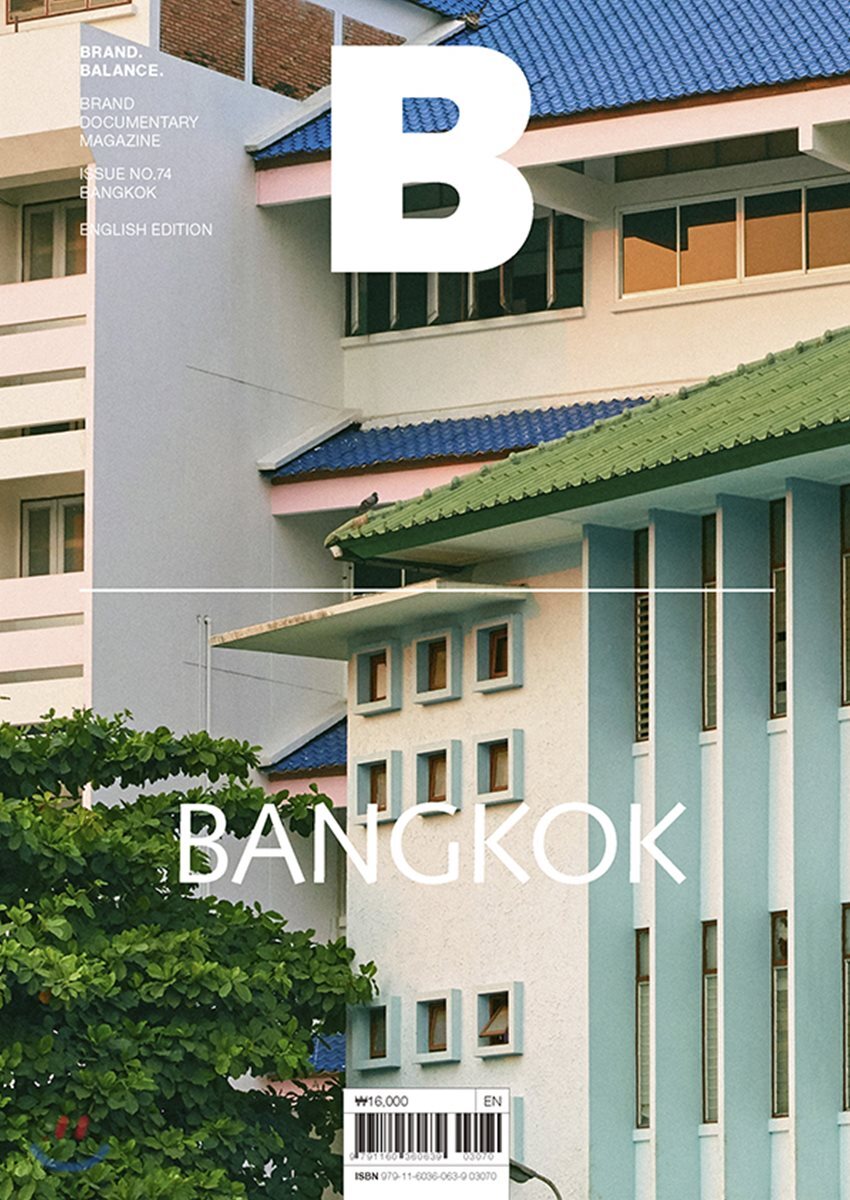
02 Intro
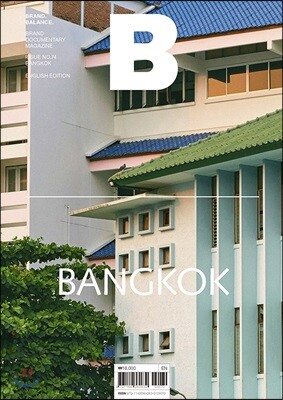
09 Editor’s Letter 12 At the Airport Travelers encountered at the Suvarnabhumi Airport 20 Greeting Unique Bangkok hotels with unwavering tastes and distinctive colors 30 Report The aggressive growth and expansion of Bangkok’s hotel industry 34 Down to Earth Commercial spaces in Bangkok that propose healthy lifestyle solutions 46 Interview Ou Baholyodhin, chief creative officer at Sansiri Public Company Limited, and Tyler Brule, editor-in-chief of Monocle, discuss future cities and new forms of residential environment 50 Hub TCDC, the hub of designers and creative minds in Thailand 54 Bangkokian Bangkok creators who express their identities with Thailand as their base 64 Space Galleries and community spaces nested in Bangkok and its Old City area 74 City Navigation Sociocultural characteristics and figures that shed light on Bangkok 82 Skyline The historical, architectural, and economic significance of Bangkok’s skyscrapers 86 Districts Walking routes in each Bangkok district that showcase the city’s various charms 96 On the Street Daytime and nighttime food chats with people on the streets 100 Dine and Bar Bangkok’s dining scene and nightlife attractions reflecting Thai tradition and culture 108 Coffee Break A wide spectrum of coffee and dessert shops found in Bangkok 116 Made in Thailand Thai brands that emanate authentic style and attitude 122 Communication Thailand’s commercial design scene seen through Bangkok’s prominent agencies and their work 126 Objects Bangkok lovers share the city’s aesthetics and their treasured collectibles from Bangkok 134 Discover Places worth visiting in Bangkok categorized by interest 141 Outro |
저자 소개 1
매거진 《B》는 전 세계의 균형 잡힌 브랜드를 소개하는 광고 없는 월간지입니다. 새로운 비즈니스를 구상하는 브랜드 관계자부터 브랜드에 대한 감각을 익히고 싶어 하는 이들까지, 브랜드에 관심을 가진 모두를 위해 만드는 진지하지만 읽기 쉬운 잡지입니다
매거진 《B》 편집부의 다른 상품
![매거진 F (격월) : 12월 [2023년]](https://image.yes24.com/Goods/123935178/L)
![매거진 F (격월) : 11월 영문판 [2023년]](https://image.yes24.com/Goods/123297019/L)
![매거진 F (격월) : 10월 영문판 [2023년]](https://image.yes24.com/Goods/123272399/L)
![매거진 F (격월) : 9월 [2023년]](https://image.yes24.com/Goods/122601081/L)
![매거진 F (격월) : 8월 영문판 [2023년]](https://image.yes24.com/Goods/121552778/L)
![매거진 F (격월) : 7월 [2023년]](https://image.yes24.com/Goods/120166762/L)
![매거진 F (격월) : 5월 영문판 [2023년]](https://image.yes24.com/Goods/118811593/L)
![매거진 F (격월) : 5월 영문판 [2023년]](https://image.yes24.com/Goods/118811579/L)
품목정보
- 발행일
- 2019년 04월 29일
- 쪽수, 무게, 크기
- 152쪽 | 170*240*20mm
- ISBN13
- 9791160360639
출판사 리뷰
|
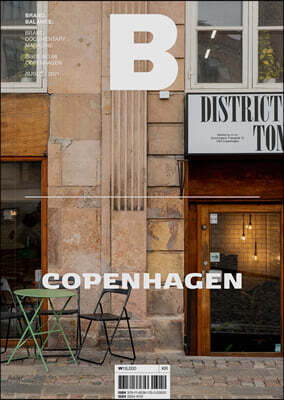
Welcome to the 74th edition of B.
There are people described as “global citizens” or “global nomads,” people who are fluent in foreign languages, who embrace different ideas and cultures without prejudice or judgment, who are able to communicate as one individual to another outside the frame of collectivism. With the effusiveness of the word “global” aside, the aforementioned qualities or attitudes will become an increasingly important virtue. In the age of hyperconnectivity represented by 5G and IoT, the conventional sense or definition of belonging to a community is bound to be obsolete. Even the World Cup and the Olympics don’t arouse the same amount of enthusiasm as before, which only testifies to this change: Hyper-connection begins when micro-level individuals form relationships beyond their physical and social settings. Looking back, B has also worked extremely hard to meet such needs of the time as a magazine. We’ve always tried to free our content of Korean conventions and conceptions. This magazine is made by Korean-speaking people living in Korea, which is inevitably a significant part of our identity, but we believe that its content should be relatable to anyone and everyone. This fifth city issue of B introduces Bangkok, the city probably most suited for a global citizen. There are several megacities that outrun Bangkok in terms of average income, economic size, or social infrastructure, but when it comes to the ability to absorb different cultures and cradle change, Bangkok is definitely at the forefront. The reviews of our editors, who traveled around Bangkok for more than a week to cover the stories, were no different: they spoke favorably of how the residents of Bangkok were comfortable with expressing themselves and telling their stories, all the while showing just enough courtesy and respect for others. Bangkok does not only appeal to editors visiting for coverage. It’s an ideal destination for many types of travelers: business professionals looking to attract investment, backpackers planning to stay for a month, short-term tourists on vacation. Another way to interpret this would be that Bangkok is a city that knows how to retain its identity while also actively responding to different needs. B wanted to capture this “attitude” of Bangkok for people who only know the city by its famous temples, fancy nightlife, and nearby resort areas like Phuket. Cultural heritage, an artistic eye, a business mindset, and technical skills can make a brand or a city great, but “attitude” points to future possibilities. As uncertainty escalates in societies and markets, people tend to rely more on the visions projected through attitudes than objective indicators. It would help to recall the exemplary brands featured by B over the years that focus on selling their attitude. An attitude encompasses many values, as demonstrated by WeWork’s slogan “Do What You Love,” Patagonia’s proposition to “Live Simply,” and Vans’ attitude of “Off the Wall.” In that sense, then, what could Bangkok’s attitude be reduced down to? I believe “adaptive” is the right adjective to describe the city. Experimenting and turning it into real-life experiences rather than conjecturing right or wrong, or good or bad?this adaptive attitude is what makes Bangkok such a multifaceted city as it is today, capable of transforming itself according to the times and environment. If the city had only tried to lead ahead or find exact answers, it wouldn’t have fostered such a quirky harmony of differences?no small family-run hostels next to the global brand six-star hotel, no interesting intermix of street food and high-end fine dining restaurants. After putting this issue together, I’m deliberately keeping my eyes and ears open to the various goings-on in Bangkok. That is because I believe that it might just be these adaptable groups of people who will change the world of tomorrow. Eunsung Park Content & Editorial Director |