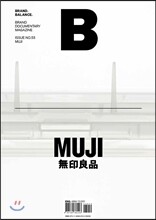

![매거진 B (월간) : 3월 영문판 [2017년]](https://image.yes24.com/Goods/37252051/S)
![매거진 B (월간) : 3월 영문판 [2017년]](https://image.yes24.com/goods/37252051/XL)
- 표지 스크래치, 내지 잉크 튐은 제작 과정 중 자연스럽게 발생할 수 있어 교환 대상이 아닙니다.
이미 소장하고 있다면 판매해 보세요.
- 국내배송만 가능
- 문화비소득공제 가능
이 상품의 시리즈 198

![매거진 F (격월) : 3월 영문판 [2024년]](https://image.yes24.com/Goods/126804059/L)

![매거진 B : No.39 Breville 브레빌 국문판 [2022]](https://image.yes24.com/Goods/112233622/L)
![매거진 B : No.16 Aesop 에이솝 국문판 [2022]](https://image.yes24.com/Goods/111100708/L)




![매거진 B (월간) : 7, 8월 국문판 [2019년]](https://image.yes24.com/Goods/76894194/L)
![매거진 B (월간) : 6월 국문판 [2019년]](https://image.yes24.com/Goods/74315893/L)
![매거진 B (월간) : 5월 국문판 [2019년]](https://image.yes24.com/Goods/73047293/L)
![매거진 B (월간) : 4월 국문판 [2019년]](https://image.yes24.com/Goods/72121823/L)
![매거진 B (월간) : 3월 국문판 [2019년]](https://image.yes24.com/Goods/70921242/L)
![매거진 B (월간) : 1,2월 국문판 [2019년]](https://image.yes24.com/Goods/69310511/L)
![매거진 B (월간) : 12월 국문판 [2018년]](https://image.yes24.com/Goods/67513299/L)
![매거진 B (월간) : 11월 국문판 [2018년]](https://image.yes24.com/Goods/66916206/L)
![매거진 B (월간) : 10월 국문판 [2018년]](https://image.yes24.com/Goods/65447464/L)
![매거진 B (월간) : 9월 국문판 [2018년]](https://image.yes24.com/Goods/64341113/L)
![매거진 B (월간) : 7월 영문판 [2018년]](https://image.yes24.com/Goods/69505570/L)
![매거진 B (월간) : 7,8월 합본호 국문판 [2018년]](https://image.yes24.com/Goods/62199157/L)
![매거진 B (월간) : 6월 국문판 [2018년]](https://image.yes24.com/Goods/61387625/L)
![매거진 B : No.65 LE LABO 영문판 [2018]](https://image.yes24.com/Goods/149676523/L)
![매거진 B (월간) : 5월 국문판 [2018년]](https://image.yes24.com/Goods/60744440/L)
![매거진 B (월간) : 4월 영문판 [2018년]](https://image.yes24.com/Goods/60513594/L)
![매거진 B (월간) : 4월 [2018년]](https://image.yes24.com/Goods/59658653/L)
![매거진 B (월간) : 3월 영문판 [2018년]](https://image.yes24.com/Goods/59400137/L)
![매거진 B (월간) : 3월 [2018년]](https://image.yes24.com/Goods/59158799/L)
![매거진 B (월간) : 2월 영문판 [2018년]](https://image.yes24.com/Goods/58478809/L)
![매거진 B (월간) : 1,2월 [2018년]](https://image.yes24.com/Goods/58074709/L)
![매거진 B (월간) : 12월 영문판 [2017년]](https://image.yes24.com/Goods/57914973/L)
![매거진 B (월간) : 12월 [2017년]](https://image.yes24.com/Goods/57572010/L)
![매거진 B (월간) : 11월 영문판 [2017년]](https://image.yes24.com/Goods/57503422/L)
![매거진 B (월간) : 11월 [2017년]](https://image.yes24.com/Goods/56682896/L)
![매거진 B (월간) : 10월 영문판 [2017년]](https://image.yes24.com/Goods/55998041/L)
![매거진 B (월간) : 10월 [2017년]](https://image.yes24.com/Goods/53232680/L)
![매거진 B (월간) : 9월 영문판 [2017년]](https://image.yes24.com/Goods/50263862/L)
![매거진 B (월간) : 9월 [2017년]](https://image.yes24.com/Goods/45546468/L)
![매거진 B (월간) : 7월 영문판 [2017년]](https://image.yes24.com/Goods/44275430/L)
![매거진 B (월간) : 7,8월 [2017년]](https://image.yes24.com/Goods/43870035/L)
![매거진 B (월간) : 6월 영문판 [2017년]](https://image.yes24.com/Goods/43620247/L)
![매거진 B (월간) : 6월 [2017년]](https://image.yes24.com/Goods/42493396/L)
![매거진 B (월간) : 5월 [2017년]](https://image.yes24.com/Goods/40144365/L)
![매거진 B (월간) : 4월 영문판 [2017년]](https://image.yes24.com/Goods/39002663/L)
![매거진 B (월간) : 4월 [2017년]](https://image.yes24.com/Goods/38880813/L)
![매거진 B (월간) : 3월 영문판 [2017년]](https://image.yes24.com/Goods/37252051/L)
![매거진 B (월간) : 3월 [2017년]](https://image.yes24.com/Goods/37007457/L)
![매거진 B (월간) : 2월 영문판 [2017년]](https://image.yes24.com/Goods/37009698/L)
![매거진 B (월간) : 1,2월 [2017년]](https://image.yes24.com/Goods/35121164/L)
![매거진 B (월간) : 12월 [2016년]](https://image.yes24.com/Goods/33713933/L)
![매거진 B (월간) : 11월 영문판 [2016년]](https://image.yes24.com/Goods/35219445/L)
![매거진 B (월간) : 11월 [2016년]](https://image.yes24.com/Goods/33179955/L)
![매거진 B (월간) : 10월 영문판 [2016년]](https://image.yes24.com/Goods/35219443/L)
![매거진 B (월간) : 10월 [2016년]](https://image.yes24.com/Goods/32542292/L)
![매거진 B (월간) : 9월 영문판 [2016년]](https://image.yes24.com/Goods/35219424/L)
![매거진 B (월간) : 9월 [2016년]](https://image.yes24.com/Goods/30743139/L)
![매거진 B TRAVEL PACKAGE [2016년]](https://image.yes24.com/Goods/30393008/L)
![매거진 B (월간) : 7월 영문판 [2016년]](https://image.yes24.com/Goods/35219417/L)
![매거진 B (월간) : 7,8월 합본판 [2016년]](https://image.yes24.com/Goods/29254901/L)
![매거진 B (월간) : 6월 영문판 [2016년]](https://image.yes24.com/Goods/35219413/L)
![매거진 B (월간) : 6월 [2016년]](https://image.yes24.com/Goods/28060764/L)
![매거진 B (월간) : 5월 영문판 [2016년]](https://image.yes24.com/Goods/35219409/L)
![매거진 B (월간) : 5월 [2016년]](https://image.yes24.com/Goods/27066931/L)
![매거진 B (월간) : 4월 영문판 [2016년]](https://image.yes24.com/Goods/35219405/L)
![매거진 B (월간) : 4월 [2016년]](https://image.yes24.com/Goods/25551515/L)
![매거진 B (월간) : 3월 영문판 [2016년]](https://image.yes24.com/Goods/24814050/L)
![매거진 B (월간) : 3월 [2016년]](https://image.yes24.com/Goods/24725358/L)
![매거진 B (월간) : 1월 영문판 [2016년]](https://image.yes24.com/Goods/24814018/L)
![매거진 B (월간) : 1월 [2016년]](https://image.yes24.com/Goods/23710850/L)
![매거진 B (월간) : 12월 영문판 [2015년]](https://image.yes24.com/Goods/24813993/L)
![매거진 B (월간) : 12월 [2015년]](https://image.yes24.com/Goods/23335339/L)
![매거진 B (월간) : 11월 [2015년]](https://image.yes24.com/Goods/22791259/L)
![매거진 B (월간) : 10월 영문판 [2015년]](https://image.yes24.com/Goods/24813986/L)
![매거진 B (월간) : 10월 [2015년]](https://image.yes24.com/Goods/21624214/L)
![매거진 B (월간) : 9월 영문판 [2015년]](https://image.yes24.com/Goods/24813921/L)
![매거진 B (월간) : 7월 영문판 [2015년]](https://image.yes24.com/Goods/24813898/L)
![매거진 B (월간) : 7월 [2015년]](https://image.yes24.com/Goods/19109048/L)
![매거진 B (월간) : 6월 영문판 [2015년]](https://image.yes24.com/Goods/24813815/L)
![매거진 B (월간) : 6월 [2015년]](https://image.yes24.com/Goods/18233105/L)
![매거진 B (월간) : 5월 영문판 [2015년]](https://image.yes24.com/Goods/24813792/L)
![매거진 B (월간) : 5월 [2015년]](https://image.yes24.com/Goods/17781586/L)
![매거진 B (월간) : 4월 영문판 [2015년]](https://image.yes24.com/Goods/24813768/L)
![매거진 B (월간) : 4월 [2015년]](https://image.yes24.com/Goods/17386901/L)
![매거진 B (월간) : 3월 영문판 [2015년]](https://image.yes24.com/Goods/24813748/L)
![매거진 B (월간) : 3월 [2015년]](https://image.yes24.com/Goods/16921031/L)
![매거진 B (월간) : 1월 영문판 [2015년]](https://image.yes24.com/Goods/24813724/L)
![매거진 B (월간) : 1월 [2015년]](https://image.yes24.com/Goods/15821828/L)
![매거진 B (월간) : 12월 영문판 [2014년]](https://image.yes24.com/Goods/24813703/L)
![매거진 B (월간) : 12월 [2014년]](https://image.yes24.com/Goods/15384732/L)
![매거진 B (월간) : 11월 영문판 [2014년]](https://image.yes24.com/Goods/24813630/L)
![매거진 B (월간) : 11월 [2014년]](https://image.yes24.com/Goods/15058100/L)
![매거진 B (월간) : 10월 영문판 [2014년]](https://image.yes24.com/Goods/24813579/L)
![매거진 B (월간) : 9월 영문판 [2014년]](https://image.yes24.com/Goods/24813555/L)
![매거진 B (월간) : 10월 [2014년]](https://image.yes24.com/Goods/14757829/L)
![매거진 B (월간) : 9월 [2014년]](https://image.yes24.com/Goods/14377896/L)
![매거진 B (월간) : 7월 영문판 [2014년]](https://image.yes24.com/Goods/24813511/L)
![매거진 B (월간) : 7월 [2014년]](https://image.yes24.com/Goods/13662675/L)
![매거진 B (월간) : 6월 영문판 [2014년]](https://image.yes24.com/Goods/24813469/L)
![매거진 B (월간) : 6월 [2014년]](https://image.yes24.com/Goods/13345665/L)
![매거진 B (월간) : 4월 영문판 [2014년]](https://image.yes24.com/Goods/24813369/L)
![매거진 B (월간) : 3월 영문판 [2014년]](https://image.yes24.com/Goods/13158704/L)
![매거진 B (월간) : 5월 영문판 [2014년]](https://image.yes24.com/Goods/24813422/L)
![매거진 B (월간) : 5월 [2014년]](https://image.yes24.com/Goods/12993854/L)
![매거진 B (월간) : 4월 [2014년]](https://image.yes24.com/Goods/12603283/L)
![매거진 B (월간) : 1,2월 합본호 영문판 [2014년]](https://image.yes24.com/Goods/12603274/L)
![매거진 B (월간) : 12월 영문판 [2013년]](https://image.yes24.com/Goods/12325147/L)
![매거진 B (월간) : 3월 [2014년]](https://image.yes24.com/Goods/12292363/L)
![매거진 B (월간) : 1,2월 합본호 [2014년]](https://image.yes24.com/Goods/11869473/L)
![매거진 B (월간) : 10월 영문판 [2013년]](https://image.yes24.com/Goods/11732547/L)
![매거진 B (월간) : 12월 [2013년]](https://image.yes24.com/Goods/11574386/L)
![매거진 B (월간) : 9월 영문판 [2013년]](https://image.yes24.com/Goods/11459170/L)
![매거진 B (월간) : 11월 [2013년]](https://image.yes24.com/Goods/11321268/L)
![매거진 B (월간) : 10월 [2013년]](https://image.yes24.com/Goods/11101416/L)
![매거진 B (월간) : 7,8월 영문판 [2013년]](https://image.yes24.com/Goods/11466179/L)
![매거진 B (월간) : 9월 [2013년]](https://image.yes24.com/Goods/10852252/L)
![매거진 B (월간) : 6월 영문판 [2013년]](https://image.yes24.com/Goods/9358994/L)
![매거진 B (월간) : 7,8월 [2013년]](https://image.yes24.com/Goods/9223808/L)
![매거진 B (월간) : 6월 [2013년]](https://image.yes24.com/Goods/8978807/L)
![매거진 B (월간) : 4월 영문판 [2013년]](https://image.yes24.com/Goods/8934477/L)
![매거진 B (월간) : 5월 [2013년]](https://image.yes24.com/Goods/8842101/L)
![매거진 B (월간) : 3월 영문판 [2013년]](https://image.yes24.com/Goods/11026760/L)
![매거진 B (월간) : 4월 [2013년]](https://image.yes24.com/Goods/8718592/L)
![매거진 B (월간) : 12월 영문판 [2012년]](https://image.yes24.com/Goods/8566933/L)
![매거진 B (월간) : 1,2월 영문판 [2013년]](https://image.yes24.com/Goods/8566937/L)
![매거진 B (월간) : 3월 [2013년]](https://image.yes24.com/Goods/8530358/L)
![매거진 B (월간) : 1,2월 합본호 [2013년]](https://image.yes24.com/Goods/8280657/L)
![매거진 B (월간) : 11월 영문판 [2012년]](https://image.yes24.com/Goods/8173373/L)
![매거진 B (월간) : 12월 [2012년]](https://image.yes24.com/Goods/8109189/L)
![매거진 B (월간) : 11월 [2012년]](https://image.yes24.com/Goods/7955686/L)
![매거진 B (월간) : 10월 영문판 [2012년]](https://image.yes24.com/Goods/7942629/L)
![매거진 B (월간) : 10월 [2012년]](https://image.yes24.com/Goods/7823961/L)
![매거진 B (월간) : 9월 [2012년]](https://image.yes24.com/Goods/7467610/L)
![매거진 B (월간) : 9월 영문판 [2012년]](https://image.yes24.com/Goods/7659298/L)
![매거진 B (월간) : 8월 영문판 [2012년]](https://image.yes24.com/Goods/7413006/L)
![매거진 B (월간) : 7~8월 합본호 [2012년]](https://image.yes24.com/Goods/7297442/L)
![매거진 B (월간) : 6월 영문판 [2012년]](https://image.yes24.com/Goods/7288101/L)
![매거진 B (월간) : 6월 [2012년]](https://image.yes24.com/Goods/7150878/L)
![매거진 B (월간) : 5월 영문판 [2012년]](https://image.yes24.com/Goods/7119460/L)
![매거진 B (월간) : 5월 [2012년]](https://image.yes24.com/Goods/7011857/L)
![매거진 B (월간) : 4월 [2012년]](https://image.yes24.com/Goods/6713019/L)
![매거진 B (월간) : 3월 영문판 [2012년]](https://image.yes24.com/Goods/6660343/L)
![매거진 B (월간) : 3월 [2012년]](https://image.yes24.com/Goods/6388167/L)
![매거진 B (월간) : 1,2월 합본호 [2012년]](https://image.yes24.com/Goods/8797088/L)
![매거진 B (월간) : 창간호 11월 [2011년] 국문판](https://image.yes24.com/Goods/5903527/L)
![매거진 B (월간) : 11월 영문판 [2011년]](https://image.yes24.com/Goods/5980283/L)
상세 이미지

목차
|
02 Intro
12 Editor’s Letter 16 Store Images of Muji shoppers and comments on Muji from the media 22 Opinion A multifaceted take on the Muji brand from Professor Ken Kusunoki 26 Inner Space Muji’s approach to consumption as defined 124 by its lineup of over 7,000 items 46 Partners Past project collaborators remember and 126 reflect on their experiences working with Muji 54 Opinion A comprehensive look at Muji houses from designer Kenya Hara, a member of the Muji advisory board 60 Muji House The Muji House, a modern living option that draws to mind a catch-all for holding odds and ends 74 Opinion Identifying and understanding Muji style with Yu Yamada, director of creative agency Method 78 Muji Style City dwellers whose conceptions of style align with the ideas of Muji 94 Mujirer Glimpses of Muji products as they are actually used 98 Found Muji Found Muji, a project devoted to finding and recognizing “Mujiness” 102 B’s Cut Observing what makes Muji products distinct 112 Brand Story The story behind the birth and growth of Muji 122 100 Good Things Examples of how Muji has given back to the community and supported the environment 124 HQ Muji headquarters in Japan, where the brand philosophy is a part of life 126 Advisory Board Muji’s key consultative body of five outside creative directors 134 Communication The history of Muji as seen through its simple print advertisements 140 Abroad Exploring Muji’s overseas sales strategy and experiences with Director of East Asia Business, Satoshi Shimizu 144 Masaaki Kanai An interview with Masaaki Kanai, chairman of Ryohin Keikaku 148 Figures Muji by the numbers 150 Outro |
저자 소개 1
매거진 《B》는 전 세계의 균형 잡힌 브랜드를 소개하는 광고 없는 월간지입니다. 새로운 비즈니스를 구상하는 브랜드 관계자부터 브랜드에 대한 감각을 익히고 싶어 하는 이들까지, 브랜드에 관심을 가진 모두를 위해 만드는 진지하지만 읽기 쉬운 잡지입니다
매거진 《B》 편집부의 다른 상품
![매거진 F (격월) : 12월 [2023년]](https://image.yes24.com/Goods/123935178/L)
![매거진 F (격월) : 11월 영문판 [2023년]](https://image.yes24.com/Goods/123297019/L)
![매거진 F (격월) : 10월 영문판 [2023년]](https://image.yes24.com/Goods/123272399/L)
![매거진 F (격월) : 9월 [2023년]](https://image.yes24.com/Goods/122601081/L)
![매거진 F (격월) : 8월 영문판 [2023년]](https://image.yes24.com/Goods/121552778/L)
![매거진 F (격월) : 7월 [2023년]](https://image.yes24.com/Goods/120166762/L)
![매거진 F (격월) : 5월 영문판 [2023년]](https://image.yes24.com/Goods/118811593/L)
![매거진 F (격월) : 5월 영문판 [2023년]](https://image.yes24.com/Goods/118811579/L)
품목정보
- 발행일
- 2017년 03월 16일
- 쪽수, 무게, 크기
- 164쪽 | 170*240*20mm
- ISBN13
- 9791160360103
출판사 리뷰
|
Magazine B is an ad-free monthly publication that dedicates each issue to one well-balanced brand unearthed from around the globe. The magazine introduces the brand’s hidden stories, as well as its sensibility and culture, and is an easy but also serious read for anyone with an interest in brands.
■ About the Issue Welcome to the 53rd edition of magazine B. Muji is a lifestyle goods brand that offers every kind of product that might be used in a home, from toothbrushes and bed frames to tables and appliances. The brand is my personal go-to when I need a tool for light use around the house. Its draws are reasonable prices and a style that is “just right” ? free of strong elements of personality and thus unlikely to clash with diverse personal tastes. With other brands emerging whose concepts and styles borrow a lot from Muji, it wouldn’t be surprising if some consumers got them confused. In the late 1970s, just before Muji was birthed, consumption in Japan was at a peak, and the criteria for measuring a brand’s value were unclear. Large-scale retailers responded by creating self-branded, low-cost lifestyle goods that could be brought to market in a short time. When the Saison Group’s discount retailer Seiyu entered the market in 1980, however, it chose a different approach: a concept that would combine low prices with high quality and a healthy driving ideology. Seiji Tsutsumi, then head of the Saison Group and its subsidiaries, including Seiyu, consulted with a broad range of experts across different sectors for the development of the Muji brand. Among them was celebrated Japanese graphic designer Ikko Tanaka, who defined the direction the brand would take in succinct terms: “Mujiryushi Rohin,” meaning “high-quality goods with no brand.” Thus, Muji, as Mujiryushi Rohin would be called outside of Japan, was launched, with the slogan “Lower priced for a reason.” The brand’s slogan today is “Muji is enough,” and where it once sold 40-some items, it now offers over 7,000 different products. With the Muji House project, the company has expanded its business to prefab housing. onsumer interest in Muji centers mainly on the brand’s philosophy and design. The company has defined and promoted its ideology in exceptional ways, so the emergence of a strong, devoted fan base is understandable. But as we discovered while preparing for this edition of magazine B, Muji is more than just a well-told story. The company, for example, relies on a dynamic of solid teamwork. In the 2000s, during a time of financial difficulty brought on by a drop in sales, then-Muji-head Tadamitsu Matsui was quoted as saying that 90 percent of the company was its system ? the way it was run. Matsui also famously equipped company personnel with a manual that outlined, among other things, how local stores were to be managed and how employees were to conduct themselves. Managed by a five-person advisory board that includes Japan’s leading creatives, the company also sets itself apart through its brand strategy and creative control. The current chairman, Masaaki Kanai, has played a decisive role in ensuring that the opinions of the outside advisory board are incorporated into the key message of Muji and that employees are sufficiently inspired to subscribe to this message and “sell” it as part and parcel of the company’s business. Of course, an extremely well-developed brand concept and pitch-perfect presentation are also important. But it’s much more important ? and not to mention more difficult ? to motivate people to make such ideas a reality, all while maintaining consistency across the board. No company or organization can last without people who understand its core ideas and put them into action. Brands, I want to stress, do not come to life without a deep attachment and steadfast interest. Nice-sounding words might, for a moment, win over great crowds, but when a company’s actions contradict its words, the consumer eventually finds out. The real value of the Muji brand, then, is its people, who faithfully embody the alignment of words with actions. Let’s ponder the words of Chairman Masaaki Kanai: “We should all live more thoughtfully.” In learning how such a task might be undertaken, we might benefit from more thoughtfully considering what makes a brand ? and a life ? truly good. Taehyuk Choi, Editor-in-Chief |